
Orlando Real-Time AQI Tracker


Get Alerts For Unhealthy AQI In Your Area
When air quality in your area reaches unhealthy levels, we'll send you a quick alert, along with expert tips on how to reduce your exposure.
What's Actually In Orlando Air Today?
What High AQI Means for Your Lungs in Orlando
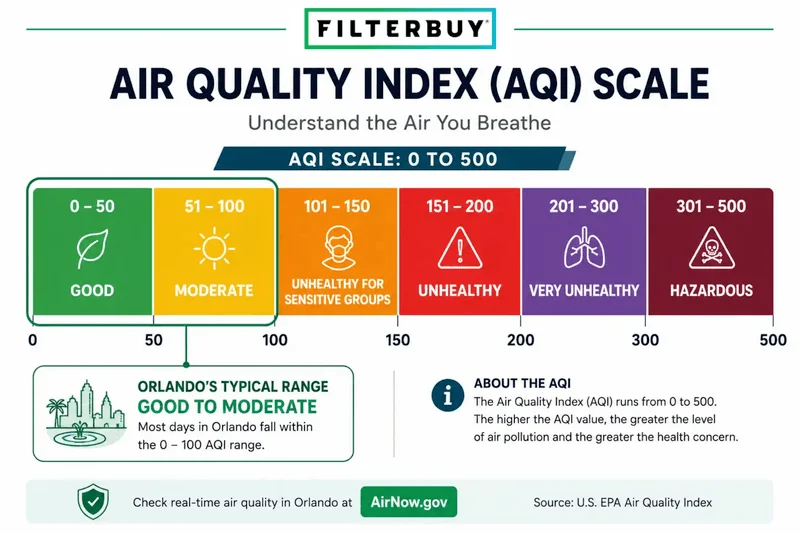
How to Read AQI
The Air Quality Index (AQI) measures how polluted the air is and how it may affect your health.
0–50 (Good): Air quality is satisfactory.
51–100 (Moderate): Acceptable, but some pollutants may pose minor concerns.
101–150 (Unhealthy for Sensitive Groups)
151–200 (Unhealthy)
201–300 (Very Unhealthy)
301+ (Hazardous)
Moderate
Still okay for most, but if you have asthma or allergies, take it easy and avoid long outdoor workouts.
Shop MERV 11 filters→What's the Right Filter for Your AQI Level?
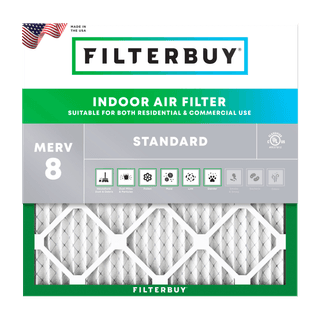
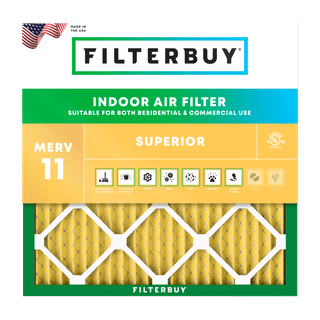



Check Today's Live Real Time Air Quality Index AQI Map In Orlando, FL Now
By Michelle Wan, Brand Manager & Air Quality Writer | Filterbuy · Reviewed by David Clark, Licensed HVAC Technician · Published July 5, 2026 · Updated July 5, 2026
Most mornings in Orlando, the air over Lake Eola looks clear enough to run in without a second thought. Then a July haze rolls in off the Atlantic carrying Saharan dust, or an afternoon of stacked heat cooks up a batch of ground-level ozone, and air that felt fine at 7 a.m. can nudge into the Moderate range by 3 p.m. We build the filters that end up in Central Florida return vents, so days like that are exactly what we pay attention to. The live map above shows you where Orlando stands right now, so you can decide whether it's a great day for the outdoor workout or a better day to close the windows and let your HVAC system do the breathing for you.
Quick Answers About Orlando Air Quality Today
What Is The Air Quality In Orlando Right Now?
How To Read Orlando's Live AQI Map
The AQI runs from 0 to 500 and reports the single pollutant with the highest reading at each monitor, almost always ozone or PM2.5 in Central Florida. An AQI at or below 100 meets the national air quality standard for that pollutant. The color on the live map tells you the category at a glance.
The AQI reports the pollutant with the highest reading, usually ozone or PM2.5 in Central Florida. An AQI at or below 100 meets the national air quality standard.
Orlando's monitors report through two authoritative live sources you can cross-check against the map above: EPA's AirNow platform and the Florida DEP Spatial Air Quality System. Both refresh throughout the day, and both feed the same government-validated data.
What Drives Air Quality In Orlando
Orlando's air quality follows a seasonal rhythm that differs from the industrial-corridor pattern people picture when they hear "air pollution." Four local drivers do most of the work.
Ground-level ozone climbs on hot, sunny, low-wind afternoons, mostly from late spring through summer, when heat and sunlight react with vehicle and everyday emissions. Ozone is the pollutant most likely to push a Central Florida reading toward Moderate.
Tree and grass pollen peaks in spring, and while pollen itself is not scored in the AQI, it loads the same indoor filters that also capture fine particles, so it matters for what you breathe at home.
The Saharan Air Layer arrives in summer, carrying mineral dust thousands of miles across the Atlantic. Those dust plumes can raise particle readings and give Orlando skies their milky summer haze. It's the driver we find surprises Orlando homeowners most, because a dust-hazy day carries no smell and no smoke to warn you, yet it still loads the filter working to keep it out of your living room.
Prescribed burns and occasional wildfires in the surrounding forests and wildland areas, most common in the dry winter and spring months, can send smoke into the metro on the right wind. Smoke particles are where the health stakes rise fastest, which is the reason the filter conversation matters.
Orlando's Air Quality Year, Season By Season
Orlando's air runs on a local rhythm, and knowing which driver owns each season tells you when to pay closer attention.
What Orlando's AQI Doesn't Tell You
Pollen never appears in the AQI. In spring, the air outside can read Good while your filter fills with oak and grass pollen.
A Moderate reading in Orlando is usually ozone or Saharan dust, not smoke. The precautions are similar, but dust and ozone give you no warning smell.
Indoor air can be dirtier than outdoor air. Cooking, candles, and a tired filter can push your indoor particles past a clean outdoor number.
The map shows a metro average. A home near a busy road or an active construction site can run higher than the county figure.
Why The Number On The Map Affects Your Health
PM2.5, or fine particulate matter, describes airborne particles about 2.5 micrometers wide or smaller, roughly thirty times thinner than a human hair. The EPA identifies PM2.5 as the pollutant that poses the greatest risk to health, because particles this small travel deep into the lungs and can pass into the bloodstream. The CDC links particle pollution to worsened asthma, heart attacks, and strokes, with children, older adults, and people who have heart or lung conditions most affected.
Smoke-derived particles deserve extra respect. Research on wildfire-specific PM2.5, cited in the statistics below, found it far more harmful to respiratory health than the same amount of PM2.5 from everyday sources, so a smoke event that reads the same as a typical Moderate day can hit sensitive lungs harder. That gap is why checking the source behind a reading, not just the number, helps you make a smarter call.
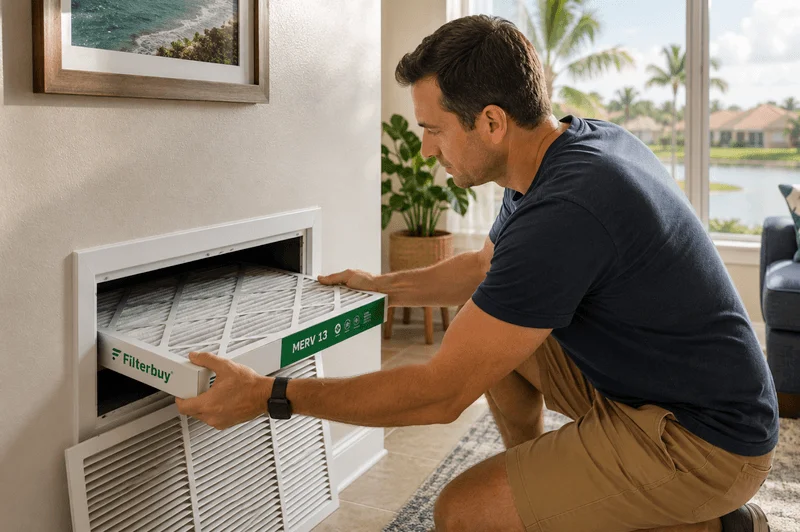
Most air quality maps stop at the outdoor number, but that number covers only part of your day. You spend most of your hours indoors, where outdoor particles follow you through windows, doors, and your HVAC intake. What your system's filter captures decides how much of an Orlando ozone-and-dust afternoon reaches your family. Catching those finest particles without choking your airflow is the whole job Filterbuy designs its filter media around, and our guide to choosing the right filter for your home walks through the tradeoffs between filtration and airflow.
A Note From Our Air Quality Writer
Expert Quote
Your Air-Obsessed Toolkit For Taking Charge Of Orlando's Air
You're the one looking out for the air your family breathes every day, and these seven trusted sources make that job a whole lot simpler.
See What's In Your Air Right Now, Straight From The Source
You can't see the fine particles drifting over Orlando, but the EPA's AirNow map can. Punch in your ZIP code for a live reading, plus a Fire and Smoke Map that flags wildfire haze long before it reaches your front door.
Source: EPA AirNow real-time air quality and Fire and Smoke Map for Florida.
Zoom In On The Monitor Closest To Your Neighborhood
Florida's own monitoring network tracks live ozone and PM2.5 across Orange, Seminole, Lake, and Osceola counties. Use it to see how the air on your street compares to the metro-wide number, so you're never left guessing.
Source: Florida DEP Spatial Air Quality System.
Finally Understand The Tiny Particles That Matter Most
The EPA makes the invisible visible, explaining what PM2.5 and PM10 really are and why the smallest particles slip the deepest into your lungs. Read it once and every number on the AQI map starts working harder for you.
Source: EPA guide to particulate matter (PM) basics.
Know Exactly When To Head Outside And When To Wait
The CDC turns the AQI into plain, protective choices for the people who feel poor air first, like kids, older adults, and anyone managing asthma or a heart condition. It's the guidance that helps you protect your household with real confidence.
Source: CDC guidance on air quality and protecting your health.
Have A Game Plan Ready Before The Next Air Quality Alert
The National Weather Service shows how it and the EPA report air quality, and it spells out what to do the moment an alert lands. Bookmark it now so a smoky or high-ozone forecast never catches your family off guard.
Source: National Weather Service guide to the Air Quality Index.
Get Your Home Smoke-Ready Before The Haze Rolls In
ASHRAE's wildfire guidance points to MERV 13 filtration and simple building steps that keep smoke outside where it belongs. It's the expert playbook we lean on when we tell Central Florida homeowners how seriously to treat a smoky forecast.
Source: ASHRAE Guideline 44 wildfire response resources.
Keep Your Filter Working As Hard As You Do
The Department of Energy lays out how often to check and swap your HVAC filter, a rhythm worth tightening through Orlando's dusty, smoky stretches. Stay on schedule and you protect your air and your system at the same time, which is a win for the whole house.
Source: DOE Energy Saver guidance on air conditioner maintenance.
Three Numbers Every Orlando Household Should Know
We'd never ask you to just take our word for it. Here's what the research from trusted U.S. sources says about the air around your Orlando home.
Source: Aguilera et al., 2021 (Nature Communications) on wildfire smoke and respiratory health.
Source: American Lung Association "State of the Air" 2026 findings for the Orlando metro.
Source: NOAA satellite service report on Saharan dust reaching Florida.
How MERV Filters Compare For Central Florida Homes
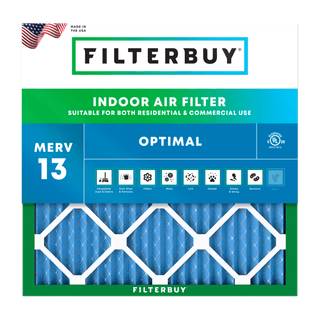
The filter in your return vent is the one variable in this whole picture you fully control. For Orlando's mix of pollen, dust, and occasional smoke, the right MERV rating balances particle capture against the airflow your system can handle. After manufacturing filters in the USA for over a decade, Filterbuy has settled on MERV 13 as the sweet spot for most Central Florida homes, and our MERV 13 pleated filters hit that balance.
MERV 13 suits most modern HVAC systems. Confirm your system's airflow supports it before upgrading.
Final Thoughts And Opinion
Orlando gets a good hand with its air. The metro's clean-leaning grades reflect a place without heavy industry, cooled by coastal breezes for much of the year. That good fortune has a blind spot, though. Because bad-air days are rare here, a lot of Central Florida households never build the habit of checking, and they treat every Moderate reading the same as a Good one. A summer ozone afternoon and a dust-hazy morning both call for the same small adjustments, and skipping those adjustments year after year is where slow, avoidable exposure adds up for the people who feel it most.
Our view is simple. Use the live map as a daily glance, not a once-a-year check. On the handful of days when the number climbs, close the windows, run your system, and make sure the filter in it can catch what's in the air rather than wave it through. That's the problem Filterbuy exists to solve for households like yours, one well-built filter at a time.
Next Steps
Bookmark this page and check the live map before outdoor exercise, especially on hot summer afternoons and hazy Saharan-dust mornings. When the reading hits Moderate or higher, switch your thermostat to circulate air and keep the windows closed.
Then make sure your filter is up to the job. For Central Florida homes managing pollen, dust, and occasional smoke, MERV 13 is the practical target when your system's airflow supports it. If smoke season is your main concern, our best MERV rating for wildfire smoke guide breaks down which rating actually blocks smoke particles.
Air Quality Terms, Defined
Quick definitions for the terms on this page, so every reading and recommendation stays clear.
Frequently Asked Questions
Protect Your Indoor Air On Orlando's Higher-AQI Days
You can't change what blows in off the Atlantic, but you decide what reaches your lungs at home. Match your system with a Filterbuy filter built for Central Florida's pollen, dust, and smoke, and breathe easier on every reading the map throws at you.