
Pueblo Real-Time AQI Tracker


Get Alerts For Unhealthy AQI In Your Area
When air quality in your area reaches unhealthy levels, we'll send you a quick alert, along with expert tips on how to reduce your exposure.
What's Actually In Pueblo Air Today?
What High AQI Means for Your Lungs in Pueblo
How to Read AQI
The Air Quality Index (AQI) measures how polluted the air is and how it may affect your health.
0–50 (Good): Air quality is satisfactory.
51–100 (Moderate): Acceptable, but some pollutants may pose minor concerns.
101–150 (Unhealthy for Sensitive Groups)
151–200 (Unhealthy)
201–300 (Very Unhealthy)
301+ (Hazardous)
Moderate
Still okay for most, but if you have asthma or allergies, take it easy and avoid long outdoor workouts.
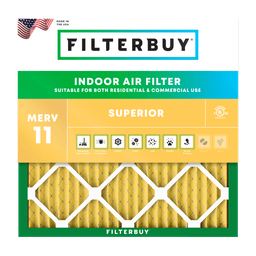
Shop MERV 11 filters→What's the Right Filter for Your AQI Level?


Check Today's Live Real Time Air Quality Index AQI Map in Pueblo, CO Now
TL;DR
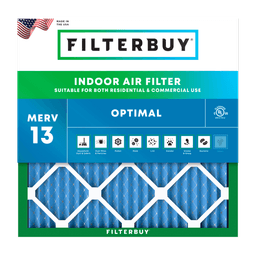
Filterbuy's live map above shows Pueblo's current Air Quality Index (AQI) and the pollutant behind it. Those readings come from two state monitors: particles at Fountain School and ozone in Pueblo West. At AQI 100, Filterbuy's action line, switch to a MERV 13 filter, set the fan to On, run a portable HEPA air cleaner in each occupied room and close up the house.
Pueblo Air Quality Now: How to Read the Live Map
The number on the map above is Pueblo's AQI on the EPA's 0–500 AQI scale, and the color shows its category. At Filterbuy, we read the pollutant label first because it tells you what to do: dust and smoke mean closing up and filtering, while ozone means rethinking when you head outside.
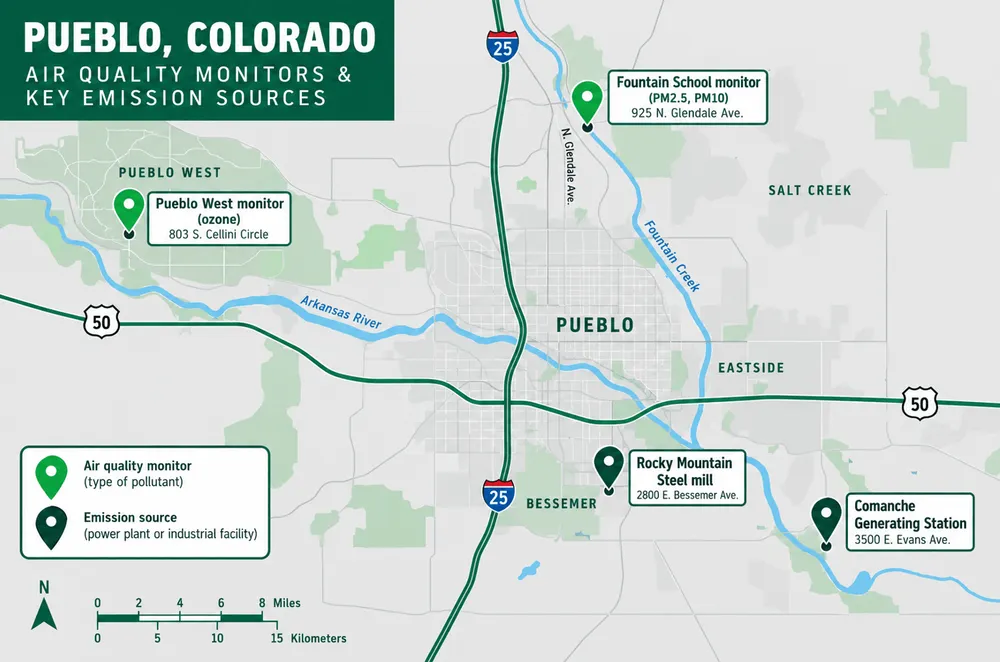
When Filterbuy mapped Pueblo's monitors for this page, the gap stood out. Official data comes from just two Colorado Department of Public Health and Environment (CDPHE) monitors listed in the state's 2025 Ambient Air Monitoring Network Plan. The Fountain School site tracks fine particles (PM2.5) and coarse particles (PM10), about 6 miles north of the Comanche Generating Station, while the Pueblo West site tracks ground-level ozone. Sensors from the Clean Air Pueblo project add neighborhood detail.
Key Takeaways
Two CDPHE monitors supply Pueblo's official AQI: particles at Fountain School, ozone at Pueblo West.
Read the pollutant label first: dust and smoke call for filtering, while ozone calls for timing.
AQI 100 is Filterbuy's action line: MERV 13, fan On, a HEPA air cleaner in each occupied room, house closed.
Swamp coolers pull in unfiltered outdoor air, so in homes without ducts, portable HEPA air cleaners are the main defense.
Pueblo AQI Levels and What to Do at Each One
On EPA's scale, AQI 100 is still Moderate. It's also where Filterbuy tells Pueblo households to act. Check AirNow and CDPHE guidance first, then take these four steps:
Switch the HVAC to a MERV 13 filter.
Set the thermostat fan to On so the system filters continuously.
Run a portable HEPA air cleaner in each occupied room, bedrooms first.
Close windows and doors, and skip candles, frying and smoking while smoke is in.
Above 100, sensitive groups should also scale back outdoors: children, adults over 65, people who work or exercise hard outside, and people with asthma, COPD or heart disease, who should follow their doctor's plan and official guidance.
| AQI | Category | What to Do in Pueblo |
|---|---|---|
| 0–50 | Good | Open windows, run the swamp cooler and get outside. |
| 51–100 | Moderate | Get MERV 13 and spares in before smoke season. At 100, start the four steps above. |
| 101–150 | Unhealthy for Sensitive Groups | Sensitive groups cut outdoor exertion. MERV 13, fan On, HEPA in occupied rooms, house closed. |
| 151–200 | Unhealthy | Everyone limits exertion. Keep all four steps going and inspect the filter more often. |
| 201–300 | Very Unhealthy | Follow AirNow and CDPHE guidance first. Stay in a HEPA-cleaned room; filtration is one layer. |
| 301+ | Hazardous | Follow CDPHE and Pueblo County guidance first, including any relocation advice. |
Why Pueblo's AQI Can Trail What You See Outside
Pueblo's AQI lags because it uses EPA's hourly NowCast data, which blends in earlier hours, so a fast dust front or haze over Bessemer can take an hour or more to register. On smoke days, trust your eyes: CDPHE advises that smoke is unhealthy when visibility drops below 5 miles, whatever the map says.
Is the Air in Pueblo Safe to Breathe Today?
Whether Pueblo's air is safe or bad today depends on the number on the live map. Up to 100, the air is acceptable for most people; above 150, everyone should limit time outdoors, so check the map before exercising outside.
Since EPA's 2024 AQI update, PM2.5 turns yellow at 9.0 µg/m³, the level of the annual health standard. One yellow day is no emergency, but a run of them is worth acting on.
Ozone breaks down indoors on contact with surfaces, so staying in works on ozone days.
Where to Check Pueblo's Air Quality Forecast and Alerts
CDPHE posts daily forecasts and Action Day alerts at colorado.gov/airquality. The National Weather Service in Pueblo issues blowing dust advisories and dust storm warnings, and AirNow carries the national forecast.
During ozone advisories, exercise in the morning. For smoke or dust, work through Filterbuy's air quality alert checklist for home. Compare the Colorado Springs air quality map or the statewide Colorado air quality map.
Pueblo Air Quality by Neighborhood
Pueblo's air burden is uneven. Colorado Sun reporting places Salt Creek and Bessemer downwind of the Rocky Mountain Steel mill, and Eastside neighborhoods near Xcel Energy's Comanche Generating Station, Colorado's largest coal-fired plant. Because those areas sit miles from Fountain School, the AQI can understate local spikes.
| Monitor | Location | Measures | Best For |
|---|---|---|---|
| Pueblo – Fountain School (CDPHE) | 925 N. Glendale Ave. | PM2.5, PM10 | Official particle AQI |
| Pueblo West (CDPHE) | 803 S. Cellini Circle | Ozone, wind, temperature | Official ozone AQI |
| Clean Air Pueblo (IQAir sensors) | Sites countywide | PM2.5 | Neighborhood particle trends |
What's in Pueblo's Air: Dust, Fine Particles and Ozone
Coarse dust (PM10) is Pueblo's signature. Dry soils and strong spring and early-summer winds lift dust that Fountain School records as PM10 and PM2.5.
Fine particles (PM2.5) come mostly from wildfire smoke and from fuel burned in plants and vehicles. The Colorado Public Utilities Commission extended Comanche Unit 2's retirement to December 31, 2026 after Unit 3 went offline in August 2025.
Ground-level ozone builds on hot, sunny days from vehicle and industrial emissions. Pueblo also gets ozone mixed down from the upper atmosphere, which drives some spring and early-summer advisories.
Filterbuy's dust-or-smoke test: when the map names PM10, the culprit is usually wind-blown dust, which a MERV 8 or MERV 11 filter catches well. When it names PM2.5 and you can see haze or smell smoke, treat it as smoke and follow the AQI 100 steps above.
Smoke, Dust Storms and Ozone Spikes in Pueblo
Pueblo's worst air days arrive as short events:
June 2024: The Oak Ridge Fire near Beulah brought an air quality alert for western Pueblo and eastern Custer counties.
March 13, 2026: Nebraska wildfire smoke hazed over the city, and the Pueblo Fire Department told people with respiratory issues to stay in.
May 30, 2026: CDPHE issued an ozone advisory for Pueblo and three neighboring counties as upper-atmosphere ozone mixed down.
June 9, 2026: NWS Pueblo put much of the county under a dust storm warning as gusts neared 60 mph.
For active fires, see Filterbuy's Colorado wildfire and smoke map and the wildfire season preparation checklist before summer.
Swamp Coolers and Window Units on Pueblo Smoke Days
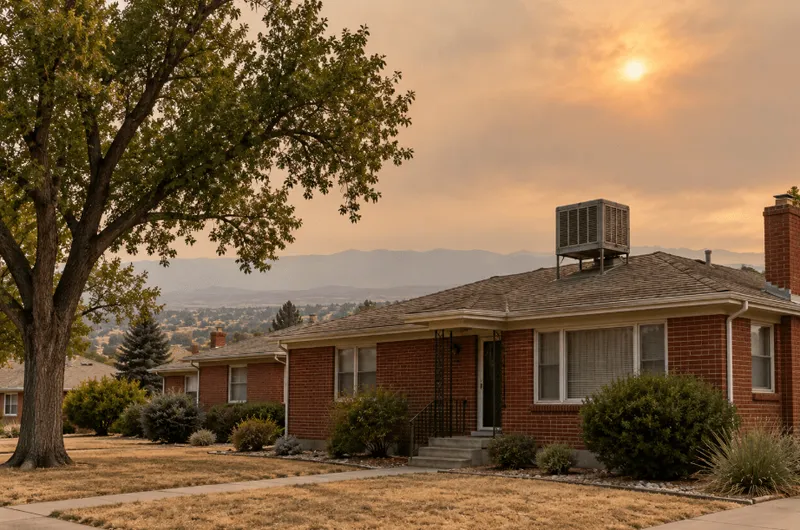
Many Pueblo homes rely on evaporative (swamp) coolers, which blow outdoor air through wet pads with no filter, so smoke and dust come straight inside. The Regional Air Quality Council's Simple Steps. Better Air. program advises keeping the cooler running in a heat wave, since heat is a health risk too.
With no ducts, there's no filter slot to upgrade, so portable HEPA air cleaners are the primary defense, not a backup. Size each one to its room: EPA's guideline is a smoke CADR of at least two-thirds of the floor area, so a 300 sq ft bedroom needs a smoke CADR of about 200. EPA also advises skipping any air cleaner that produces ozone. Filterbuy would rather point these homes to the right tool than sell the wrong one, and carries replacement air purifier filters to keep one running.
Our Take: What Filterbuy Sees in Pueblo's Air
Filterbuy makes air filters, so we read Pueblo's numbers from the return vent outward. Most days, a home filter here catches coarse dust off the plains; a few days a year, it faces smoke fine enough to slip past a basic filter.
Dust storms and smoke can load a filter well before its calendar change date, so our rule for Pueblo homes is to check the filter after every dust storm warning or smoke advisory. EPA advises replacing a filter when it looks dirty, dark brown or black, even if that's sooner than usual, so keep spares on hand.
"Researching Pueblo, what surprised me was how little of its air the official map can see. I trust the map for the big picture and my eyes for the neighborhood. If you can see dust or haze, close up and check your filter."
Michelle Wan, Brand Manager and Air Quality Writer, Filterbuy
Which Filter Pueblo's AQI Calls For
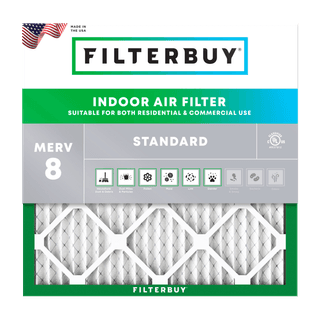
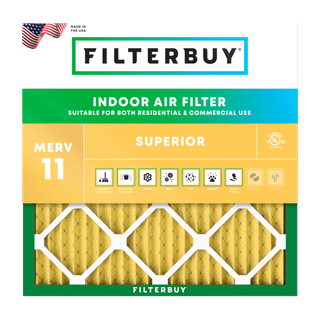
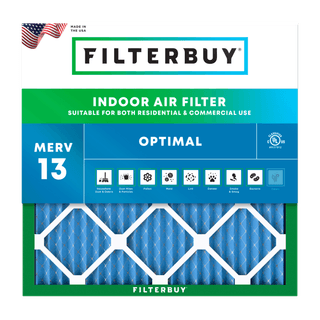
For most Pueblo homes with central HVAC, Filterbuy recommends MERV 11 year-round for dust and MERV 13 once smoke arrives or the AQI reaches 100. See which MERV rating to use.
| Situation | Best Choice | Why |
|---|---|---|
| Everyday dust, AQI 0–99 | MERV 8 or MERV 11 | Catches dust and pollen; MERV 11 adds finer particles. |
| Smoke, or AQI 100 and above | MERV 13 | Filterbuy's tier for smoke. Check size and fit as usual. |
| Lingering smoke odor | Odor Eliminator line | Pleated filters capture particles, not odors. |
| No ducts or swamp cooler only | Portable HEPA air cleaner | No HVAC slot; HEPA never goes in a furnace. |
| Ozone advisory | Keep your filter; close windows | Particle filters don't remove ozone; it breaks down indoors. |
EPA recommends MERV 13 or higher in a central system during smoke events and notes that most furnaces and HVAC systems can use it when the filter is replaced often. Treat the fit check like confirming a size; our guide to upgrading to a MERV 13 filter walks through it. As David Clark, Licensed HVAC Technician, notes in our AQI above 100 guide, a fan left on Auto only cleans air while the system heats or cools.
Filterbuy makes MERV 8, MERV 11, MERV 13 and Odor Eliminator carbon filters in the USA in 600+ sizes plus custom sizes, with free shipping and auto-delivery.
Supporting Statistics
40.8% of Pueblo residents are under 18 or 65+
Groups most sensitive to air pollution. Source: U.S. Census Bureau
0 Pueblo monitors track NO2, SO2 or CO
Only 2 sites: particles and ozone. Source: CDPHE
About 90% of time is spent indoors
EPA advises MERV 13 or higher for fine particles. Source: EPA
Frequently Asked Questions
How do I check the air quality in Pueblo right now?
Use the live, real-time map at the top of this page. For alerts, sign up at colorado.gov/airquality.
What causes air pollution in Pueblo?
Wind-blown dust (PM10) and smoke (PM2.5) drive most poor air days, while ozone peaks on hot afternoons.
Should I run my swamp cooler when there is wildfire smoke in Pueblo?
A swamp cooler pulls smoky air inside unfiltered. On heavy smoke days, turn it off if you can stay cool and run HEPA air cleaners. In extreme heat, keep cooling and filter at least one clean room.
What filter should I use for wildfire smoke in Pueblo?
MERV 13 in the HVAC with the fan set to On, plus a portable HEPA air cleaner in each occupied room; homes without ducts rely on the HEPA cleaners.
Does the Pueblo West ozone reading apply to my neighborhood?
Mostly, yes. Ozone forms over a wide area, so it varies less across the city than particles do.
Glossary
Air Quality Index (AQI): The EPA's 0–500 scale with six color-coded health categories.
PM2.5: Fine particles 2.5 micrometers or smaller, mostly from smoke and combustion.
PM10: Coarse particles 10 micrometers or smaller, including wind-blown dust.
Ground-level ozone: A lung-irritating gas formed when sunlight reacts with emissions.
NowCast: EPA's method for calculating a current AQI from recent hourly readings.
CDPHE: Colorado Department of Public Health and Environment, Pueblo's monitor operator.
Evaporative (swamp) cooler: A cooler pulling unfiltered outdoor air through wet pads.
MERV: Minimum Efficiency Reporting Value, a 1–16 rating of HVAC filter particle capture.
HEPA: High-efficiency particulate air filtration, used in portable air cleaners, never in a furnace slot.