
Wind Chill Map: Current Wind Chill Values Across the US
October 22, 2026

Wind chill is how cold the air feels on exposed skin when wind carries heat away from your body. At 0°F with a 15 mph wind, it feels like -19°F, and exposed skin can freeze in 30 minutes.
Your pipes and furnace don't feel wind chill. They cool only to the actual air temperature.
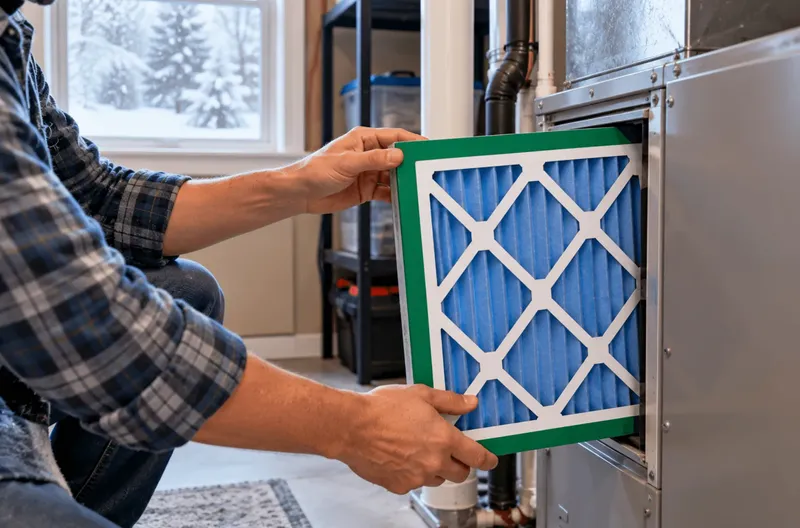
Windy days do make your furnace run longer, though. When a cold alert shows up on the map, check your air filter that day.
in 30 minutes
cool no lower
Get Your Furnace Filter Before the Next Cold Snap
Not sure which MERV rating fits your home?
Answer a few quick questions and we'll match you to the right filter.
A wind chill map shows how cold the air feels on exposed skin when wind meets low temperatures. The live map below tracks current wind chill values across the US and shades any area where NOAA's National Weather Service (NWS) has an Extreme Cold Warning, Extreme Cold Watch, or Cold Weather Advisory in effect. Enter your ZIP code to see the wind chill near you, then check tomorrow in the forecast view.
TL;DR
Wind chill is how cold your skin feels when wind carries heat away from your body. At 0°F with a 15 mph wind, the wind chill drops to -19°F, and exposed skin can freeze in 30 minutes. Dangerous wind chills bring NWS cold alerts, ranging from a Cold Weather Advisory to an Extreme Cold Warning.
Key Takeaways
A 0°F day with a 15 mph wind has a wind chill of -19°F, cold enough to freeze exposed skin in 30 minutes.
Near -10°F, a 4 mph breeze is enough to reach that same -19°F mark.
Since October 1, 2024, the NWS cold alerts have been the Extreme Cold Warning, Extreme Cold Watch, and Cold Weather Advisory.
Wind chill applies only to people and animals. Pipes and HVAC equipment cool to the air temperature and no further.
How We Built This Wind Chill Guide
Filterbuy makes the air filters that keep furnaces running all winter, so we wrote this guide to answer one question: what does today's wind chill mean for your family and home?
We calculated our lookup tables from the NWS formula and checked them against the NWS reference value of -19°F.
We matched each alert name to the NWS notice effective October 1, 2024.
David Clark, a Licensed HVAC Technician, reviewed the home and HVAC guidance.
How To Read The Live Wind Chill Map
The live map colors each location by its current feels-like temperature. Select any point to see the air temperature and wind speed behind it. Above 50°F, or with wind at 3 mph or less, wind chill does not apply, so the map shows air temperature instead.
The NWS notes that bright sunshine may raise the wind chill by 10°F to 18°F, so map values hit hardest when the sun is low or behind clouds.
For a second view, the Oklahoma Mesonet, a university-run weather network, posts an hourly national wind chill and heat index map built on NWS data.
What Is Wind Chill And How Does The NWS Calculate It?
Wind chill describes how cold people and animals feel outside. The NWS calculates it from air temperature and wind speed using its Wind Chill Temperature Index, in use since November 1, 2001.
NWS: At a wind chill of -19°F, exposed skin can freeze in 30 minutes.
The NWS wind chill chart shades shorter frostbite times as wind chills fall below that mark.
Calculated by Filterbuy from the NWS formula, rounded to the nearest degree.
Filterbuy's calculations show that wind hits harder as temperatures fall. A jump from 5 mph to 20 mph lowers the wind chill by 8°F at 30°F, by 11°F at 0°F, and by 14°F at -20°F.
We also ran the formula in reverse to find the wind speed that reaches -19°F.
Calculated by Filterbuy from the NWS formula and rounded up to the next whole mph.
At about -10°F, nearly any breeze brings 30-minute frostbite risk. Cover up even on days that look calm.
Which Alerts Replaced Wind Chill Warnings?
On October 1, 2024, the NWS retired the Wind Chill Warning, Wind Chill Watch, and Wind Chill Advisory. The new alerts cover dangerous air temperatures as well as wind chills, because cold can be dangerous with or without wind.
Filterbuy explains why the NWS retired wind chill alerts. To get your home ready, start with what an Extreme Cold Warning means, then read the Cold Weather Advisory guide and the Extreme Cold Watch checklist. You can also compare a Cold Weather Advisory vs. Extreme Cold Warning side by side or check the national weather alerts map guide.
How To Check The Wind Chill Forecast For Tomorrow
Your NWS point forecast at weather.gov lists the wind chills expected for your ZIP code, and its Hourly Weather Graph plots them hour by hour. Nationally, the National Digital Forecast Database (NDFD) maps wind chill as Apparent Temperature. Switch the map above to its forecast layer to see tomorrow's coldest readings.
Wind Chill Map Minnesota: Local Alert Thresholds
Each NWS office sets cold alert thresholds to fit its local climate. The Twin Cities office applies these to either wind chill or air temperature.
Source: NWS Twin Cities office criteria.
What Does Wind Chill Mean For Your Home And HVAC System?
At Filterbuy, we read the map with a two-number rule. Wind chill tells you how to dress and how long to stay out, while air temperature tells you what your pipes and heating system face. The NWS confirms that objects cannot cool below the air temperature, so on a -5°F day with a -31°F wind chill, a car radiator stays at -5°F or warmer.
Wind still slips indoors through gaps around windows and doors, and ENERGY STAR suggests closing them by weatherstripping doors and caulking window gaps.
Pipes
Pipes freeze once the air around them drops below 32°F, and wind moving through a crawl space or exterior wall gets them there faster. The American Red Cross advises that you open cabinet doors and let cold water drip from exposed pipes during a hard freeze. Filterbuy's chart lists safe temperature limits for pipes and pets.
Heat Pumps And Furnaces
Heat pump owners can read Filterbuy's guide on how heat pumps handle cold climates.
Furnaces run longer on windy days because drafts carry heat out of the house. During a cold snap, hold one steady thermostat setting instead of deep overnight setbacks. Filterbuy's furnace guide explains why a furnace runs nonstop in extreme cold.
Filters And Vents
As an air filter manufacturer, Filterbuy keeps its advice simple: when a cold alert shows up on the map, check your furnace filter that day. Longer run times move more air through it, so keep checking every 30 days until the cold breaks. See how often to change a furnace filter in winter.
Drifting snow can also block high-efficiency furnace vent pipes and shut the system down. Learn how to clear a frozen furnace vent pipe safely.
USFA: An estimated 34,200 residential heating fires were reported to US fire departments each year from 2017 to 2019, with 20% in January.
Test your smoke alarms and follow U.S. Consumer Product Safety Commission (CPSC) advice to install carbon monoxide alarms on every level of your home. The fire figures come from U.S. Fire Administration data on residential heating fires.
Cold Snap Action Plan By Wind Chill Level
We built this plan by pairing NWS frostbite thresholds with the home steps from Filterbuy's winter guides.
CDC: The US recorded 16,911 hypothermia-related deaths from 1999 to 2011, an average of about 1,301 per year.
Those figures come from CDC National Vital Statistics System data on hypothermia deaths. If cold knocks out power, see Filterbuy's guide to heating your home in a winter power outage.
"The wind chill temperature is how cold people and animals feel when outside."
National Weather Service, Wind Chill Chart
Supporting Statistics
NOAA: The contiguous US averaged 33.2°F in January 2026, 3.1°F above the 20th-century average. Even so, Arctic air reached as far south as Florida that month, according to NOAA's January 2026 national climate analysis. Mild winters still bring dangerous cold.
NSC: US weather events caused 889 deaths and 1,331 injuries in 2025. Winter weather ranked among the deadliest causes, according to the National Safety Council's weather-related injury data.
EIA: Natural gas was the main heating fuel in 47% of US homes in 2024. Electricity led in 42%. The two fuels heat most US homes, according to the U.S. Energy Information Administration's residential heating fuel analysis.
Frequently Asked Questions
What Is The Wind Chill Near Me Right Now?
Enter your ZIP code in the live map above. It shows your current wind chill along with the readings behind it.
Does The NWS Still Issue Wind Chill Warnings?
No. On October 1, 2024, the NWS replaced the Wind Chill Warning with the Extreme Cold Warning. Wind chill still plays a role in all three current cold alerts.
At What Wind Chill Does Frostbite Start?
According to the NWS, exposed skin can develop frostbite within 30 minutes at a wind chill of -19°F, and faster when colder. Keep your nose, ears, cheeks, chin, fingers, and toes covered.
Does Wind Chill Affect My Furnace Or Heat Pump?
Not directly. HVAC equipment responds to the air temperature, but windy days raise heating demand through drafts, so Filterbuy recommends checking your filter monthly in long cold stretches.
Does Wind Chill Affect Pets?
Yes. The NWS applies wind chill to people and animals alike. The American Veterinary Medical Association's cold weather animal safety advice is to shorten dog walks.
Glossary
Wind Chill: How cold people and animals feel when wind speeds heat loss from exposed skin.
National Weather Service (NWS): The agency within the National Oceanic and Atmospheric Administration (NOAA) that issues US forecasts and alerts.
Cold Weather Advisory: An NWS alert for cold that can cause frostbite or hypothermia.
Extreme Cold Watch: An NWS alert that dangerous cold is possible soon.
Extreme Cold Warning: An NWS alert that life-threatening cold is expected or occurring.
Hypothermia: Body temperature below 95°F, a medical emergency per the CDC.
MERV: Minimum Efficiency Reporting Value, a 1 to 16 rating of how well an air filter captures particles.
Keep Your Furnace Ready For The Next Cold Snap
A clean filter is the easiest way to get your furnace ready for a cold snap. Filterbuy makes MERV 8, MERV 11, and MERV 13 pleated air filters in hundreds of standard and custom sizes, with fast and free 2-day delivery to most US states. Check your HVAC system's manual for the MERV rating it supports, then shop air filters by size or set up filter auto-delivery before the next cold alert.