
Is There a Winter Storm Warning Near Me? How to Check Right Now and Get Your Home Ready
October 26, 2026
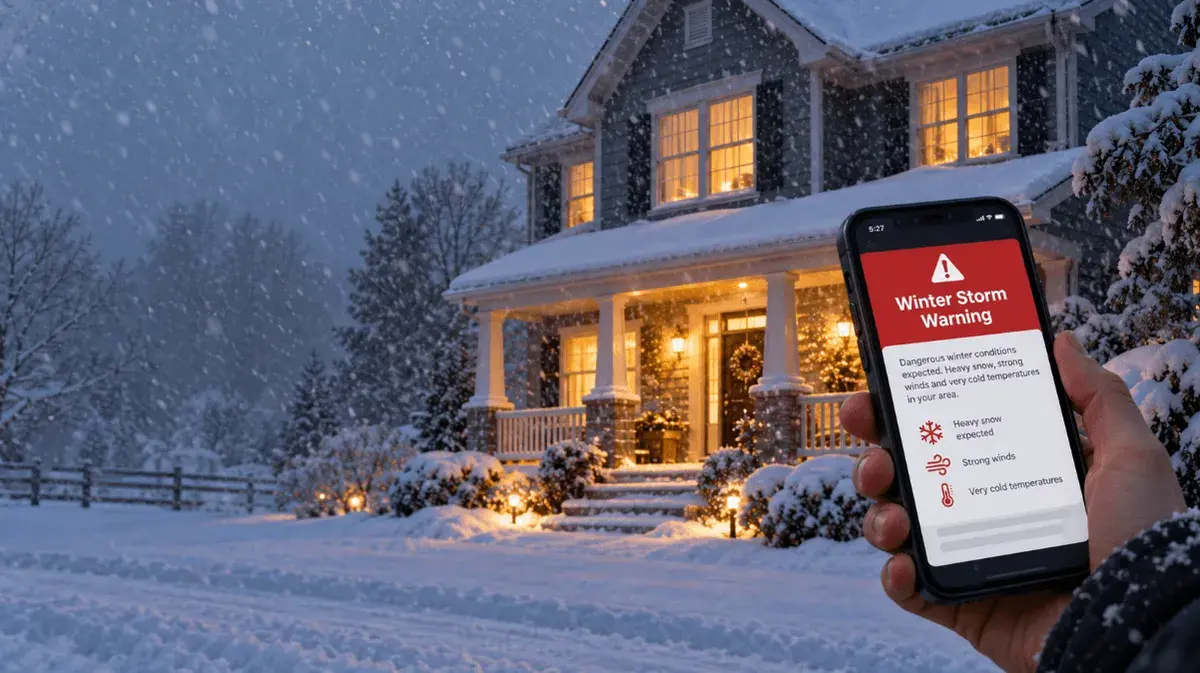
Every storm alert starts a clock. A watch usually posts 24 to 48 hours ahead and a warning 12 to 36 hours ahead, so use the watch to order a spare filter and the warning to swap it in.
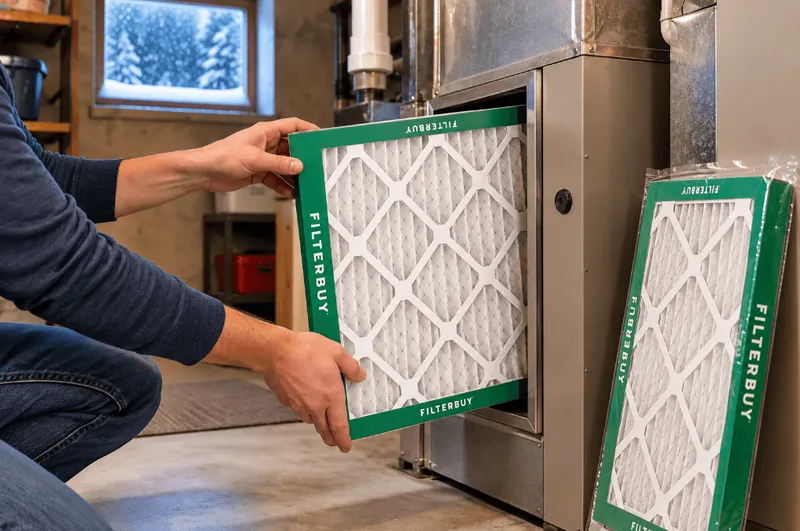
During a storm, your furnace may run for hours, pulling the same indoor air through its filter over and over. Hold yours up to a light. If light barely passes through, or it has been in for 30 days or more, replace it before the first flakes fall and keep a spare by the furnace. Order the size printed on the frame.
Order a Spare Filter Before the Storm
Fast and free 2-day delivery to most US states.
Your Storm Countdown
Hours before the storm, by NWS alert
Storm here? Stay home.
Keep the spare by the furnace to swap mid-storm.
Source: National Weather Service. Lead times vary by office.
Answer a few quick questions and we'll match you to the right filter for winter.
TL;DR
To see if a winter storm warning is active where you live, enter your ZIP code at weather.gov, the National Weather Service (NWS) website, or check your phone's emergency alerts. A warning means dangerous snow, sleet or ice is falling or expected soon, usually within 12–36 hours. Then take 15 minutes to check your furnace filter and outdoor vents and test your carbon monoxide alarms.
Key Takeaways
The NWS issues every official U.S. winter storm warning.
Warning thresholds differ by NWS office and commonly fall between 4 and 8 inches of snow.
A furnace running nonstop loads its filter faster, so Filterbuy recommends checking it when a warning posts.
Snow-blocked vents and indoor generators can cause carbon monoxide poisoning.
Weather sites tell you how much snow is coming, not what it does to your heating. At Filterbuy, we have made air filters in our U.S. factories since 2013, and every winter we hear from homeowners whose heating suddenly feels off. So we treat every storm alert as a home-maintenance cue, and this guide covers both.
How Do I Check for a Winter Storm Warning Near Me Right Now?
To check for a winter storm warning near you, open your local forecast page on weather.gov. Any NWS alert for your county appears in a colored banner above the forecast. Other ways to stay alerted:
weather.gov: Enter your ZIP code and tap the banner for the full alert.
Wireless Emergency Alerts (WEA): Serious NWS warnings reach most phones automatically if emergency alerts are on.
NOAA Weather Radio: Broadcasts NWS alerts around the clock, even when power or internet fails.
Weather apps and local TV: Handy, but confirm details on weather.gov.
Filterbuy team tip: bookmark your weather.gov page, and save the ZIP code of anyone you look after, like an aging parent. Phone alerts only reach phones inside the warned area. Filterbuy's live air quality map shows outdoor conditions, too.
What Does a Winter Storm Warning Mean?
A winter storm warning tells you heavy snow, sleet, freezing rain or a mix is happening now or very likely soon. When one is posted, finish prep and stay off the roads.
What counts as heavy depends on your local NWS office. NWS Cleveland issues a warning for 6 or more inches of snow in 12 hours or 8 or more in 24 hours (NWS Cleveland), while other areas use 4 inches or a quarter inch of ice (Washington EMD). The alert lists expected totals.
Winter Storm Watch vs. Warning vs. Advisory
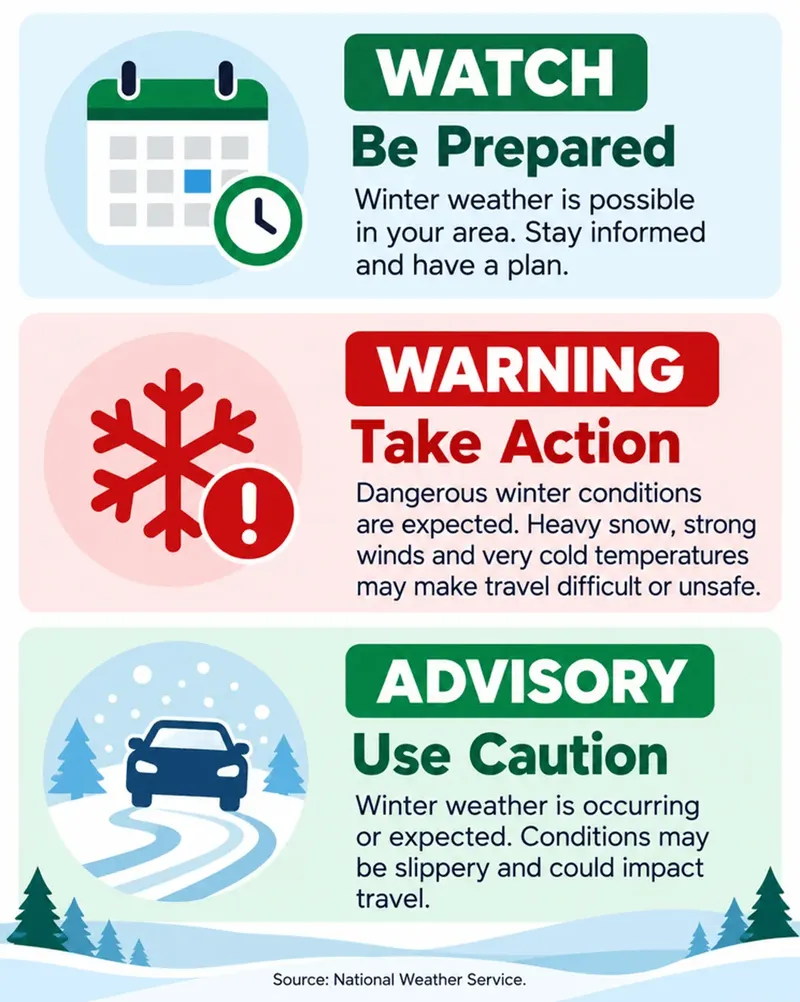
A winter storm watch means prepare, and a winter storm warning means act. An advisory calls for caution. Lead times vary by office (NWS Amarillo).
| Alert | What it means | Lead time | What to do |
|---|---|---|---|
| Winter Storm Watch | Heavy snow, ice or blizzard conditions are possible | 24–48 hours | Plan: stock supplies, check your filter, test alarms |
| Winter Storm Warning | Hazardous snow, sleet or ice is occurring or imminent | 12–36 hours | Act: finish prep and avoid travel |
| Winter Weather Advisory | Hazardous inconvenience, below warning level | Usually within 36 hours | Use caution, especially on the road |
| Ice Storm Warning | Damaging ice, often 1/4 inch or more | Hours to a day | Expect power outages and downed lines |
| Blizzard Warning | Strong wind and blowing snow cut visibility | Hours to a day | Stay off the roads |
Source: National Weather Service. Lead times vary by local NWS office.
Alert names are changing. The NWS plans to replace the word "Advisory" with plain-language headlines. Its 2024 cold-alert changes are covered in Filterbuy's cold weather advisory guide.
Is There a Winter Storm Warning Near Me Today, Tonight, Tomorrow or This Weekend?
Every NWS winter storm warning lists WHAT is expected (snow and ice totals), WHERE (counties covered), WHEN (start and end times) and likely IMPACTS. Plan by its timing:
Today or right now: The storm is here or close. Stay home and finish prep indoors.
Tonight or tomorrow: Use this window for the checklist below.
This weekend or this week: Expect a watch first, so order spare filters now.
What Should I Do When a Winter Storm Warning Is Issued? The Filterbuy Storm-Ready Home Air Checklist
In a storm, your furnace may run for hours, pulling the same indoor air through its filter again and again. Filterbuy's manufacturing team sees the result every winter:
"In our years of manufacturing filters and testing them under real-world conditions, we've found that winter is the season most homeowners underestimate. A filter that looks fine in October can be completely choked by December, and that's when we see the most avoidable furnace failures."
– Filterbuy Manufacturing Team
So Filterbuy built this 15-minute checklist around the heating system, not the pantry. David Clark, a licensed HVAC technician, reviewed it.
| Step | Time | How to do it |
|---|---|---|
| Inspect your furnace filter | 2 min | Hold it up to a light. If light barely passes through, replace it now. |
| Stage a spare filter | 1 min | Keep one by the furnace for a mid-storm swap. |
| Check the airflow arrow | 30 sec | The arrow on the filter frame should point toward the furnace. |
| Test CO and smoke alarms | 3 min | Press each test button and replace weak batteries. |
| Locate outdoor vents | 3 min | Find the furnace and water heater vents to keep them clear. |
| Clear space around heaters | 2 min | Keep space heaters at least 3 feet from bedding, curtains and furniture. |
| Hold the thermostat steady | 1 min | Pick one setting instead of big swings. |
| Charge devices and find your weather radio | 2 min | Keep alerts coming if cell service slows. |
| Total | About 15 min | Done before the first flakes fall. |
Space heater clearance per the U.S. Consumer Product Safety Commission.
Step one's light test is the same check the Filterbuy team recommends. If your filter fails, these signs of a clogged furnace filter confirm the problem. For heaters, see our space heater safety guide.
Ordering a spare? Order the size printed on the frame. Filterbuy cuts filters roughly half an inch under it so they slide in easily. If the label is worn, use our air filter size chart.
Should I Change My Furnace Filter Before the Storm?
Filterbuy's rule of thumb: judge the filter by sight, not the calendar.
| What you see | What to do |
|---|---|
| Light passes through; changed within 30 days | Keep it. Recheck after the storm with a spare on hand. |
| Light barely passes through, or it is 30+ days old | Replace it now, before the first flakes fall. |
| Pets, allergies or a multi-day storm | Replace now and recheck mid-storm. |
| Filter is wet, icy, or dark gray to black | Replace it and call a licensed HVAC technician. |
Behind on filter changes? Our guide to how often to change your furnace filter in winter lays out the schedule, or set up filter auto-delivery so fresh filters arrive before the next storm.
How Do I Stay Safe If the Power Goes Out During a Winter Storm?
In an outage, the biggest hidden danger is carbon monoxide (CO), a colorless, odorless gas from fuel-burning equipment like generators and grills. As a filter manufacturer, Filterbuy tells customers plainly what filters cannot do:
Instead, follow these rules from safety agencies (CPSC, Cal OES):
Run portable generators outdoors only, at least 20 feet from the house, with the exhaust pointed away from windows, doors and vents. Never run one in a garage, basement, porch or carport.
Never heat your home with a gas oven, grill, camp stove or car engine.
Keep snow off furnace and water heater vents so exhaust can escape. Here's how to clear a frozen or buried furnace vent pipe safely.
Never plug a generator into a wall outlet.
If a CO alarm sounds or anyone feels dizzy or nauseated, get everyone outside and call 911. Filterbuy's explainer covers why no air filter can remove carbon monoxide.
Gas furnaces usually stop heating in a power outage. Most modern gas furnaces need electricity for the igniter, controls and blower. To hold in warmth, close off unused rooms and gather in one interior room.
What Should I Do After the Winter Storm Passes?
Once a winter storm warning expires, check your heating system, starting outside. As David Clark explains:
Clear the vents again after plowing or a freeze-thaw cycle. Snowmelt can also lead to a wet or freezing furnace filter.
Check the furnace filter again and replace it if it looks gray or dusty. See our winter furnace filter guide.
Watch for warning signs like short-cycling or weak airflow. Filterbuy also flags one that weather alerts never mention: a filter that turns dark gray or black within days can point to a combustion problem. Call a licensed HVAC technician, and see why furnaces short cycle in cold weather.
Restock your spare filter for the next storm.
Supporting Statistics
7.7% of deaths in Texas's February 2021 winter storm were CO poisonings, some from ice-blocked vents. Source: Texas DSHS
765 CO deaths from 2009–2019 were linked to portable generators, and over half of CO deaths occur November–February. Source: CPSC
30% of U.S. fire deaths come from winter home fires, often from heat sources too close to combustibles. Source: USFA
Frequently Asked Questions
Is there a winter storm warning near me right now?
Enter your ZIP code at weather.gov. Any active warning appears above the forecast.
How much snow triggers a winter storm warning?
It varies by NWS office. Many use 6 inches in 12 hours, but milder areas may use as little as 4 inches.
What is the difference between a winter storm watch and a warning?
A watch means a significant storm is possible, usually 24–48 hours out. A warning means hazardous snow, sleet or ice is likely or underway, usually 12–36 hours out.
How often should I check my furnace filter in winter?
Filterbuy recommends checking it every 30 days in winter and again whenever a storm warning posts.
Does an air filter protect against carbon monoxide?
No. Filterbuy filters, like all air filters, capture particles, not gases. Only a working CO alarm can warn you.
Glossary
| Term | Definition |
|---|---|
| Filterbuy | A family-owned U.S. manufacturer of HVAC and furnace air filters, making filters since 2013 in 600+ sizes. |
| National Weather Service (NWS) | The federal agency, part of NOAA, that issues official U.S. forecasts, watches and warnings. |
| Winter Storm Warning | An NWS alert that heavy snow, sleet or ice is occurring or highly likely, usually 12–36 hours out. |
| Winter Storm Watch | An NWS alert that a significant winter storm is possible, usually 24–48 hours out. |
| Winter Weather Advisory | An NWS alert for hazardous winter weather that stays below warning criteria. |
| Cold Weather Advisory | The NWS alert that replaced the Wind Chill Advisory on October 1, 2024. |
| Carbon monoxide (CO) | A colorless, odorless, poisonous gas from burning fuel that only a CO alarm can detect. |
| Short-cycling | A furnace turning on and off more often than normal, often from restricted airflow. |
About the Author and Reviewer
Michelle Wan is Brand Manager and Air Quality Writer at Filterbuy,. In her words: "My job is to give you the straight answer, explain why it matters, and let you get back to your day."
David Clark is a Licensed HVAC Technician and President of Filterbuy HVAC Solutions, with 10+ years in HVAC service.