How Often Should You Change Your HVAC, Furnace, or AC Filter?
July 18, 2025
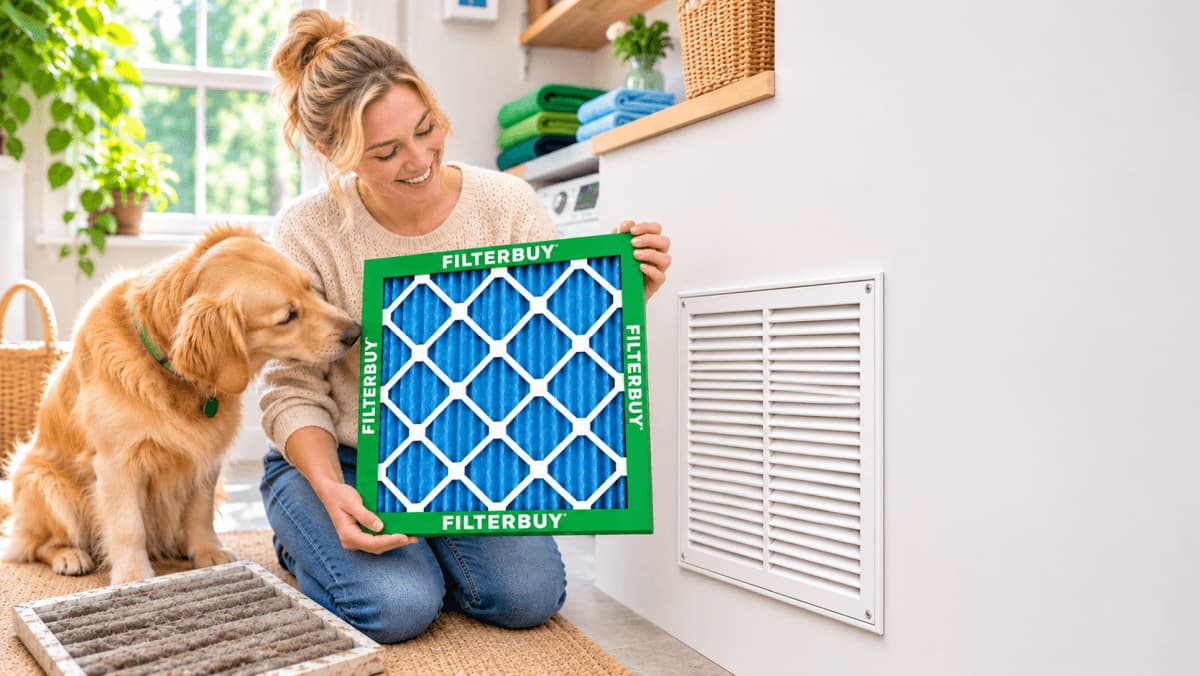
Change a standard pleated air filter about every 90 days. Change it sooner if you have pets, allergies or asthma at home, or a system that runs nearly nonstop. Cheaper fiberglass filters need a swap about every 30 days.
- Pets in the home: every 2 months
- Allergies or asthma at home: every 6 weeks
- Light use with a higher-end pleated filter: up to 6 months
Not sure which air filter fits your home? Take the quick quiz below.
Shop replacement air filters Add auto-delivery and your next filter shows up on schedule.
Answer a few quick questions and we'll match you to the right air filter.
Most homeowners should change a standard 1-inch air filter every 1 to 3 months. Thicker filters, such as 4-inch or 5-inch media filters, can often last 6 to 12 months. The right schedule depends on filter thickness, MERV rating, pets, allergies, and how often your HVAC system runs. Checking your filter monthly is the most reliable way to know when it's time for a replacement.
Key Takeaways
A 1-inch filter typically needs replacing every 1 to 3 months.
Thicker filters (4-inch to 5-inch) can last 6 to 12 months due to greater surface area.
Furnace filters and AC filters are usually the same filter, since most residential systems share one air handler.
Pets, allergies, smoking, renovations, and wildfire smoke can all shorten filter lifespan.
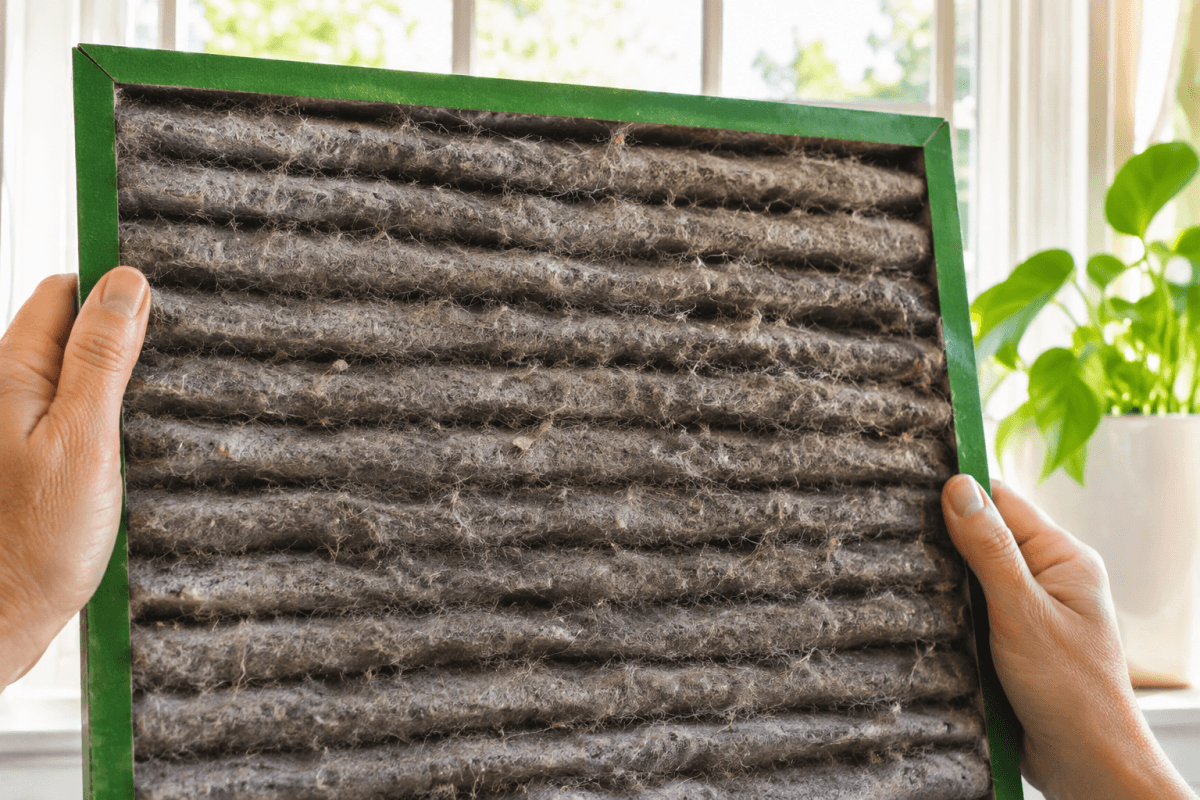
A visibly dirty, gray, or clogged filter should be replaced regardless of how long it's been installed.
Replacing your home's air filter on schedule keeps your HVAC system running efficiently and helps maintain indoor air quality. Filterbuy, a U.S. manufacturer and retailer of residential HVAC air filters, designs filters for a wide range of replacement intervals. This guide breaks down exactly how often to change your filter based on thickness, filter type, MERV rating, and household factors, so you can build a schedule that fits your home.
How Often Should You Change Your HVAC Air Filter?
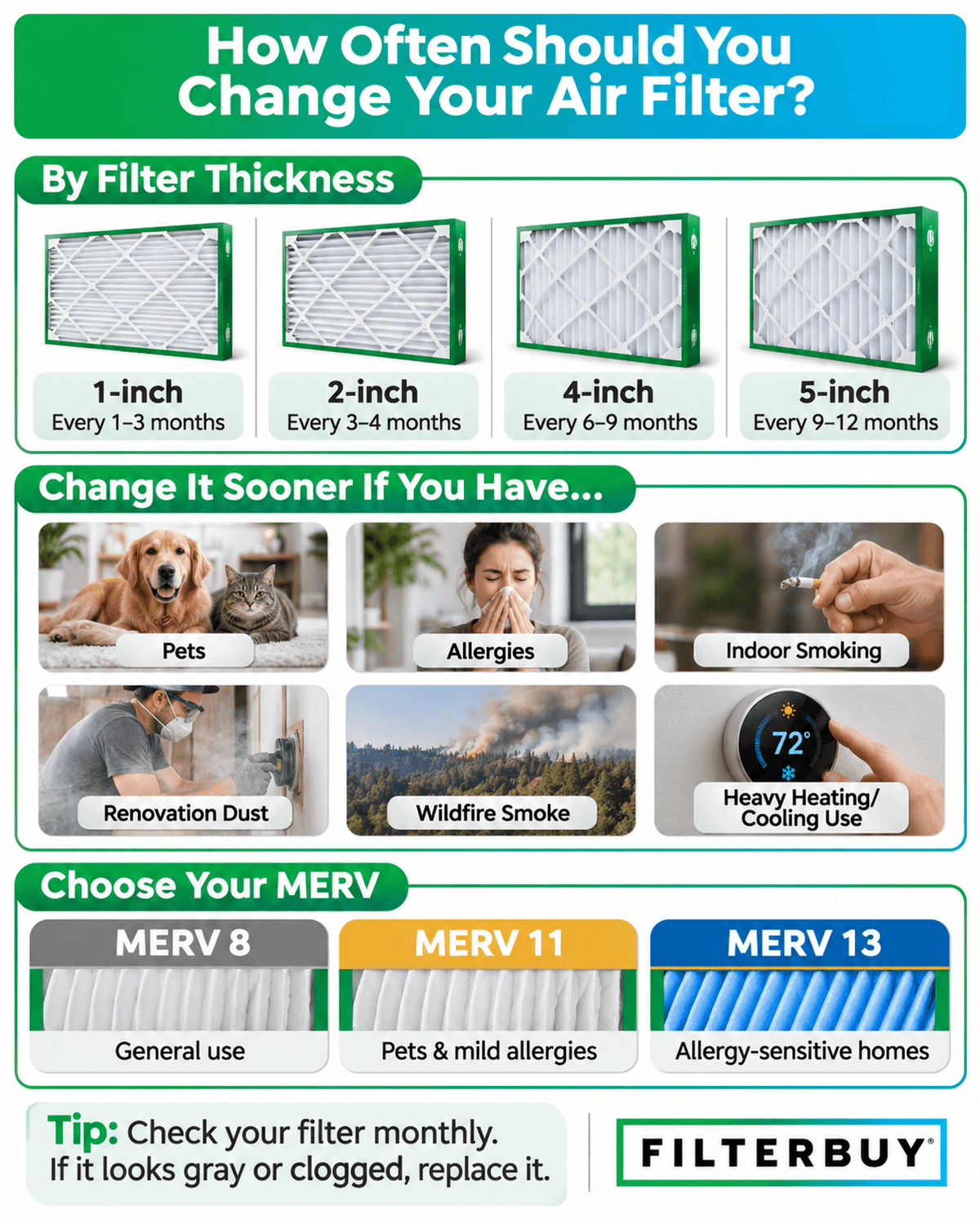
The general rule is simple: thinner filters need more frequent changes, while thicker filters last longer because they have more surface area to trap particles before airflow is restricted.
| Filter Thickness | Typical Replacement Interval |
|---|---|
| 1-inch | Every 1 to 3 months |
| 2-inch | Every 3 to 4 months |
| 4-inch | Every 6 to 9 months |
| 5-inch | Every 9 to 12 months |
1-Inch Filters
A 1-inch filter is the most common size in residential HVAC systems. Because it's thin, it fills up with dust and debris relatively quickly. Most manufacturers, including Filterbuy, recommend checking 1-inch filters monthly and replacing them every 1 to 3 months.
2-Inch Filters
2-inch filters offer slightly more surface area than 1-inch models, which allows them to capture more particles before airflow drops. A 3 to 4 month replacement schedule works for most homes.
4-Inch Filters
4-inch media filters are often installed directly into the ductwork near the furnace or air handler. Their larger surface area typically supports a 6 to 9 month lifespan under normal household conditions.
5-Inch Filters
5-inch filters are the thickest common residential option and can last 9 to 12 months. These are popular in homes looking to minimize how often they need to change filters while still maintaining strong air filtration.
Is a Furnace Filter the Same as an AC Filter?
In most homes, yes. A furnace filter and an AC filter are the same physical filter, because residential heating and cooling systems typically share one blower and one air handler. The filter cleans the air regardless of whether the system is heating or cooling it.
When Furnace and AC Filters Are Different
Some homes with separate heating and cooling equipment, such as a window AC unit paired with a standalone furnace, may use two different filters. If your system has distinct heating and cooling components, check your owner's manual to confirm whether one filter or two are involved.
How Often Should You Change Your Furnace Filter?
Furnace filters should generally follow the same thickness-based schedule listed above. Since furnaces run more continuously during winter, filters in active use may need more frequent checks.
When Should You Change Your Furnace Filter in Winter?
During peak heating season, check your furnace filter monthly. Homes that run the furnace daily for extended periods may need to replace a 1-inch filter closer to the 1 month mark rather than the 3 month mark.
How Often Should You Change Your AC Filter?
AC filters follow the same general intervals as furnace filters, since it's typically the same filter. The main difference is seasonal demand: AC use spikes in summer, which can accelerate filter buildup.
Should You Change Your AC Filter More Often in Summer?
Yes, heavy summer AC use can shorten a filter's effective lifespan. Homes running central air continuously during hot months should check filters every 2 to 4 weeks and replace as needed, even if it hasn't reached the typical 1 to 3 month mark.
What Factors Affect How Often You Should Change Your Air Filter?
No single schedule fits every household. Several factors can shorten or extend how long an air filter lasts.
Pets and Pet Dander
Homes with pets accumulate more fur and dander, which clogs filters faster. The American Lung Association notes that pet dander is a common indoor allergen, and households with pets often need to check filters more frequently.
Allergies and Seasonal Pollen
If a household member has allergies, more frequent filter changes can help manage airborne pollen and dust, especially during high pollen seasons.
Indoor Smoking and Other Particle Sources
Smoking indoors introduces fine particles that clog filters faster than typical household dust.
Home Renovations and Construction Dust
Renovation work generates drywall dust, sawdust, and other fine particles that can quickly overwhelm a filter. Check filters weekly during active construction.
Heavy Heating or Cooling Use
The more your system runs, the more air passes through the filter, meaning homes in extreme climates may need to replace filters more often than the general guidelines suggest.
Wildfire Smoke and Outdoor Air Pollution
According to the EPA, wildfire smoke can significantly increase fine particulate matter indoors. During wildfire events or high outdoor pollution days, check filters more frequently, as they may clog faster while working harder to filter smoke particles.
Does Filter Thickness Affect How Long an Air Filter Lasts?
Yes. Thicker filters have more pleated surface area, which means they can trap more particles before airflow becomes restricted. This is why a 4-inch or 5-inch filter lasts significantly longer than a 1-inch filter of the same MERV rating.
Fiberglass vs. Pleated Air Filters: Which Lasts Longer?
| Filter Type | Typical Lifespan | Filtration Efficiency |
|---|---|---|
| Fiberglass | 30 days | Lower (captures larger particles) |
| Pleated | 60 to 90 days (1-inch) | Higher (captures smaller particles) |
Pleated filters generally last longer and filter more effectively than basic fiberglass filters, due to their folded design and greater surface area.
Does MERV Rating Affect How Often You Change Your Air Filter?
MERV (Minimum Efficiency Reporting Value) rating measures how effectively a filter captures particles, and it can influence replacement frequency. Higher MERV filters capture finer particles, which can mean more buildup over time depending on home conditions.
| MERV Rating | Particle Capture | Best For |
|---|---|---|
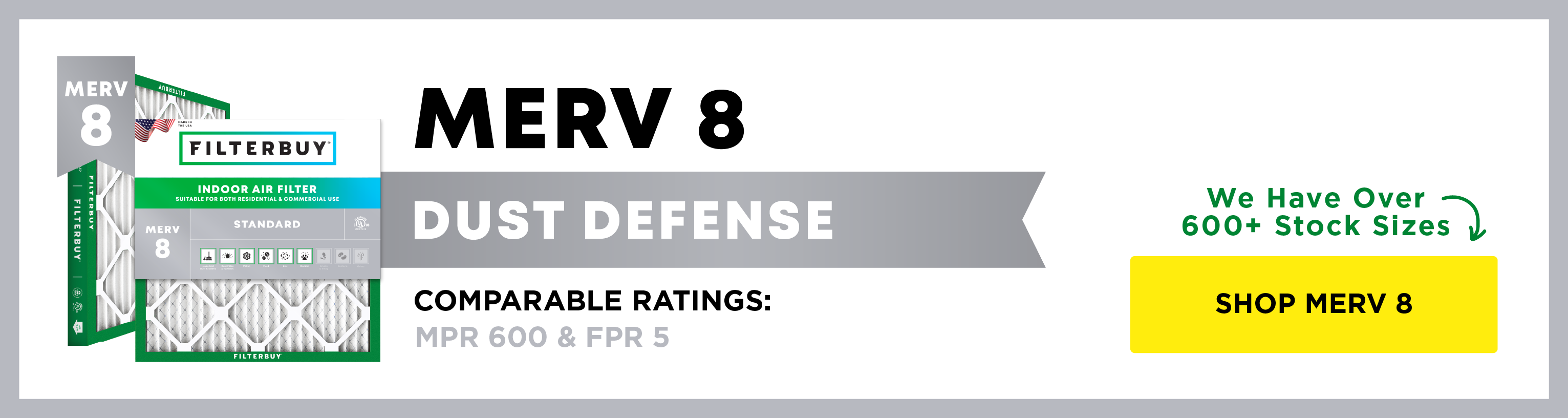
| MERV 8 | Dust, pollen, mold spores | General residential use |
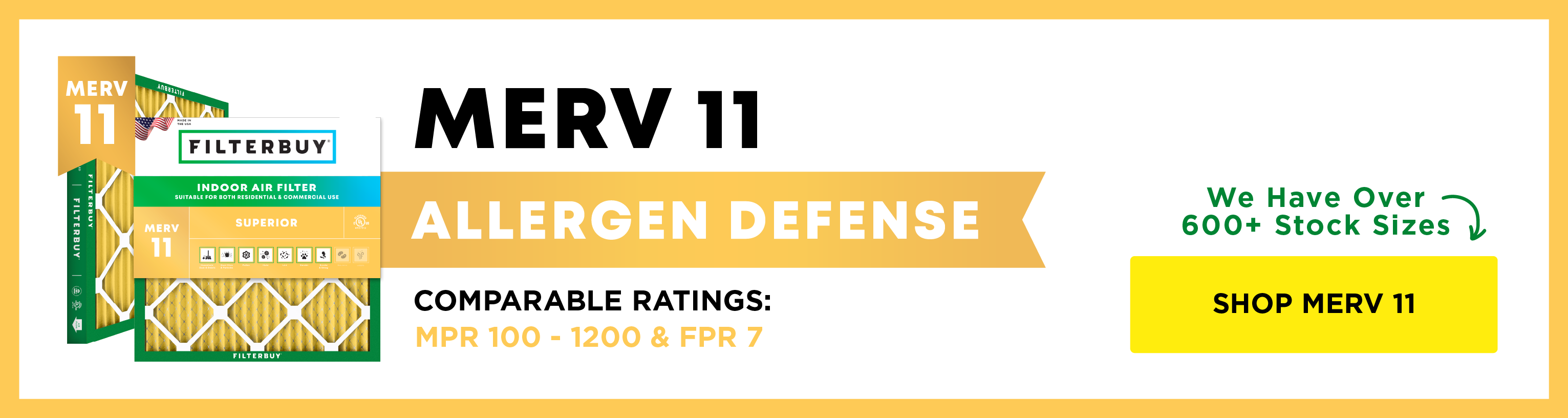
| MERV 11 | Pet dander, smoke, fine dust | Homes with pets or mild allergies |
| MERV 13 | Bacteria, viruses, fine smoke particles | Allergy-sensitive households, higher filtration needs |
Choose MERV 8 if you want reliable general filtration with standard airflow. Choose MERV 11 if pet dander or smoke are ongoing concerns. Choose MERV 13 if a household member has significant allergy or respiratory sensitivity and your HVAC system is rated to handle the added airflow resistance. Always confirm your system can support a higher MERV rating before upgrading, since excessively restrictive filters can strain some HVAC equipment.
How Can You Tell When an Air Filter Needs Changing?
The most reliable method is a visual and physical check, regardless of how much time has passed since installation.
5 Signs You May Need to Replace Your HVAC Filter
The filter looks visibly gray or dust-covered.
Airflow from vents feels weaker than usual.
Energy bills have increased without an obvious cause.
Dust accumulates faster than normal on furniture.
The HVAC system runs longer to reach the thermostat setting.
How to Check if Your Filter Is Dirty
Remove the filter and hold it up to a light source. If light struggles to pass through, the filter is clogged and ready for replacement.
How to Find the Best Air Filter Replacement Schedule for Your Home
Identify your filter's thickness and MERV rating.
Check the filter monthly for the first few months to observe how quickly it accumulates dust.
Factor in pets, allergies, smoking, or renovation activity.
Adjust your baseline schedule up or down based on what you observe.
Set a recurring reminder, or use a service like Filterbuy's Auto Delivery to stay on schedule automatically.
What Happens if You Don't Change Your HVAC Filter?
A neglected filter doesn't just reduce air quality. It can also cause lasting damage to your HVAC system.
Reduced Airflow
A clogged filter restricts airflow, forcing your system to work harder to heat or cool your home.
Increased Energy Use
According to ENERGY STAR, a dirty filter can make an HVAC system use more energy to maintain comfortable temperatures.
Cooling Coil Problems
Restricted airflow can cause the evaporator coil to freeze, reducing cooling performance and potentially leading to costly repairs.
Furnace Overheating
A clogged filter can cause a furnace to overheat and shut down as a safety precaution, interrupting heating when you need it most.
Additional HVAC Maintenance Problems
Prolonged neglect of filter changes often leads to a buildup of dust throughout the system, increasing wear on components and shortening equipment lifespan.
How Often Should You Change an Air Filter in an Apartment?
Apartment HVAC systems often use smaller 1-inch filters, so the standard 1 to 3 month interval generally applies. However, shared ventilation systems or older buildings may accumulate dust faster, so checking monthly is a good habit for apartment dwellers as well.
Make Air Filter Replacement Easier With Filterbuy
Keeping track of filter sizes, MERV ratings, and replacement dates can be tedious. Filterbuy offers a wide selection of residential air filters across common sizes and MERV ratings, making it easy to find the exact replacement your system needs. For households that want one less thing to remember, Filterbuy's Auto Delivery service ships new filters straight to your door on a schedule that matches your home's needs, so you never have to guess when it's time for a change.
Keep Your HVAC System Running With the Right Replacement Schedule
There's no single universal number that applies to every home. The right air filter replacement schedule depends on filter thickness, MERV rating, and factors unique to your household, from pets to seasonal pollen to how hard your HVAC system works. Checking your filter monthly is the simplest way to catch problems before they affect airflow or air quality.
Once you've identified the right interval for your home, the easiest way to stay consistent is to remove the guesswork entirely. Browse Filterbuy's selection of air filters to find the right size and MERV rating for your system, or set up Auto Delivery to have fresh filters arrive right when you need them.

Frequently Asked Questions
How Often Should I Change A 1-Inch Air Filter?
Most 1-inch filters should be replaced every 1 to 3 months, depending on household factors like pets and allergies.
Can I Use A Higher MERV Filter Than My HVAC System Is Rated For?
Not always. A MERV rating that's too high for your system can restrict airflow and strain your equipment. Check your HVAC manufacturer's recommendations first.
Do Thicker Filters Really Last Longer Than Thinner Ones?
Yes. Thicker filters, such as 4-inch or 5-inch models, have more surface area and generally last 6 to 12 months compared to 1 to 3 months for 1-inch filters.
Is It Bad To Go Longer Than 3 Months Without Changing A Filter?
It depends on the filter type and household conditions. A visibly dirty filter should always be replaced, even if it hasn't reached the typical interval.
Does Filter Type Affect Indoor Air Quality?
Yes. Pleated filters generally capture more particles than fiberglass filters, which can support better indoor air quality.
Should I Change My Filter More Often If I Have Pets?
Yes. Pet dander and fur accumulate quickly, so homes with pets often need more frequent filter checks and changes.
Does Wildfire Smoke Affect How Often I Should Change My Filter?
Yes. According to the EPA, wildfire smoke increases fine particulate matter, which can clog filters faster during smoke events.
What's The Difference Between A Furnace Filter And An AC Filter?
In most residential systems, they are the same filter, since heating and cooling share one air handler.
How Do I Know What MERV Rating I Need?
Choose MERV 8 for general use, MERV 11 if pets or mild allergies are a concern, and MERV 13 for higher filtration needs, provided your system supports it.
Can A Dirty Filter Increase My Energy Bill?
Yes. According to ENERGY STAR, restricted airflow from a dirty filter can cause your HVAC system to use more energy.
How Often Should Apartment Residents Change Their Filter?
Most apartments use 1-inch filters, so the standard 1 to 3 month schedule generally applies, with monthly checks recommended.
What's The Easiest Way To Stay On Top Of Filter Changes?
Setting a recurring reminder or using a subscription service like Filterbuy's Auto Delivery helps ensure filters are replaced on time without manual tracking.
MERV 11 filters step up the protection and are great for homes with pets or residents who suffer from allergies. They catch smaller particles while still maintaining decent airflow.
MERV 13 filters, which we sell at Filterbuy, provide top-tier filtration, capturing bacteria, smoke, and fine particles. These are recommended for health-conscious households or areas with poor outdoor air quality, but make sure your system can handle the increased resistance.