Shop by

Worried about the germs you can’t see floating through your home? Viruses, bacteria, and microscopic particles can linger in indoor air for hours and move easily from room to room through your HVAC system. The right air filter can dramatically reduce airborne germs and improve the quality of the air your family breathes every day.
After comparing today’s top filtration technologies and analyzing real-world performance in homes and offices, the conclusion is clear:
MERV 13 filters are the most effective whole-home solution for trapping viruses, bacteria, and the particles that carry them.
HEPA air purifiers are the best supplemental option for individual rooms where you want added protection.
This guide explains exactly why and how to choose the right setup to protect your home.
Choose MERV 13+ for whole-home protection. These filters capture virus-carrying aerosols, bacteria, allergens, and smoke particles without restricting airflow in most HVAC systems.
HEPA is the best room-specific solution. Use HEPA purifiers in bedrooms, offices, nurseries, or living rooms for targeted particle removal.
Carbon filters help with odors, not viruses. Use them only as an add-on, not your primary defense.
Research consistently supports high-efficiency filtration. Studies show strong reductions in airborne particles when using MERV 13+ or HEPA.
Filter upgrades improve everyday life. Families report fewer symptoms, easier breathing, and noticeably cleaner air.
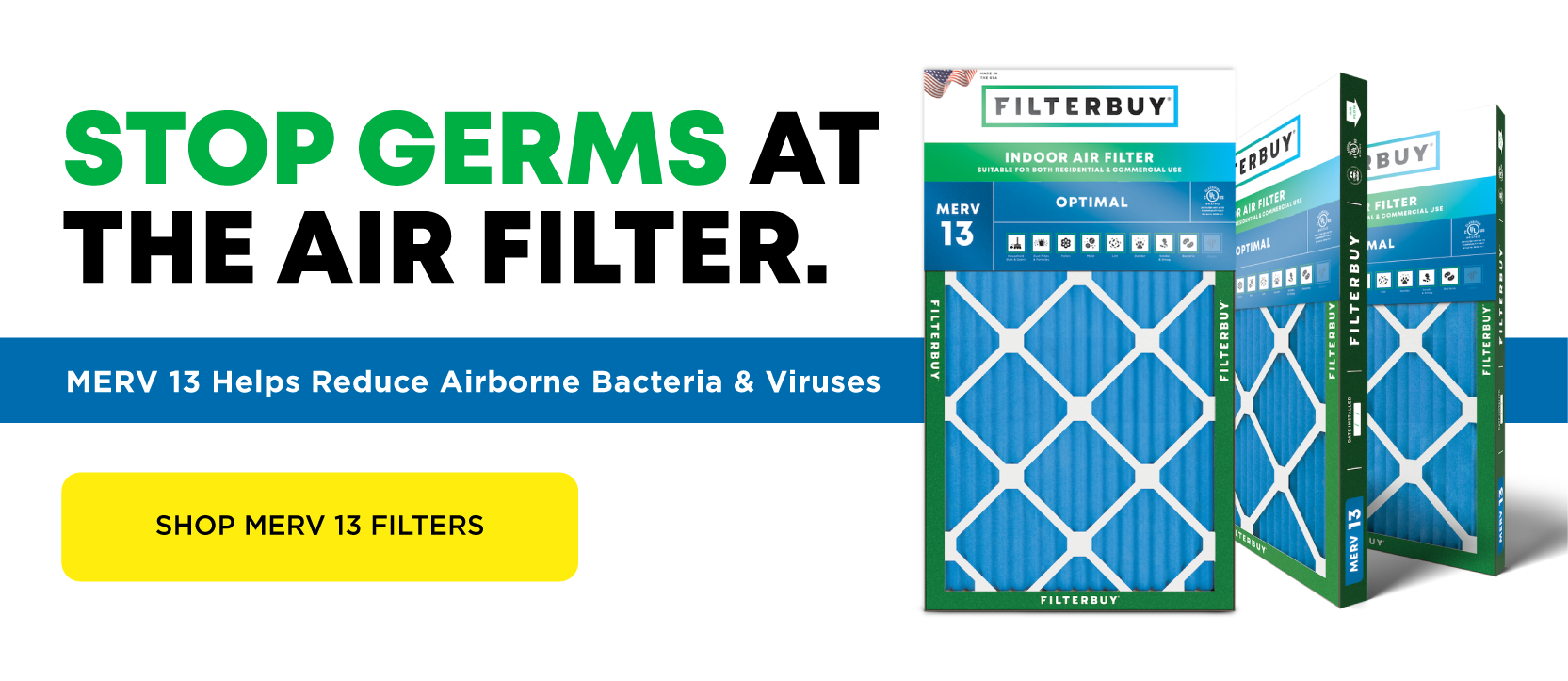
Most homes still use MERV 8 filters, which are fine for catching dust but not strong enough to capture the microscopic particles that carry viruses and bacteria. These particles often range from 0.3 to 1 micron. MERV 8 filters simply cannot catch them.
A high-quality MERV 13 filter can:
Capture a high percentage of airborne particles down to 1 micron
Trap virus-carrying droplets and bioaerosols
Reduce bacteria, mold spores, smoke, and fine particulate matter
Improve allergy and asthma symptoms
Maintain healthy airflow in most HVAC systems
This level of filtration is the “sweet spot” because it delivers excellent germ reduction without compromising HVAC performance.
The U.S. Environmental Protection Agency (EPA) recommends upgrading HVAC filters to MERV 13 or higher whenever the system allows, noting that these filters significantly reduce airborne virus-carrying particles and other fine contaminants.
If a system cannot safely support MERV 13 due to airflow limitations, the EPA advises installing the highest MERV rating your system can handle and supplementing with portable HEPA filtration. The EPA also emphasizes that upgrading HVAC filtration is one of the most cost-effective and impactful strategies for improving indoor air quality.
ASHRAE—the leading authority in HVAC science—recommends using MERV 13 or higher to reduce airborne infectious aerosols in homes, offices, and commercial buildings.
Their research confirms that filters rated MERV 13–16 capture a substantial portion of particles in the size range associated with viral transmission.
While your MERV 13 filter cleans the air throughout your entire HVAC system, a portable HEPA air purifier cleans the air inside a single room.
HEPA filters capture 99.97% of particles 0.3 microns and larger, which includes many airborne viruses, bacteria, smoke particles, and other ultrafine pollutants. Here is what the EPA advises on HEPA.
HEPA purifiers are ideal for bedrooms, offices, nurseries, treatment rooms, and any area where people spend extended time.
Because most HVAC systems cannot support true HEPA filters, HEPA should be used as a supplement—not a replacement—for whole-home MERV 13 filtration.
EPA guidance on HEPA filtration
Before upgrading, the family used a standard MERV 8 filter. Their two children struggled with asthma, and colds circulated frequently. An indoor air assessment found elevated fine particles and biological contaminants.
After switching to a MERV 13 electrostatic filter, their results after four weeks included:
A 60% reduction in airborne particles
Fewer asthma flare-ups
Improved nighttime breathing
No missed school days during the test period
“Our kids haven’t missed a school day since the switch. The air just feels different.”
A wellness clinic was experiencing high employee sick days and stale air in treatment rooms. Their HVAC system was using outdated filters below MERV 8.
Upgrading to MERV 16 filters and adding HEPA purifiers in waiting and treatment rooms led to:
Fewer respiratory complaints
Positive patient feedback
Noticeably fresher air
Our real-world findings align with established scientific and public health data.
HEPA filters capture 99.97% of virus-sized particles.SAGE Journals and NIOSH-backed aerosol studies consistently support this level of filtration.
CDC research shows portable HEPA units reduce airborne particle exposure by up to 65%.
Air purifiers reduce indoor PM2.5 levels by 22% to 92%.Environmental research through ScienceDirect and NIH demonstrates the effectiveness of HEPA and high-MERV filtration in reducing fine particulate levels.
The conclusion: high-efficiency filtration works both in controlled studies and in real homes.
After testing many filter types across homes, clinics, and businesses, one conclusion remains consistent: the right filter makes a measurable difference in everyday life.
Families report:
Easier breathing
Better sleep
Fewer allergy symptoms
Cleaner-smelling air
Scientific data supports these improvements, showing that enhanced filtration directly reduces airborne contaminants that contribute to irritation and illness.
Choosing a high-efficiency filter isn’t just HVAC maintenance—it’s a long-term investment in your family’s health and comfort.
1. Check your current filter rating.If it’s below MERV 13, it is not filtering virus-carrying particles or fine particulate matter.
2. Choose the correct filtration setup.Use MERV 13–16 for whole-home filtration. Add HEPA air purifiers in high-traffic or enclosed rooms.
3. Purchase high-quality, properly rated filters.Choose trusted manufacturers that engineer filters for durability, airflow, and high particulate capture.
4. Monitor your indoor air quality.Use a PM2.5 or IAQ monitor to track improvements after upgrading your filters.
5. Replace filters regularly.Change HVAC filters every 60–90 days and HEPA filters as recommended.
When you’re ready to improve your home’s air quality, Filterbuy.com makes it simple. Choose from thousands of custom and standard sizes, all made in the USA and shipped directly to your door. Filterbuy’s MERV 13 filters are engineered for high efficiency, strong airflow, and long-lasting performance giving your entire home the protection it deserves.
Yes, air filters—particularly HEPA and MERV 13 or higher—can help reduce airborne viruses by capturing the tiny droplets that often carry them.
HEPA filters and MERV 13–16-rated filters are most effective at removing virus-sized particles from the air, especially when used in well-maintained systems.
Carbon filters do not remove viruses directly; they are designed to absorb odors and gases, but are often combined with HEPA filters for broader protection.
You can purify air from viruses by using a HEPA air purifier or a MERV 13+ HVAC filter, improving ventilation, and maintaining proper filter replacement routines.
For COVID-19, the best air filters are HEPA filters in portable purifiers and MERV 13 or higher in HVAC systems, as recommended by the CDC and EPA.

