
Dust Storms and Air Quality: What a Haboob Does to Your AQI
September 22, 2026
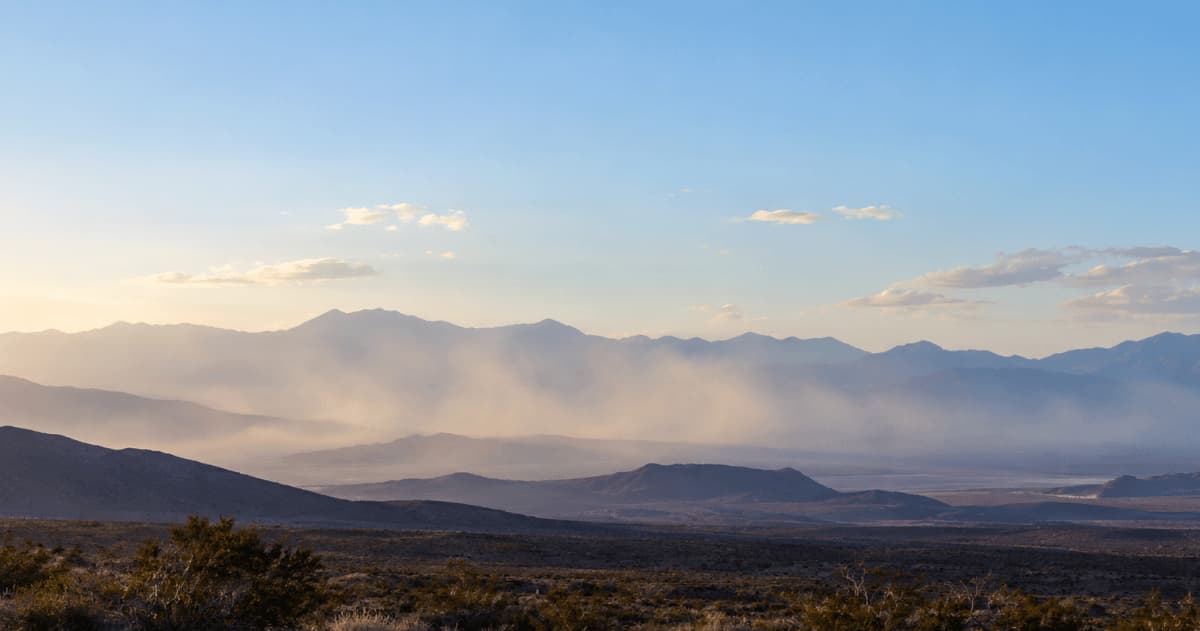
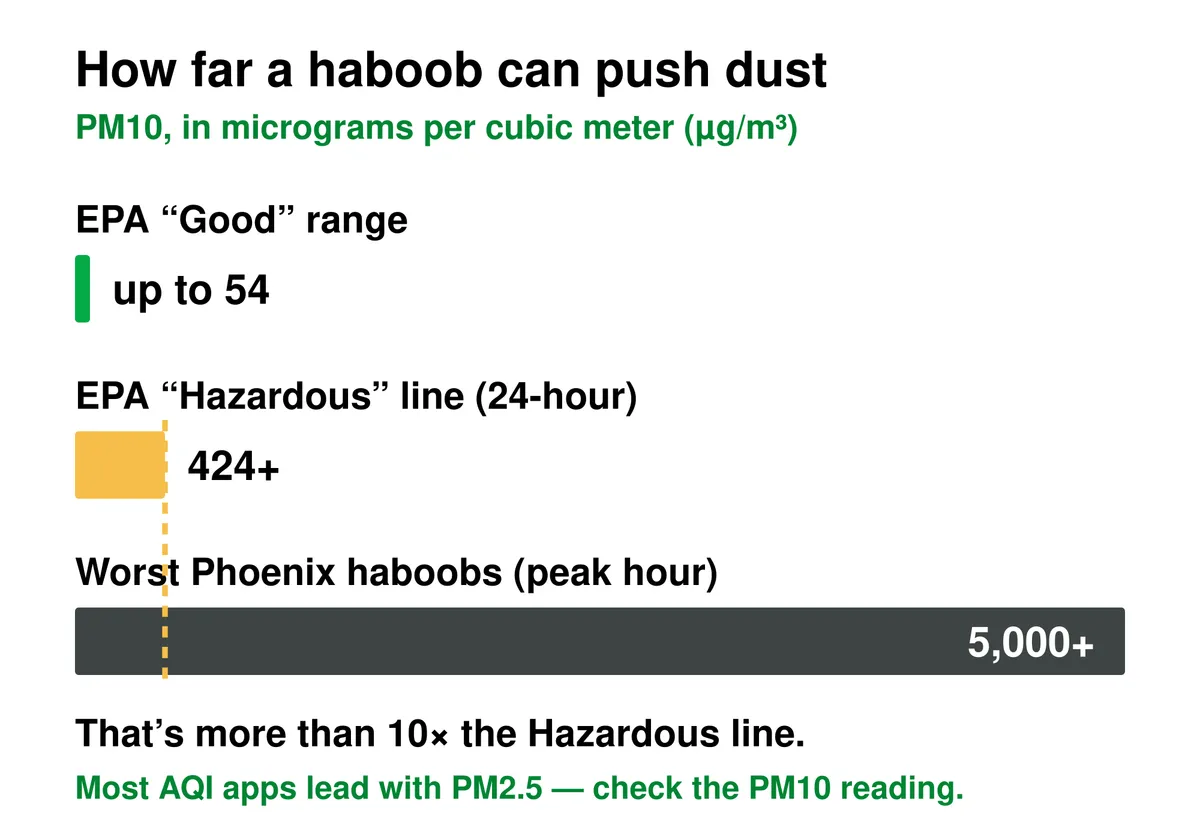
A haboob can push coarse dust (PM10) from the EPA’s “Good” range into the thousands within an hour, far past the “Hazardous” line. Most phone AQI apps lead with PM2.5, so they can read “Good” in the middle of a dust storm.
Once the storm passes, check your HVAC filter within 48 hours, because dust can clog it fast. Take the quick quiz below to find the right filter for your home.
Answer a few quick questions and we’ll match you to the right filter for your home.
Already know your size? Choose from 600+ sizes made in the USA, with free shipping.
Shop Air FiltersTL;DR
A haboob is a wall of dust pushed out ahead of a collapsing thunderstorm. Within minutes, it can push coarse-particle (PM10) pollution far past the EPA's "Hazardous" threshold. Most phone AQI apps lead with PM2.5, so they understate dust. If a storm is coming, get off the road and close up the house, including anything that pulls in outdoor air. Once it passes, check your HVAC filter, because a single storm can clog it quickly.
Key Takeaways
A haboob is a thunderstorm-driven dust storm that can loft dust roughly 5,000 feet high.
Haboob pollution is mostly PM10. The EPA calls 24-hour PM10 above 424 µg/m³ Hazardous, and Phoenix's worst haboobs have topped 5,000 µg/m³ in a single hour.
Many air quality apps are built around PM2.5, so they can show "Good" in the middle of a dust storm. Watch PM10 and weather alerts instead.
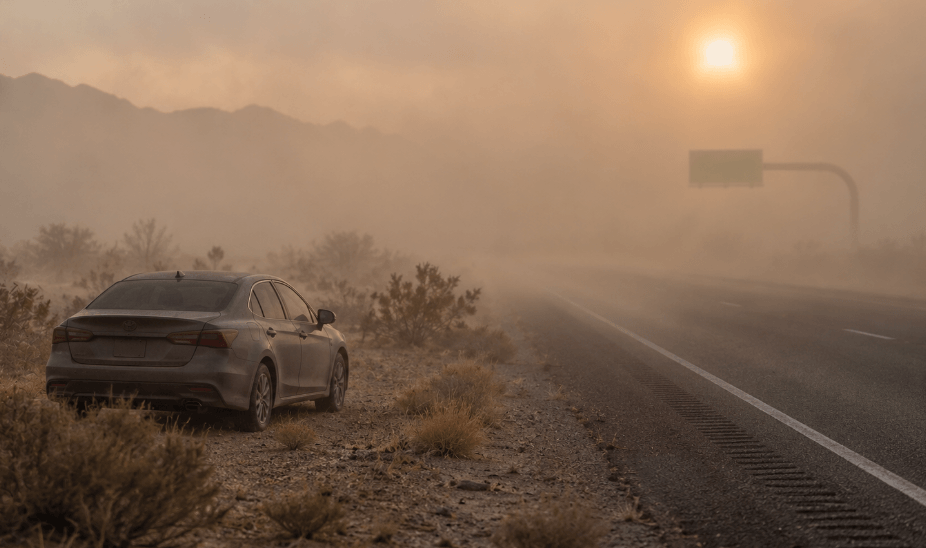
Never drive into a dust wall. If one catches you, pull fully off the pavement and turn off all lights until it passes.
Filterbuy's rule of thumb: with dust, filter condition matters as much as MERV rating. Check your HVAC filter within 48 hours of a haboob.
What Does a Haboob Do to Your AQI?
A haboob can turn clean desert air into some of the dirtiest in the country within an hour. As the dust wall rolls in, PM10 can climb from the EPA's "Good" range (0–54 µg/m³) into the thousands, and it doesn't clear right away. The morning after an August 2026 Phoenix storm, most Valley monitors still read above 200 µg/m³, when a normal reading is below 50.
We see the aftermath firsthand. Filterbuy has built air filters in the U.S. since 2013, and the filters Arizona customers send back to us show what an AQI app can miss: filters from the Phoenix–Tucson corridor carry 30–40% heavier particulate loading than filters from humid climates.
What Is a Haboob?
A haboob is an intense dust storm. A collapsing thunderstorm's cold air hits the ground and spreads out, lifting dust into a wall that can stretch for miles. The name comes from an Arabic word for wind.
In the U.S., haboobs are most closely tied to Arizona's monsoon season, officially June 15 to September 30. As the National Weather Service points out, they often strike with little warning.
How Bad Can Haboob Air Quality Get?
In Phoenix's worst haboobs, peak hourly PM10 has topped 5,000 µg/m³, more than 10 times the level the EPA's 24-hour scale labels Hazardous. Here's how the scale breaks down:
Minimum capture efficiency by particle size under ANSI/ASHRAE Standard 52.2, as summarized by the U.S. EPA. Higher MERV filters add airflow resistance, so confirm your system is compatible.
In 2026, Arizona State University and regional partners launched the PHX-DUST Scale, a peer-reviewed 1–5 ranking. A Category 5 needs a peak hourly PM10 of at least 5,000 µg/m³. Phoenix saw two Category 5 storms in one week in early August 2026, only the fifth and sixth on record. The first lingered a record 16 hours.
Why Your AQI App May Say "Good" During a Dust Storm
Most consumer apps and low-cost sensors are built around PM2.5, the fine particles in smoke and exhaust. Desert dust, on the other hand, is mostly coarser PM10 (see PM10 vs. PM2.5). A peer-reviewed study of PurpleAir, a popular low-cost sensor network, found that even EPA-corrected readings underestimated dust by a factor of 5–6. Fox Weather forecasters flagged the same gap in August 2026.
Filterbuy publishes live AQI maps, so we plan around this blind spot. We suggest two habits:
Look at the PM10 reading, not only the color. On Filterbuy's live AQI map or Phoenix AQI map, check which pollutant is driving the number. Our guide explains why PurpleAir and AirNow readings disagree.
Go by official alerts, not app colors. A National Weather Service Dust Advisory or Dust Storm Warning is your cue to act. Valley residents can also sign up for Maricopa County air quality alerts.
Dust Storm Health Effects: Who Is Most at Risk?
Dust can cause anything from sore throats to serious heart and lung strain. The EPA notes that particles smaller than 10 micrometers can be inhaled, and particle pollution is linked to asthma attacks and heart attacks. After the August 2026 storm, an ASU emergency physician named the people most at risk: anyone with lung or heart disease, young children, older adults, and people who are immunosuppressed. Keep rescue medications close, and get emergency care for severe breathing trouble or chest pain.
Valley fever (coccidioidomycosis) is a fungal lung infection caused by breathing in spores of Coccidioides, a fungus that lives in desert soil. Its flu-like symptoms usually show up one to three weeks after exposure. Scientists debate how much one storm raises the risk (see this 2021 GeoHealth study and a 2022 response). If a cough or fever lingers after heavy dust exposure, ask your doctor about testing.
Dust Storm Safety: What to Do If You're Driving
Never drive into a dust storm. Visibility can drop to zero in seconds. In 2013, a dust storm on Interstate 10 near Picacho Peak triggered a 19-vehicle collision that killed three people.
If dust catches you driving, follow the Arizona Department of Transportation's Pull Aside, Stay Alive steps:
Check the traffic around you and start slowing down.
Pull off as soon as you can, all the way off the pavement. Never stop in a travel or emergency lane.
Turn off all your lights, including hazard flashers, so drivers behind you don't follow your taillights and hit you.
Set the parking brake and take your foot off the brake pedal.
Stay buckled in until the storm passes.
How to Protect Your Indoor Air During a Haboob
When a dust storm warning goes out, it's time to seal up the house:
Close everything. Shut all windows and doors, including pet doors and the garage.
Stop pulling in outside air. Turn off evaporative (swamp) coolers and whole-house fans, since both draw dust straight inside. Close any fresh-air intake too.
Keep the HVAC fan running. Set the thermostat fan to "On" so your filter keeps catching whatever slips in.
Wait before airing out. Skip sweeping and leaf blowing until the air settles, and open up once official readings drop.
Dust Storm vs. Wildfire Smoke: What Changes for Your Home
Dust and smoke stress your home in different ways:
Sources: Jaffe et al. (2023); U.S. EPA; ASU PHX-DUST Scale; Filterbuy.
For smoke, see our guides to wildfire smoke and the AQI and what to do during an air quality alert.
The Post-Haboob Filter Check
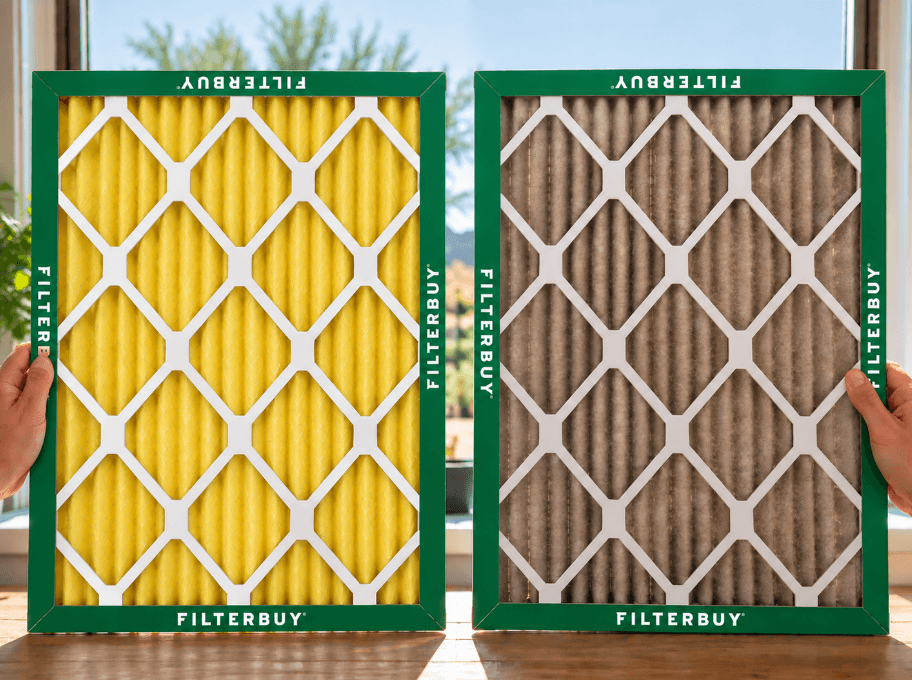
Check your HVAC air filter within 24 to 48 hours of a haboob. Since dust is a loading problem, the real concern is how much airflow your filter has left. Here's how:
Look at it. Hold the filter up to a light. If no light comes through, or the intake side is coated tan or gray, replace it.
Check the fit. Filterbuy cuts standard filters about half an inch under their nominal size so they slide in easily. Gaps around the frame, or dust streaks on the downstream side, mean dust is getting around the filter.
Check the date. If it's due within a few weeks anyway, swap it now.
Adjust your schedule. During monsoon season, check monthly. Our guide on changing your filter when AQI is high covers the timing.
From the author: Michelle Wan, Filterbuy’s Brand Manager, would rather you "run MERV 11 on a real schedule than MERV 13 for eight months." Her easiest tracking habit: "Write the install date on the cardboard frame in marker."
Which MERV rating is right for a dusty home? Any of Filterbuy's three tiers will catch haboob dust, so start with the standard choice and step up for what else your home deals with. MERV (Minimum Efficiency Reporting Value) is the industry scale for how well a filter traps airborne particles; higher means finer.
MPR and FPR are third-party rating systems, shown for comparison only.
Before you choose, check your HVAC manual for the MERV ratings your system is built for, the same quick fit check as confirming your size. Then see our MERV rating guide, or shop MERV 13 air filters if your home also deals with smoke.
Pro tip: Keep a spare on hand, or let Filterbuy air filter auto-delivery take care of it.
Beyond the HVAC filter. After a storm, also check:
Your car's cabin air filter. Check it after a big storm (see our cabin air filter guide).
Your outdoor AC condenser. With the power off, gently hose dust off the fins, or book a tune-up.
Supporting Statistics
232 dust storm traffic deaths, not 10. NOAA researchers found 232 U.S. traffic deaths linked to dust storms from 2007 to 2017, while official datasets recorded only 10.
Source: NOAA Research, "How deadly are dust storms?"
7.4% more deaths two days after a dust storm. An EPA-led study of U.S. dust storms from 1993 to 2005 tied storm days to a 7.4% rise in non-accidental deaths two days later.
Source: Environmental Health Perspectives, via the National Institutes of Health (PMC)
About 90% of our time is spent indoors. Indoors, some pollutants run 2 to 5 times higher than outside.
Source: U.S. EPA, Report on the Environment: Indoor Air Quality
Dust Storm FAQs
How long does bad air quality last after a haboob?
The dust wall usually passes in under an hour, but PM10 can stay high for hours afterward. One August 2026 storm lasted 16 hours.
Should I wear a mask during a dust storm?
Stay indoors if you can. Outside, a well-fitted N95 respirator cuts the dust you breathe, and the CDC lists avoiding dusty air as a key Valley fever precaution.
What's the difference between a haboob and a dust storm?
A haboob is one type of dust storm. It forms from a thunderstorm's outflow and arrives as a wall of dust, while other dust storms come from widespread winds, such as a cold front.
Is it safe to exercise outside after a haboob?
Wait until PM10 readings fall back to Good or Moderate. At Unhealthy for Sensitive Groups, the EPA's AQI guidance advises people with heart or lung disease, children, and older adults to cut back on long or heavy outdoor exertion.
How often should I change my air filter in Arizona?
During monsoon season, check it monthly and after every major dust storm, and replace it whenever it looks loaded. See our guide to changing filters when AQI is high.
Glossary
Haboob: An intense dust storm driven by a collapsing thunderstorm's outflow.
Air Quality Index (AQI): The EPA's color-coded 0–500 air pollution scale.
PM10: Particulate matter 10 micrometers or smaller in diameter, the main pollutant in dust storms.
PM2.5: Fine particulate matter 2.5 micrometers or smaller, mostly from smoke and combustion.
PHX-DUST Scale: Arizona State University's 1–5 severity scale for Phoenix dust storms.
Dust Storm Warning: A National Weather Service alert issued when a dust storm cuts visibility to a quarter mile or less.
Valley fever (coccidioidomycosis): A lung infection caused by breathing in spores of the soil fungus Coccidioides.
MERV: Minimum Efficiency Reporting Value, the ASHRAE 52.2 rating of how well a filter captures 0.3–10 micrometer particles.
Breathe Easier Before the Next Storm
Before the next dust advisory, check your local AQI now. Then find your exact filter size among 600+ sizes Filterbuy makes in the USA and ships free.
About the Author
Michelle Wan is Filterbuy's Brand Manager and Air Quality Writer. She works directly with Filterbuy's U.S. manufacturing team in Alabama, Florida, Pennsylvania, and Utah, and holds a B.A. from the University of California, Santa Cruz. Technically reviewed by David Clark, Licensed HVAC Technician.