
When A Neighbor's Wood Smoke Is In Your House: Rules And Remedies
September 24, 2026
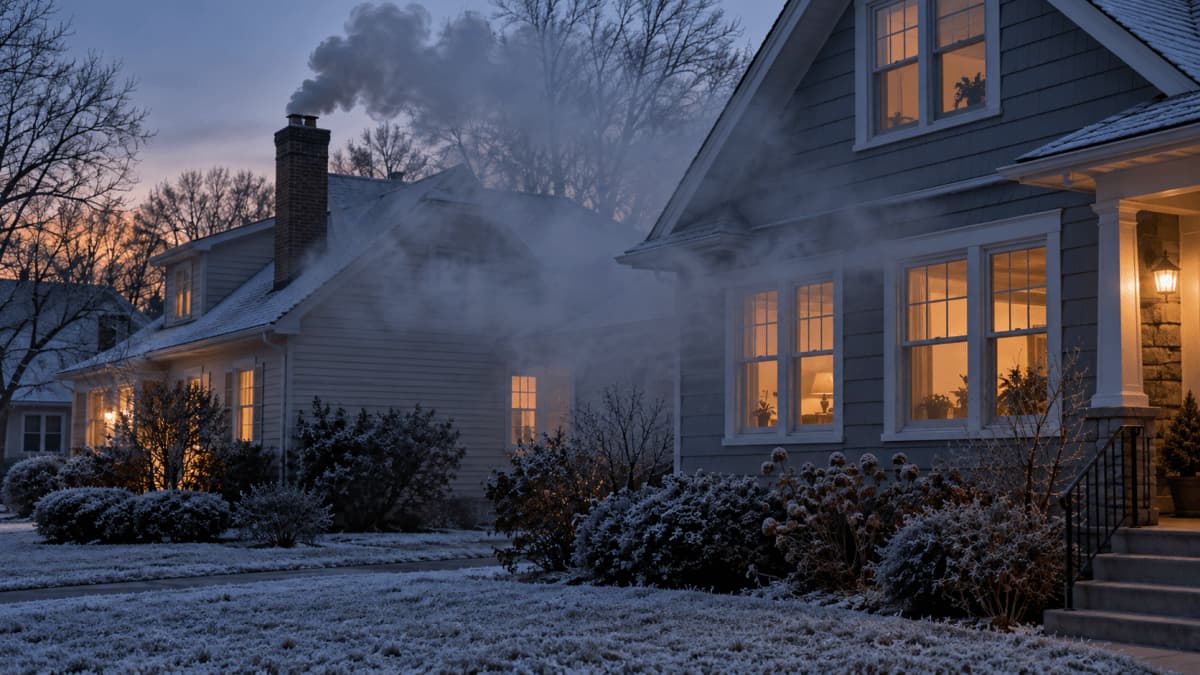
What Can You Do When A Neighbor's Wood Smoke Gets Into Your House?
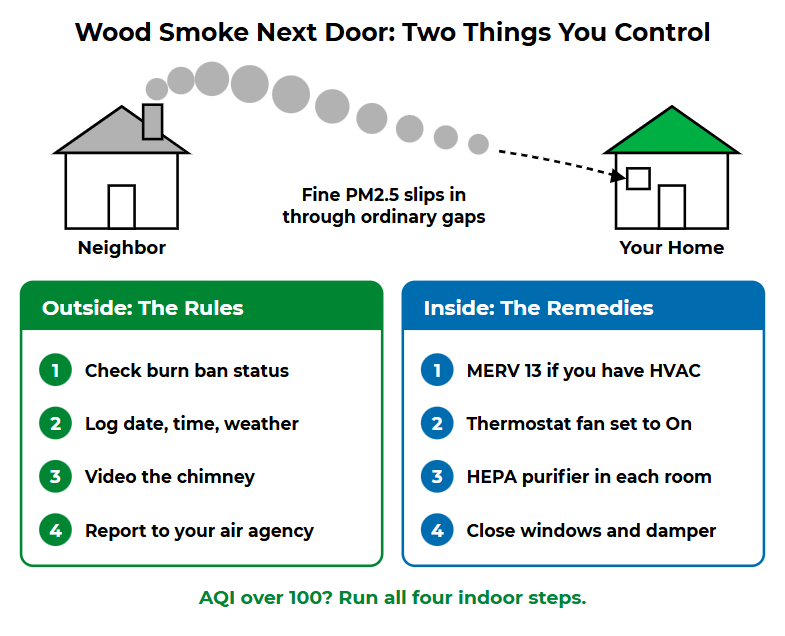
Log each episode and report it to your local air agency, then capture the fine smoke particles that get inside. Once the AQI is over 100, Filterbuy's rule is to switch to MERV 13 if you have an HVAC system and run a HEPA air purifier in each room. Check your system manual as you would for any filter. Not sure which filter fits your system? The quick quiz below will match you.
Answer a few quick questions and we'll match you to the right filter for your home.
By Michelle Wan, Brand Manager and Air Quality Writer | Reviewed by David Clark, Licensed HVAC Technician | Published September 24, 2026 | Updated September 24, 2026
The smell shows up after dinner. A neighbor lights the wood stove and the evening air goes still. By bedtime, your living room smells like a campfire you never built. That smoke carries PM2.5, the fine particles in smoke, and a closed window doesn't keep them out. Here is how we handle it at Filterbuy, from reading local burn rules to filtering what still gets in.
TL;DR
Residential wood burning is a leading U.S. source of winter air pollution, and its smoke drifts indoors through ordinary air leaks. Many air agencies restrict burning during bans and limit dense chimney smoke year-round, so a dated log helps them act. When the AQI is over 100, switch to a MERV 13 filter if you have an HVAC system, and run HEPA air purifiers in each room.
Key Takeaways
A neighbor's wood smoke is mostly PM2.5, fine particles that slip through gaps in a closed house.
Filterbuy's take: log the smoke before you call, because agencies act on what their inspectors see.
Indoors, pair an EPA-recommended MERV 13 HVAC filter with HEPA air purifiers in each room, each sized by smoke CADR.
Why Does A Neighbor's Wood Smoke Get Inside Your House?
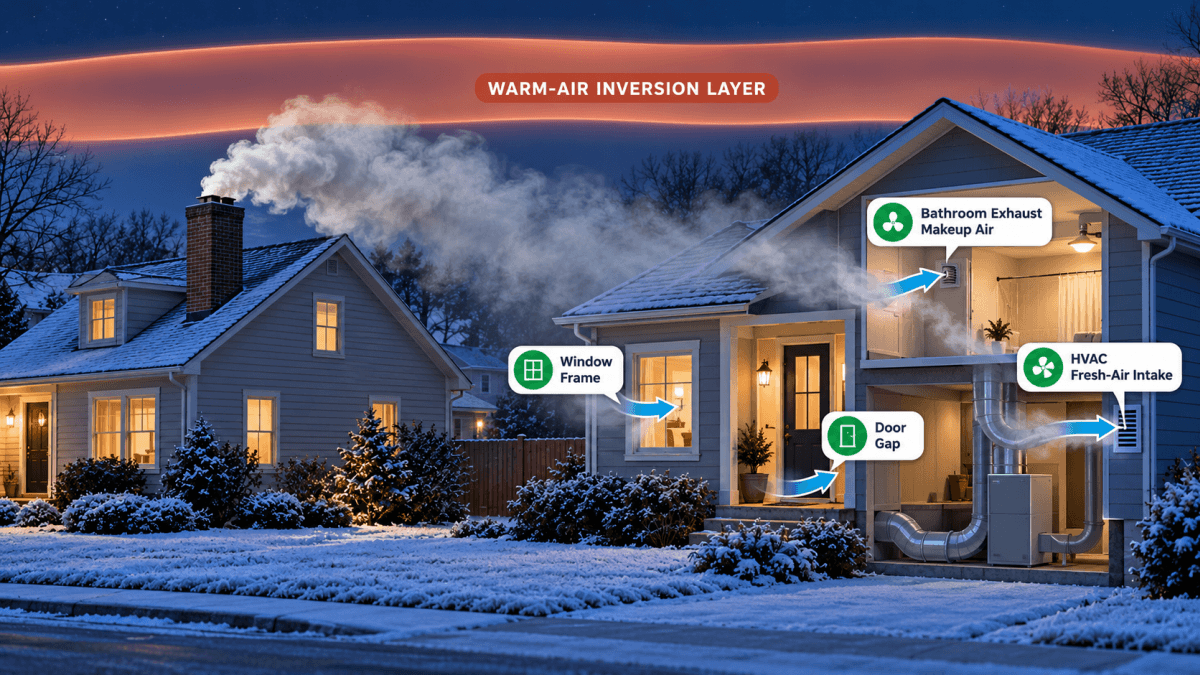
A neighbor's wood smoke gets inside because every house trades air with the outdoors. Fine smoke particles ride in through gaps around windows and doors and through the makeup air exhaust fans pull in. On cold, calm nights, a temperature inversion acts like a lid, holding chimney smoke near the ground, right where your home draws its air.
The EPA's Burn Wise facts and figures on residential wood smoke show that home wood smoke puts out more PM2.5 than on-road and non-road vehicles combined, making it the second-largest national source of winter PM2.5 emissions. The EPA archived Burn Wise in 2025.
Burning wood yourself? Filterbuy's guide to fireplace season and indoor air covers the burning side.
Is Residential Wood Smoke A Health Concern?
Yes, residential wood smoke is a health concern. The American Lung Association's guidance on residential wood burning links it to coughing, wheezing, asthma attacks, and heart attacks. It also notes that your indoor air can suffer when neighbors burn.
Children, older adults, and people with lung disease, heart disease, or diabetes face higher risk. If someone at home has asthma or COPD, ask their doctor about a plan for smoky nights.
What Do Burn Ban Rules And Wood Smoke Laws Actually Cover?
Burn ban rules are set locally, usually by a county or regional air agency, so what applies depends on where you live. Table 1 sorts out the common types, but confirm with your agency before assuming a violation.
In Washington, the Puget Sound Clean Air Agency's wood burning and the law page says chimney smoke cannot exceed 20 percent opacity for six consecutive minutes in any hour, and it treats smoke that affects neighbors as a nuisance subject to enforcement. A Stage 1 burn ban shuts down fireplaces and uncertified stoves, and Stage 2 adds certified and pellet stoves.
What Local Wood Smoke Rules Typically Cover
How Do You Document Wood Smoke And File A Neighbor Complaint?
Start with a record, then file with the agency that enforces wood smoke rules where you live, usually a county or regional air district.
Check the burn ban status. Burning during an active ban is the easiest case to enforce.
Log each episode. Write down the date, times, weather, and where the smoke entered your home.
Record the chimney. A timestamped video of several minutes shows how long the smoke lasted.
Add indoor readings. A home PM2.5 monitor log backs up your pattern.
Talk to your neighbor if it feels safe. Keep it friendly: "Our bedrooms pick up smoke on calm nights. Would you check burn ban days and try drier wood?"
File the complaint by phone or online, and attach your log. Renters can also involve their landlord or HOA.
The Bay Area Air District's Spare the Air and wood smoke FAQ takes reports of alert-day burning, excessive smoke, or trash burning at 1-877-4NO-BURN or online. Those complaints steer inspector patrols, and a ticket follows only when an inspector documents a violation. That is why we put the log before the phone call. It tells the agency when to look.
For a private nuisance claim, talk with a local attorney.
How Do You Filter Wood Smoke Out Of Your Indoor Air?
Filter wood smoke indoors in two layers, one for the whole house and one for each room. Once the AQI is over 100, Filterbuy's rule is to switch to MERV 13 if you have an HVAC system and run HEPA air purifiers in each room. Neither layer removes the gases behind the smell.
If officials advise staying indoors or leaving the area, follow AirNow and your local air agency first. Then check the reading on Filterbuy's live AQI and smoke map or at AirNow's AQI basics page and work through four steps.
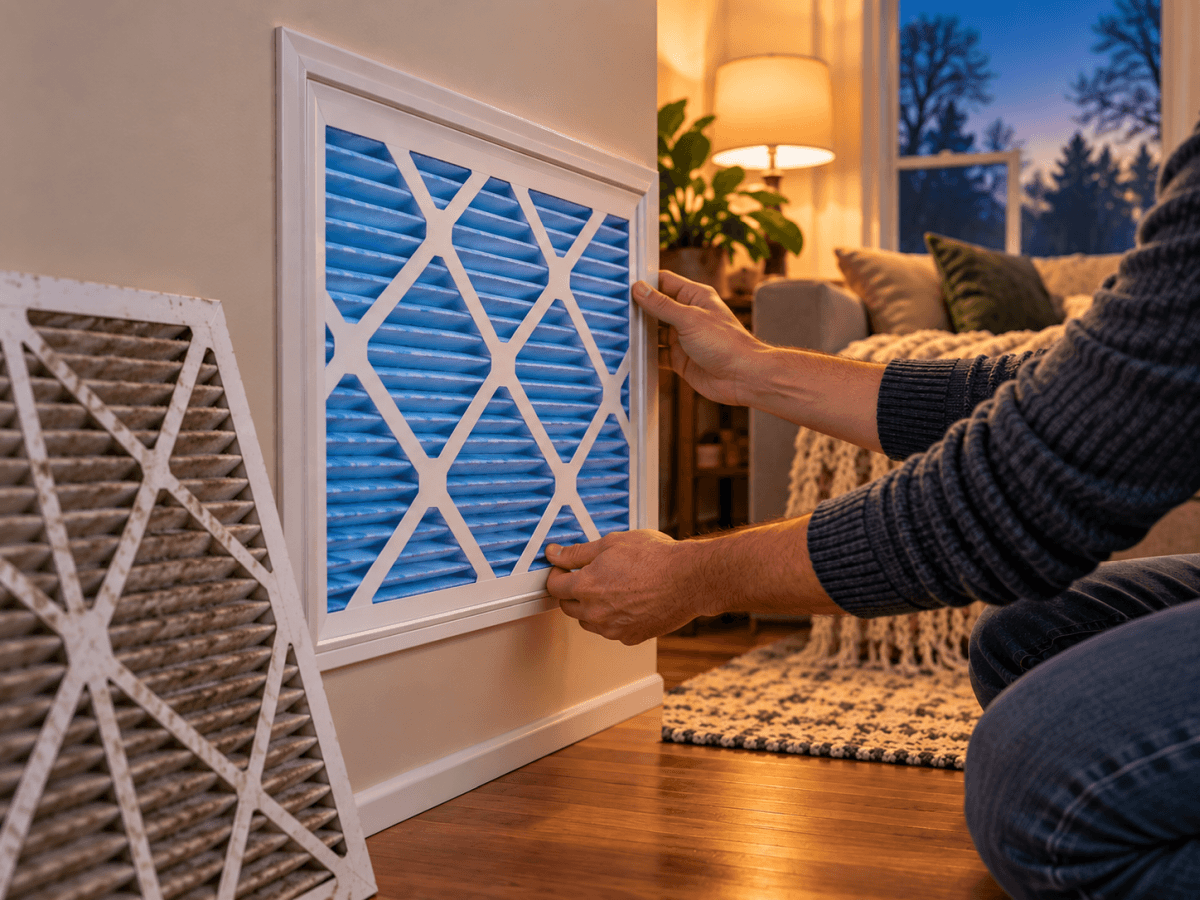
Switch to MERV 13 if you have an HVAC system. Install a MERV 13 filter, the rating the EPA recommends during smoke events. Most furnaces and HVAC systems handle it without equipment problems when the filter is changed often, so check your system manual as a normal fit check.
Set the thermostat fan to On. Auto runs the blower only when the heat kicks on. On keeps air moving through the filter.
Run HEPA air purifiers in each room, bedrooms first. This step applies with or without an HVAC system.
Close the house. Shut the windows and doors and close your fireplace damper. If your system has a fresh-air intake, close that too. While smoke is in, skip candles, frying, smoking, and vacuuming without a sealed unit.
We set that trigger with regional smoke in mind. A neighbor's chimney is far more local, so a regional monitor can read Moderate while your street smells like a fireplace. The Filterbuy team's smell first, verify second habit covers that gap: if smoke reaches your rooms, run the same steps.
Smoke loads filters quickly. Check yours during burn season and replace it once it looks dark brown or black, which can be well before the normal interval, so keep a spare on hand. Pleated MERV filters capture particles, not the gases behind smoke odor. For odors, Filterbuy's Odor Eliminator filters add an activated carbon layer to pleated media. Skip ionizers and ozone generators, since the EPA advises against air cleaners that produce ozone.
A Burn-Night Routine That Gets Ahead Of The Smoke
Neighborhood fires usually start in the evening, and still night air can hold the smoke low overnight.
Close windows and doors before evening fires start, not after you smell smoke.
Keep bedroom doors shut overnight while each purifier runs.
Air out the house the next afternoon if the AQI allows.
No Ductwork? Size HEPA Air Purifiers By CADR
Without ductwork, HEPA air purifiers in each room are your main defense, not a backup. Size each one with the AHAM two-thirds rule for smoke CADR: smoke CADR should equal at least two-thirds of the room's floor area, for ceilings up to 8 feet. A 12-by-14-foot bedroom is 168 square feet, and two-thirds of that calls for a smoke CADR of 112 or higher.
In studies the EPA summarized, portable air cleaners with CADRs of about 100 to 300 cubic feet per minute cut indoor PM2.5 by about half on average. Filterbuy's comparison of MERV 13 and HEPA filtration explains how the two layers split the work.
A DIY box-fan cleaner built with a MERV 13 filter is a reasonable stopgap, according to EPA research on DIY air cleaners. Use a certified fan from 2012 or newer, and don't leave it running unattended. It doesn't replace a certified air cleaner.
What The Filterbuy Team Sees When Smoke Moves In
“I check outdoor AQI for a different U.S. city almost every morning. Over the past few fire seasons, the reader question has shifted from ‘what does this number mean’ to ‘why did my house still smell smoky after the map turned green.’ That gap almost always traces back to one thing: what was in the HVAC filter before the smoke arrived.”
Supporting Statistics
About 11 million U.S. homes, 8.9 percent, burned wood in 2020.
Only about 2.2 million use wood as their main heat.
Source: U.S. Energy Information Administration's wood energy data
Up to 70 percent of chimney smoke can come back inside.
Studies found it can re-enter the burning home or the homes next door.
Source: California Air Resources Board review of wood smoke research
2 percent of homes, 22 percent of winter exposure.
Wood burning drives about 21.9 percent of population-weighted winter PM2.5.
Source: 2026 Science Advances study of U.S. residential wood combustion
Frequently Asked Questions
Can I Report My Neighbor For Wood Stove Smoke?
Yes, where local wood smoke rules exist. Report it to the air agency that enforces burn bans, with dates and times. Repeated, specific reports help inspectors time their patrols.
Is It Illegal For A Neighbor's Chimney Smoke To Come Into My House?
Legality depends on where you live. Some agencies, including the Puget Sound Clean Air Agency, treat smoke that affects neighbors as a nuisance. Your local air agency can tell you which rules apply.
Will A MERV 13 Filter Get Rid Of Wood Smoke Smell?
Not on its own. A MERV 13 filter captures fine smoke particles, but the odor comes from gases that pass through particle filters. For odors, Filterbuy's Odor Eliminator line adds an activated carbon layer.
Are EPA-Certified Wood Stoves Allowed During A Burn Ban?
Sometimes. Puget Sound allows certified stoves during a Stage 1 ban but not Stage 2. A Bay Area Spare the Air Alert for fine particles prohibits all wood burning.
Get Your Filter Ready Before Burn Season
Your HVAC filter is the part of this you control every night. Choose MERV 13 in your exact size or order a custom-size filter, and check your system manual as you would for any filter. Filterbuy orders ship with fast and free 2-day delivery to most US states, and filter auto-delivery keeps a spare ready.
Glossary
PM2.5: Fine particulate matter 2.5 microns or smaller, the main particle fraction in wood smoke.
Air Quality Index (AQI): The national 0–500 scale for daily air quality. Readings of 101–150 are Unhealthy for Sensitive Groups.
Air Quality Burn Ban: A temporary air agency order restricting wood stoves and fireplaces on forecast bad-air days.
MERV 13: A Minimum Efficiency Reporting Value rating for HVAC filters that targets fine PM2.5-range particles.
CADR: Clean Air Delivery Rate, AHAM's measure of how much filtered air a portable air cleaner delivers.