
Wildfire Smoke and the Air Quality Index: A Homeowner's Guide
June 10, 2026
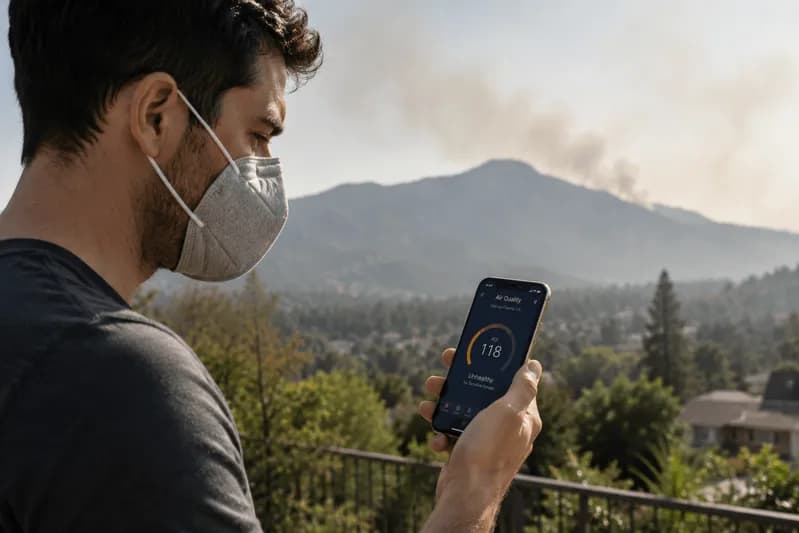
The smoke you can see is the least of your problems. During a wildfire, the air quality index is really measuring the particles you can't see, the fine PM2.5 that runs about one-twentieth the width of a human hair. We're obsessed with that invisible math because it decides how clean the air inside your home stays. This guide turns the wildfire smoke air quality index into a plan you can act on, and points you to the filter that keeps those particles outside where they belong.
TL; DR Quick Answers
What Is The Wildfire Smoke Air Quality Index?
It's a 0 to 500 scale that tells you how dirty the outdoor air is during a fire. In smoke, it mostly tracks PM2.5, the fine particles small enough to slip deep into your lungs. The higher the number, the more there is to breathe and the more it matters.
What the levels mean:
0 to 50: clean air, nothing to do.
51 to 150: sensitive groups ease up on time outside.
151 and up: everyone moves indoors and filters the air.
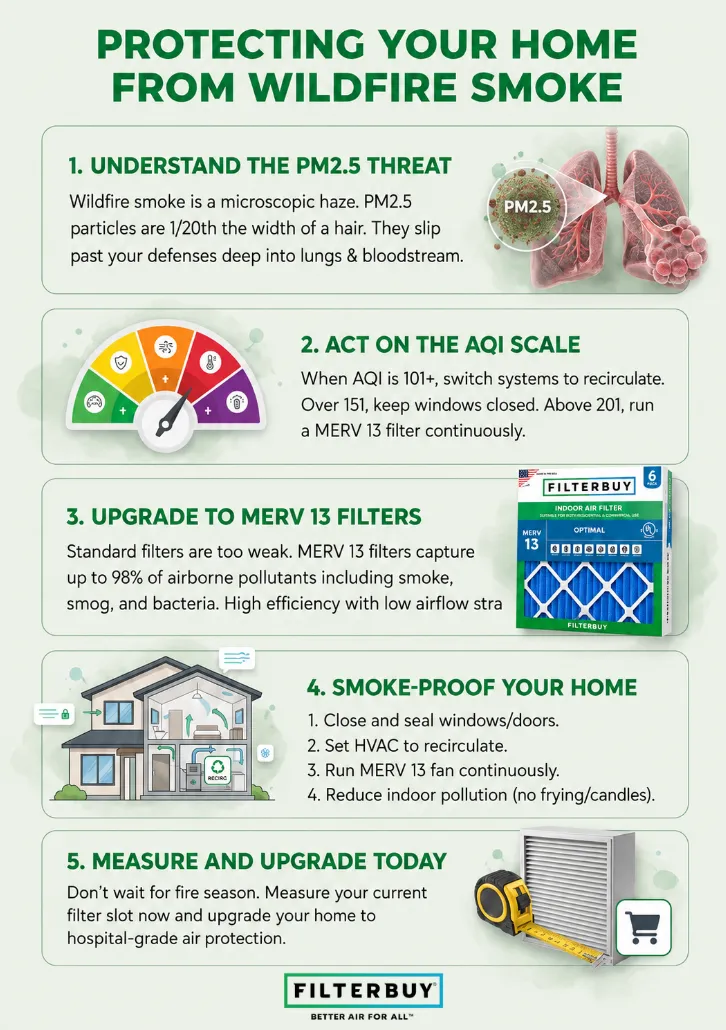
Here's how we read it after years of obsessing over indoor air. The number is a cue to act, not a stat to admire. When it climbs, close the windows, switch your HVAC to recirculate, and run a MERV 13 filter so your system pulls those smoke particles out of the air you're breathing.
Top Takeaways
Wildfire smoke is mostly PM2.5, the fine stuff that reaches deep into your lungs.
The scale runs across six categories, from Good at 0 to 50 up to Hazardous at 301 to 500. Each one calls for a different move.
Kids, older adults, and anyone with a heart or lung condition feel it first, so they act sooner.
A MERV 13 filter grabs the fine smoke particles that cheaper filters miss.
Shut the windows, run your HVAC on recirculate with a fresh filter, and the air inside stays far cleaner than the sky outside.
What The Air Quality Index Measures During Wildfire Smoke
Smoke isn't one thing. It's a shifting mix of gases and particles, and the one that matters most for your health is PM2.5. These particles run up to 2.5 microns wide, roughly one-twentieth the width of a human hair, and they make up the bulk of what you breathe when smoke rolls in. They slip past your body's defenses, settle deep in your lungs, and can cross into your bloodstream. That's the invisible threat we want to make visible.
The index takes all those particles and turns them into a single number from 0 to 500. Read 50 or below, and the air is clean. Read above 300, and it's hazardous. For the full picture of how the index gets built and what each pollutant adds, our guide on how the Air Quality Index works walks through it. During a wildfire, PM2.5 is almost always what's driving the number on your phone.
The Wildfire Smoke AQI Chart And What Each Level Means
Smoke from wildfires nearby or hundreds of miles away can spike the AQI within an hour as the wind turns. The chart below is your wildfire smoke air quality scale, the same six categories the EPA uses, matched to what you should actually do inside. Use it to turn a number into a decision.
| AQI Range | Category | Color | What To Do Indoors |
|---|---|---|---|
| 0 to 50 | Good | Green | Live normally. No smoke action needed. |
| 51 to 100 | Moderate | Yellow | Sensitive groups watch for symptoms. Think about a filter upgrade. |
| 101 to 150 | Unhealthy for Sensitive Groups | Orange | Sensitive groups limit outdoor time. Run HVAC on recirculate. |
| 151 to 200 | Unhealthy | Red | Everyone cuts outdoor exposure. Keep windows closed and the filter running. |
| 201 to 300 | Very Unhealthy | Purple | Stay indoors. Run a high-efficiency filter and seal gaps. |
| 301 to 500 | Hazardous | Maroon | Health emergency. Set up a clean room and follow local guidance. |
Smoke AQI chart. These wildfire AQI levels hold whether the fire is down the road or three states over. They follow the EPA AirNow six-category scale.
When To Take Action Indoors At Each AQI Level
The AQI earns its keep when you treat each band as a signal to move, not a color to glance at. Here's what that looks like at home.
0 to 100, Good to Moderate: live normally. If someone in the house is sensitive, slip in a fresh filter now.
101 to 150, Unhealthy for Sensitive Groups: kids, older adults, and anyone with heart or lung issues, head inside, and the system goes on recirculate.
151 to 200, Unhealthy: everyone cuts outdoor time. Close the house up and keep filtered air moving.
201 and up, Very Unhealthy to Hazardous: stay in, set up one clean room, and follow your local authorities.
Which MERV Filter Rating Captures Wildfire Smoke Particles
A filter only helps if it can grab particles this small. Plenty of basic furnace filters are built for lint and big dust, so the fine smoke sails straight through. For wildfire smoke, reach for MERV 13. It's built to capture a high share of PM2.5 while still letting enough air through for your system to breathe.
Move up to a MERV 13 before fire season, and you've made one of the biggest changes available to your indoor air. Check your filter size now. Keep a spare on the shelf, because heavy smoke means you'll swap it more often than usual.
How To Protect Your Home During A Smoke Event
When the AQI climbs, the job is simple. Keep the dirty air out, keep the clean air moving. These steps pull in the same direction.
Close windows and doors, and set your HVAC to recirculate so it quits pulling smoky air inside.
Run the fan with a MERV 13 filter in place so indoor air keeps cycling through filtration.
Seal the obvious gaps around doors and windows where smoke sneaks in.
Keep one room cleanest of all, ideally with a portable air cleaner, for anyone sensitive.
Check a live smoke map and your local AQI a few times a day, because the wind rewrites the situation fast.
And don't add to the problem indoors. Skip the frying, the candles, and anything else that burns while the smoke is heavy.
After manufacturing filters for over a decade and serving more than two million households, we've found that the AQI usually spikes hours before a family even notices smoke indoors. That's exactly why the filter you install before fire season matters more than anything you do once the haze arrives. A MERV 13 sized to your system is the single change we see make the biggest difference in how clean a home stays through a smoke event.
— Filterbuy Team
Essential Resources For Staying Ahead Of Wildfire Smoke
You can't see the fine particles that make wildfire smoke so harmful. But you can absolutely stay ahead of them. As people who are obsessed with what's floating in your air, these are the seven resources we reach for the moment smoke rolls in. Each one helps you turn an invisible threat into a clear plan for protecting your family, your home, and your HVAC system.
Check Real-Time Smoke And AQI For Your Exact Location
The smoke you smell is only part of the story, and the particles doing the real damage are far too small to see. This live map shows exactly what's in the air at your address right now, so your first move comes from facts instead of a hunch.
Source: AirNow Fire and Smoke Map
Know Whether The Smoke Puts Your Family At Risk
You're the protector of your household, and smart decisions start with knowing who's most at risk. This CDC guide shows you which family members need extra care and what warning signs to watch for, so you can act before symptoms set in.
Source: CDC, Wildfires and Wildfire Smoke
Clean Your Indoor Air And Choose The Right Filter
Here's where our obsession really kicks in. When smoke is heavy outside, the air inside your home becomes your safe zone, and this EPA resource shows you how to keep it that way with the right filter, recirculated airflow, and a cleaner room your family can retreat to.
Source: EPA, Wildfires and Indoor Air Quality
Protect Your Lungs Before, During, And After Smoke
Your lungs are working hard during a smoke event, even when you feel fine. The American Lung Association walks you through protecting them at every stage and tells you plainly when breathing trouble means it's time to call your doctor.
Source: American Lung Association, Wildfire Smoke and Lung Health
Build Your Wildfire Evacuation And Emergency Plan
Staying ahead of smoke sometimes means being ready to leave. Ready.gov helps you build a wildfire plan, pack a go-kit, and map your routes now, so a tense moment never catches your family flat-footed.
Source: Ready.gov, Wildfires
Forecast Whether The Air Will Worsen Or Clear
A little foresight goes a long way during fire season. The National Weather Service publishes fire weather and smoke outlooks so you can see what's heading your way and plan your next few days with confidence.
Source: National Weather Service, Fire Weather
Supporting Statistics
Clean air is our obsession, and the research backs up what we see in homes every fire season.
Wildfire smoke is more harmful than everyday pollution. A 10 µg/m³ rise in wildfire-specific PM2.5 is tied to a 1.3 to 10 percent jump in respiratory hospitalizations. That's a sharper rise than the same amount of PM2.5 from other sources.
In our experience, the filter that handles daily dust often isn't enough once smoke arrives.
Source: Aguilera et al., Nature Communications, 2021 (PMC7935892)
Smoke is a yearly, nationwide reality. U.S. wildfires burn about 7 million acres in an average year, and several recent years ran well above that.
We hear from households in cities that never see a flame. Living far from a forest isn't living far from its smoke.
Source: National Interagency Fire Center, Wildfires and Acres
The problem keeps growing. Warmer, drier conditions roughly doubled the western U.S. forest area burned between 1984 and 2015, and fire seasons now start earlier and last longer.
That makes smoke readiness a standing job, so the filter you keep on hand matters as much as the calendar.
Source: NOAA, Wildfire Climate Connection
Final Thoughts And Opinion
A smoke event tests the air plan you didn't know you had. The homes that ride it out best aren't the ones with the priciest gear. They're the ones where someone watched the number, shut the windows in time, and already had the right filter in the slot. You can be that someone. Treat the AQI as your early warning, and treat your filter as part of the plan that's fully in your hands.
Next Steps
Turn the number into a ready home. Run these in order before the next smoke event.
Check the air now. Pull up a live Fire and Smoke Map for your address. Make it a fire-season habit.
Know your filter size. Read the dimensions on your current filter, or measure the slot.
Upgrade to MERV 13. It catches the fine particles that basic filters miss. Keep a spare on the shelf.
Seal up and recirculate. Past AQI 150, close the windows, shut the fresh-air intake, and run the fan.
Build one clean room. A bedroom plus a portable air cleaner, for anyone sensitive.
Do it once, and you're set for the season.
Frequently Asked Questions
What AQI Level Should I Stay Indoors During Wildfire Smoke?
Once it hits 151, the Unhealthy band, everyone should limit time outside and keep their indoor air filtered. Sensitive groups should start at 101.
Can A Furnace Filter Remove Wildfire Smoke?
A basic furnace filter grabs bigger dust and lint but misses much of the fine PM2.5 in smoke. A MERV 13 is built to catch those smaller particles while keeping airflow healthy.
Is An AQI Of 150 Dangerous?
It sits right at the top of the Unhealthy for Sensitive Groups range. Kids, older adults, and people with heart or lung conditions should cut their exposure, and everyone should be ready to move indoors as it climbs.
Does Closing Windows Lower Indoor AQI?
Yes. Closing windows and setting your HVAC to recirculate keeps smoky air from pouring in, and a MERV 13 filter cleans what's already inside.
How Long Does Wildfire Smoke Stay Inside A House?
Without filtration, it can hang around for hours or longer. Run your system with a good filter, add a portable air cleaner, and it clears far faster.
Get Your Filter Ready Before The Smoke Arrives
Fire season rewards whoever gets ready first. Before the smoke shows up, find your filter size and load your system with a MERV 13, so the air your family breathes inside stays cleaner than the sky outside. You're the one keeping that air clean. We're here to make it easy.