
Air Quality in Alaska
Air quality index (AQI⁺) and PM2.5 air pollution in Alaska •


Get Alerts For Unhealthy AQI In Your Area
When air quality in your area reaches unhealthy levels, we'll send you a quick alert, along with expert tips on how to reduce your exposure.
Live Air Quality Ratings in Alaska
The Right Air Filter For High AQI Days
When outdoor air quality drops, the EPA recommends upgrading to a MERV 13 filter — or the highest-rated filter your HVAC system can handle — to help capture more of the fine particulate (PM2.5) that comes with poor air quality. MERV 13 is the highest rating most residential systems can run without restricting airflow.
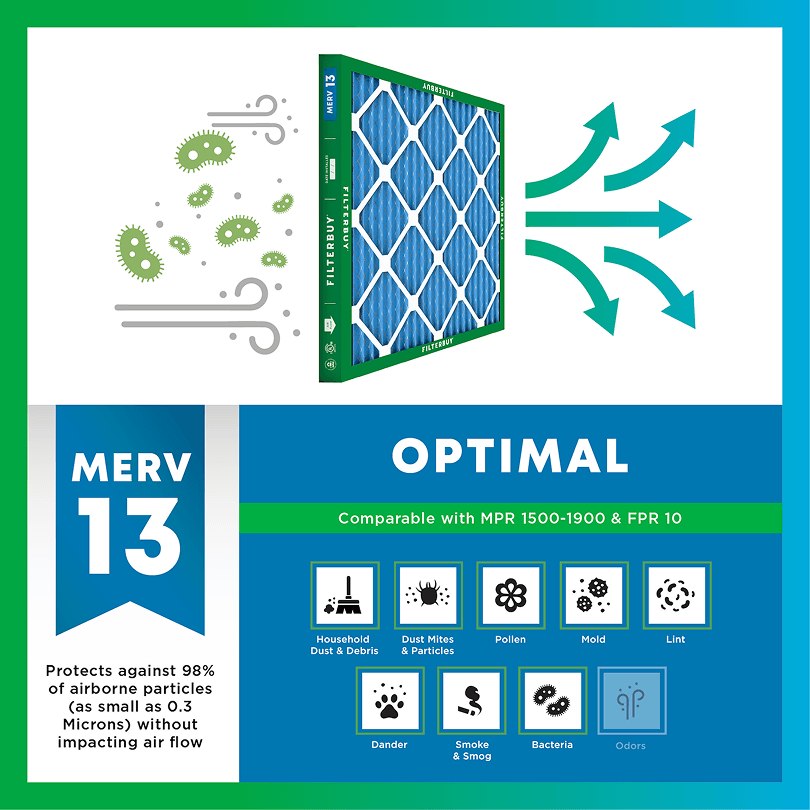
- Captures PM2.5 and other fine particulates
- Filters ash, soot, and smoke particles
- Rated to capture particles as small as 0.3 microns
- Matches the filter rating the EPA suggests during high-AQI and smoke events

AQI FAQs
What is AQI?
AQI stands for Air Quality Index, the EPA's scale for reporting daily air quality. It runs from 0 to 500. The higher the number, the greater the level of air pollution. Values at or below 100 are generally considered satisfactory; values above 100 mean air quality is unhealthy, first for sensitive groups, then for everyone as numbers climb.
What does AQI measure?
The AQI tracks five major pollutants regulated by the Clean Air Act: ground-level ozone, particle pollution (PM2.5 and PM10), carbon monoxide, sulfur dioxide, and nitrogen dioxide. The reported AQI value reflects whichever pollutant is highest at that time — most often ozone or fine particles (PM2.5).
How is AQI calculated?
Monitoring stations measure pollutant concentrations, and the EPA converts each into a standardized 0–500 score using set breakpoints. Each pollutant gets its own sub-index, and the highest sub-index becomes the reported AQI. That's why a single number can represent different pollutants on different days.
What is a good AQI?
An AQI of 0–50 is rated "Good" — air quality poses little or no risk. 51–100 is "Moderate," acceptable for most people though unusually sensitive individuals may want to limit prolonged outdoor exertion. Anything at or below 100 is generally considered satisfactory air quality.
What does an AQI of 100 (or 150) mean?
100 is the dividing line: at or below it, air quality is satisfactory for the general public. From 101–150, air is "Unhealthy for Sensitive Groups" — people with respiratory conditions, older adults, and children. From 151–200, it's "Unhealthy" and everyone may begin to feel effects.
Why is the AQI bad today?
Short-term AQI spikes usually come from wildfire smoke, temperature inversions that trap pollutants near the ground, high-ozone weather (hot, sunny, stagnant days), or heavy traffic and industrial activity. Check a real-time source like the map on this page to see which pollutant is driving today's reading in your area.
What AQI is bad for running or exercise?
Many runners follow the EPA category lines: below 50, no adjustment needed; 51–100, unusually sensitive people may shorten intense workouts; above 100, sensitive groups are advised to reduce prolonged or heavy outdoor exertion; above 150, that advice extends to everyone. Exercise increases how much air you breathe in, which is why thresholds matter more during workouts.
What AQI is safe to open windows?
A common rule of thumb is to keep windows open when the AQI is under 100 and close them when it climbs above, especially during wildfire smoke events when fine particles are elevated. When windows are closed, running your HVAC system with a fresh filter helps capture particles circulating indoors.
Should I wear a mask based on AQI?
Public health agencies generally suggest considering a well-fitted N95-style respirator outdoors when the AQI exceeds 150, particularly during smoke events. Cloth and surgical masks don't filter fine particles effectively. Follow guidance from your local health department, which may adjust recommendations during severe episodes.
Check Today's Live Real Time Air Quality Index AQI Map in Alaska Now
The live map above shows Alaska air quality today, with current Air Quality Index (AQI) readings from Anchorage and Fairbanks to Juneau. Tap a station for its reading and main pollutant, usually PM2.5, the fine particles found in smoke. Below, Filterbuy, a U.S. air filter maker since 2013, explains how we read Alaska's air.
TL;DR
Alaska's air is clean most days; the exceptions are seasonal: heating smoke around Fairbanks in winter and wildfire smoke in summer. At AQI 100, Filterbuy's action line, switch the HVAC to MERV 13, set the thermostat fan to On, run a portable HEPA air cleaner in each occupied room, and close the house up.
Key Takeaways
Alaska has two air seasons, winter heating smoke and summer wildfire smoke, and each needs a different plan.
North Pole's Hurst Road monitor runs at 150% of the federal 24-hour PM2.5 limit.
The EPA recommends MERV 13 or higher during smoke events. Filterbuy acts at AQI 100.
Ductless homes should treat a portable HEPA air cleaner as their primary defense.
How to Read Alaska's Live Air Quality Map
Air can change sharply from one Alaska valley to the next, so your nearest station matters most. Here is how the Filterbuy team reads the map:
Start with the nearest station and read it on the EPA's 0 to 500 AQI scale, not the statewide color.
Treat an empty area as missing data, since Alaska has only eight regulatory monitoring sites.
Check the smoke layer on the AirNow Fire and Smoke Map.
If your eyes and nose disagree with the number, trust them.
For a closer look, see Anchorage air quality, Fairbanks air quality, and Juneau air quality, or compare states on the live USA AQI map.
What Each AQI Color Means for Alaskans
Filterbuy's action line is AQI 100. That number is still the top of the Moderate range, so we act at the threshold, before the orange category starts at 101. Check AirNow and local guidance first, then take four steps:
Put MERV 13 air filters in the HVAC.
Set the thermostat fan to On so the system filters around the clock.
Run a portable HEPA air cleaner in each occupied room, bedrooms first.
Close the house up, and skip candles, frying, and wood stoves while smoke is in.
Ranges, categories, and colors: U.S. EPA. Actions: Filterbuy recommendations.
Why an Alaska AQI Reading Can Lag or Look Wrong
Particle readings use the NowCast, a weighted average of recent hours, so they trail sudden changes and can miss smoke on your street.
Inversions make it trickier. The Alaska Department of Environmental Conservation (DEC) notes that Fairbanks, ringed by hills on three sides, can trap pollution near the ground for days or weeks.
Is the Air Safe to Breathe in Alaska Today?
Whether Alaska's air is safe today depends on your nearest station. At 100 or below, it is fine for nearly everyone. Above 100, children, older adults, and anyone with heart or lung disease should cut back outdoors, and above 150, everyone should.
Where to Get Alaska Air Quality Alerts and Burn Ban Notices
The Alaska DEC Division of Air Quality sends statewide advisories by email and text. The Municipality of Anchorage Air Quality Program posts a weekday AQI report, Fairbanks North Star Borough Air Quality calls burn curtailments, and the Alaska Volcano Observatory forecasts ashfall.
In the Fairbanks area, Stage 1 and Stage 2 alerts restrict burning wood and other solid fuels, with Stage 2 the stricter.
Alaska Air Quality by Region
What's Actually in Alaska's Air?
Fine particles (PM2.5) come from wood stoves, heating oil, vehicles, and wildfire smoke, while coarse particles (PM10) come from glacial silt and road dust. Ozone rarely matters here.
The EPA names residential wood heating as the primary cause of the Fairbanks PM2.5 problem, and in the Mat-Su Valley, windblown river silt triggers several dust alerts each spring and fall.
How Alaska's Air Compares, Nationally and Monitor by Monitor
Nationally, Fairbanks ranked worst for short-term particle pollution in State of the Air 2026, even as Anchorage posted its lowest-ever soot levels. See our worst air quality cities rankings.
That ranking hides a local story. When Filterbuy lined up the monitor data in DEC's 2025 network assessment, North Pole's Hurst Road station came in at 150% of the federal 24-hour limit, about double the Fairbanks monitors a short drive away. Hurst Road is also Alaska's only site above the tighter 2024 annual standard.
2022 to 2024 design values in micrograms per cubic meter, excluding wildfire days. Federal limit: 35. Source: Alaska DEC.
Filterbuy's read: North Pole households should treat the winter plan below as essential.
Wildfire Smoke and Volcanic Ash: Alaska's Biggest Air Quality Events
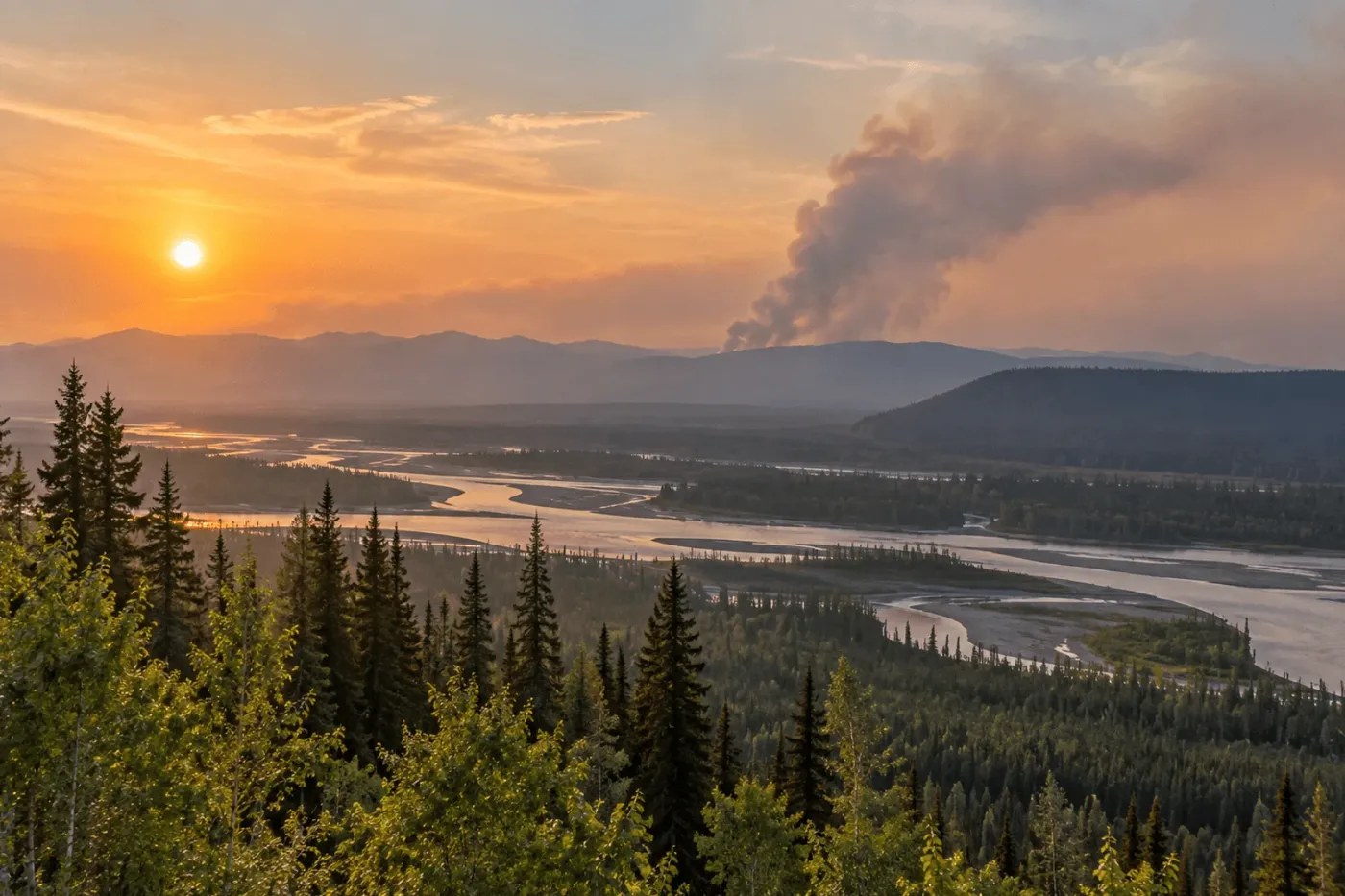
Wildfire smoke can reach nearly every Alaska community, and the Alaska Interagency Coordination Center tracks every large fire. The record 2004 season burned about 6.59 million acres and brought two months of unhealthful or hazardous air. Follow the plumes on our live Alaska wildfire and smoke map.
Volcanic ash is rarer but uniquely Alaskan. Mount Spurr's 1992 eruption closed Anchorage's airport for 20 hours, and the Alaska DEC advises that people with heart or lung conditions seek medical guidance about ashfall. In heavy smoke or ash, shut off any heat recovery ventilator (HRV).
No Ducts? Cleaner Air for Alaska Homes Heated by Boilers or Stoves
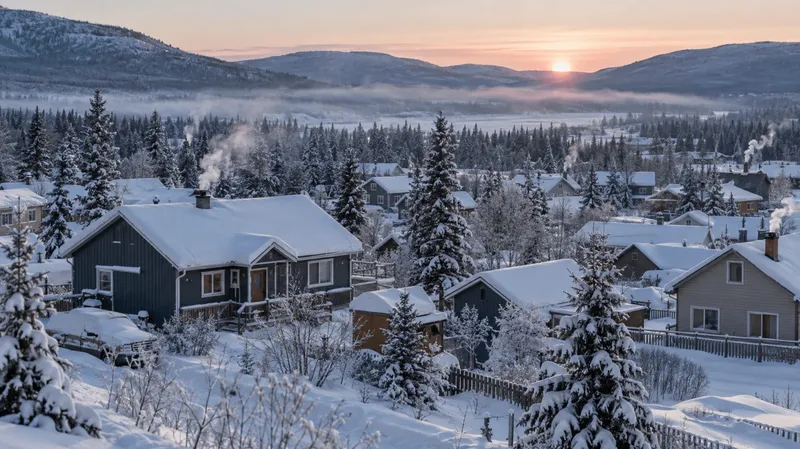
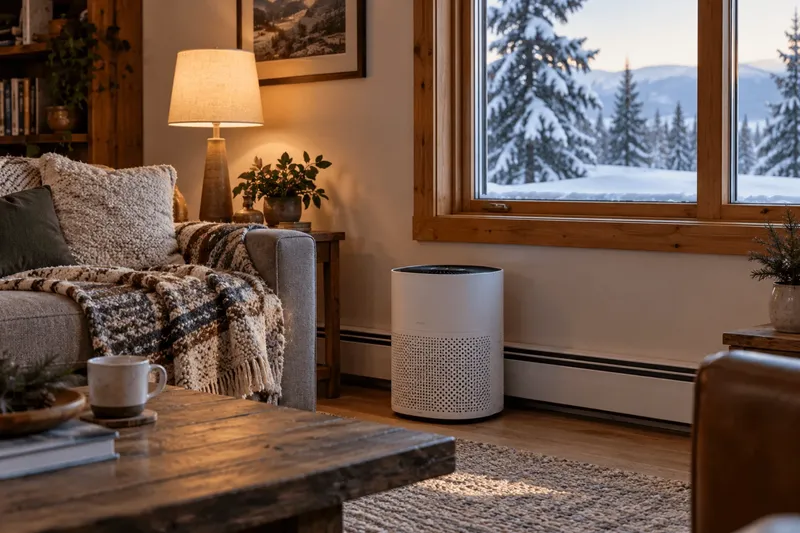
Many Alaska homes heat with a boiler loop or a stove. No ducts, no filter slot, so a portable HEPA air purifier becomes the primary defense. Size it with the EPA's clean-room rule: a smoke CADR of at least two-thirds of the room's square footage, or roughly 200 for a 300-square-foot bedroom. Avoid ionizers and anything that produces ozone. A DIY box fan cleaner with a MERV 13 filter is a fair stopgap if the fan is certified, made in 2012 or later, and never left running unattended. Our MERV 13 vs. HEPA comparison explains why HEPA stays out of the furnace.
The first question isn’t which filter to buy. It’s whether your home moves air through a filter at all, and for a Toyo or a baseboard loop the answer is no.
Michelle Wan, Filterbuy
Filterbuy's Take: Alaska Has Two Air Seasons, and Each Needs a Different Plan
Most AQI advice is written for summer smog. After more than a decade of building filters, Filterbuy reads Alaska differently: two air seasons, and the fix for one can be wrong for the other.
Winter (October to March): Nearby chimney smoke gets trapped under inversions. Households can shrink this one, so honor burn curtailments and check your furnace filter often, since long runtimes load it fast.
Summer (June to August): Smoke drifts in from fires you may never see. You can't change the source, so close the house up and filter what gets in.
We sell MERV 13 filters, and we still tell some Alaska homeowners not to buy one. If your home heats with a boiler or a Toyo stove, the best filter we make will never touch your air.
Filterbuy
Which Air Filter Your Alaska AQI Level Calls For
What MERV rating do you need for Alaska smoke? MERV 13. The EPA recommends MERV 13 or higher during smoke events and notes that most furnaces and HVAC systems can accommodate it without equipment problems, provided the filter is replaced often. For everyday use, MERV 8 air filters cover dust and pollen and MERV 11 air filters suit Mat-Su dust days.
Pleated filters capture particles, not the gases behind smoke smell. For odor, see the Odor Eliminator line.
During smoke, replace the filter when it looks dark brown or black, which can be well before the normal interval, and keep spares on hand because the EPA warns filters get scarce. See our best MERV filter for wildfire smoke guide.
Filterbuy builds MERV 8, 11, and 13 in the U.S., in 600+ sizes plus custom air filters. Our advice is a rating and a size, never a single "wildfire filter."
Supporting Statistics
The research behind Filterbuy's guidance.
1. Fairbanks Leads the Nation in Particle Pollution Days
22,127 Alaska kids breathe unhealthy air.
Takeaway: Alaska's risk is particles, not smog.
Source: American Lung Association, State of the Air 2026
2. Eight Monitoring Sites Cover the Whole State
26 regulatory monitors sit at just 8 sites.
About 1 in 3 Alaskans live in towns under 1,000 people.
Takeaway: No nearby station? Trust your eyes and nose.
Source: Alaska DEC, 2025 Air Monitoring Network Assessment
3. A Better Filter Can Cut Indoor PM2.5 About in Half
About 50% less indoor PM2.5 is possible with a high-efficiency filter and a continuously running fan.
Filterbuy's takeaway: follow the four AQI 100 steps above.
Alaska Air Quality FAQs
Glossary
Air Quality Index (AQI): The EPA's 0 to 500 daily air pollution scale.
PM2.5: Fine particles 2.5 micrometers or smaller, mostly from combustion.
PM10: Coarse particles 10 micrometers or smaller, such as dust and ash.
Temperature inversion: Warm air over cold ground air, trapping pollution.
Burn curtailment: A Fairbanks-area alert restricting solid-fuel burning.
MERV: Minimum Efficiency Reporting Value, a 1 to 16 filter rating.
Toyo stove: A ductless oil-fired heater common in Alaska.
HEPA: A filter standard for portable air cleaners, capturing 99.97% of 0.3-micron particles. It does not go in a furnace.