
Alaska Live Wildfire Smoke Map
Get Alerts For Wildfires In Your Area
The moment a wildfire starts near you, you'll get an instant alert and simple tips to reduce your smoke exposure.
What's In The Smoke
30xSmaller than a human hair
Fine enough to reach deep into the lungs. A MERV 13 is built to capture it.
How Far It Travels


It Doesn't Stay Local
Smoke rides the wind far downwind — you can get smoky air with no fire nearby.
What To Do During A Smoke Event
Simple steps to reduce indoor exposure.
- Stay In, Close UpShut windows and doors to keep smoke out.
- Set Fan To "On"Keeps air cycling through your filter, not just when heating or cooling.
- Recirculate AirSwitch off fresh-air intake so you're not pulling smoke in.
- Run A MERV 13Built to capture the fine PM2.5 in smoke.
- Add A PurifierExtra filtration for the room you use most.
- Wear an N95 if OutsideFits snug to block fine particles — a cloth mask won't.


The Best Air Filter For Wildfire Smoke
During smoke events, the EPA recommends upgrading to a MERV 13 filter — or the highest-rated filter your system can handle — to help reduce the fine particles smoke brings indoors. MERV 13 is the level most home HVAC systems can run while still capturing PM2.5, the fine particulate that makes up the bulk of wildfire smoke.
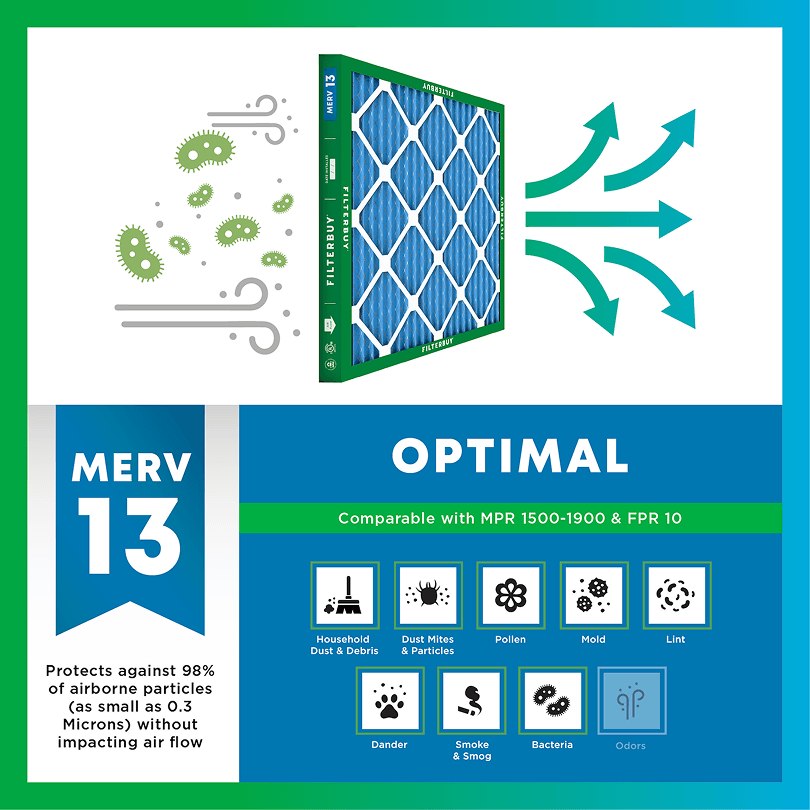
- Captures PM2.5 particles
- Blocks ash, soot, and smoke odor
- Keeps your indoor air safe—even when the outdoor air is dangerous
- Meets the EPA's recommended rating for filtering fine wildfire smoke particles.

Wildfire Smoke FAQs
Facts About Wildfires
Over 70,000 wildfires burn in the U.S. every year.
Wildfire smoke can travel 1,000+ miles, affecting states that aren't even near the blaze.
Exposure to wildfire smoke can worsen asthma, trigger heart issues, and lead to ER visits.
Indoor air can hold more fine particles during wildfire events unless it's properly filtered.
The EPA advises using MERV 13 filters or portable HEPA air cleaners during wildfire smoke events.
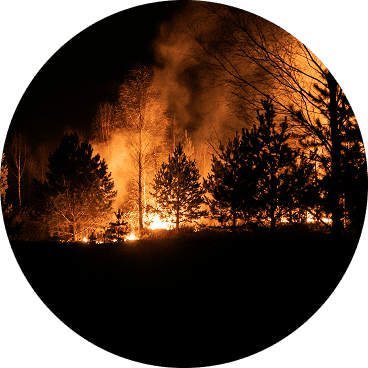
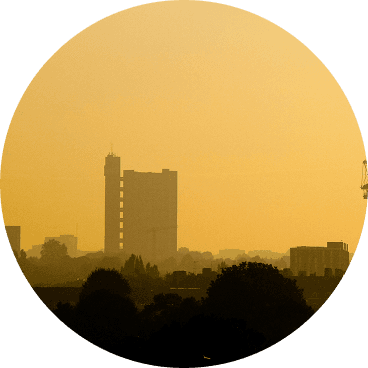
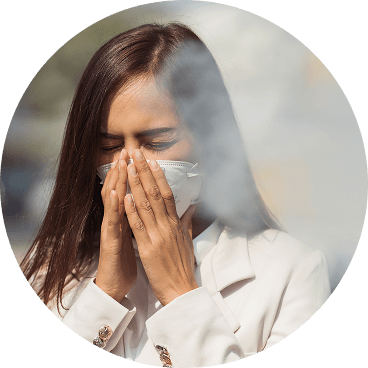
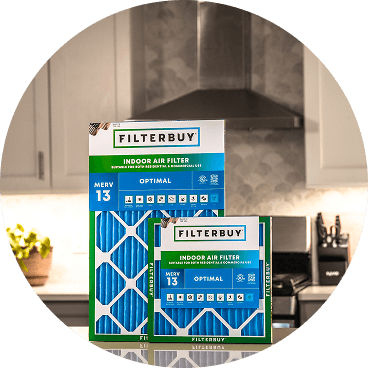
Don't Wait Until The Smoke's Inside.
Use the live wildfire smoke tracker and upgrade your air filters today to protect your lungs and your home.
Shop Filters For Smoke Protection

Live Alaska Forest Wildfire & Smoke Map Today: Statewide Air Quality Tracking & Indoor Protection Solutions from Filterbuy.com's Air Obsessed Experts
By Michelle Wan | Technically reviewed by David Clark, Licensed HVAC Technician Published: August 9, 2026 | Last updated: August 9, 2026
If you can smell smoke in Fairbanks, or the Chugach have gone gray from Anchorage, you want two answers fast: how bad is it, and what do I do indoors? This page gives you both.
Filterbuy has made air filters in the USA since 2013, and Alaska orders skew toward sizes big-box stores never stock, because much of the housing here was owner-built. Almost every smoke guide opens by telling you to put a MERV 13 in your furnace. We sell MERV 13 filters, and that advice is wrong for a large share of Alaska homes, because a Toyo stove, a baseboard loop, and a wood stove have no filter slot at all.
TL;DR
The Filterbuy Alaska wildfire and smoke map above combines both authoritative live sources: AirNow for PM2.5 and the Alaska Interagency Coordination Center (AICC) for active fires. Alaska’s 2026 season is unusually quiet, with roughly 43,000 acres burned through July 31, under 10% of the long-term median. One lightning bust can still put smoke over the Interior within a day. When the map turns orange near you, close up, recirculate, and run a MERV 13 filter.
Key Takeaways
Wildfire smoke is mostly PM2.5, particles 2.5 microns and smaller that reach the lungs and, per the EPA, the bloodstream.
Roughly a third of Alaskans live in communities under 1,000 people, and DEC will not expand regulatory monitoring, so the nearest dot may be hundreds of miles away.
Four official warnings arrive before smoke does: Red Flag Warning, burn permit suspension, AICC preparedness level, and lightning.
Many Alaska homes have no filter slot at all. Monitor heaters, baseboard, and wood heat move no filtered air.
The EPA recommends MERV 13 or higher during smoky periods. Filterbuy makes MERV 8, 11, 13, and carbon filters in the USA, in 600+ sizes plus custom.
Alaska Wildfire and Smoke Conditions Today
Alaska’s 2026 wildfire season has been quiet by historical standards. Roughly 43,000 acres burned through July 31, under 10% of the 1993–2025 median and third-lowest in that record, per Rick Thoman, a climate specialist at the University of Alaska Fairbanks, using AICC data in his July 2026 wildfire update.
Ignition was not the limiting factor. Two lightning episodes hit this summer; Thoman attributes the small fire sizes to the absence of a sustained hot, dry stretch.
A quiet season is not a safe season. Smoke over Fairbanks and the Denali Borough in late July came from a fire 25 miles east of Clear that had burned for weeks, not a new start. Alaska smoke is usually a downwind event, so statewide acreage tells you little about your air this afternoon.
Sources: AICC data via Rick Thoman (ACCAP/UAF); Alaska Fire Science Consortium. Figures current as of July 31, 2026.
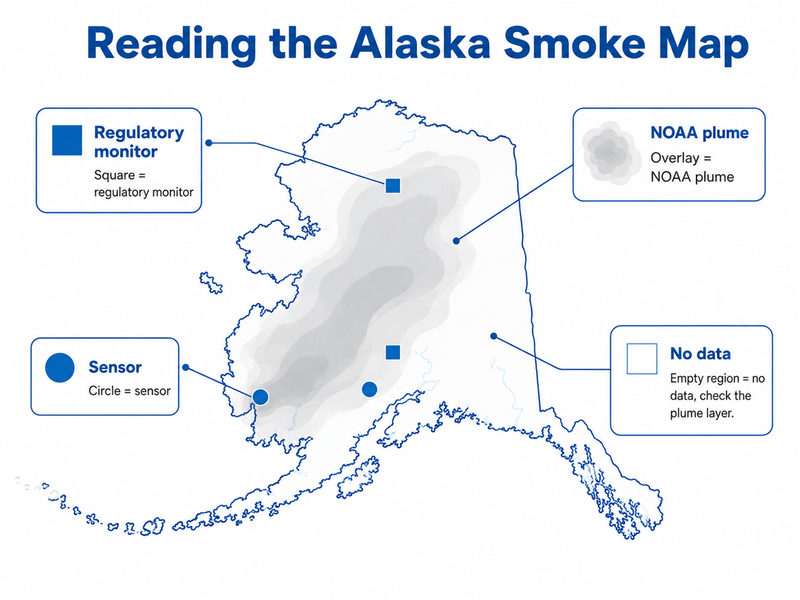
How to Read the Alaska Smoke Map, and What It Will Not Show You
A green area with no nearby dot is not a reading. It is an absence of data. Alaska is the largest state and the most sparsely monitored, and DEC states in its 2025 network plan that it will not expand regulatory coverage. Its answer is 55 low-cost sensor pods, but a 2026 UAA study found many volunteer-hosted sensors failed within a few years.
Here is how Filterbuy reads it:
Confirm a monitor exists near you before trusting the color.
Squares are regulatory-grade monitors; circles are corrected sensors. Both are useful; squares are the gold standard.
Cross-check the NOAA plume layer, which covers the whole state including places with no sensor. If a plume sits over you and no monitor does, believe the plume.
Use your eyes and nose. Falling visibility and indoor smoke smell justify acting whatever the nearest dot says.
The Four Warnings That Arrive Before the Smoke Does
Smoke on the map is the last signal, not the first. By the time PM2.5 registers near you, the wind has turned. Alaska publishes four earlier signals:
Red Flag Warning (hours to a day). Issued when critical fire weather is occurring or expected within 24 hours. See the NWS Alaska fire weather page.
Burn permit suspension (same day, and the most overlooked). A Red Flag Warning often triggers one, as in the Delta Prevention Area in May 2026 and Fairbanks on July 11.
AICC preparedness level (days to weeks). A move from 2 to 3 on the 1-to-5 scale means crews and aircraft are being assigned, a structural signal, not a forecast.
Lightning activity (days). Most large Alaska fires start with lightning, and AICC publishes a lightning dashboard.
The first question isn’t which filter to buy. It’s whether your home moves air through a filter at all, and for a Toyo or a baseboard loop the answer is no.
Michelle Wan, Filterbuy
What to Do When Smoke Reaches Your Community
Do four things in order: close every window and door, switch your HVAC to recirculate, run the fan continuously rather than on Auto, and seal one bedroom as a clean room. Change the filter first if it is older than a month or looks grey. Sealing precedes filtering because a filter only cleans air that reaches it.
AQI breakpoints per the U.S. Air Quality Index. Actions per Alaska DEC and EPA guidance. General information, not medical advice.
Confirm PM2.5 on AirNow, then check DEC advisories and the Fairbanks Borough forecast. Inspect the filter weekly, far sooner than the normal 90-day schedule. DEC and the CDC advise that children, older adults, pregnant people, and anyone with asthma, COPD, heart disease, diabetes, or kidney disease avoid exposure entirely.
The Alaska Filtration Problem Most Guides Miss
Standard smoke advice assumes a central forced-air system with a filter slot, and in much of Alaska that assumption is wrong. Toyo-style monitor heaters, baseboard, and wood stoves are common primary heat, and none move air through a filter. Newer tight homes often have an HRV or ERV instead, whose filter most owners have never opened.
This is where Filterbuy tells some readers not to buy from us: homes without ductwork are routed below to portable HEPA units instead.
MERV 13 is the EPA-recommended minimum for wildfire smoke. Confirm your system's maximum rating before upgrading.
The EPA recommends MERV 13 or higher during smoky periods and notes most systems accommodate it if replaced often. EPA research supports the DIY box-fan build, with the caveat that a dirty filter renders one almost useless.
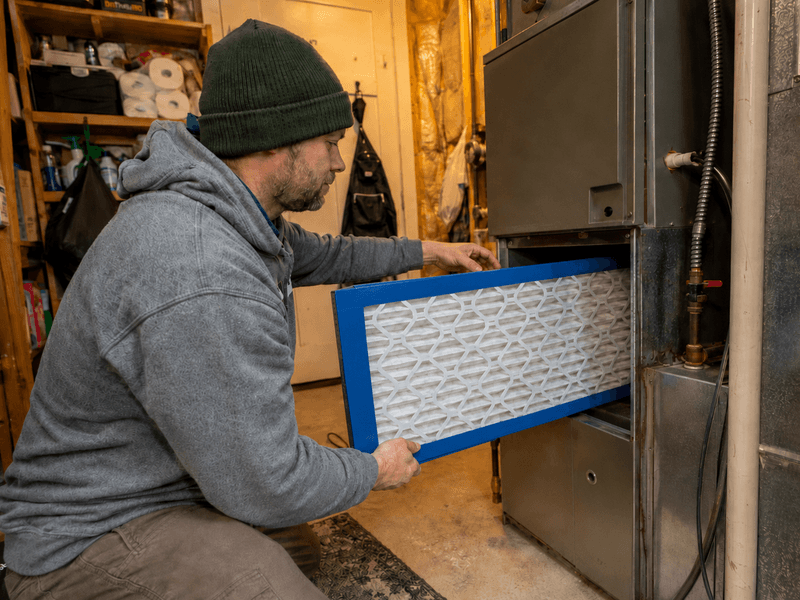
Which Filter Rating You Need for Alaska Wildfire Smoke
MERV 13 is the EPA’s recommended minimum for wildfire smoke and the highest most residential systems run safely. True HEPA resistance starves a residential blower, which is why HEPA belongs in a portable unit. See MERV 13 vs. HEPA.
MERV 8: dust and pollen. Not sufficient for smoke.
MERV 11: for older systems that cannot handle MERV 13’s resistance.
MERV 13: the right default for Alaska fire season.
Odor Eliminator carbon filters: for the smoke smell particle filters miss.
Two cases where Filterbuy would steer you away from MERV 13. If your furnace predates 2000 and its static pressure was never checked, a MERV 11 your blower can move cleans more air than a MERV 13 it fights. And if odor rather than haze is the complaint, carbon media is the variable.
Filterbuy cuts custom sizes to order alongside 600+ standard sizes, which matters in owner-built Interior homes.
Essential Resources
These four government sources cover live conditions, advisories, and forecasts. Filterbuy keeps the list current because a page that only points at its own products is not much use when the air turns.
See live smoke and PM2.5 statewide. Monitors, sensors, fire detections, and plumes on one screen. Source: AirNow Fire and Smoke Map
Verify what is burning. Situation reports, acreage, preparedness level, lightning. Source: Alaska Interagency Coordination Center
Know before the wind turns. Red Flag Warnings and zone forecasts. NWS Alaska Fire Weather
Get a three-day Interior forecast. The Borough notes conditions vary block to block, so act on haze and smell even when monitors read clean. Fairbanks North Star Borough
Supporting Statistics
1. A Third of Alaskans Live Beyond the Regulatory Network
About 1 in 3 Alaskans live in communities under 1,000 residents.
DEC will not expand regulatory monitoring, citing cost and few industrial sources.
Its alternative: 55 low-cost sensor pods, roughly 36 rural.
Source: Alaska DEC, 2025 Air Monitoring Network Plan
2. A Better Filter Cuts Indoor Smoke Particles Roughly in Half
High-efficiency filter plus continuous fan: about 50% less indoor PM2.5.
Windows closed, no air cleaner: indoor PM2.5 runs at 55–60% of outdoor levels.
That range swings by house, from 30% to 100%. A leaky cabin hits 100%, so sealing is step one.
Source: U.S. EPA, Strategies to Reduce Exposure Indoors
3. Alaska’s Fire Environment Is Getting Less Predictable
2022: over a million acres burned in southwest Alaska, where fire is historically rare.
2024: Fairbanks North Star Borough burned more acres than any year since 2004.
Three of the last five years broke a pattern, which is why Filterbuy tells Alaska customers to stock up in April.
Source: Alaska Fire Science Consortium, Alaska’s Changing Wildfire Environment
Frequently Asked Questions
Check the Map Today, Then Get Your Filter Ready for Tomorrow
Alaska’s air changes in an afternoon, and the only part you control is inside your walls. Shop MERV 13 filters or set up auto-delivery so the right filter is on the shelf before smoke.
Glossary
PM2.5: Particles 2.5 microns or smaller, the main and most harmful component of wildfire smoke.
MERV: The ASHRAE 52.2 scale rating for particle capture. MERV 13 is the EPA’s minimum for smoke.
Monitor heater (Toyo stove): A direct-vent oil-fired primary heater. No ductwork, no filter.
Burn permit suspension: A temporary Division of Forestry order halting open burning in an area, issued on fire danger.
Related: MERV ratings · Alaska AQI map · Anchorage AQI
Subscribe to wildfire smoke alerts for Alaska to get a heads-up before the next event reaches your area.