May 5, 2026
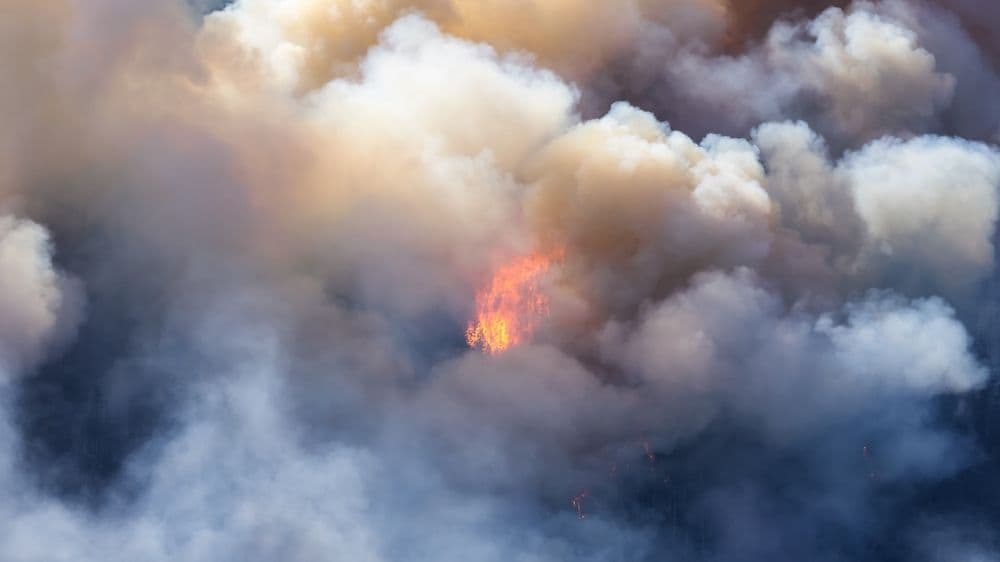
For smoky periods, the EPA recommends upgrading your HVAC filter to MERV 13 or higher. The part most people miss: it doesn't have to be a permanent change. You can run a higher-MERV filter for the weeks that smoke is around, then go back to your usual rating when the air clears.
What the EPA actually says
During smoky periods, the EPA recommends upgrading to an HVAC filter rated MERV 13 or higher to remove fine particle pollution from smoke in indoor air. It notes that most furnaces and HVAC systems can accommodate a MERV 13 filter without equipment problems, provided the filter is replaced frequently, and that a professional HVAC technician can determine the most efficient filter a given system can use.
Most filter advice assumes you pick one rating and live with it. Smoke is a temporary condition, so it's worth treating your filter the same way. Here's the sequence.
Before the season
Check and stock
When smoke arrives
Swap in and run it
After the air clears
Swap back or stay
Swapping back isn't a step down. It's matching the filter to the conditions, which is the same logic behind the upgrade in the first place.
There's a real tradeoff behind high-MERV filtration, and it's worth stating plainly: denser media captures a wider range of particle sizes, and it also resists airflow more. On a system with plenty of headroom that's a non-issue. On an older system or one with a low-static blower, sustained added resistance can mean reduced airflow and a harder-working blower.
Running the higher rating for the few weeks smoke is actually around, rather than all year, keeps the benefit where it matters and shortens how long your equipment is exposed to that tradeoff. It also concentrates your filter spend on the period when the difference is most noticeable.
The one condition worth taking seriously
A clogged high-MERV filter is worse for airflow than the filter you replaced. EPA's guidance that most systems accommodate MERV 13 without equipment problems is explicitly conditioned on replacing it frequently. If you're not going to inspect it during a smoke event, the upgrade works against you.
MERV — Minimum Efficiency Reporting Value, defined under ASHRAE Standard 52.2 — describes the size range of airborne particles a filter captures as air passes through it. Higher ratings capture a wider range of smaller particles. The scale runs to MERV 16 for this class of filter.
| Rating | What it's built for | During a smoke event |
|---|---|---|
| MERV 1–4 Fiberglass panel |
Protecting the equipment from lint and large debris. That's the original purpose of a furnace filter. | Not designed for fine particles. This is the tier worth moving off of. |
| MERV 8 Pleated |
Everyday household dust, lint, pollen. A common baseline. | Below the range EPA points to for smoke. Fine as your normal filter, worth upgrading from during an event. |
| MERV 11 Pleated |
A wider range than MERV 8, including finer dust and dander. | A meaningful step up from MERV 8, and the sensible choice if your system genuinely can't take MERV 13. Still below EPA's smoke recommendation. |
| MERV 13 Pleated |
The fine-particle range, including the PM2.5 size fraction that air quality agencies track during smoke events. | EPA's recommended starting point. Most systems accommodate it if the filter is replaced frequently. |
| MERV 14–16 Higher efficiency |
Commercial and specialized applications. | Within EPA's "or higher," but the airflow tradeoff grows. Don't go here without a technician confirming your system supports it. |
MERV describes performance against defined particle size ranges under a standardized test. It isn't a measurement of what any one filter will do in your specific house, with your specific blower and duct layout.
Not sure which rating fits your situation?
Answer five quick questions about your home and we'll put together an air quality guide for your situation — including what to run when smoke moves in.
EPA guidance is to replace the filter when it appears dirty — dark brown or black — which during a smoke event may be sooner than the manufacturer's normal interval. Inspect it rather than working from a date. Heavy smoke can load a filter in a fraction of its usual service life, which is why the spares matter.
Worth being clear about the limits, because they shape what else you should be doing.
For an additional layer in one room, the EPA has published research on low-cost DIY air cleaners built from box fans and filters. See EPA's DIY air cleaner research — follow their build guidance rather than a generic tutorial, since fan selection matters for safety.
Check your system's documentation or ask a technician before moving up a rating.
What MERV rating does the EPA recommend for wildfire smoke?
MERV 13 or higher during smoky periods. MERV 13 is the recommended starting point, not an upper limit — though going above it raises the airflow tradeoff, so confirm your system can support it first.
Can I use a MERV 13 filter just for smoke season and then switch back?
Yes, and it's a reasonable way to do it. EPA's recommendation is framed around smoky periods specifically. Running the higher rating while smoke is around and returning to your usual filter afterward keeps the benefit where it counts and shortens how long your blower works against the added resistance.
Will a MERV 13 filter fit my furnace?
Dimensionally, yes — MERV is about the media, not the size, so any rating comes in your existing dimensions. The real question is whether your blower can move air through it. Check your system documentation for a maximum rating, or have a technician measure static pressure. Older equipment and low-static blowers are where problems show up.
Is HEPA better than MERV 13 for smoke?
They aren't interchangeable, so it isn't a straight comparison. HEPA media captures a finer range, but it's built for portable air cleaners and sealed enclosures — not for a residential furnace slot, where the airflow resistance would be far beyond what a typical blower handles. EPA's HVAC guidance points to upgrading the MERV rating rather than putting HEPA in ductwork. The two work together: MERV 13 in the system, HEPA in a portable unit in the room you use most. Full comparison here.
How often should I change the filter during smoke season?
Inspect rather than schedule. EPA guidance is to replace it when it looks dirty — dark brown or black — which under heavy smoke can be well before the normal interval. Keep spares on hand so a loaded filter doesn't stay in because a replacement is still in transit.
Does a MERV 13 filter remove the smoky smell?
No. Pleated filters capture particles; odor is gas-phase compounds. That needs an activated carbon layer, either in the filter itself or in a portable unit with a carbon stage. Smoke residue on upholstery, carpet, and bedding also keeps releasing odor for a while after the particles are gone.
Will a higher-MERV filter raise my energy bill?
Two things affect it. Running the fan on On instead of Auto uses more blower runtime by design — that's the point of it during smoke. And a loaded filter makes the blower work harder, which is another reason to inspect it. A clean filter at a higher rating in a system that supports it isn't the variable to worry about.
Can stacking two lower-grade filters equal one MERV 13?
No. Two MERV 8 filters are still MERV 8 media — you've doubled the airflow resistance without widening the range of particles captured. It's the worst of both outcomes.
Related reading
This page is general information about air filtration. For questions about what your HVAC system can handle, talk to a licensed HVAC technician. For questions about your own health or a specific condition, talk to a qualified healthcare professional.
The U.S EPA says MERV 13 is the highest filter rating most home HVAC systems can use safely, and it removes up to 95% of wildfire smoke particles that pass through the unit. It pulls fine dust from indoor air, and most newer systems can run it safely as long as you swap the filter on time.
Invest in MERV 13. It blocks about 90 % of wildfire smoke and suits most home systems.
Lower grades miss smoke. MERV 1–11 filters leave fine PM₂.₅ in the air.
Check monthly during the fire season. Heavy smoke can clog a MERV 13 in 30–60 days.
Seal and recirculate. A tight fit and recirc mode keep smoke from bypassing the filter.
Add room help. Use a HEPA purifier or a DIY box-fan filter for extra cleanup.
Most homes use a thin 1-inch fiberglass pad rated MERV 1–4—fine for lint, nearly useless for wildfire smoke. Upgrading to MERV 8 blocks more household dust, and MERV 11 is better, yet neither meets the high-efficiency range that EPA guidance recommends for smoke. Only MERV 13 captures the bulk of PM 2.5 before it spreads through the house.
Measure first: Buy the exact size printed on your old filter so smoke can’t bypass the frame.
Seal gaps: Close the filter-slot cover firmly.
Run on recirculate: Set the thermostat fan to recirc to cycle indoor air through the filter again and again.
Replace often: Heavy smoke loads clog a filter fast. Check it monthly and change immediately if it looks too dirty.
Ask for help if unsure: Ask a technician to check if your blower can handle MERV 13. Adjust fan speed for better airflow.
The ENERGY STAR advises homeowners to check their filter every month during heavy use and change it if it looks dirty at least every three months. Because wildfire smoke loads a high-MERV filter much faster than normal dust, that same monthly check is the safest schedule in fire season.
Most smoke slips through. A MERV 1–4 pad stops lint but lets almost all wildfire PM 2.5 into the house.
Health gets hit first. Tiny particles can go deep in the lungs, causing severe coughing, eye burn, and asthma attacks. This affects kids, the elderly, and anyone with lung disease more.
Damage grows over time. PM₂.₅ can inflame the lung air sacs, weaken breathing, and affect lung function.
System works harder. Low grade filters can clog easily with soot, reduce airflow, and force the blower to run longer. This increases energy use and speeds up wear and tear on parts.
Upgrade to quality filters, specifically with MERV 13 rating, to effectively block as much as 90% of smoke dust. Keep your indoor air cleaner and safer.
Close up the house. Shut windows and doors whenever the outdoor AQI goes above 150.
A portable HEPA purifier in bedrooms is a good addition.
Add a low-cost box-fan filter with four MERV 13 panels for living areas. EPA testing shows it works well during smoky days.
Install a MERV 13 filter before fire season, set your HVAC to recirculate, and check the filter each month so your home air stays cleaner when smoke drifts in.
A MERV 13 filter is the minimum rating in the U.S. EPA recommends for removing fine wildfire dust (PM 2.5) in most homes.
Most newer HVAC systems can run a MERV 13 safely, but check your owner’s manual or ask an HVAC technician if you are unsure.
Check it every month; replace it every 30–60 days—or sooner if the media looks dark or airflow feels weak.
Yes, HEPA traps even smaller particles (roughly equal to MERV 17), but it is used in portable purifiers, not standard furnace slots.
No. Doubling thin pads does not raise the rating and can block airflow without improving smoke capture.
It removes most dust, but odor gases need an added activated-carbon layer or a purifier with a carbon stage.
Only if it clogs; replace it on schedule to keep airflow smooth and power use normal.
