May 5, 2026

The short answer
Wildfire smoke usually clears from a local area within a few hours to a few days after the fire is contained. But smoke that gets lifted high into the atmosphere can drift for thousands of miles over days to weeks, which is why hazy skies show up in cities nowhere near a fire.
Two things decide how long it lasts where you are: how high the smoke rose and whether the weather is moving it out or holding it in place.
"Wildfire smoke" behaves like three different problems depending on where you're standing. Find your situation below.
| Your situation | Typical duration | What ends it |
|---|---|---|
| Near an active fire Within roughly 20 miles |
Hours to several days | Containment, plus a wind shift. Smoke concentration here swings hour to hour with the wind direction. |
| Downwind in the same region Tens to a few hundred miles |
Days to weeks | A front, rainfall, or a change in the prevailing flow. Long-burning fires can keep a region hazy for most of a season. |
| Far downwind A thousand miles or more |
A few days per plume, arriving in waves | The plume passing through. Each wave is separate, so air quality can rebound and then worsen again days later. |
Smoke that stays low settles out fast. Smoke that gets lofted high has almost nothing to settle onto, so it travels. The higher the plume, the longer it survives — and the less it affects the air you're actually breathing.
Hours to days
Ground level
Near-surface smoke. This is the layer that drives your local air quality reading. It mixes down into neighborhoods, seeps indoors, and clears when the wind picks up or rain washes it out.
Days to weeks
Lower atmosphere
Transported smoke. Lifted by the fire's own heat, then carried by upper-level winds. This is how smoke from Canadian and Western fires reaches the Midwest and East Coast — arriving as distinct plumes days after it was produced.
Weeks to months
Very high plumes
High-altitude aerosol. The most intense fires generate their own thunderstorm clouds that punch smoke far above normal weather. Aerosol at that height can circulate for months, but it mostly shows up as milky skies and vivid sunsets — not as a ground-level air quality problem.
This is why a hazy sky and a bad air quality reading don't always go together. You can have one without the other.
Same fire, same distance, wildly different outcomes depending on what the atmosphere is doing.
Temperature inversions
A layer of warm air sits over cooler air near the ground and acts like a lid. Smoke can't rise out. Valleys and basins are especially prone, and inversions often form overnight — which is why smoke frequently feels worst first thing in the morning.
Stagnant high pressure
Calm, sunny, settled weather is the worst case for smoke. Without wind to disperse it or rain to wash it out, a plume just parks. A stagnant pattern can hold smoke over a metro area for a week or more.
Wind direction, not just speed
Strong wind clears smoke from where you are — and delivers it somewhere else. A single degree shift in flow can take a city from clear to hazardous in an afternoon, then reverse the next day.
Rain
The most effective reset. Falling rain collects fine particles and pulls them out of the air. A soaking rain can clear a smoke event in hours — and, if it falls on the fire, shorten the whole thing.
The particles that matter most in wildfire smoke are far too small to see. Visibility is a rough signal, not a measurement — air can measure poorly on a day that looks fine.
Wildfire smoke is a mix of gases and fine particulate matter. The fraction called PM2.5 — particles 2.5 micrometers across and smaller — is the part air quality agencies track during smoke events, because particles that size stay airborne for a long time and travel deep into the respiratory tract.
Two things outlast the visible haze:
Check a monitor rather than the window. The AirNow Fire and Smoke Map combines regulatory monitors with low-cost sensors, so it usually has better coverage during smoke events than the standard AQI map.
AQI categories are set by the EPA. The color band on the left matches what you'll see on AirNow.
| AQI | Category | Reasonable steps |
|---|---|---|
| 0–50 | Good | Normal activity. A good window to air out the house and swap a smoke-loaded filter. |
| 51–100 | Moderate | Most people are unaffected. Anyone unusually sensitive to particle pollution may want to ease up on long, strenuous time outdoors. |
| 101–150 | Unhealthy for sensitive groups | Close windows and doors. Switch the thermostat fan from Auto to On so indoor air keeps cycling through your filter. Close any fresh-air intake. |
| 151–200 | Unhealthy | Stay indoors with the fan running. Skip anything that adds indoor particles — frying, broiling, candles, vacuuming without a sealed HEPA vacuum. Run a portable air cleaner in the room you use most. |
| 201+ | Very unhealthy and above | Follow guidance from your local health department and emergency management agency. Set up one room you can keep cleanest, and check filters daily — heavy smoke loads them fast. |
General information only. If you have a respiratory or heart condition, or you're pregnant, talk to your healthcare provider about a plan for smoke events — they can advise on what's appropriate for your situation.
Not sure what applies to your home?
Answer five quick questions about your space and we'll put together an air quality guide for your situation — including what to do when smoke moves in.
You can't shorten a smoke event, but you can keep circulating indoor air through a filter while it lasts. MERV — Minimum Efficiency Reporting Value — describes the size range of airborne particles a filter captures as air passes through it. Higher MERV means the filter captures a wider range of smaller particles.
What the EPA recommends
For smoky periods, the EPA recommends upgrading to an HVAC filter rated MERV 13 or higher, and notes that most furnaces and HVAC systems can accommodate one without equipment problems provided the filter is replaced frequently. It also advises that a professional HVAC technician can determine the most efficient filter a given system can handle. See the EPA guidance.
Three practical points that matter more during smoke than at any other time of year:
A filter captures particles. Wildfire smoke also contains gases and odor compounds that particle filtration doesn't address, so filtration works best alongside keeping windows closed and using a portable air cleaner sized for the room.
Choosing a rating for your system
We cover filter selection in depth on separate pages:
Check your system's documentation or ask a technician before moving up a rating.
How long does wildfire smoke stay in the air?
Locally, hours to a few days after the fire is contained. Regionally, days to weeks for large or long-burning fires. Smoke lofted high into the atmosphere can travel thousands of miles and persist for weeks, though at that altitude it affects sky color more than ground-level air quality.
Why is it hazy here when the nearest fire is a thousand miles away?
Intense fires push smoke high enough for upper-level winds to carry it across the continent. It arrives as discrete plumes days after it was produced, which is why air quality can improve and then deteriorate again without any change in the fire itself.
The sky looks clear but I still smell smoke. Is the air still bad?
Not necessarily. Odor and particulate are separate. Smoke residue on fabric and surfaces releases odor compounds for days or weeks after PM2.5 has come back down. Check a monitor like the AirNow Fire and Smoke Map rather than relying on smell or visibility.
How long does smoke linger indoors after the outdoor air clears?
Indoor air lags outdoor air. Particles that came in during the event stay until they're filtered out, settle, or are ventilated out. Running your system fan on On keeps indoor air cycling through the filter, and opening windows once outdoor readings are genuinely good speeds up the flush.
How often should I change my filter during a smoke event?
More often than usual. EPA guidance is to replace the filter when it appears dirty — dark brown or black — rather than waiting for the normal interval. Inspect it regularly while smoke is heavy and keep spares on hand.
Does wildfire smoke affect pets?
Animals breathe the same air. Bring pets indoors during smoke events, keep walks short, and include them in any evacuation plan. Your veterinarian is the right resource for questions about a specific animal.
This page is general information about air quality and filtration. It isn't medical advice. For questions about your own health or a specific condition, talk to a qualified healthcare professional. For questions about what your HVAC system can handle, talk to a licensed HVAC technician.
Wildfire smoke can linger in the air for days or even weeks, depending on weather conditions and fire intensity.
Factors like wind, humidity, and temperature play a significant role in how long smoke remains in the atmosphere.
Larger wildfires tend to produce smoke that can travel hundreds or even thousands of miles, affecting air quality far from the source.
Smoke particles can settle quicker at lower altitudes, but high-altitude smoke may remain suspended for extended periods.
Understanding these patterns is crucial for air quality monitoring and health preparedness.
Wildfire smoke is a complex mixture of gases and fine particles released when forests, shrubs, and other materials burn. It can affect air quality for miles away, putting communities at risk of health issues. The microscopic particles in wildfire smoke are particularly dangerous as they can penetrate deep into your lungs and even enter your bloodstream.
It directly affects air quality, even if you're miles away from the fire.
Prolonged exposure can lead to severe health problems, particularly for vulnerable groups like children, the elderly, and individuals with pre-existing respiratory or heart conditions.
Proper preparation can help you mitigate risks and maintain indoor air quality.
The EPA provides valuable resources on understanding and managing air quality during wildfire season. To further protect your home, consider upgrading to high-quality air filters from Filterbuy to keep indoor air clean and safe.
Wildfire smoke can linger for varying durations depending on multiple factors. Here's what you need to know:
Local wildfires often cause smoke levels to spike for a few hours to several days, particularly if the fire is small or quickly contained.
Larger or more distant wildfires can affect communities for weeks. During these events, smoke can travel hundreds or even thousands of miles, with wind patterns spreading it far beyond the fire's origin. For example, wildfire smoke from California has been found to reach the East Coast.
1. Wind Direction:
Winds can carry smoke to areas far from the source, prolonging exposure even in regions untouched by flames.
2. Weather Conditions:
Temperature, humidity, and atmospheric pressure can either disperse or trap smoke, affecting how long it remains concentrated in an area.
3. Fire Size and Proximity:
Larger fires naturally produce more smoke, which can take longer to dissipate, especially if the fire is nearby.
Even after visible smoke has cleared, lingering particles can persist in the air indoors and outdoors. These particles, known as PM2.5 (fine particulate matter), are particularly harmful because of their size and ability to bypass the body's natural defenses.
Smoke from wildfires is more than just an inconvenience; it poses significant health risks.
Can trigger asthma attacks and worsen chronic lung diseases like bronchitis or COPD.
Irritates the respiratory tract, causing coughing, wheezing, and shortness of breath.
Particles in wildfire smoke can increase the risk of heart attacks and worsen conditions like arrhythmia and congestive heart failure.
Fatigue, headaches, eye irritation, and allergic reactions.
Prolonged exposure may impact mental well-being due to stress and reduced outdoor activities.
Pregnant women
Children and the elderly
Individuals with pre-existing respiratory or cardiovascular conditions
Wildfire smoke poses significant health risks, particularly for high-risk groups such as children, the elderly, and individuals with existing health conditions. Understanding these dangers and taking proactive measures, like staying indoors during poor air quality and using air purifiers, can help mitigate its impact. Prioritizing awareness and preparedness is crucial for safeguarding both physical and mental well-being during wildfire events.
Preparation is key to protecting your health during wildfire season. Here’s how you can stay ready:
Keep track of reliable air quality updates from government agencies like AirNow.gov or your local public health office. Mobile apps and public service announcements can also provide real-time information.
If you have existing conditions like asthma or heart disease, work with your healthcare provider to create a plan. Include:
An up-to-date asthma or disease action plan
Emergency medication supplies
Non-perishable food and drinking water
Spare medications for at least a week
Flashlights and batteries, in case of power outages
Install high-efficiency filters such as MERV 13 or higher in your HVAC system. These can remove up to 95% of smoke particles.
Have a professional HVAC technician inspect your system to make sure it’s optimized for smoke filtration.
Keep windows and doors closed, even if it gets warm. Invest in fans or air conditioning units that recirculate indoor air without pulling in smoke from outside.
Portable air cleaners equipped with HEPA filters are excellent for removing smoke particles in small to medium-sized rooms.
During extremely smoky conditions, consider wearing N95 respirators if you need to step outdoors. Ensure they fit properly for optimal protection.
Smoke levels can rise rapidly, making it essential to have a plan in place. Identify a safe destination and pack:
Important documents
Emergency kits with first-aid supplies
Essentials for pets
By taking these precautions, you can significantly reduce your exposure to harmful smoke and protect your health. Staying informed, prepared, and proactive is key to staying safe during smoky conditions.
Wildfire smoke can pose serious health risks, especially for individuals with respiratory conditions, children, and the elderly. Taking proactive measures to protect yourself and your family is crucial during these events. Below are practical steps to help minimize your exposure to harmful smoke and maintain your well-being.
Use HEPA filter-equipped purifiers in bedrooms and living spaces.
Seal gaps around windows and doors to prevent smoke from entering.
Minimize activities like frying or grilling that can worsen indoor pollution.
Avoid strenuous outdoor activities. Vulnerable groups should stay indoors as much as possible.
Monitor air quality reports daily and adapt your plans accordingly.
Efficient air filters are the frontline defense during wildfire season. Without proper filtration, it’s nearly impossible to maintain good indoor air quality.
High-efficiency MERV 13 filters are optimal for removing fine particles, including smoke and allergens. They trap up to 95% of harmful airborne particles, making them an essential investment during wildfire season.
Offers MERV 13 and HEPA-rated filters compatible with most HVAC systems.
Filters are made from high-quality materials for optimal performance.
Provides professional guidance to ensure proper HVAC setup for smoke filtration.
By consulting HVAC professionals like those from Filterbuy HVAC Solutions, you can ensure your system is ready to handle wildfire smoke events effectively.
Preparation is the key to staying safe when wildfire smoke threatens your air quality. From installing advanced air filters to having a solid emergency plan, every step you take significantly reduces your exposure to harmful particles.
Take action today by upgrading to MERV 13 filters from Filterbuy. A cleaner and safer indoor environment will keep you and your loved ones more comfortable through wildfire season.
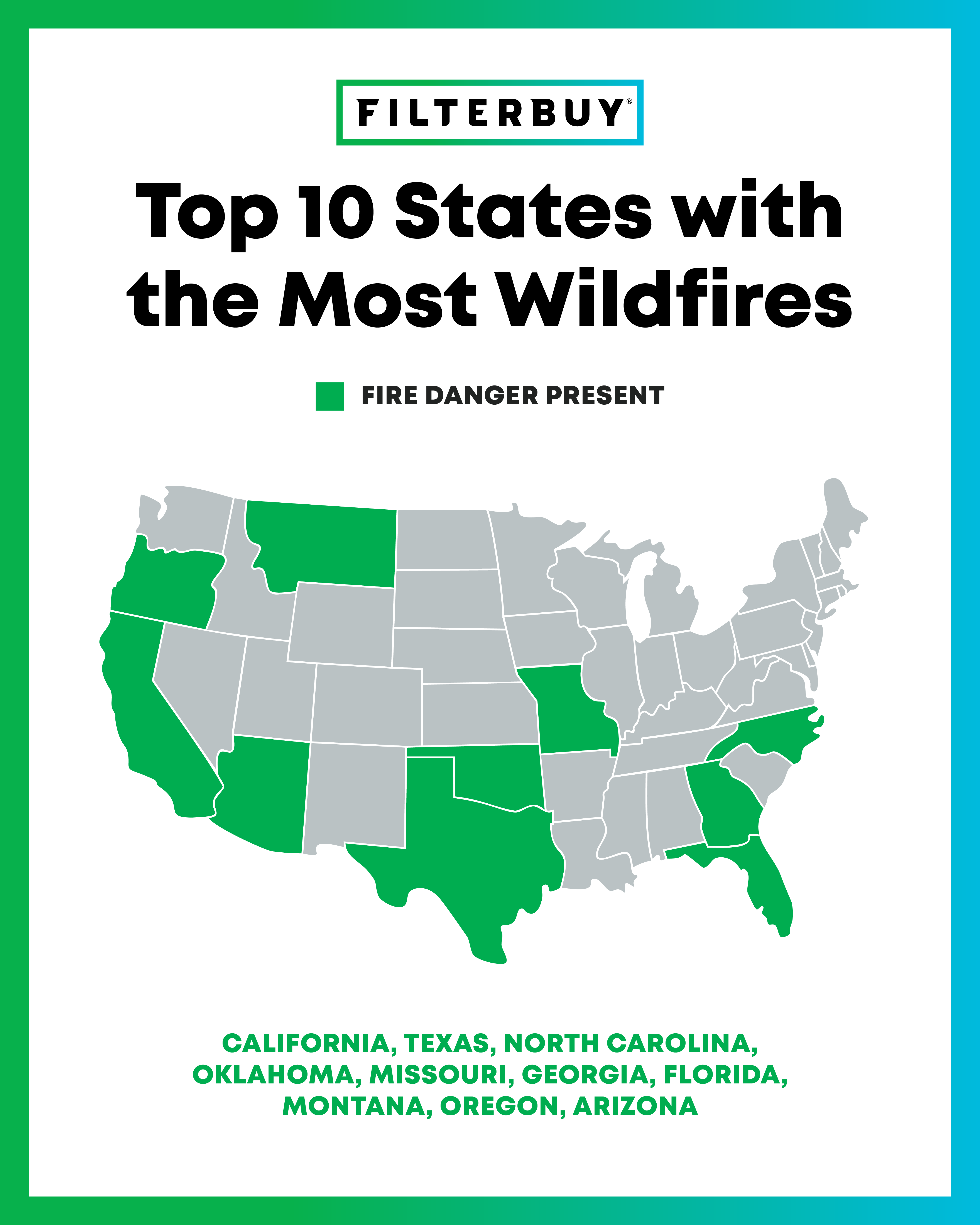
The duration of wildfire smoke can vary significantly, lasting anywhere from a few hours to several weeks, depending on factors such as wind direction, fire size, and weather conditions. In large fires, smoke may remain in the atmosphere for extended periods, affecting air quality even in distant areas.
Key factors include wind patterns, humidity levels, temperature, and the size of the wildfire. Winds can carry smoke for long distances, and high temperatures combined with stagnant air can trap smoke close to the ground, prolonging exposure.
Yes, prolonged exposure to wildfire smoke can lead to respiratory issues, aggravate pre-existing conditions like asthma and heart disease, and cause eye irritation. Those with underlying health conditions or the elderly are particularly vulnerable to these long-term effects.
The best way to protect yourself indoors is by keeping windows and doors closed, using high-efficiency air filters, and ensuring your HVAC system is equipped with a MERV 13 filter to trap smoke particles effectively. Upgrading to a higher-rated air filter can significantly improve indoor air quality during wildfire smoke events.
MERV 13 filters are ideal for capturing the fine particles present in wildfire smoke. These filters can remove up to 95% of airborne particles, including smoke and dust, making them highly effective for improving indoor air quality. Filterbuy offers high-quality MERV 13 filters designed to trap harmful particles and protect your health.
It's crucial to replace your HVAC filter more frequently during wildfire season, especially if you're using a high-efficiency filter like MERV 13. Typically, filters should be replaced every 3–6 months, but during smoke events, you may need to replace them more often to maintain optimal air quality.
Yes, portable air purifiers with HEPA filters can effectively remove fine smoke particles from indoor air. Look for units that are appropriate for your room size and have low ozone emissions. Filterbuy offers high-efficiency air purifiers that can help reduce the harmful effects of wildfire smoke in your home.
During smoky periods, it’s important to keep windows and doors closed, and stay inside with air conditioning or fans running to circulate clean air. If you don’t have air conditioning, consider purchasing a portable air purifier and using fans to help reduce indoor smoke exposure.
Yes, pets can also be affected by wildfire smoke. To protect them, keep them indoors during smoke events, and make sure they are in a well-ventilated area with clean air. Including pets in your emergency plans ensures they stay safe during wildfires.
Upgrade your HVAC system to use MERV 13 filters to filter out fine smoke particles. Ensure that your HVAC system is properly sealed and maintained. Adding a HEPA air purifier can further enhance your home’s air quality, making it safer for you and your family during wildfire season. Filterbuy offers filters that can help you improve indoor air quality during such events.
Symptoms of smoke exposure can include coughing, shortness of breath, sore throat, wheezing, eye irritation, and fatigue. Individuals with asthma or heart conditions may experience exacerbated symptoms, making it vital to reduce exposure by staying indoors and using air purifiers.
You can purchase high-efficiency filters for your HVAC system and portable air purifiers from trusted suppliers like Filterbuy. Their filters are designed to provide optimal protection against wildfire smoke and improve your indoor air quality during fire season.
