
Hartford Real-Time AQI Tracker


Get Alerts For Unhealthy AQI In Your Area
When air quality in your area reaches unhealthy levels, we'll send you a quick alert, along with expert tips on how to reduce your exposure.
What's Actually In Hartford Air Today?
What High AQI Means for Your Lungs in Hartford
How to Read AQI
The Air Quality Index (AQI) measures how polluted the air is and how it may affect your health.
0–50 (Good): Air quality is satisfactory.
51–100 (Moderate): Acceptable, but some pollutants may pose minor concerns.
101–150 (Unhealthy for Sensitive Groups)
151–200 (Unhealthy)
201–300 (Very Unhealthy)
301+ (Hazardous)
Moderate
Still okay for most, but if you have asthma or allergies, take it easy and avoid long outdoor workouts.
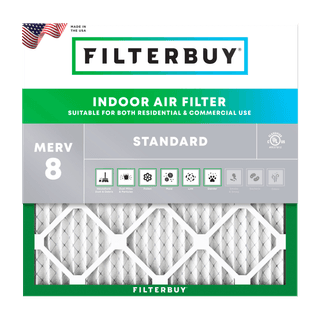
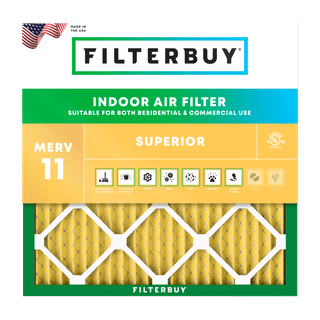
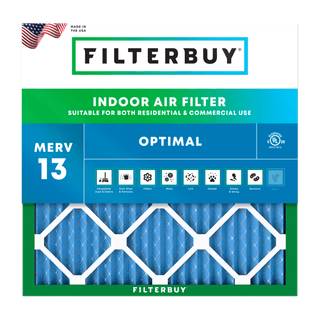
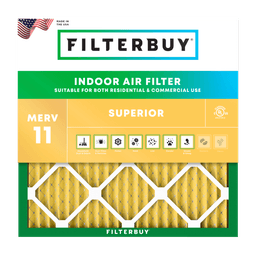
Shop MERV 11 filters→What's the Right Filter for Your AQI Level?



Check Today's Live Real Time Air Quality Index AQI Map in Hartford, CT Now
Author: Michelle Wan | Reviewer: David Clark, Licensed HVAC Technician | Publish Date: September 7, 2026 | Updated Date: September 7, 2026
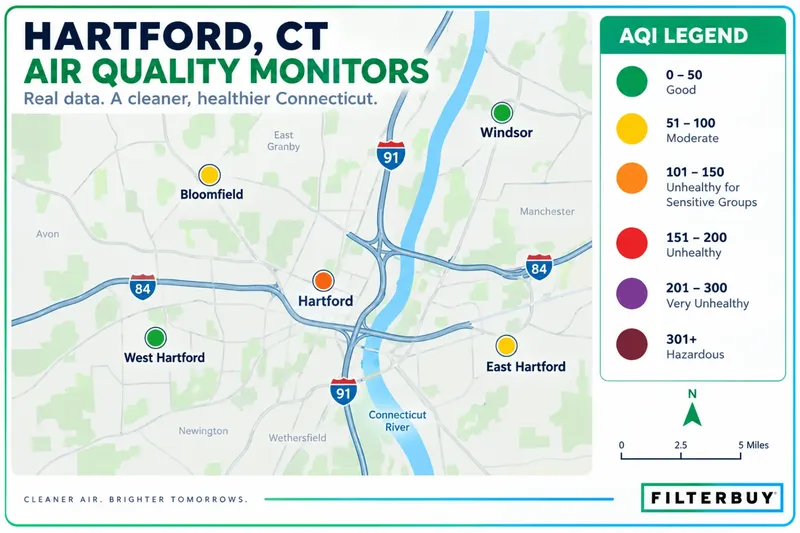
Hartford's live air quality index appears on the map above, pulled hourly from EPA AirNow and Connecticut DEEP monitors. Most days here fall in the Good (0–50) or Moderate (51–100) range. Readings climb fastest on hot summer afternoons, when ground-level ozone builds, and during wildfire smoke events, when PM2.5, the fine particles in smoke, can push the AQI past 150 in a matter of hours.
TL;DR
Hartford has two separate air problems that peak in different seasons. Ozone smog builds on hot summer afternoons and is largely blown in from outside Connecticut, which is why Hartford County earned an F for ozone in the American Lung Association's 2026 State of the Air report. Fine particle pollution is the local, episodic problem, and on that measure Hartford tied for the cleanest daily average in the state. Check the map before outdoor plans, and match your filter to whichever problem is in the air.
Key Takeaways
Hartford County earned an F for ozone smog in the American Lung Association's 2026 State of the Air report, while tying for the cleanest daily PM2.5 average in the state.
The Greater Connecticut area is classified Serious nonattainment for ozone, a step up from Moderate that EPA granted in July 2024.
Most of Hartford's ozone is not made in Hartford. Connecticut DEEP attributes the state's ozone nonattainment primarily to pollution transported from the New York metro area. DEEP forecasts ozone daily from May 1 through September 30, and PM2.5 year-round.
An AQI of 100 is our action line for smoke. That is where we recommend switching to Filterbuy MERV 13, setting the thermostat fan to On, and running a portable HEPA cleaner in each occupied room.
How to Read Today's Hartford Air Quality Map
Each colored dot on the map above is a real-time reading from a nearby monitor, green for clean air through to maroon for hazardous. Connecticut DEEP operates 14 monitoring stations statewide, but only two of them produce the number you see for Hartford, and neither one measures everything.
Hartford Huntley Place reports particles, carbon monoxide and nitrogen dioxide, but no ozone, so on a July afternoon the reading labelled Hartford actually comes from East Hartford's McAuliffe Park station.
Where it sits matters just as much. Huntley Place was built in 2013 as a near-road monitor beside I-84, so it measures close to worst-case traffic air by design. In the West End, your exposure on a calm day is probably lower.
That makes a daily check worth building in for anyone managing asthma, COPD or heart disease, plus parents of young children and adults over 65. Take condition-specific guidance from your own clinician.
Hartford's Air Quality Report Card
Hartford's air is better than a generation ago and still fails the federal ozone standard. Here is where it stands on every measure DEEP and EPA track.
Design values: CT DEEP 2026 Air Monitoring Network Plan, 2023 to 2025 data. Grades: ALA State of the Air 2026, 2022 to 2024 data.
Hartford passes every federal air standard except one. Ozone is the single measure the region cannot clear.
One row looks like a contradiction. Hartford earns a D for daily fine particles while comfortably passing the federal daily standard, because the two count different things. The Lung Association tallies unhealthy days and weights the worst of them; the federal standard works from a three-year 98th percentile. A place can log a few bad smoke days and still sit under a limit built around the typical one.
The most telling part came in July 2024, when the EPA moved Greater Connecticut from Moderate to Serious nonattainment, and Connecticut asked for it. States rarely volunteer for a stricter label, but a tougher one tightens federal obligations on the upwind states.
Why Hartford Has Two Different Air Problems
Ozone is Hartford's imported problem. It forms when tailpipe and smokestack emissions cook in sunlight, and Connecticut DEEP states plainly that the state's nonattainment comes mainly from pollutants carried out of the New York metro area, and cannot be fixed without federal enforcement of the Clean Air Act's good neighbor provisions.
Fine particle pollution is Hartford's local and episodic problem. PM2.5 comes off the highways, out of wood stoves, and in on smoke from thousands of miles away. In June 2023, Quebec smoke pushed Connecticut into Unhealthy territory for days. DEEP Commissioner Katie Dykes called it “dramatic, unhealthy, and unprecedented.” Peak state readings reached the high 200s, against a typical Connecticut daily particulate reading of five to eight.
That distinction changes what you do about it. Ozone days call for better timing, smoke days for better filtration.
The Hartford Air Quality Calendar
Hartford's dominant pollutant rotates through the year, and the response with it.
Ozone and wildfire smoke both run high in July and August.
When Hartford's Air Is Worst, Hour by Hour
The season tells you which pollutant. The clock tells you when it peaks. The two rarely line up.
Summer ozone peaks mid to late afternoon. Precursors need hours of sunlight, so a hot day is cleanest early. A 7 a.m. run beats a 5 p.m. one.
Winter particles peak overnight and before dawn. Cold, still nights pin wood smoke near the ground until the sun breaks the inversion.
Traffic particles peak at rush hour. Huntley Place sits beside I-84, so its worst readings track the commute, not the weather.
Wildfire smoke ignores the clock. It arrives when the wind delivers it, so smoke days need repeat checks.
Above an AQI of 100, move hard exertion into whichever window the season leaves cleanest and bring children indoors. The EPA band that is unhealthy for sensitive groups begins at 101.
What to Do When Hartford's AQI Reaches 100
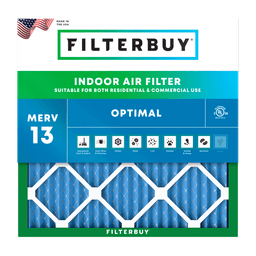
The EPA recommends a high-efficiency filter rated MERV 13 or higher in a central HVAC system during smoke events. At Filterbuy, an AQI of 100 is where we tell Hartford customers to act: MERV 13 in the system, the thermostat fan set to On, and a portable HEPA cleaner in each occupied room. Our full guide to what to do above an AQI of 100 walks through every step, including apartments with no ductwork and when to swap a smoke-loaded filter. During a smoke event, AirNow and local guidance come first.
Choosing a Filter for a Hartford Home
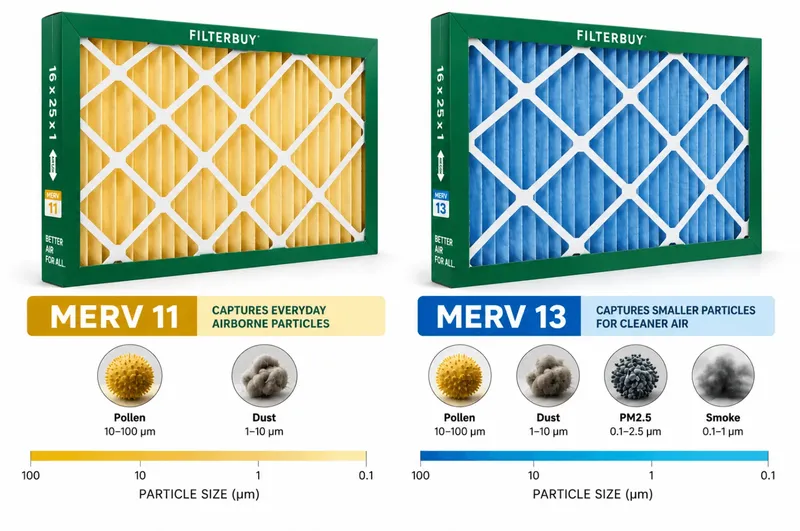
For most Hartford homes, Filterbuy MERV 11 is the year-round baseline, covering dust, pollen and traffic particles. Filterbuy MERV 13 is the smoke-event tier. Most furnaces accommodate MERV 13 without equipment problems when the filter is replaced often, so treat it as a fit check, the same as confirming a size. Our guide to MERV ratings walks through the ladder.
One limitation is worth stating plainly, and it applies to our own products. A standard pleated filter does nothing for ozone. Fiber media catches particles and ozone is a gas, so it slips past a Filterbuy MERV 13, and past the HEPA in a portable cleaner. Activated carbon media does adsorb a meaningful share, but on a high-ozone afternoon your first defense is timing and closed windows. We would rather lose the upsell than have a Hartford family think a filter protects them from something it cannot touch. See what filters can and cannot do about ozone.
Filterbuy has manufactured filters in the USA for over a decade, and we will still tell Hartford homeowners when not to buy one. On a hot July afternoon the pollutant is ozone, and nothing we make will touch it. Shut the windows and move the run to seven in the morning instead. Our filters earn their keep in a different season, when smoke and wood-burning particles are what is actually in the air. Knowing which of Hartford’s two problems you have beats any upgrade we could sell you.
Filterbuy Team
Supporting Statistics
Three figures from federal and Connecticut agencies sit behind the above.
1. More than 80% of Connecticut's ozone blows in from out of state.
More than 90% in southwest Connecticut.
Air already exceeds ozone standards as it crosses the state line, on the days Connecticut itself fails federal limits.
Source: Connecticut Office of the Attorney General, statement on Ohio v. EPA, June 27, 2024
2. A high-efficiency HVAC filter cuts indoor PM2.5 by about 50%.
Requires the thermostat fan set to On, not Auto.
A low-efficiency filter still cuts particles about 24% (Fisk and Chan, 2017).
With windows closed and no air cleaner running, indoor PM2.5 still sits at 55% to 60% of outdoor levels.
Source: U.S. EPA, Strategies to Reduce Exposure Indoors, updated October 10, 2025
3. Connecticut children reach emergency departments for asthma at 69.9 per 10,000.
More than double the adult rate of 33.6 (2023).
$119.9 million in acute care charges that year, the most since 2014.
Connecticut ranked 4th nationally for adult asthma prevalence in 2022.
Source: Connecticut Department of Public Health, Asthma Program
Frequently Asked Questions
Glossary
AQI (Air Quality Index): the EPA scale: Good (0–50), Moderate (51–100), Unhealthy for Sensitive Groups (101–150), Unhealthy (151–200), Very Unhealthy (201–300), Hazardous (301+).
PM2.5: fine particles under 2.5 microns, small enough to reach deep lung tissue. Dominant during smoke and wood-burning.
Ground-level ozone: a gas formed when emissions react in sunlight, also called smog. Hartford's one failing pollutant.
Nonattainment area: an EPA designation for a region failing a federal air standard. Greater Connecticut has been Serious since 2024.
Connecticut DEEP: the agency operating Connecticut's 14 air monitoring stations.
Get Hartford-Ready Filters Before You Need Them
Clean indoor air on Hartford's worst days starts with the filter already in your system when conditions turn. Filterbuy builds over 600 sizes plus custom cuts in its U.S. factory, so an odd size in an older Hartford colonial is no special order. Find your size in under a minute and keep a spare on the shelf.
Find your filter size · Shop MERV 13 · Set up auto-delivery
Compare Hartford with the Connecticut statewide AQI map, New Britain, or New Haven, or read how the AQI is calculated.