
Are Smart Thermostats Worth It? What the Savings Data Shows
November 23, 2026
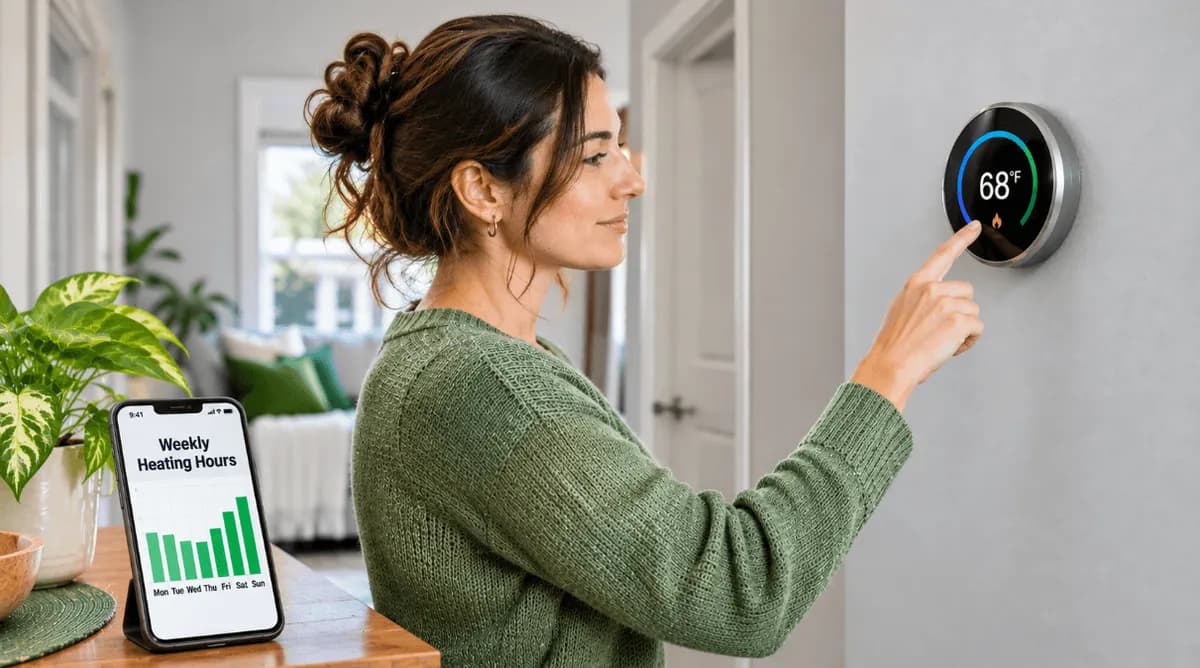
Smart thermostats are worth it for most homes that heat and cool on a regular schedule. As an air filter manufacturer, Filterbuy judges them by a single measure: how many fewer hours your system has to run. On that score, an ENERGY STAR certified model saves the average household about 8% on heating and cooling, or roughly $50 a year.
TL;DR
Most smart thermostats pay for themselves within one to five years. ENERGY STAR puts average savings at about 8% of heating and cooling bills, around $50 a year, and up to $100 for homes with higher bills. Homes that sit empty on a regular schedule save the most, while always-occupied homes save the least.
Key Takeaways
Certified smart thermostats cut heating and cooling bills by about 8% on average, or roughly $50 a year.
ENERGY STAR requires a year of field data in which 4 out of 5 sampled homes cut heating run time by at least 4%.
A $130 thermostat saving $50 a year pays for itself in about 2.6 years, or about 13 months after a $75 rebate.
Households that keep one temperature all day gain the most, and always-occupied homes gain the least.
Heat pump owners save more when the thermostat keeps electric backup heat to a minimum.
Do Smart Thermostats Actually Save Money?
Smart thermostats do save money in most homes, though the amount is modest and varies widely. The ENERGY STAR smart thermostat FAQ puts average savings for certified models at about 8% of heating and cooling bills, or roughly $50 a year.
Those savings come from running your heating and cooling equipment less while you sleep or are away. The U.S. Department of Energy says you can save as much as 10% a year by turning your thermostat back 7°F to 10°F for 8 hours a day, and a smart thermostat makes those setbacks happen without you.
Independent utility studies in Indiana and Washington State found savings near 12%, as the statistics below show. Even so, plan on the $50 average and treat anything beyond it as a bonus.
What Does The ENERGY STAR Label Prove About Smart Thermostat Savings?
The ENERGY STAR label shows that a smart thermostat saved energy in real homes rather than in a lab. To earn it, the thermostat's service provider runs a year of data from hundreds of customer homes through EPA software, then keeps submitting field data to stay certified.
ENERGY STAR also sets a floor at the 20th percentile. Heating run time must drop at least 4% and cooling at least 5%, which means 4 out of 5 sampled homes saved at least that much. A 2026 EPA and Lawrence Berkeley National Laboratory analysis of six years of data from 13 vendors found heating savings of 3% to 20% and cooling savings of 10% to 20%, depending on climate zone, with savings slowly declining in many zones.
EPA built this field-data requirement after it dropped the ENERGY STAR label for programmable thermostats in 2009, when too many owners never programmed them.
What Is The Payback Period For A Smart Thermostat?
Most smart thermostats pay for themselves within one to five years. At the ENERGY STAR average of $50 a year, a $130 thermostat breaks even in about 2.6 years.
| Net Cost After Rebates | Payback at $50 per Year | Payback at $100 per Year |
|---|---|---|
| $55 ($130 minus $75 rebate) | About 13 months | About 7 months |
| $130 | About 2.6 years | About 16 months |
| $175 | About 3.5 years | About 21 months |
| $250 | About 5 years | About 2.5 years |
Example prices for illustration. $50 is the ENERGY STAR average and $100 is its higher-bill estimate. Paid installation adds to net cost and extends payback.
Filterbuy built this table from ENERGY STAR's field-tested figures rather than brand claims. It also shows why a mid-priced certified model with a rebate usually pays back faster than a premium model.
Estimate Your Own Payback In Three Steps
Find your heating and cooling spend. Add up 12 months of energy bills, then subtract your cheapest spring or fall month multiplied by 12. What remains is roughly your yearly heating and cooling cost.
Pick a savings rate. Use 8%, the ENERGY STAR average, or 4% if someone is home all day or you already set back the temperature. That lower figure is the heating floor that 4 out of 5 certified homes reach.
Do the math. Divide the thermostat price after rebates by your yearly savings to see how many years payback takes.
Say your bills total $1,800 a year and your cheapest month is $80. That leaves about $840 for heating and cooling, so at 8% a $130 thermostat pays back in about 23 months. At 4%, it takes almost 4 years.
Who Saves The Most With A Smart Thermostat, And Who Saves Little?
Homes that sit empty on a predictable schedule save the most, and always-occupied homes in mild climates save the least. Habits matter more than hardware, and ENERGY STAR adds that homes with big seasonal temperature swings tend to save more.
When Filterbuy compared 2020 federal survey data, we found a telling gap: about 65.4 million U.S. households owned a programmable or smart thermostat, yet only 19.8 million let it adjust the heat on its own.
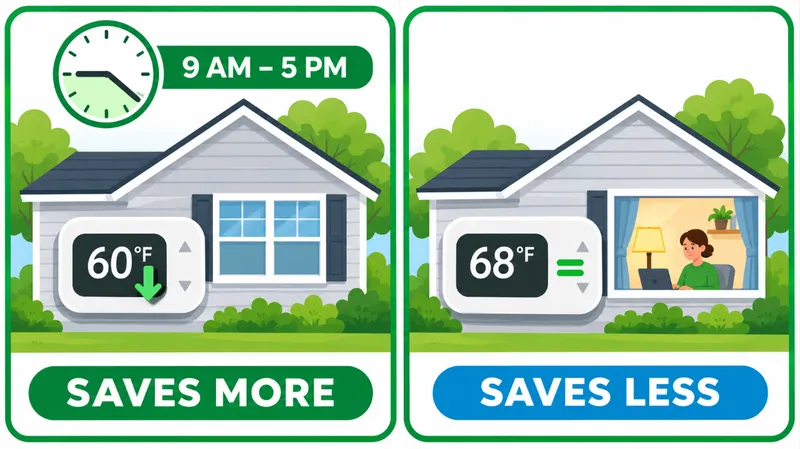
| Factor | Saves More When | Saves Less When |
|---|---|---|
| Daily schedule | Home empty at set hours | Someone home all day |
| Current habits | One temperature held 24/7 | Already sets back the temperature |
| Climate | Harsh winters or summers | Mild climate, low HVAC bills |
| Heating system | Heat pump with backup strip heat | Variable-capacity system |
| Equipment type | Ducted central HVAC | Ductless mini split |
Equipment matters too. ENERGY STAR advises that variable-capacity systems work best with the thermostat their manufacturer recommends, and ductless owners should compare smart controllers for mini splits instead. If you have wondered whether to leave your AC on all day, away mode answers that for you.
Smart Thermostat Pros And Cons
The biggest advantages are verified savings and automatic, phone-controlled scheduling. The drawbacks are upfront cost, wiring limits, Wi-Fi dependence, and company-held data.
Smart Thermostat Pros
Field-verified savings with an ENERGY STAR certified model.
Automatic setbacks through schedules or occupancy sensing, including geofencing.
Remote control, which comes in handy when choosing the temperature to leave your AC on vacation.
Monthly run time reports that show how hard your system is working.
Smart Thermostat Disadvantages
Upfront cost that can take five years to recover in low-use homes.
A C-wire, or common wire, that many models need and some older systems lack.
Limited fit with baseboard heat and mini splits, which need specialized controls.
Wi-Fi for app controls, although certified models still work offline.
Usage data held by the thermostat company, so ENERGY STAR suggests asking about security and privacy.
How Do Rebates Change The Smart Thermostat Math?
Rebates can cut payback time by half or more. Many utilities offer instant or mail-in rebates on ENERGY STAR certified models.
Before you buy, check your utility's website or the ENERGY STAR Rebate Finder, and ask about credits for demand response enrollment. Don't count on a federal tax credit, because the Section 25C home improvement credit ended December 31, 2025.
How To Get The Most Savings From A Smart Thermostat
A smart thermostat saves the most when you let it make setbacks on its own. Work through these steps during the first week, since a thermostat cannot save energy it is never allowed to manage.
Confirm compatibility. Check for a C-wire and make sure the model supports your system type, such as a heat pump or dual-fuel setup.
Turn on schedules and away mode. Filterbuy's season-by-season thermostat guide can help you pick setpoints.
Keep heat pump setbacks shallow. Filterbuy's winter thermostat settings guide suggests 1°F to 2°F, because deeper setbacks can trigger backup heat during recovery mode.
Leave the fan on Auto. Our thermostat fan setting guide explains when On makes sense.
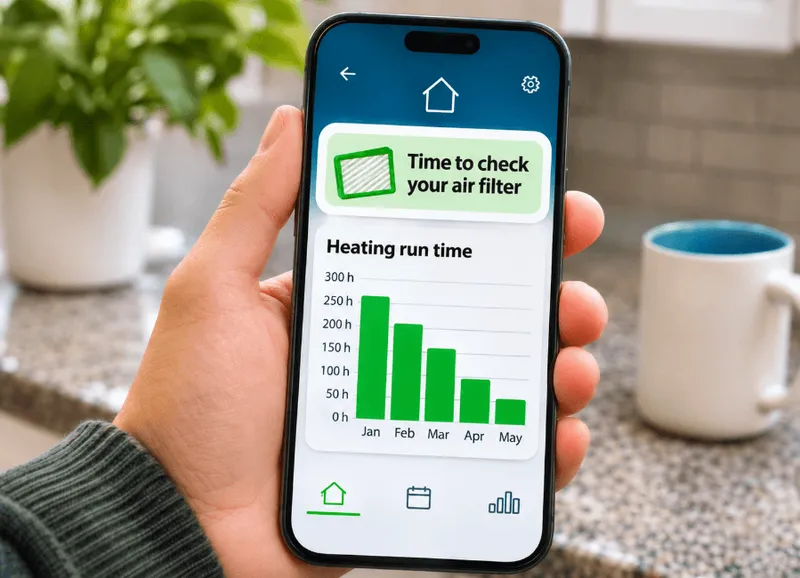
Watch run time reports. As a filter manufacturer, Filterbuy treats rising run time as an airflow question first. If run time climbs while the weather stays similar, check the air filter first, since a clogged filter restricts airflow and keeps the system running longer. Keeping replacement air filters on hand makes on-time changes easy.
How To Check Whether Your Smart Thermostat Is Saving Money
Judge the savings after a full season. Compare each month's kWh or therms with the same month last year, since dollar amounts shift with utility rates. If your bill lists average outdoor temperature or degree days, use it to match months with similar weather. Fewer runtime hours in similar weather is the clearest sign the setbacks are working.
Filterbuy's Take: Who Should Buy One
A smart thermostat makes sense if your home sits empty on a schedule or you rarely adjust the temperature, especially with a utility rebate. If someone is home all day and you already set back, the cheapest certified model is enough, or skip it. Either way, keep the filter on schedule to protect airflow.
"We make filters, so we look at a smart thermostat the way your HVAC system does. It can cut the hours your system runs, but it cannot fix a system that struggles to move air. Use the schedule and change your filter on time."
- Michelle Wan, Brand Manager & Air Quality Writer, Filterbuy
Supporting Statistics
In 2020, 50.7 million U.S. households set one heating temperature and left it there most of the time. Source: Table HC6.1 Space Heating in U.S. Homes, by Housing Unit Type, 2020
Heat pump homes in a Bonneville Power Administration pilot saved about 841 kWh a year with learning thermostats, roughly 12% of heating and cooling energy. Backup strip heat ran during first-stage heating at 34% of sites. Source: Nest Learning Thermostat Pilot Program Savings Assessment
In a Cadmus evaluation of 600 Indiana dual-fuel homes, learning thermostats cut gas heating use by 12.5%, compared with 5.0% for programmable thermostats. Cooling savings were close, at 13.9% and 13.1%. Source: Evaluation of the 2013–2014 Programmable and Smart Thermostat Program
Frequently Asked Questions
How Much Does A Smart Thermostat Save Per Month?
On average, a smart thermostat saves about $4 a month, based on ENERGY STAR's $50 yearly figure. Homes with higher bills can save closer to $8.
Is A Smart Thermostat Better Than A Programmable Thermostat?
For most people, yes. A smart thermostat sets back the temperature without manual programming, while a programmable thermostat only saves if its owner programs it, and survey data shows most owners do not.
Do Smart Thermostats Work With Heat Pumps?
Yes, as long as the model supports heat pump wiring and auxiliary heat control. Keep setbacks small.
Can A Smart Thermostat Raise My Energy Bill?
It can, if it favors comfort over savings or triggers backup heat on a heat pump. Keep schedules active, and leave Emergency Heat mode off unless the heat pump has failed.
Do Smart Thermostats Need A C-Wire?
Many do. A C-wire, or common wire, supplies steady 24-volt power, though some models include an adapter. If your wall plate has no connected C terminal, check compatibility before you buy.
Keep Your Smart Thermostat Working For You
For more help, browse Filterbuy's smart thermostat guides and pair your thermostat with a fresh filter. Filterbuy's American-made air filters ship with fast and free 2-day delivery to most US states.
Glossary
ENERGY STAR: An EPA program that certifies energy-saving products using real-home data.
Smart thermostat: A Wi-Fi thermostat that adjusts heating and cooling automatically.
Setback: A temporary setpoint change while a home is empty or occupants sleep.
Run time: The hours heating or cooling equipment operates.
C-wire: The common wire that powers a smart thermostat.
Auxiliary heat: Electric backup heat in a heat pump, also called strip heat.
Demand response: A utility program that adjusts enrolled thermostats during peak demand.