
Winter Weather Alerts by ZIP Code
October 26, 2026
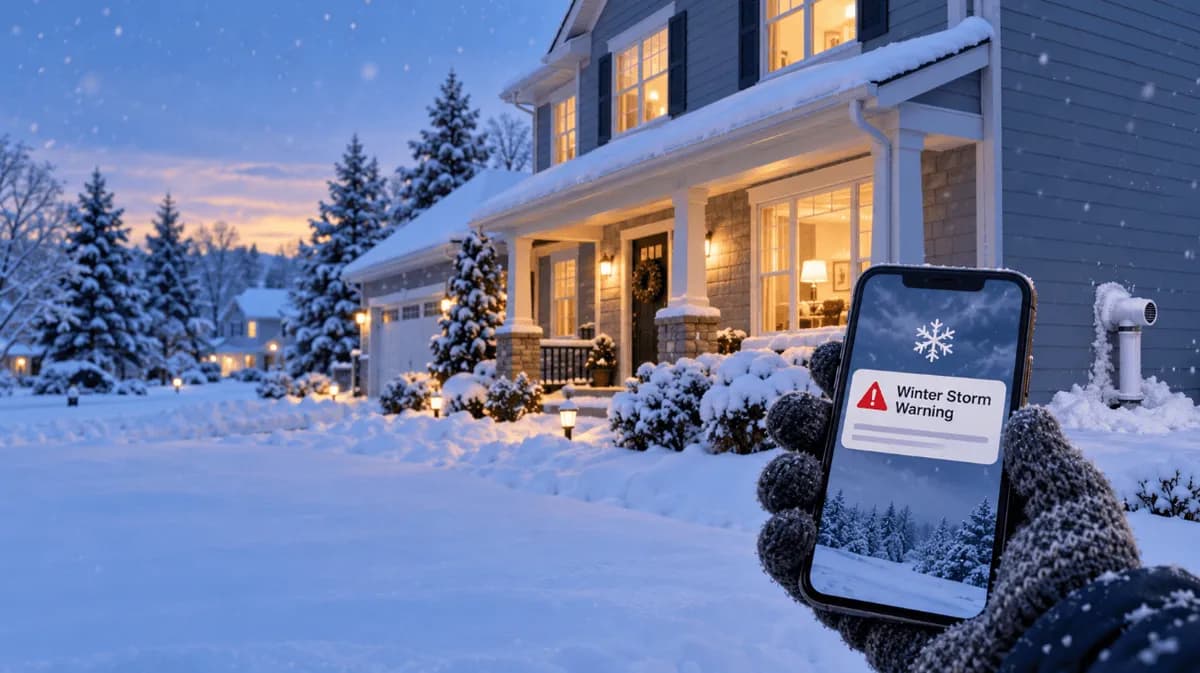
A Winter Storm Watch is usually the earliest warning your ZIP code gets, often 24 to 72 hours before snow or ice arrives. Use that window to change your furnace filter, because once a warning goes up, icy roads can stop deliveries fast.
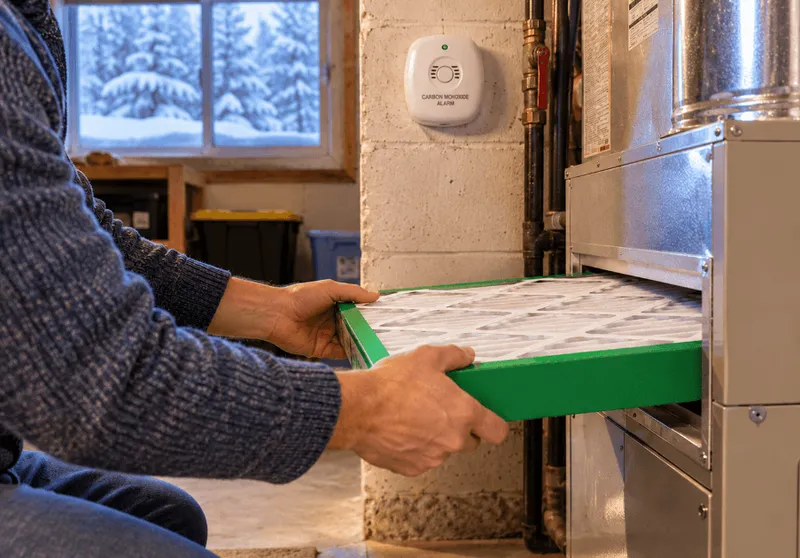
During a storm your furnace runs longer to keep up with the cold, and a clogged filter can trip its high-limit safety switch and shut off your heat. A fresh filter takes about two minutes to install, and it keeps air moving while your family waits out the weather indoors.
How Much Notice Each Winter Alert Gives You
Typical lead time before the storm reaches your area
Winter Storm Watch: 24 to 72 hours out
Filter day: your best window to swap the filter
Ice Storm Warning: 24 to 48 hours out
Plan for power loss and safe backup heat
Winter Storm Warning: 12 to 36 hours out
Stay home and keep furnace vents clear of snow
Winter Weather Advisory: 12 to 24 hours out
Check the filter and clear vents after snowfall
Source: National Weather Service. Lead times vary by local NWS office.
Shop Air Filters Before The Watch Ends
Fast and free 2-day delivery to most US states. Auto-delivery saves 5% on every order.
Find The Right Furnace Filter Before Your Next Winter Alert
TL;DR:
Enter your five-digit ZIP code in the Filterbuy Winter Storm Tracker below to see every active National Weather Service (NWS) winter alert where you live. Because the NWS issues winter alerts by forecast zone rather than ZIP code, the tracker pins your ZIP to an exact location. Each alert comes with the home step Filterbuy recommends to keep your heat running.
Key Takeaways
The NWS is the official, free source for every U.S. winter alert.
Winter alerts go out by forecast zone, so a single ZIP code can fall in two zones with different alerts.
Most winter warnings, including blizzard and ice storm warnings, won't trigger an emergency alert on your phone.
At Filterbuy, we call a Winter Storm Watch "filter day," your last calm window to swap the filter.
What Each Winter Weather Alert Means for Your Home
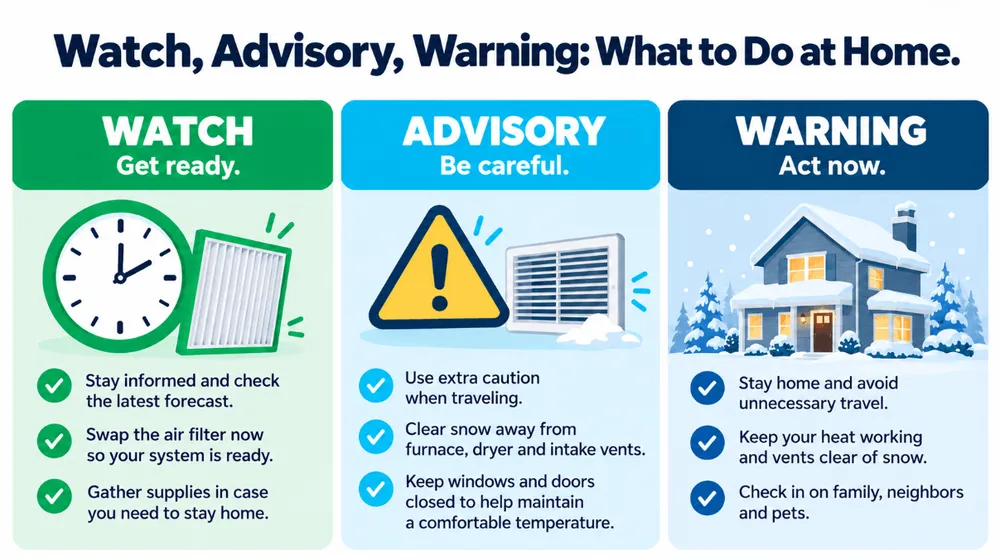
Think of NWS alerts as a countdown: a watch says get ready, and a warning says act now. An advisory sits in between: be careful. Every NWS office sets its own triggers, which is why 2 inches of snow can bring a warning in metro Atlanta while Cleveland waits for about 6 inches in 12 hours.
The home column below comes from what the Filterbuy team sees after storms. Our rule of thumb is simple: blizzards are vent problems, and ice storms are power problems.
| NWS alert | What it means | Lead time | Filterbuy home step |
|---|---|---|---|
| Winter Storm Watch | Warning-level snow or ice is possible | 24–72 hours | Swap the filter; test CO alarms |
| Winter Storm Warning | Heavy snow or ice is expected or underway | 12–36 hours | Stay home; keep furnace vents clear of snow |
| Winter Weather Advisory | Disruptive snow or ice below warning levels | 12–24 hours | Check the filter and clear vents after snowfall |
| Blizzard Warning | Strong wind and blowing snow cut visibility | 12–36 hours | Check side-wall vents; drifts bury them fast |
| Ice Storm Warning | Damaging ice buildup from freezing rain | 24–48 hours | Expect power loss; plan safe backup heat |
| Extreme Cold Warning | Dangerously cold air or wind chill is expected | Varies by office | Keep heat at 55°F or higher; check the filter monthly |
| Cold Weather Advisory | Cold enough to cause frostbite if unprepared | Varies by office | Protect exposed pipes; confirm the furnace cycles normally |
Definitions: NWS. Home actions: Filterbuy. Lead times vary by NWS office.
When Two Alerts Show Up for Your ZIP Code
When a winter storm or ice storm warning arrives alongside an Extreme Cold Watch or Warning, you could lose power, and your central heat with it, in dangerous cold. If you see both, set up a warm room and plan safe backup heat before the snow starts. See our winter storm emergency plan.
Why Your ZIP Code and Your NWS Alert Area Don't Always Match
The National Weather Service doesn't issue alerts by ZIP code. The Filterbuy team dug into the NWS Geolocation Guide and found that winter storms and extreme cold are issued by public forecast zone, using codes like MDZ013. Fast-moving snow squall warnings are drawn as polygons instead. Since a ZIP code is really a mail route, one ZIP can straddle two zones with different alerts.
Zones don't line up neatly with counties either, and the NWS redraws them about twice a year. In hilly or lake-effect country, a warning can end a few miles from your door.
How to tell if your ZIP code straddles two zones: If your ZIP covers both a valley and a ridge, or crosses a county line, look up alerts for an address near each edge. When the results differ, follow the stricter alert. At home, the tracker's "Use my location" button gives a point-exact answer, as does clicking your spot on the winter storm warning map.
There's a seasonal gap, too. Once the local growing season ends, many NWS offices stop issuing frost and freeze alerts until spring, so a 25°F night in December can arrive with no alert. We protect pipes by the forecast low rather than waiting for a warning.
Free Ways to Get Winter Weather Alerts by ZIP Code
The best free setup for winter weather alerts pairs one option that pushes alerts to you with one you check for details.
Winter Weather Alerts by ZIP Code This Week
For the week ahead, check your 7-day forecast at weather.gov and the NWS Winter Storm Severity Index. Your first official signal is usually a Winter Storm Watch, and that's the moment to order a spare filter. Filterbuy cuts every filter to order and ships within 24 hours, but no carrier can reach an iced-over street.
Set Up ZIP-Code Winter Alerts in 10 Minutes
The Filterbuy team would hand a neighbor this setup:
Turn on government alerts on your phone. Switch on Emergency Alerts in your notification settings so snow squall warnings reach you on the road.
Add your ZIP code, and your family's, to the free Federal Emergency Management Agency (FEMA) app. Then you can watch an aging parent's ZIP code from home too.
Text your ZIP code to 888777 if your town uses Nixle. You'll get local updates on road closures and warming centers.
Program a NOAA Weather Radio with your county's SAME code. The code is a 0 plus your state and county FIPS codes, and the radio works when cell service fails.
Bookmark the tracker. Save the Filterbuy Winter Storm Tracker and check it whenever a watch goes out.
What to Do When a Winter Alert Shows Up for Your ZIP Code
When a winter alert shows up for your ZIP code, protect your heat first. The Filterbuy team has pulled February filters from customers' systems that were completely black after just 30 days. A filter rated for 90 days can be spent within weeks of a cold snap.
Start these steps as soon as a watch is issued:
Check or replace the furnace filter. A clogged filter can trip the furnace's high-limit safety switch and shut off your heat. If you can't remember when you last changed it, it's overdue. See how often to change your air filter.
Test your carbon monoxide (CO) alarms. According to the Centers for Disease Control and Prevention (CDC), more than 400 Americans die each year from unintentional, non-fire CO poisoning. Filterbuy's winter carbon monoxide safety guide explains where alarms belong.
Clear furnace and water heater vents. Snow drifts can bury side-wall vent pipes, so learn how to clear a frozen furnace vent pipe safely.
Keep the thermostat at 55°F or higher. Steady heat protects pipes in exterior walls.
Plan safe backup heat. Run a portable generator outdoors only, at least 20 feet from the house, and never heat your home with a gas oven or grill.
Charge your phones and power banks.
"Most no-heat calls during a winter storm trace back to two things a homeowner can check in five minutes: a snow-blocked vent pipe and a clogged filter. Clear the vents and swap the filter before the snow starts."
David Clark, Licensed HVAC Technician, Filterbuy HVAC Solutions
To make the first step automatic, Filterbuy auto-delivery ships your exact size before you need it, made to order in our own U.S. plants. Not sure what size you need? Learn how to measure your air filter.
How Winter Storms Affect Your Indoor Air
With the windows shut, a home recirculates the same air for days, which is a big reason indoor air quality gets worse in winter. Dust and fireplace smoke have nowhere to go but your filter.
On Filterbuy's factory floor, we see why a 4-inch filter rides out a long storm better than a 1-inch: each pleat is deeper. Our 1-inch filters carry 14 pleats per foot, and our 4-inch filters carry 8. On rating, David Clark advises staying with the MERV your system is built for during a warning, usually MERV 8 to 11, and saving a first jump to MERV 13 for a mild week. Compare options on the Filterbuy MERV rating chart.
Because Filterbuy makes filters, we'll be plain about their limits: no air filter removes carbon monoxide. Only a working CO alarm can warn you. To see conditions outside during a storm, check the Filterbuy USA air quality map.
Filterbuy has made air filters in its own U.S. plants for more than a decade, and every winter brings the same pattern: when a cold snap hits, urgent filter orders spike, often from homeowners whose furnace has already shut down.
"Most storm checklists stop at batteries and bottled water. I read a winter warning from the furnace closet, because the filter is the one part you can fix in two minutes before the roads close."
Michelle Wan, Brand Manager and Air Quality Writer, Filterbuy
Supporting Statistics
1. Only 36% of U.S. adults signed up for alerts and warnings in 2023, down from 46% in 2022. Source: FEMA National Household Survey
2. Cold killed 25 people in the U.S. in 2025, more than twice the 10 killed by winter storms. Source: National Weather Service
3. Space heaters and heating stoves account for 47% of home heating fires but 73% of heating fire deaths. Source: NFPA data, 2020–2024
Frequently Asked Questions
How do I find current winter weather alerts near me?
Enter your ZIP code in the Filterbuy Winter Storm Tracker. You can also search your city or ZIP code on the NWS active alerts page.
What is the best free app for winter weather alerts by ZIP code?
The free FEMA app sends official NWS alerts for up to five locations you choose by ZIP code.
Can I get winter weather alerts by text?
Yes. Many cities and counties send free emergency texts through services like Nixle. To opt in, text your ZIP code to 888777.
Will my phone alert me to a winter storm warning automatically?
Usually not. Since early 2023, the only winter warnings that trigger a phone alert are snow squall warnings tagged "Significant," as Filterbuy's winter storm warning guide explains. For winter storms, set up an app or text alert instead.
Is there a map of winter weather alerts by ZIP code?
Yes. The NWS hazard map at weather.gov is the official live map. Filterbuy's national weather alerts map guide explains why each zone shows only its top alert.
About the Author and Reviewer
Michelle Wan is Filterbuy's Brand Manager and Air Quality Writer. David Clark, a Licensed HVAC Technician with Filterbuy HVAC Solutions, reviewed the HVAC guidance. Learn more about Filterbuy.
Glossary
Filterbuy: A family-owned U.S. maker of pleated HVAC air filters, cut to order in its own U.S. plants.
National Weather Service (NWS): The NOAA agency that issues official U.S. weather alerts.
Watch, advisory, warning: The NWS alert levels, from "get ready" up to "act now."
Forecast zone: The NWS area used for winter alerts, coded like MDZ013.
Wireless Emergency Alerts (WEA): Free government alerts pushed to phones.
NOAA Weather Radio: A radio network that broadcasts NWS alerts by county.
Carbon monoxide (CO): An odorless gas from burning fuel that only a CO alarm detects.
MERV rating: Minimum Efficiency Reporting Value, a 1–16 scale for how well an HVAC filter captures particles.