
Madison Real-Time AQI Tracker


Get Alerts For Unhealthy AQI In Your Area
When air quality in your area reaches unhealthy levels, we'll send you a quick alert, along with expert tips on how to reduce your exposure.
What's Actually In Madison Air Today?
What High AQI Means for Your Lungs in Madison
How to Read AQI
The Air Quality Index (AQI) measures how polluted the air is and how it may affect your health.
0–50 (Good): Air quality is satisfactory.
51–100 (Moderate): Acceptable, but some pollutants may pose minor concerns.
101–150 (Unhealthy for Sensitive Groups)
151–200 (Unhealthy)
201–300 (Very Unhealthy)
301+ (Hazardous)
Moderate
Still okay for most, but if you have asthma or allergies, take it easy and avoid long outdoor workouts.
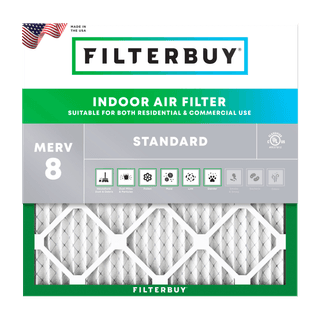
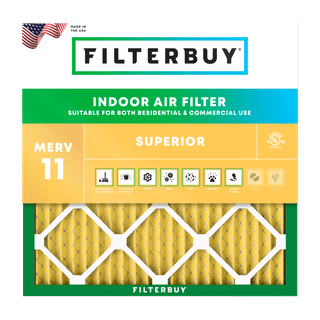
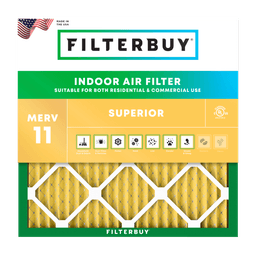
Shop MERV 11 filters→What's the Right Filter for Your AQI Level?



Check Today's Live Real Time Air Quality Index AQI Map in Madison, WI Now
TL;DR
The live AQI map above from Filterbuy, a U.S. air filter manufacturer, shows Madison's current Air Quality Index (AQI) and the pollutant behind it, from EPA-monitored stations. Readings of 0 to 50 are Good for everyone, and above 100, sensitive groups should ease up outdoors. Madison's worst days come from fine particle pollution (PM2.5), mostly wildfire smoke from Canada and northern Minnesota, while summer ozone and winter wood smoke cause most of the rest.
Key Takeaways
The Wisconsin DNR issues county advisories when ozone or PM2.5 is forecast to turn unhealthy.
In July 2026, smoke pushed Madison's AQI above 450 as Wisconsin logged its highest readings in at least 16 years.
At AQI 100, Filterbuy's action line, close the house up, run MERV 13 with the fan On and add a HEPA cleaner in each occupied room.
How to Read Madison's Live AQI Map
Madison's AQI reflects whichever pollutant is highest, usually PM2.5 or ozone, and each calls for a different response:
PM2.5: Your goal is keeping particles out of the house.
Ozone: Exercise in the morning, before ozone builds on hot afternoons.
What Each AQI Level Means for Your Day in Madison
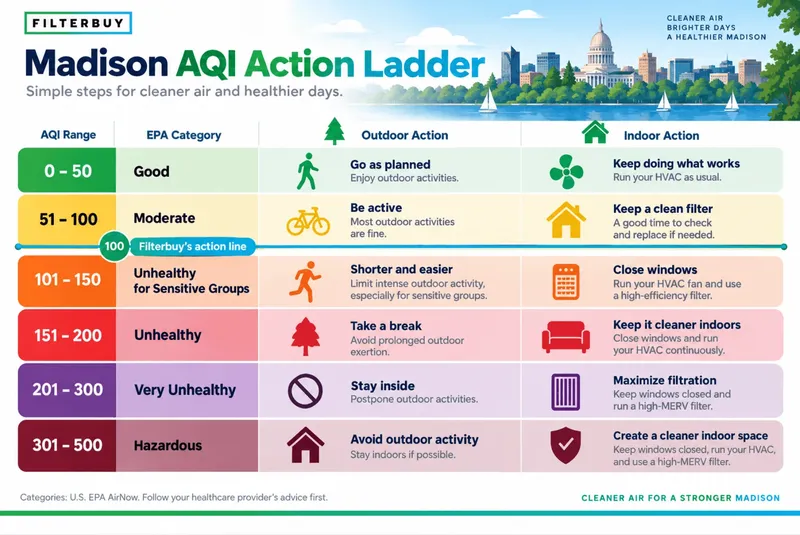
Filterbuy's action line is AQI 100. That's still Moderate on the scale, but it's where we tell customers to move. At 100 and above, take four steps: put a MERV 13 filter in the HVAC, set the thermostat fan to On, run a portable HEPA air cleaner in each occupied room, bedrooms first, and close the house up.
Categories and ranges follow EPA's AirNow AQI guidance. The action steps are Filterbuy's recommendations, and 100 is our action line.
Why Madison's Reading Can Lag What You See or Smell
The AQI is built from averages, so it can trail real conditions. The Wisconsin Department of Natural Resources (DNR) bases the ozone AQI on 8-hour rolling averages and the PM2.5 AQI on 24-hour rolling averages. The EPA's AirNow NowCast method weights recent hours to speed things up, yet a fast-moving plume can still beat the number to your street.
Official readings come from the Madison East and University Ave. Well #6 monitors on the DNR air quality map. Our customer team often hears it during smoke events: those readings can trail what people see by an hour or more. If you smell smoke while the map looks moderate, close the windows.
Is It Safe to Be Outside in Madison Today?
It depends on the live number and EPA's AQI lines. Below 101, most people can exercise as usual; from 101 to 150, people with heart or lung disease, older adults and kids should take it easier; and at 151 and above, everyone should. With a heart or lung condition, follow your doctor's advice, as health officials urged in July 2026.
Where to Find Madison Air Quality Forecasts and Advisories
Each of Madison's five air quality tools answers a different question:
Cheat sheet compiled by Filterbuy from EPA, Wisconsin DNR and City of Madison tools.
Get early warnings by signing up for DNR advisory emails or texts, and read Public Health Madison & Dane County's smoke tips.
Madison Air Quality by Neighborhood
Air quality varies across Madison, and an EPA-funded city sensor network measures it. The first city monitor went up at Kennedy Heights Community Center in July 2024, and hourly PM2.5 from more than 40 locations now appears on the Love My Air Wisconsin map.
What's Actually in Madison's Air?
PM2.5 matters most in Madison. The DNR explains that most fine particles form in the air from nitrogen oxides, sulfur dioxide, organic carbon and ammonia, and that levels typically peak in winter. In Dane County, that mix comes from:
traffic on the Beltline and I-39/90 (the City of Madison says vehicles are usually the main local source)
farm ammonia
regional power generation
wood stoves and fires
Ozone takes over in summer. Statewide, the DNR's trends report shows both pollutants leveling off or creeping up after decades of improvement.
How Madison's Air Compares
Dane County received F grades for both ozone and particle pollution in the 2026 "State of the Air" report. For today's comparison, check our Wisconsin AQI map or Milwaukee's live AQI.
Wildfire Smoke: Madison's Biggest Air Quality Wildcard
Wildfire smoke now drives Madison's worst days. A Wisconsin Watch analysis found Madison hadn't logged an AQI above 200 since at least 2010, until Canadian smoke arrived in 2023.
On July 16, 2026, smoke from 17 lightning-caused fires in Minnesota's Superior National Forest settled over the city, and stagnant air held it there. Follow the next plume on Filterbuy's live Wisconsin wildfire smoke map.
No Ducts? Smoke Steps for a Madison Apartment or Radiator-Heated Home
Many Madison renters and radiator-heated homes have no ducts or furnace filter. For these homes, portable HEPA air cleaners (how they differ from HVAC filters) are the primary defense. Filterbuy doesn't make them, so this advice is brand-neutral:
Size each unit so its smoke CADR is at least two-thirds of the room's square footage, per EPA. A 300 sq ft bedroom needs a smoke CADR of about 200.
Skip ionizers and ozone generators, since EPA advises against air cleaners that produce ozone.
Keep windows shut and close the outdoor air damper on window AC units. If it gets too hot without AC, go somewhere cooler, like a library.
If purifiers sell out, an EPA-tested DIY air cleaner (a MERV 13 filter on a certified 2012-or-newer box fan) is a reasonable stopgap; never leave it unattended.
Filterbuy's Take: What a Filter Manufacturer Sees in Madison's Air
Filterbuy has built filters in the USA since 2013 for more than two million households. Three lessons stand out:
Ozone and smoke need different fixes. Ozone fades indoors; smoke particles keep circulating until a filter catches them.
Filtration is preparation, not response. A filter ordered once the sky turns gray can arrive after the peak.
Smoke loads filters fast. After the 2023 smoke season, Filterbuy's team found that customers in areas with sustained AQI above 100 replaced filters 30–40% sooner than normal.
Which Furnace Filter Madison's AQI Calls For
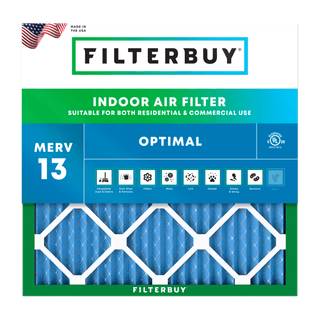
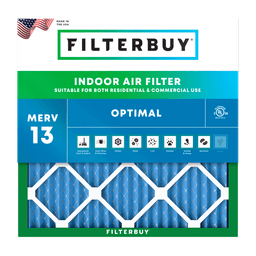
MERV 13 is the tier Filterbuy recommends for wildfire smoke.
EPA recommends MERV 13 or higher during smoke events and says most furnaces and HVAC systems can accommodate it when the filter is replaced often. Just confirm your size.

On Filterbuy's production floor, depth is the dimension our team sees ordered wrong most often, and a 1-inch slot won't take a 4-inch filter. We cut a 20x25x1 to 19.50 x 24.50 x 0.75 inches so it slides in snugly.
The question I get most is which MERV to buy. The one to ask first is whether the filter you are holding actually fills the slot. A rating describes the media, not the gap around it.
Michelle Wan, Brand Manager and Air Quality Writer, Filterbuy
For more, read our MERV rating guide and wildfire smoke filter guide.
Measure your filter slot, then choose from 600+ made-to-order sizes of Filterbuy's American-made MERV 13 filters, or set up filter auto-delivery before smoke season.
Your Madison Smoke-Season Game Plan
This routine blends EPA guidance with our filter experience:
Before June
Measure your filter slot, install MERV 13 and keep spare filters on hand.
Pick a bedroom as your clean room and size its purifier by the CADR rule above.
When AQI reaches 100 or the DNR issues an advisory
Check AirNow and DNR guidance first.
Keep MERV 13 in place and set the thermostat fan to On.
Run a portable HEPA cleaner in each occupied room, bedrooms first.
Close windows, doors and AC dampers, and skip candles, frying, smoking and vacuuming without a sealed unit.
After the smoke clears
Air out the house once the map returns to green or yellow.
Replace the filter if it looks dark brown or black, which can be well before its normal interval.
Reorder spares for the next plume.
Supporting Statistics Behind This Guidance
Smoke days in Wisconsin jumped from under 1 to about 9 a year.
From 2010 to 2020, smoke made PM2.5 unhealthy less than one day a year.
Since 2020, it has averaged about nine days.
Smoke causes an estimated 250 premature deaths statewide each year.
Source: Clean Wisconsin, Wildfire Smoke in Wisconsin: Effects on Health (2026)
Closed windows still leave indoor PM2.5 at 55–60% of outdoor levels.
EPA says to replace the filter when it looks dark brown or black, and to keep spares on hand.
Filterbuy's recommendation: In a closed-up house, pair MERV 13 and the fan on On with a portable HEPA cleaner in each occupied room.
Source: U.S. EPA, Strategies to Reduce Exposure Indoors (updated Oct. 2025)
802,686 Wisconsin children breathe unhealthy air.
Kids are a sensitive group; keep them indoors on orange days.
Source: American Lung Association, "State of the Air" 2026 Wisconsin release
Madison Air Quality FAQs
Glossary
Air Quality Index (AQI): The EPA's 0–500 scale with six color-coded health categories.
PM2.5: Fine particles 2.5 micrometers or smaller; the main pollutant in wildfire smoke.
Ground-level ozone: A lung irritant formed when sunlight reacts with vehicle and industrial emissions.
NowCast: The EPA method that weights recent hours for a faster hourly AQI.
MERV: Minimum Efficiency Reporting Value, a 1–16 filter efficiency rating.
HEPA: High-efficiency particulate air filtration for portable purifiers.
CADR: Clean air delivery rate, the volume of filtered air a purifier delivers.