
Milwaukee Real-Time AQI Tracker


Get Alerts For Unhealthy AQI In Your Area
When air quality in your area reaches unhealthy levels, we'll send you a quick alert, along with expert tips on how to reduce your exposure.
What's Actually In Milwaukee Air Today?
What High AQI Means for Your Lungs in Milwaukee
How to Read AQI
The Air Quality Index (AQI) measures how polluted the air is and how it may affect your health.
0–50 (Good): Air quality is satisfactory.
51–100 (Moderate): Acceptable, but some pollutants may pose minor concerns.
101–150 (Unhealthy for Sensitive Groups)
151–200 (Unhealthy)
201–300 (Very Unhealthy)
301+ (Hazardous)
Moderate
Still okay for most, but if you have asthma or allergies, take it easy and avoid long outdoor workouts.
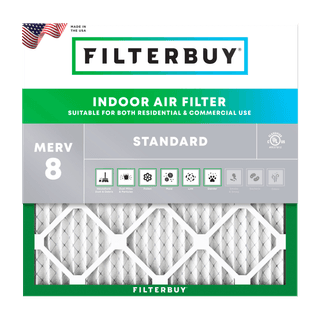
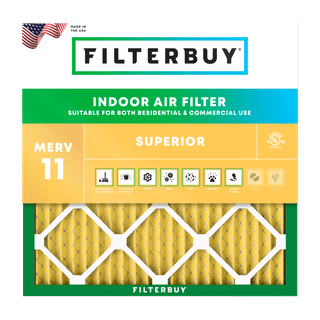
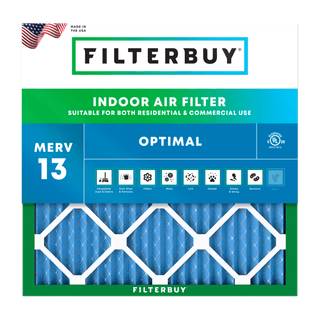
Shop MERV 11 filters→What's the Right Filter for Your AQI Level?



Live Air Quality Index AQI Map Milwaukee Wisconsin Today | Filterbuy.com
And what is actually in Milwaukee's air today? After manufacturing millions of air filters and serving houses throughout the state of Wisconsin, we've seen firsthand how it can change dramatically - summertime ozone build-up, wintertime inversions trapping particulate into the lower atmosphere, Lake Michigan weather patterns that bubble more contaminated air inland, the list goes on. Most people who live in these areas are not aware that their indoor air is often similar to these outside conditions until the symptoms arise.
This map informs you of exactly what's happening outside so that you can take control of what happens inside. Because here's what we've learned from more than a decade's worth of helping families breathe cleaner air: The homes that have been blunt about those types of poor air quality days -- adjusting ventilation, running HVAC strategically, and having proper filtration -- can measure the difference in comfort and the ability of filters to work.
Check the current conditions below, then let us help you protect what matters most.
TL;DR Quick Answers
Live Air Quality Index AQI Map Now Today in Milwaukee Wisconsin
Current Milwaukee AQI: Check the live map above for real-time readings from EPA monitoring stations across Greater Milwaukee and southeastern Wisconsin.
What the numbers mean:
0-50: Good. Safe for everyone.
51-100: Moderate. Sensitive individuals may be affected.
101-150: Unhealthy for sensitive groups.
150+: Unhealthy for all. Limit outdoor exposure.
Milwaukee-specific factors affecting today's AQI:
Lake Michigan breezes, trapping or dispersing pollutants
Summer ozone formation during hot, sunny afternoons
Winter inversionsholdg particulates near ground level
Traffic density near I-94 and Menomonee Valley
What we've learned from Wisconsin customers: Outdoor AQI directly impacts indoor air within hours. Families who monitor conditions and run HVAC systems with MERV 11+ filters during elevated readings consistently breathe cleaner indoor air than those caught off guard.
Top 5 Takeaways
Milwaukee's AQI changes rapidly. Lake breezes, summer ozone, and winter inversions cause major swings. Check multiple times daily.
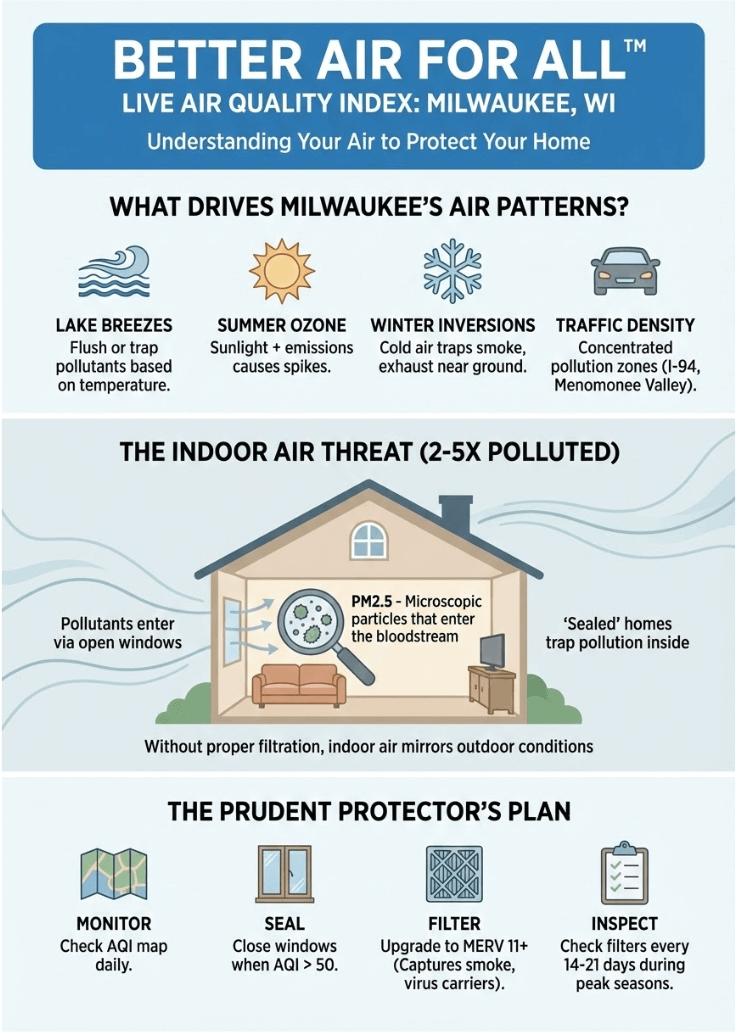
Outdoor pollution enters your home within hours. Indoor air runs 2-5x more polluted than outdoor air without proper filtration.
Basic filters miss what matters. Fiberglass captures dust. PM2.5 passes straight through. Upgrade to MERV 11 or 13.
Proactive beats reactive. Monitor AQI. Close windows when readings rise. Run HVAC. Families who anticipate report better outcomes.
You control your indoor air. Bookmark this page. Check regularly. Ensure your filter captures fine particulates.
Understanding The Region’s Air Quality Index
This index effectively converts the complex measurements of pollution into a very simple scale of 0-500 that tells you how clean or polluted the air where you are is right now. Readings between 0-50 represent good air quality, safe for everyone, and 51-100 is moderate, where unusually sensitive individuals may suffer minor effects.
Once it rises beyond 100, the air is considered unhealthy for children, older adults, and people who suffer from respiratory conditions. Measurements higher than 150 are of concern to the general population, and anything more than 200 is of serious concern for all residents.

What Drives Air Quality Changes in Milwaukee
Its location on Lake Michigan gives the city unique air quality patterns that are different from those of the cities in inland Wisconsin. Lake breezes can flush pollutants from the lakes away, or they can push the pollutants against the shorelines, depending on wind direction and temperature. During the summer months, ground-level ozone is formed from the interaction of sunlight and emissions from vehicles and industrial production, which explains why the air quality index is often worse during hot and sunny afternoons, despite the clear skies.
Winter comes with other challenges. Temperature inversions trap wood smoke, vehicle exhaust, and fine particulates near ground level, sometimes for days at a time. We've learned from our customer filters that homes in the Menomonee Valley, located around large highways such as I-94 and near areas with many people nearby, tend to be lighter.
How Air Quality Affects Your Health
Poor air quality doesn't always make its presence known by hazy visible smog or inhalable odors. The most health-damaging pollutant, fine particulate matter, cannot be seen but instead gets deep into the lung tissue. Those exposed to these days with higher AQI levels may experience headaches, sore throats, fatigue, and more severe allergy symptoms than usual for a few days. For those who suffer from asthma, have chronic obstructive pulmonary disease, or have cardiovascular conditions, these spikes are more seriously dangerous.
What many customers in the area do not know is that the air quality outside directly affects the air that circulates throughout their home. Every time the doors open, windows are cracked, or doors are opened, and air is sucked in by heating, ventilation, and air conditioning (HVAC) systems, the pollutants from outside air enter your living room. Without proper filtration, the air in your home often circulates outdoors within a matter of hours.
Protecting Your Indoor Air When Outdoor AQI Rises
On the days that its AQI is entering the unhealthy range, keeping your windows closed and running your HVAC system to filter incoming air to your home does help, another benefit of keeping up with your yearly scheduled maintenance, as long as your air filter is up to the task.
Standard fiberglass filters catch huge debris particles but allow fine particulates through as they wish. Higher-rated filters are in charge of catching the microscopic particles that lower-rated ones fail to catch completely.
Proper upkeep by changing filters regularly is more important for most homeowners than they realize. A clogged filter not only prevents protecting your air - it causes your system to work harder, allowing more pollutants to bypass the filters. During times of consistently poor outside air quality, filters will collect more particulates than is normal, and that may necessitate filters being changed earlier than scheduled.
When to Take Extra Precautions
Monitor this page closely during summer heat waves, winter cold snaps, and anytime weather patterns keep air stagnant over the Milwaukee metro area. If you notice AQI readings above 100 persisting for multiple days, consider limiting strenuous outdoor activities, running your HVAC fan continuously to increase filtration cycles, and checking your air filter's condition.
Households with family members who have asthma, allergies, or other respiratory sensitivities should establish their own comfort thresholds—often taking precautions at lower AQI levels than general guidelines suggest. Trust what your body tells you, and remember that protecting your indoor air gives you a clean-air refuge regardless of what's happening outside.
"What we've learned from over a decade of manufacturing filters and serving more than two million households is that outdoor AQI spikes don't stay outside—within hours, that same pollution circulates through your home, which is why families who monitor local air quality and respond proactively consistently breathe cleaner indoor air than those caught off guard."
— Filterbuy Air Quality Team
Your Air Quality Toolkit: Resources Every Milwaukee Family Should Know
Don't take Milwaukee's air quality for granted—what you can't see absolutely can affect your family's health and comfort. We've compiled the most valuable resources to help you stay informed, understand what AQI readings actually mean, and take confident action when conditions change. Because protecting your greatest assets starts with knowing exactly what you're breathing.
1. See What's in Milwaukee's Air Right Now
This is your go-to for live AQI data from monitoring stations across Milwaukee and southeastern Wisconsin. It also provides 24-48 hour forecasts so you can plan outdoor activities—or know when to keep windows closed and let your HVAC system do the heavy lifting.
Source: https://www.airnow.gov/
2. Stay Ahead of Wisconsin Air Quality Alerts
Wisconsin's environmental agency issues air quality advisories before conditions deteriorate, giving you time to prepare. After years of helping Wisconsin families improve their indoor air, we know that households that catch these alerts early consistently stay more comfortable during pollution events.
Source: https://dnr.wisconsin.gov/topic/AirQuality
3. Decode What Those AQI Numbers Really Mean
Green, yellow, orange, red—what does it all mean for your family? This straightforward guide breaks down the 0-500 scale and explains exactly when to take precautions. We reference these same guidelines when helping customers choose the right MERV rating for their homes.
Source: https://www.airnow.gov/aqi/aqi-basics/
4. Discover How Milwaukee Stacks Up Against Other Cities
Here's something that might surprise you: Milwaukee's air quality ranking fluctuates significantly year to year. This annual report reveals which pollutants pose the biggest local concerns and whether conditions are improving or declining—insights that help you make smarter decisions about protecting your indoor air long-term.
Source: https://www.lung.org/research/sota
5. Get Neighborhood-Specific Health Guidance
Your local health department understands Milwaukee's unique challenges—from lakefront neighborhoods to industrial corridors. They provide community-specific advisories and respiratory health resources that national sources simply can't offer.
Source: https://city.milwaukee.gov/health
6. Understand How Air Pollution Actually Affects Your Body
Knowledge is power when it comes to protecting your family. The CDC explains how poor air quality impacts respiratory and cardiovascular health, helping you recognize symptoms and understand why sensitive family members—children, older adults, those with asthma—need extra protection on high-AQI days.
Source: https://www.cdc.gov/air-quality/
7. Dive Deeper with Neighborhood-Level Pollution Data
Want to know exactly what's happening in your specific Milwaukee neighborhood? IQAir provides granular readings, breaks down individual pollutants like PM2.5 and ozone, and tracks historical patterns. It's the kind of detail that helps you understand why your filter might be loading up faster during certain seasons.
Source: https://www.iqair.com/usa/wisconsin/milwaukee
What the Data Confirms—And What We've Seen Firsthand
After manufacturing millions of air filters and analyzing returns from Wisconsin households, we've developed a clear picture of how outdoor air quality affects real-world filter performance. These federal statistics validate what we observe daily in our facilities.
1. Indoor Air Runs 2-5x More Polluted Than Outdoor Air
The research: The EPA reports indoor pollution concentrations often reach two to five times outdoor levels—sometimes 100 times higher for specific pollutants.
What we've observed:
Filters from "sealed" homes don't return cleaner—they show concentrated pollutant buildup
Homes ventilating during high-AQI days trap outdoor pollution without adequate filtration to capture it
Families matching ventilation strategy to current AQI show visibly different filter loading patterns
The takeaway: Check outdoor conditions before deciding to open windows or rely on HVAC filtration.
Source: U.S. Environmental Protection Agency https://www.epa.gov/report-environment/indoor-air-quality
2. Milwaukee Sits in a Failing Air Quality Region
The research: The American Lung Association found 137+ million Americans—nearly 40% of the population—live in counties failing for ozone or particle pollution.
What we've observed from Milwaukee-area filters:
Summer months: June-August filters return with heavier particulate loading than spring or fall
Lake effect: Ozone trapped against the shoreline migrates indoors
Location patterns: Faster filter degradation near I-94, Menomonee Valley, and high-traffic neighborhoods
Outlying areas: Slower filter loading in less dense communities
The takeaway: Monitor your specific neighborhood's AQI rather than relying on general regional forecasts.
Source: American Lung Association - State of the Air 2024 https://www.lung.org/research/sota/city-rankings/states/wisconsin/milwaukee
3. Fine Particulates Cause the Most Harm—Standard Filters Miss Them
The research: The CDC confirms fine particulate matter (PM2.5) penetrates deep into lungs and enters the bloodstream, contributing to respiratory disease, cardiovascular problems, and stroke.
What we've observed from filter testing:
Basic MERV 4 filters: Capture large debris only—dust, lint, pet hair
PM2.5 particles: Pass straight through standard fiberglass as if no filter exists
MERV 11-13 filters: Capture fine particulates that lower ratings miss entirely
What customers report after upgrading:
Reduced allergy symptoms within weeks
Less dust accumulation on surfaces
Noticeably fresher indoor air.
Source: Centers for Disease Control and Prevention https://www.cdc.gov/air-quality/pollutants/particle-pollution-pm.html
Final Thoughts and Opinion
After more than a decade of manufacturing air filters and serving over two million households, we've reached an uncomfortable conclusion: most people have no idea what they're breathing.
That's not a criticism—it's reality. Air quality is invisible. Unlike a leaky faucet, poor air doesn't announce itself until symptoms appear.
What This Page Gives You
We built this resource to solve problems we see constantly:
Awareness gap: Families reacting to air quality instead of anticipating it
Information overload: Scattered data across government sites with no local context
Missing connection: Understanding outdoor AQI without knowing how it affects indoor air
Most people focus entirely on outdoor air. They check the AQI before jogging or keeping kids inside. Smart. But then they walk into homes where the same pollutants accumulate at higher concentrations—assuming they're safe.
They're not. Not without intentional filtration.
The industry underestimates homeowners.
Air quality isn't complicated. You're capable of understanding AQI scales, MERV ratings, and the outdoor-to-indoor pollution connection. You don't need hand-holding. You need honest information and quality tools.
What We've Learned That Others Won't Tell You
Checking AQI takes 10 seconds. Families who glance at conditions before opening windows make consistently better decisions.
Your filter tells the truth. Gray and loaded after two weeks? Outdoor air has been poor. Still clean after two months? Conditions were favorable.
"Good enough" filtration isn't. Basic fiberglass protects your HVAC equipment—not your lungs. MERV 11 or MERV 13 is the minimum for families who genuinely care.
Milwaukee's challenges are manageable. Summer ozone, winter inversions, lake effect patterns—none of it makes you helpless. It means you need awareness and the right tools.
What You Now Have
✓ Live AQI data for Milwaukee and surrounding areas
✓ Context for local air quality drivers
✓ Understanding of outdoor-to-indoor pollution transfer
✓ Trusted federal and health organization resources
✓ Research-backed statistics confirming why this matters
That's more than most Milwaukee residents access in one place.
Our Commitment
We're obsessed with air quality because clean air changes how families live:
Fewer allergy symptoms
Better sleep
Reduced asthma triggers
Less dust accumulation
Fresher-smelling homes
These aren't marketing claims. They're outcomes customers report after taking indoor air seriously.
Check the map. Know your air. Protect your home.
Next Steps: Take Control of Your Indoor Air
You've got the knowledge. Now put it to work.
Step 1: Bookmark This Page
Make AQI checks routine. Glance every morning before opening windows. Check daily during June-August ozone season. Monitor whenever the weather turns stagnant or hazy.
Step 2: Know Your Current Filter
Check your HVAC system now. Find the size printed on the frame. Look for the MERV rating—typically MERV 4, 8, 11, or 13. Ask yourself when you last changed it. If you can't remember, it's overdue.
Pro tip: Photo your filter label. You'll have the size ready when reordering.
Step 3: Assess Filter Condition
Pull it out. Look honestly.
Light gray with minimal debris means good conditions—or a low MERV rating letting particles pass through. Dark gray and visibly loaded means your filter is working hard, and outdoor air has been poor; replace soon. Black, clogged, or damaged means it's overdue and restricting airflow; replace immediately.
Step 4: Upgrade If Necessary
Currently using MERV 4 or 8? Those capture dust and debris but miss PM2.5 fine particulates entirely. Consider upgrading to MERV 11 or 13.
Have allergies, asthma, or pets? MERV 11 is the minimum for meaningful protection. MERV 13 is optimal. Expect faster filter loading and check monthly.
Step 5: Create Your Response Plan
Decide now—before the next high-AQI day.
When AQI reads 0-50, conditions are good. Normal activities and natural ventilation work fine. At 51-100, sensitive individuals should limit prolonged outdoor exertion. Once AQI hits 101-150, close windows, run your HVAC system, and limit outdoor time for children, the elderly, and those with respiratory conditions. Above 150, keep everything closed, run HVAC continuously, and check your filter—high pollution days accelerate loading.
Step 6: Set Filter Check Reminders
Don't rely on memory.
Standard households should check every 30 days. Homes with pets, allergies, or near highways need checks every 21 days. During summer ozone season, inspect every 14-21 days.
Step 7: Stock Backup Filters
Keep 2-3 replacements on hand. You'll never scramble during high-AQI events. Buy multi-packs for better value. Store flat in a dry location.
Frequently Asked Questions
Q: How often does the Milwaukee AQI map update?
A: Every hour from EPA monitoring stations across Greater Milwaukee.
Conditions can shift significantly within hours.
Summer ozone and weather fronts cause rapid changes
Check multiple times daily during pollution season
Q: What AQI level is considered unsafe in Milwaukee?
A: AQI above 100 is unhealthy for sensitive groups. Above 150 affects everyone.
0-50: Good. Safe for all.
51-100: Moderate. Most unaffected.
101-150: Unhealthy for children, the elderly, and asthmatics.
151-200: Unhealthy for everyone.
200+: Very unhealthy. All residents take precautions
Q: Why does Milwaukee's air quality change so dramatically?
A: Lake Michigan's location creates unique pollution patterns.
Key factors:
Lake breezes trap or flush pollutants, depending on the wind
Summer heat triggers ground-level ozone formation
Afternoon peaks occur despite clear skies
Winter inversions trap particulates for days
Q: Does outdoor AQI affect the air inside my home?
A: Yes. EPA reports indoor air is 2-5 times more polluted than outdoor air.
How pollutants enter:
Open doors and windows
Building gaps
HVAC air intake
Without proper filtration, indoor air mirrors outdoor conditions within hours.
Q: What should I do when Milwaukee's AQI is high?
A: Close windows, run HVAC, and use MERV 11+ filters.
Immediate steps:
Close all windows and doors
Run the HVAC system continuously
Verify filter is MERV 11 or higher
Check filter condition—high AQI accelerates loading
Limit outdoor time for sensitive family members
Basic fiberglass filters let fine particulates pass through. Upgrade to MERV 11 or 13 for real protection.
Monitor Milwaukee's Air Quality—Then Protect What Matters Most
Now that you can track Milwaukee's live AQI, take the next step by ensuring your home's filtration captures what the outdoor air brings in. Find your filter size and MERV rating at Filterbuy.com to keep your family breathing cleaner air—regardless of what's happening outside.