
Green Bay Real-Time AQI Tracker


Get Alerts For Unhealthy AQI In Your Area
When air quality in your area reaches unhealthy levels, we'll send you a quick alert, along with expert tips on how to reduce your exposure.
What's Actually In Green Bay Air Today?
What High AQI Means for Your Lungs in Green Bay
How to Read AQI
The Air Quality Index (AQI) measures how polluted the air is and how it may affect your health.
0–50 (Good): Air quality is satisfactory.
51–100 (Moderate): Acceptable, but some pollutants may pose minor concerns.
101–150 (Unhealthy for Sensitive Groups)
151–200 (Unhealthy)
201–300 (Very Unhealthy)
301+ (Hazardous)
Moderate
Still okay for most, but if you have asthma or allergies, take it easy and avoid long outdoor workouts.
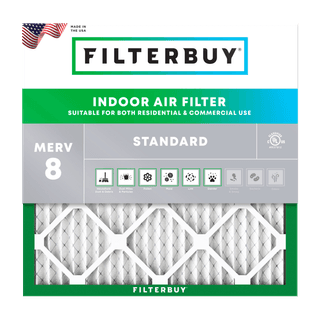
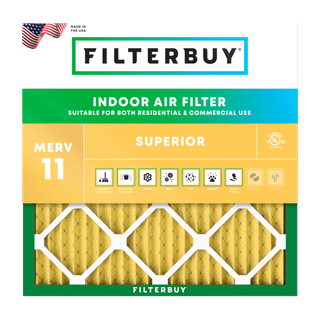
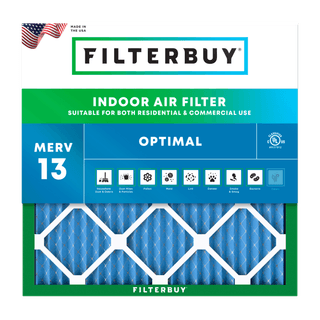
Shop MERV 11 filters→What's the Right Filter for Your AQI Level?


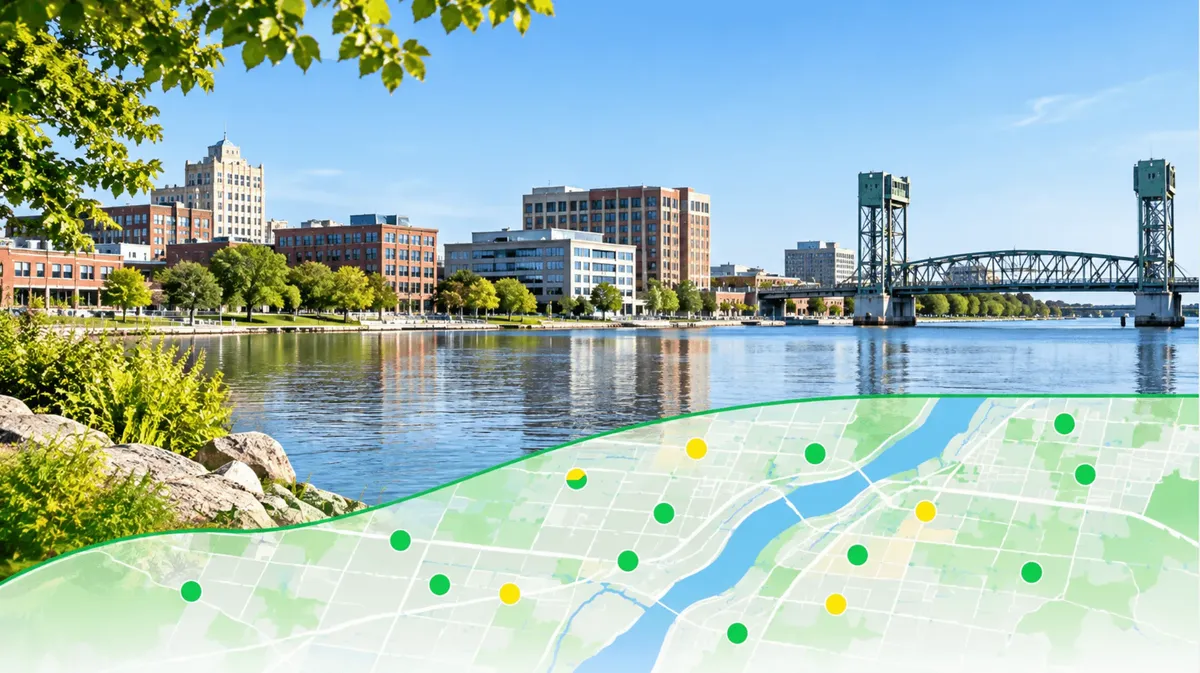
Check Today's Live Real Time Air Quality Index AQI Map in Green Bay, WI Now
TL;DR
Check the live Green Bay air quality map at the top of this page for the current Air Quality Index (AQI). Green Bay's long-term particle levels sit below federal standards, so bad-air days usually trace back to Canadian wildfire smoke or summer ozone. At AQI 100, Filterbuy's action line, close up the house and switch to a MERV 13 filter, then follow the four smoke steps below.
Green Bay Air Quality Today: How to Read the Live AQI Map
This real-time Green Bay AQI map is the quickest answer to "what is the air quality in Green Bay today?" The number gives you the current AQI, and the color tells you the health category. The label shows whether fine particles (PM2.5) or ground-level ozone is driving the reading.
Readings come from two Wisconsin Department of Natural Resources (DNR) monitors. The East High site tracks PM2.5 all year, while the UW-Green Bay site measures ozone from April 1 to October 15, per the DNR's 2026 monitoring network plan. De Pere and Ashwaubenon share these stations.
Filterbuy's tip: read the pollutant label before the number. On a smoke or PM2.5 day, close up and run a MERV 13 filter with the fan on. On an ozone day, a particle filter won't trap the gas, so move hard exercise to the morning, before ozone peaks in the afternoon.
Key Takeaways
Green Bay's official AQI comes from two Wisconsin DNR monitors: PM2.5 at East High and seasonal ozone at UW-Green Bay.
Canadian smoke put Brown County under a DNR advisory on May 18, 2023.
At AQI 100, Filterbuy's action line, switch to MERV 13 and follow the four smoke steps.
What Each AQI Color Means for Your Day in Green Bay
The Green Bay air quality index uses a 0 to 500 scale. The EPA's AirNow program attaches a health message to each color band. Filterbuy sets an action line at AQI 100, the top of Moderate: switch to MERV 13, set the thermostat fan to On, run a portable HEPA cleaner in each occupied room, and close the house up.
New to the color scale? Read Filterbuy's AQI Color Chart: What Green to Maroon Means.
Why Green Bay's AQI Can Lag Behind What You See or Smell
Haze can appear before the number moves because AirNow's NowCast method weights several recent hours of monitor data. Only two regulatory sites cover a county of about 276,000 people, and homes near I-41, I-43, or the lower Fox River industrial corridor can see higher short-term exposure than the map suggests. Filterbuy's rule of thumb: close up first and check the map second.
Is the Air Safe to Breathe in Green Bay Today?
Green Bay's air is safe for most people when the live map shows green or yellow. At orange, sensitive groups should cut back on long time outdoors; at red, everyone should.
The Wisconsin DNR counts people with heart or lung disease, older adults, children, pregnant people, and outdoor workers as sensitive. The CDC adds people with diabetes or kidney disease during smoke events. With asthma, COPD, or a heart condition, follow your doctor and official guidance.
Green Bay Air Quality Forecasts and What a DNR Advisory Means
The Wisconsin DNR issues forecasts and advisories for Brown County; an advisory means the AQI is expected to reach orange or worse. Bookmark the Wisconsin DNR air quality site, sign up for DNR air quality notices by email or text, and see Filterbuy's Wisconsin live AQI map and U.S. live AQI map.
What Causes Green Bay Air Pollution: Fine Particles and Ozone
PM2.5 is Green Bay's main year-round pollutant. Fine particles come from wildfire smoke and traffic, plus wood burning and industry on the lower Fox River, home to the city's paper mills.
Ozone takes over in the warm months. Ground-level ozone forms when sunlight reacts with vehicle and industrial emissions on hot, still afternoons. Ozone breaks down indoors; fine particles don't, which is where filtration comes in.
Wisconsin Public Service retired the coal-fired Pulliam power plant at the mouth of the Fox River at the end of 2018.
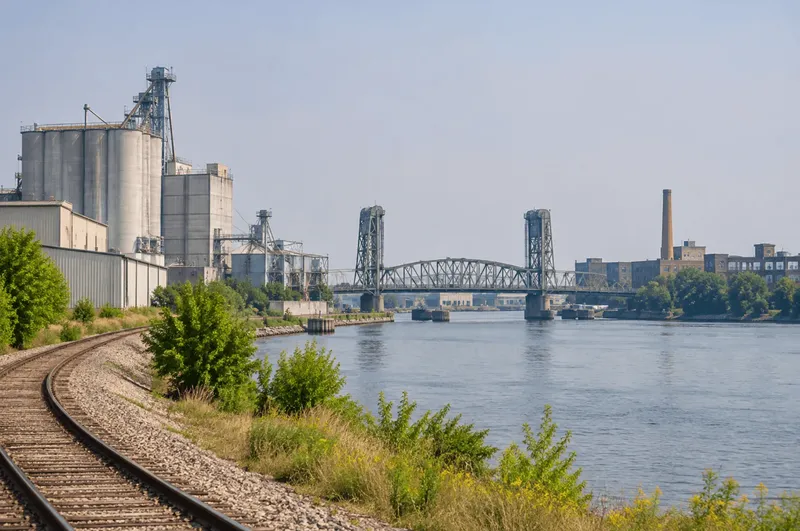
Green Bay's Air Quality Calendar: When to Watch and What to Do
Filterbuy built this seasonal calendar from the DNR monitoring schedule and the area's advisory record.
How Green Bay's Air Compares With Other Wisconsin Cities
Green Bay's air is generally cleaner than Milwaukee's: Brown County earned C grades for ozone and particles in the American Lung Association's 2024 State of the Air report, NBC26 reported, while the 2026 report failed the Milwaukee metro on both. Compare Filterbuy's Milwaukee and Madison AQI maps.
Canadian Wildfire Smoke in Green Bay: What to Do
Green Bay's worst recent air days have come from Canadian wildfire smoke, carried in on northwest winds in late spring and summer.
May 18, 2023: DNR smoke advisory for Brown and nearby counties (WBAY).
June 15, 2023: Wisconsin's sixth smoke advisory that spring (WBAY).
June 3, 2025: Another Canadian smoke advisory (WBAY).
When smoke arrives, start with official guidance: check DNR advisories and AirNow first. Then, at AQI 100 and above, take Filterbuy's four steps:
Switch to MERV 13 in your HVAC if it runs a lower tier.
Set the thermostat fan to On. Auto filters only while heating or cooling, and the EPA advises On when air quality is poor.
Run a portable HEPA air cleaner in each occupied room, bedrooms first.
Close the house up. Shut windows and doors, and skip candles, frying, vacuuming, and smoking while smoke is in.
Wear a fitted N95 for long stretches outdoors, and follow the plumes on Filterbuy's Wisconsin wildfire and smoke map or the federal AirNow Fire and Smoke Map.
No Ductwork? How to Filter Smoke Without Central HVAC
No ducts means no filter slot. In radiator-heated homes and many apartments, a portable HEPA air cleaner in each occupied room is the primary defense. Filterbuy recommends one even though we don't make them. Size it with AHAM's rule: smoke CADR at least two-thirds of the floor area, so a 300-square-foot bedroom needs a smoke CADR of about 200. The EPA advises choosing one that doesn't produce ozone, so skip ionizers and ozone generators. Portable cleaners reduce indoor pollution, though not all of it.
Filterbuy's Take: What a Filter Manufacturer Sees in Green Bay's Air
Filterbuy has built air filters in the U.S. for over a decade, and each smoke season the questions our team hears shift from "what size do I need?" to "should I upgrade my MERV?" Here's what we tell Green Bay homeowners:
Fit beats rating. Smoky air slips past gaps around the frame, so make sure the filter sits snug.
Check it during smoke, not just on schedule. Replace it when it looks heavily soiled, which can be well before the normal interval.
Keep a spare on hand. Wisconsin had six smoke advisories in spring 2023 alone.
Green Bay gets a lot of good-air days, so the smoky ones sneak up on people. When an advisory hits, many people reach for the highest MERV they can find. My advice: get the right size in MERV 13 before smoke season, and keep a spare on the shelf.
Michelle Wan, Filterbuy
Which Filter Green Bay's AQI Level Calls For
For wildfire smoke, the answer is MERV 13. For everyday Green Bay air, Filterbuy recommends MERV 11, then MERV 13 for smoke season starting at our AQI 100 action line. The EPA's wildfire smoke guide separately points to MERV 13 or higher during smoke events. Before you switch, confirm your size and slot depth, the same fit check you'd do for any filter.
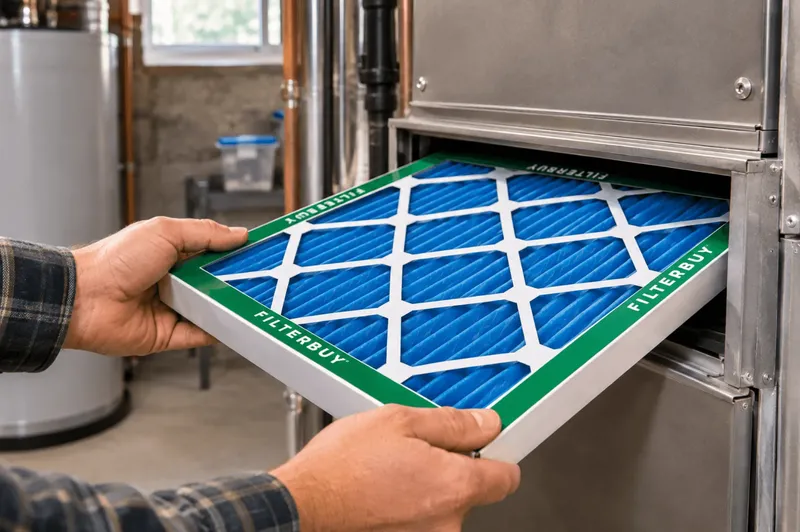
Shop MERV 8 filters, MERV 11 filters, or MERV 13 filters in 600+ sizes with fast, free shipping, and let auto-delivery keep a spare coming. Find your filter size at Filterbuy.com.
Supporting Statistics
81% of the federal limit: Green Bay's yearly fine-particle level
Daily level: 69% of the limit (2024).
Source: Wisconsin DNR
90% of our time is spent indoors
Some indoor pollutants run 2 to 5 times outdoor levels.
Source: U.S. EPA
802,686 Wisconsin kids breathe unhealthy air
Kids are a sensitive group, so orange on the map means shorter practices and recess.
Source: American Lung Association, 2026
Frequently Asked Questions
What Is the Air Quality in Green Bay Today?
The live map at the top of this page shows Green Bay air quality now, updating as new monitor data arrives.
Is the Air Quality Bad in Green Bay Today?
Orange (AQI 101 to 150) means the air is unhealthy for sensitive groups; red (151 or higher) means it's unhealthy for everyone. Haze can signal worse air before the AQI responds.
When Is Green Bay's Air Quality Usually Worst?
Late spring and summer, when Canadian smoke and afternoon ozone are most likely. Winter PM2.5 can build up on calm, cold nights.
How Do I Check Green Bay PM2.5 Today?
Check the pollutant label on the live map. Under EPA's current scale, a 24-hour PM2.5 average of 35.5 micrograms per cubic meter or more is Unhealthy for Sensitive Groups.
Does Wildfire Smoke Affect Green Bay?
Yes. Canadian wildfire smoke has triggered several DNR advisories in northeast Wisconsin, including one that covered Brown County on May 18, 2023. On smoke days, Filterbuy recommends MERV 13 in your HVAC. Follow current fires on Filterbuy's Wisconsin smoke map.
Glossary
Air Quality Index (AQI): The EPA's daily air quality scale, with six color-coded health categories.
PM2.5: Fine particles 2.5 micrometers or smaller; the main pollutant in wildfire smoke.
Ground-level ozone: A gas formed when sunlight reacts with emissions, mostly on hot afternoons.
NowCast: AirNow's method of weighting recent hourly readings into a current AQI.
MERV: Minimum Efficiency Reporting Value, a 1 to 16 filter efficiency rating.
Smoke CADR: Clean Air Delivery Rate for smoke, the filtered airflow a portable cleaner delivers.
HEPA: High-efficiency particulate air, a filter standard for portable air cleaners, not home furnaces.