
Appleton Real-Time AQI Tracker


Get Alerts For Unhealthy AQI In Your Area
When air quality in your area reaches unhealthy levels, we'll send you a quick alert, along with expert tips on how to reduce your exposure.
What's Actually In Appleton Air Today?
What High AQI Means for Your Lungs in Appleton
How to Read AQI
The Air Quality Index (AQI) measures how polluted the air is and how it may affect your health.
0–50 (Good): Air quality is satisfactory.
51–100 (Moderate): Acceptable, but some pollutants may pose minor concerns.
101–150 (Unhealthy for Sensitive Groups)
151–200 (Unhealthy)
201–300 (Very Unhealthy)
301+ (Hazardous)
Moderate
Still okay for most, but if you have asthma or allergies, take it easy and avoid long outdoor workouts.
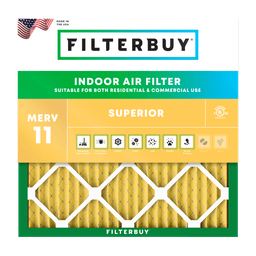
Shop MERV 11 filters→What's the Right Filter for Your AQI Level?
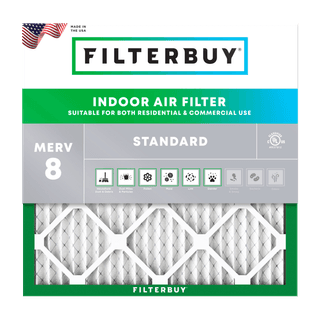
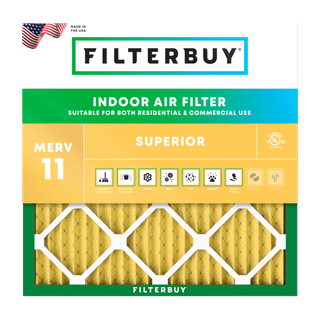
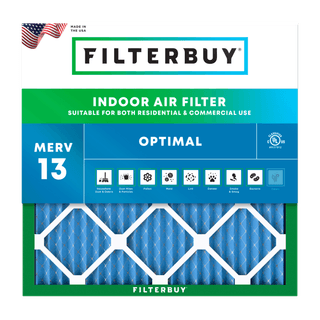


Check Today's Live Real Time Air Quality Index AQI Map in Appleton, WI Now
TL;DR
The live map at the top of this page shows real-time air quality in Appleton on the Air Quality Index (AQI). Wildfire smoke and winter fine particles cause most of Appleton's poor-air days, with ozone adding a few hot summer afternoons. At AQI 100, Filterbuy's action line, close up the house, set the furnace fan to On with a MERV 13 filter, and run a portable HEPA cleaner in occupied rooms.
How to Use the Live Appleton AQI Map Above
Start with the number and its color on the Appleton air quality map above. The Air Quality Index is the 0 to 500 scale the U.S. Environmental Protection Agency (EPA) uses to report outdoor air pollution, and higher numbers mean greater health concern, per AirNow's AQI basics. Filterbuy's U.S. live AQI map covers the rest of the country.
Next, look at the main pollutant, usually PM2.5 (fine particles) or ground-level ozone. Ozone breaks down indoors, but fine particles slip in through gaps and keep circulating until a filter catches them.
At Filterbuy, we check where a number comes from before trusting it. Most Appleton readings trace back to the Wisconsin Department of Natural Resources (DNR) Appleton-AAL station at 4579 N. Meade Street, which has measured PM2.5 year-round and ozone in the warm season since 1995, according to the DNR's 2026 air monitoring network plan.
Key Takeaways
Appleton's AQI above 100 is unhealthy for sensitive groups. Filterbuy's action line is 100.
The AQI doesn't track pollen, and furnace filters catch particles, not gases.
Canadian wildfire smoke pushed Appleton to about AQI 225 (Very Unhealthy) on July 31, 2025.
The EPA recommends MERV 13 or higher in central HVAC during smoke. Filterbuy adds a portable HEPA cleaner in each occupied room, the main defense in homes without ducts.
Appleton AQI Colors and What to Do at Each Level
At Filterbuy, AQI 100 is our action line. When the map reaches 100, switch your HVAC to MERV 13, set the thermostat fan to On, run a portable HEPA air cleaner in each occupied room, and close the house up. EPA's orange category starts at 101; we act one point earlier.
For more on each band, see Filterbuy's AQI Color Chart: What Green to Maroon Means.
| AQI Range | Color and Category | What to Do in Appleton |
|---|---|---|
| 0–50 | Green: Good | Normal plans and your usual filter. |
| 51–100 | Yellow: Moderate | Unusually sensitive people ease off. Get MERV 13 in your size and a spare. |
| 101–150 | Orange: Unhealthy for Sensitive Groups | Sensitive groups cut back. MERV 13, fan On, HEPA in occupied rooms, house closed. |
| 151–200 | Red: Unhealthy | Everyone limits exertion. Same steps; check the filter more often. |
| 201–300 | Purple: Very Unhealthy | Follow AirNow and local guidance first. Use a clean room with HEPA running. |
| 301 and higher | Maroon: Hazardous | Follow local authorities and AirNow first. Avoid outdoor activity. |
Why the Appleton Map Can Disagree with Your Eyes or Nose
"The sky looks smoky, so why is the map green?" It's one of the questions Filterbuy hears most in smoke season, and the answer usually comes down to timing. Official PM2.5 readings use NowCast, an EPA method that weights the most recent hours of data, so fast-moving smoke can take a few hours to show up.
Location matters too: Appleton-AAL sits on the north side, and smoke can drift high overhead, turning the sky milky while ground-level air stays green.
When your nose and the map disagree, Filterbuy suggests this routine:
Check nearby sensors on the AirNow Fire and Smoke Map.
Close the windows anyway.
Is Appleton's Air Okay to Breathe Today?
It depends on the current reading on the live map. Readings of 0 to 100 are acceptable for most people. Once the AQI tops 100, sensitive groups should limit long or heavy outdoor activity, and above 150 everyone should.
The CDC lists those most at risk from smoke, including children and people with lung or heart disease. If that's you, ask your doctor which AQI level should change your routine.
The AQI also leaves out pollen, so a green day can still be rough in tree-pollen or ragweed season. Check a pollen forecast too.
Where to Get Appleton Air Quality Forecasts and DNR Advisories
The Wisconsin DNR issues Air Quality Advisories for Outagamie County when it expects the AQI to reach orange or worse. Sign up for DNR air quality notices by email or text, or check the DNR's statewide air quality map.
At AQI 100, start with official guidance, then work down the Filterbuy team's list:
Check AirNow and any DNR advisory first.
Close windows and doors, and skip candles, frying, smoking, and vacuuming while smoke is in.
Switch to a MERV 13 filter and set the thermostat fan to On so it filters continuously, as the EPA advises for smoke.
Run a portable HEPA air cleaner in each occupied room, bedrooms first.
Move kids' practices and long workouts indoors.
What's in Appleton's Air, from Fine Particles to the Fox River Corridor
Two pollutants drive Appleton's AQI: PM2.5 and ozone. PM2.5 is fine particulate matter 2.5 micrometers or smaller, small enough to reach deep into the lungs. Locally, it comes from wildfire smoke and wood stoves along with traffic on I-41 and the US 10 and WIS 441 loop.
Ground-level ozone forms when sunlight reacts with nitrogen oxides and volatile organic compounds. Because it needs strong sun, Appleton-AAL only measures it in the warm season.
The Fox River industrial corridor adds a third story. The DNR's Kaukauna monitor tracks sulfur dioxide (SO2), and Outagamie County's SO2 design value was 77 parts per billion (ppb) for 2017 to 2019, just above the 75 ppb standard. By 2022 to 2024 it fell to 43 ppb, still the state's highest.
Indoors, pleated furnace filters catch particles, not gases like ozone or SO2, so on high-ozone afternoons, closed windows beat any filter upgrade.
Compare our Green Bay, Milwaukee, and Madison AQI maps or the Wisconsin live AQI map.
Appleton's Air Quality Calendar
Filterbuy built this calendar from DNR and smoke records. Our rule of thumb: have MERV 13 in your size, plus a spare, by early May, and put in a fresh filter in November before wood stoves fire up.
| Season | Main Concern | Why It Happens Around Appleton |
|---|---|---|
| Winter (Dec–Feb) | Fine particles (PM2.5) | Calm, cold nights trap wood smoke and exhaust; the DNR says PM2.5 peaks in winter. |
| Spring (Apr–Jun) | Wildfire smoke | Canadian fire season; advisories in May 2023 and June 2025. |
| Summer (Jun–Aug) | Ozone and smoke | Sunny afternoons build ozone; smoke returned in July and August 2025. |
| Fall (Sep–Nov) | Mostly cleaner air | Backyard fires and early wood stoves add smoke. |
Canadian Wildfire Smoke in the Fox Valley
Canadian wildfire smoke is behind Appleton's worst air days. The DNR issued a smoke advisory for Outagamie and nearby counties on May 18, 2023, its first spring smoke advisory in about 10 years, a DNR spokesperson told WBAY.
Wisconsin logged 21 smoke-affected days in 2023, per DNR data. Then on July 31, 2025, Appleton and nearby areas climbed to about AQI 225, in the purple Very Unhealthy range.
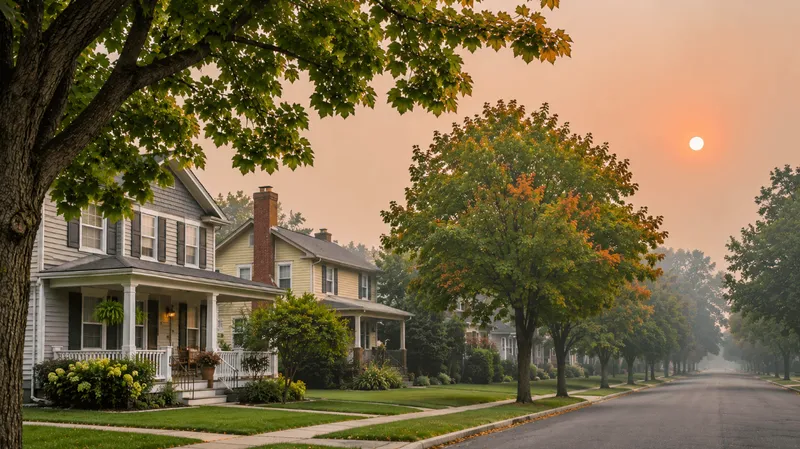
When smoke moves in, AirNow advises staying indoors, and the EPA suggests setting up a clean room. Follow plumes on Filterbuy's Wisconsin wildfire and smoke map.
During smoke, check your filter often. EPA guidance is to replace it when it looks dirty, dark brown or black, which can be well before its normal change date, and to keep extras on hand. Once the map is back to green, open the windows.
No Furnace Ducts? Filtering Smoke in Radiator Homes and Apartments
No ducts means no filter slot, and Filterbuy won't sell you a filter you can't use. For radiator-heated homes and wall-unit apartments, portable HEPA air cleaners are the primary defense, not a backup.
Size each unit by its smoke clean air delivery rate (CADR). EPA's rule is at least two-thirds of the room's square footage, so a 300-square-foot bedroom needs a smoke CADR of about 200. EPA also advises against cleaners that produce ozone. As a stopgap, EPA research on DIY box-fan cleaners found MERV 13 versions reduce smoke; use a fan made in 2012 or later and don't leave it running unattended.
Matching Your Furnace Filter to Appleton's AQI
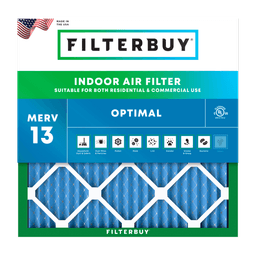
MERV 13 is the filter tier for wildfire smoke. The EPA recommends a MERV 13 or higher filter in central HVAC during smoke events. Filterbuy's trigger for switching is AQI 100.
| Live AQI | Filterbuy Action Step | Why |
|---|---|---|
| 0–50 | Your usual MERV 8 or 11 | Handles everyday dust and pollen |
| 51–99 | Usual filter, MERV 13 spare ready | Get set before smoke arrives |
| 100–150 | MERV 13, fan On, HEPA in occupied rooms | Filterbuy's action line |
| 151 and higher | Same steps, frequent filter checks | Smoke loads filters faster |
| No ducts or no filter slot | Portable HEPA in each occupied room | Your primary defense |
Do a quick fit check, the same as confirming your size, then make the switch. Most furnaces and HVAC systems can accommodate MERV 13 without equipment problems when the filter is replaced often, according to the EPA. Filterbuy's MERV rating guide and best filter for wildfire smoke walk through the tradeoffs.
Filterbuy makes MERV 8, MERV 11, and MERV 13 filters in the USA in 600+ sizes, plus custom sizes. With fast, free shipping and auto-delivery, a fresh filter arrives before smoke season.
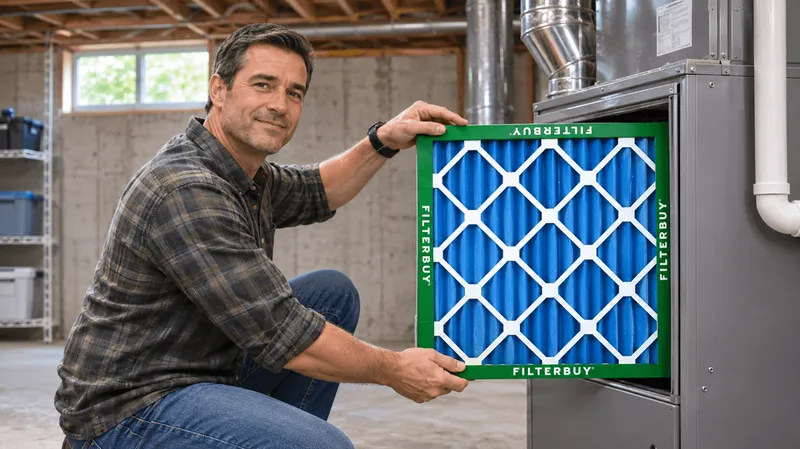
What Filterbuy Sees When Fox Valley Air Turns Hazy
Filterbuy makes filters for homes all over Wisconsin, and Appleton's air tends to arrive in bursts. Most days sit in green or yellow until a smoke plume or a still winter night changes the picture.
Our house view: MERV 8 or 11 suits most Appleton days, and MERV 13 goes in when the AQI reaches 100. MERV 13 treats the whole house, while a portable HEPA cleaner works harder in the room you're in. The two layers work together.
“Every smoke season we hear the same question: will my filter handle this? Our answer is MERV 13 in your exact size, fit-checked the same way you'd confirm a size, with a spare on the shelf before smoke arrives.”
Michelle Wan, Brand Manager and Copywriter, Filterbuy
Supporting Statistics
80%: Appleton metro's 2024 24-hour PM2.5 design value as a share of the federal limit. Source: Wisconsin DNR
36th worst: Green Bay metro's national particle pollution rank, 2025. Source: American Lung Association
2 to 5 times: How much higher some indoor pollutants run than outdoors Source: U.S. EPA
Frequently Asked Questions
What is the air quality in Appleton today?
Appleton's current air quality appears on the live AQI map at the top of this page, and the DNR map at airquality.wi.gov shows official state monitors.
Is the air quality bad in Appleton today?
Appleton's air is generally considered bad once the live AQI passes 100 and turns orange. Watch for DNR Air Quality Advisories covering Outagamie County.
What causes air pollution in Appleton?
Most poor-air days in Appleton trace back to Canadian wildfire smoke and winter fine-particle buildup, and hot summer afternoons can add ozone.
What does Appleton's PM2.5 reading mean today?
PM2.5 is fine particle pollution from smoke and exhaust, and it drives most of Appleton's high-AQI days. When today's PM2.5 reading reaches 100, use the action steps above.
What MERV rating do I need for wildfire smoke in Appleton?
MERV 13, which the EPA recommends for central HVAC during smoke events. Filterbuy's trigger for switching is AQI 100.
Glossary
Air Quality Index (AQI): The EPA's 0 to 500 scale for outdoor air pollution, in six color bands.
PM2.5: Fine particles 2.5 micrometers or smaller, found in smoke and exhaust.
NowCast: The EPA method that weights recent hours to report current AQI.
MERV: Minimum Efficiency Reporting Value, a 1 to 16 rating of HVAC filter efficiency.