
Newport News Real-Time AQI Tracker


Get Alerts For Unhealthy AQI In Your Area
When air quality in your area reaches unhealthy levels, we'll send you a quick alert, along with expert tips on how to reduce your exposure.
What's Actually In Newport News Air Today?
What High AQI Means for Your Lungs in Newport News
How to Read AQI
The Air Quality Index (AQI) measures how polluted the air is and how it may affect your health.
0–50 (Good): Air quality is satisfactory.
51–100 (Moderate): Acceptable, but some pollutants may pose minor concerns.
101–150 (Unhealthy for Sensitive Groups)
151–200 (Unhealthy)
201–300 (Very Unhealthy)
301+ (Hazardous)
Moderate
Still okay for most, but if you have asthma or allergies, take it easy and avoid long outdoor workouts.
Shop MERV 11 filters→What's the Right Filter for Your AQI Level?
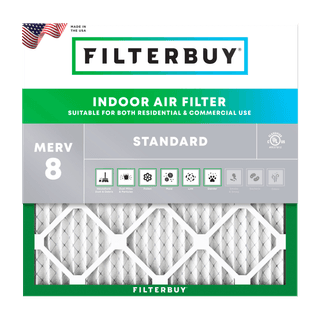
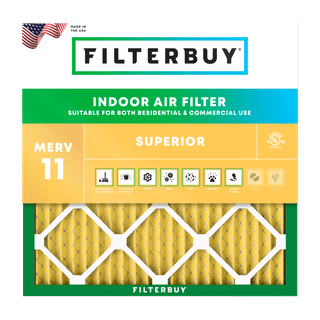
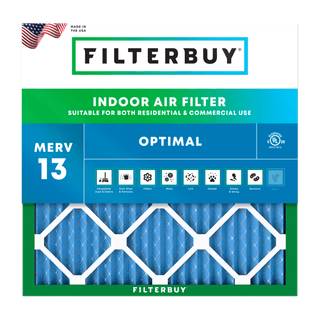
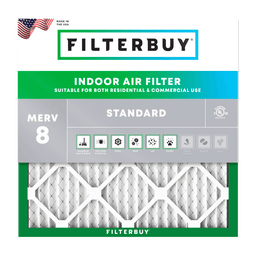
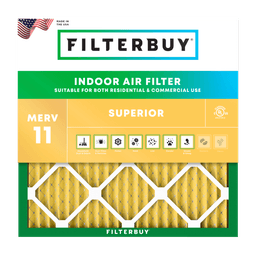
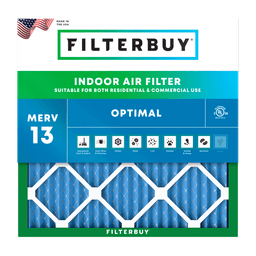

Check Today's Live Real Time Air Quality Index AQI Map in Newport News, VA Now
By Michelle Wan, Brand Manager & Air Quality Writer · Reviewed by David Clark, Licensed HVAC Technician · Published July 23, 2026 · Updated July 23, 2026
TL;DR
Newport News air quality changes hour by hour, so the number that matters is the live one on the map below, pulled from EPA AirNow and Virginia DEQ monitors. On most days the city sits in the Good (green) or Moderate (yellow) range; the two pollutants worth watching are ground-level ozone on hot summer afternoons and fine particle pollution (PM2.5) during wildfire-smoke events. Check today's reading, then match your indoor air filter to it: a MERV 11 filter handles everyday pollen and dust, while a MERV 13 filter captures the PM2.5 that spikes on smoke days.
Live Newport News Air Quality Index (AQI) Map
What the map is showing you: the number in the center of Filterbuy's live map is the current Air Quality Index for Newport News on a 0–500 scale, and its color tells you at a glance whether today's air is safe for your plans. Tap a monitor to see which pollutant is driving the reading. Filterbuy pulls this data straight from AirNow.gov and the Virginia Department of Environmental Quality.
Key Takeaways
Newport News AQI updates throughout the day. Always trust the live map above over any fixed number, because conditions shift with traffic, heat, and weather.
Ozone is the summer story. Ground-level ozone builds on hot, sunny afternoons (roughly 2–7 PM) and is the pollutant most likely to push Newport News into the yellow or orange range in June through August.
PM2.5 is the wildfire story. Fine particle pollution is usually low here but can climb sharply when smoke drifts in, and it's the pollutant that penetrates your home and lungs most deeply.
The region meets federal standards. Hampton Roads, including Newport News, currently attains the EPA ozone standard under a maintenance plan approved through 2032, so severe pollution days are the exception, not the norm.
Your filter is your indoor defense. When outdoor AQI rises, a clean, correctly rated HVAC filter (MERV 11 for allergens, MERV 13 for smoke and PM2.5) is the simplest way to keep your indoor air cleaner.
What Is the Air Quality in Newport News Today?
The current air quality in Newport News is shown live on the map above, reported as an Air Quality Index (AQI) value from 0 to 500 with a color category. On a typical day the city reads Good (0–50, green) or Moderate (51–100, yellow). The reading is calculated by the U.S. EPA from monitors operated by the Virginia Department of Environmental Quality (DEQ), and it changes hour to hour with heat, traffic, and weather. The EPA's AQI Basics explain the scale.
I check these readings most mornings, and the honest answer to “what is the air quality in Newport News right now?” is always the same: whatever the live map shows the moment you look, because AQI shifts hour to hour. For tomorrow's outlook, Virginia DEQ publishes a daily air-quality forecast and free email alerts for the Hampton Roads area.
How to Read the Newport News AQI Map: Color Scale Explained
The AQI map uses six colors set by the U.S. EPA. Each band tells you how clean the air is and who should take precautions today. This scale is the same everywhere in the United States, so once you learn it, it works for any city. The EPA's AQI Basics is the authoritative reference.
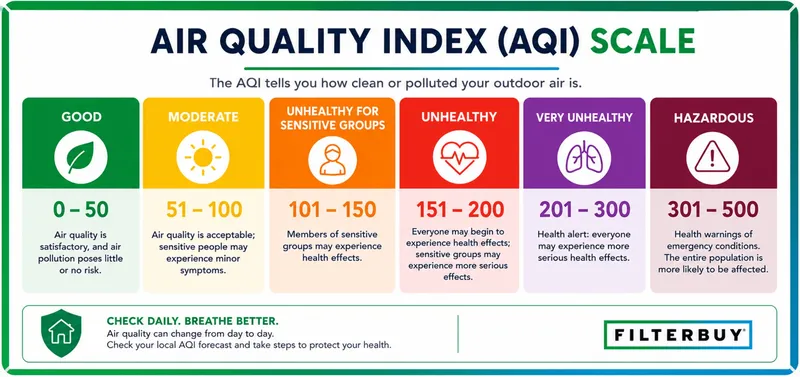
The AQI scale is set by the U.S. EPA and is the same nationwide.
What's Actually in Newport News Air? Ozone and PM2.5
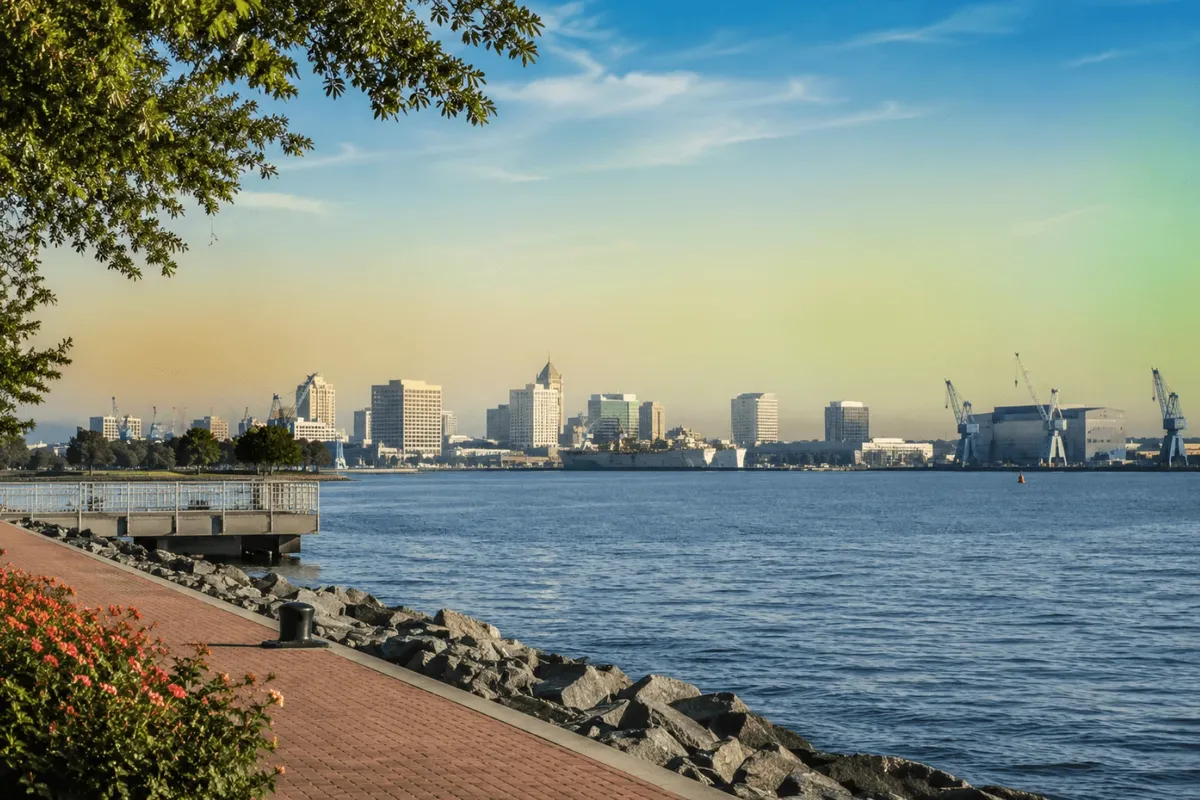
Newport News sits on the Virginia Peninsula in the Hampton Roads region, a coastal metro shaped by traffic corridors like Interstate 64, the port and shipbuilding industry, and hot, humid summers. Two pollutants drive most of the city's AQI movement:
Ground-level ozone (O₃) is the main warm-season concern. Ozone isn't emitted directly; it forms when sunlight reacts with vehicle exhaust and industrial emissions, so levels are highest on hot, sunny afternoons and lowest in the morning. Virginia DEQ has recorded summer ozone exceedances in the Hampton Roads area, which is why yellow and orange days cluster in June through August.
Fine particulate matter (PM2.5) is the pollutant to watch during smoke events. These particles are small enough to bypass your body's defenses and reach deep into the lungs. Newport News PM2.5 is usually low, but it can rise quickly when wildfire smoke drifts across the region, as it did during the widespread Canadian wildfire smoke events of recent years.
There's reassuring context, though: the Hampton Roads area, which spans Newport News, Norfolk, Hampton, Virginia Beach, and neighboring localities, currently meets the federal ozone health standard. Per Virginia DEQ's ozone planning records, EPA redesignated the area to attainment in 2007 and approved a second maintenance plan in 2023 to keep it there through 2032. Unhealthy days happen, but they're the exception.
I check Newport News’s reading most mornings, and the trap I watch people fall into is trusting the sky instead of the number. An AQI of 130 from an August ozone buildup and a 130 from drifting wildfire smoke look identical on the map, but they call for different moves: ozone usually breaks after sunset, while smoke can linger for days and seep indoors. The Peninsula’s sea breeze scrubs the air most days, which is exactly why the bad afternoons sneak up on people. Read the number, not the view.
Michelle Wan, Filterbuy’s Air Quality Writer
When Is Newport News Air Worst? A Local Timing Guide
Most days here are clean. The trouble clusters into a few predictable windows, so you can plan around them instead of guessing:
Local timing patterns for Newport News and the wider Hampton Roads area.
Is the Air Quality Bad in Newport News Today? Health Guidance by AQI
Whether the air is “bad” depends on the live number and on who you are. Air rated Good or Moderate is fine for most people, while Orange and above calls for caution, especially for children, older adults, and anyone with asthma, allergies, or heart or lung conditions. Use the live map above to find today's category, then match it to the guidance below. (Curious what pushes a reading up? See our guide to why the air quality turns bad.)
Guidance based on U.S. EPA AQI health categories. General information, not medical advice.
On any day above Good, the single most effective indoor step is to keep your HVAC system running with a clean, correctly rated filter, and to close windows so you're not pulling polluted outdoor air inside.
Health note: This page is general guidance, not medical advice. If you have a respiratory or heart condition, follow your doctor's plan and official alerts from AirNow.gov and Virginia DEQ.
How to Protect Your Indoor Air When Newport News AQI Rises
When outdoor air quality climbs, your HVAC filter is your first line of defense, but only if it's clean and rated for the pollutant you're facing. The table below matches today's dominant pollutant to the filter that addresses it.
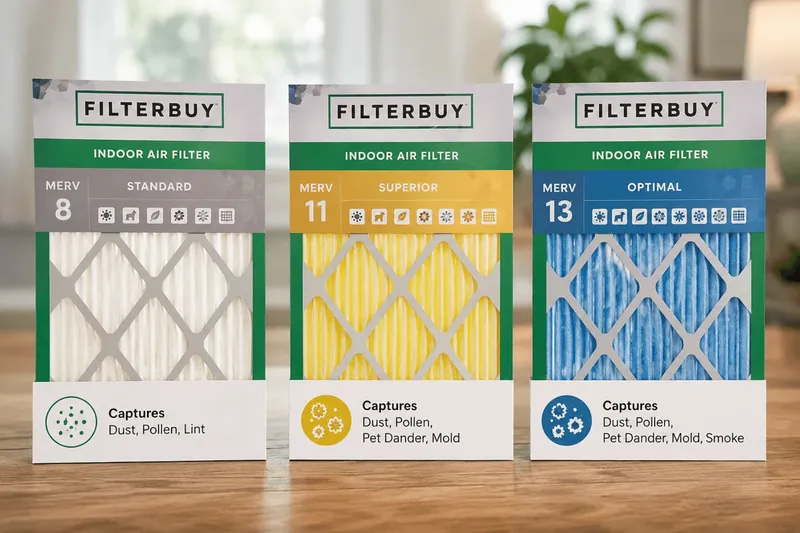
Match the filter to the pollutant driving today's AQI reading.
Why MERV 13 for smoke days: Filterbuy's MERV 13 filters capture 98% of airborne particles as small as 0.3 microns, the range that includes wildfire smoke and PM2.5. That's why the EPA recommends a MERV 13 filter (or higher) during smoky periods. Our MERV rating guide compares MERV 8, 11, and 13 in plain English.
Every fire season, we see the same pattern: searches for smoke-rated filters spike a day or two after the haze arrives, right when the good filters are hardest to get. The Newport News homes that stay comfortable through a smoke week are almost always the ones that already had a MERV 13 in place before the alert, not the ones scrambling after it.
At Filterbuy, we've manufactured pleated filters in the USA since 2013. Our lineup spans MERV 8, MERV 11, and MERV 13, plus the activated-carbon Odor Eliminator, in 600+ standard sizes and custom sizes, all shipped factory-direct with free shipping. If keeping up with changes is the hard part, Filterbuy auto-delivery sends the right filter to your door on schedule, so a smoky week never catches you with a clogged filter.
Not sure what size you need? Our air filter size guide helps you find the exact fit in a couple of minutes.
What to Do on a Bad-Air Day in Newport News
When the live map turns orange or red, these six steps do the most to protect what you breathe indoors, drawn from EPA guidance:
Check the dominant pollutant. Use the live map and the AirNow Fire and Smoke Map to see whether ozone or smoke is driving today's number, since smoke calls for more caution.
Close up the house. Shut windows and doors; if your HVAC or AC has a fresh-air intake, close it or switch to recirculate.
Run the fan continuously. Set your thermostat fan from “Auto” to “On” with a clean Filterbuy MERV 13 filter, so indoor air keeps cycling through filtration.
Don't add indoor smoke. Skip candles, frying, and gas-stove cooking while smoke is heavy.
Make one clean room. For anyone with asthma or a heart or lung condition, set up a bedroom with a portable air cleaner.
Change your filter early. In heavy smoke, a 1-inch filter can load up in two to four weeks, so check it often and swap it before it clogs.
7 Trusted Resources for Tracking Newport News Air Quality
When you want to go beyond the live map, these are the official, free, authoritative sources the Filterbuy team relies on to track Newport News and Hampton Roads air quality. Together they cover real-time readings, wildfire-smoke tracking, the science behind the numbers, and who's most at risk.
Get Tomorrow's Air Quality Before It Arrives
Virginia DEQ forecasts Hampton Roads ozone and particle pollution a day ahead and emails you an alert on Action Days, so a bad-air day never catches your family off guard. Start with Virginia DEQ's Current Air Quality & Forecast.
Track Wildfire Smoke in Real Time
When smoke drifts toward the Peninsula, the AirNow Fire and Smoke Map shows live PM2.5 readings and smoke plumes from EPA and U.S. Forest Service monitors, so you can see exactly when to close the windows.
Understand the Number on the Map
AirNow's AQI Basics explains the EPA's 0–500 scale and its six color categories in plain language, so today's Newport News reading tells you what to actually do.
Know Why Summer Air Turns Yellow
Ground-level ozone drives most of Newport News's hazy summer afternoons. The EPA's Ground-level Ozone Basics explains how heat and traffic create it and why it peaks midday.
Turn One Room Into a Clean-Air Refuge
On heavy smoke days, the EPA's guide to creating a clean room shows how to seal a space and run a MERV 13 filter so everyone in the house has somewhere to breathe easier.
Find Out Who in Your Home Needs Extra Care
The CDC's guide to how wildfire smoke affects your body names who faces the greatest risk (people with asthma, COPD, or heart disease, plus children and older adults) and the early symptoms worth watching for.
Read an Air Quality Alert Like a Weather Forecast
The National Weather Service Air Quality Safety Page explains how NOAA and the EPA forecast ozone and smoke, and what an official air quality alert is actually asking you to do that day.
Supporting Statistics: The Research Behind This Page
Three findings, from a federal agency, a health nonprofit, and peer-reviewed research, back up the advice on this page:
Indoor air is often 2–5× more polluted than outdoor air.
Americans spend roughly 90% of their time indoors (U.S. EPA).
Your HVAC filter, not the outdoor forecast alone, is your main line of defense on a high-AQI day.
Source: EPA Indoor Air Quality
Hampton Roads earned a “B” grade for ozone in 2026.
The Virginia Beach–Chesapeake, VA-NC metro, which includes Newport News, passed for ozone in the American Lung Association's “State of the Air” report.
Air is good most days; the summer ozone spikes are the ones to catch on the live map.
Sources: American Lung Association: Virginia, Newport News report card
A MERV 13 filter cut indoor smoke particles roughly in half.
In a peer-reviewed wildfire study, a MERV 13 HVAC filter held indoor PM2.5 to about 55% of outdoor levels.
A portable air cleaner brought that down to roughly 21%.
Frequently Asked Questions
About the Author & Reviewer
Michelle Wan is Filterbuy's Brand Manager and Air Quality Writer. She turns the technical side of indoor air quality (MERV ratings, filtration, and HVAC efficiency) into plain-English advice, and fronts much of Filterbuy's educational video content. She works directly with Filterbuy's U.S.-based manufacturing team, so her writing reflects how filters are actually built and used in real homes. She holds a B.A. in Sociology from UC Santa Cruz. Read more on her author page.
Reviewed by David Clark, a Licensed HVAC Technician, who verified the filtration and HVAC guidance on this page for technical accuracy.
Sources: U.S. EPA AirNow: AQI Basics; Virginia DEQ: Current Air Quality & Forecast; Virginia DEQ: Ozone Air Quality Planning; U.S. EPA: Preparing for Smoke and Heat (MERV 13 guidance).
Explore more: Virginia AQI Map · Virginia Beach AQI · Chesapeake AQI · MERV Rating Guide · Why Is the Air Quality Bad Today?
Glossary
AQI (Air Quality Index): A U.S. EPA scale from 0 to 500 that reports how clean or polluted outdoor air is and what health effects to expect, using six color-coded categories.
PM2.5 (fine particulate matter): Airborne particles 2.5 microns or smaller, from smoke, exhaust, and combustion, small enough to reach deep into the lungs. The main pollutant during wildfire-smoke events.
Ground-level ozone (O₃): A gas formed when sunlight reacts with vehicle and industrial emissions; the primary ingredient in smog and the main summertime pollutant in Newport News.
MERV rating: Minimum Efficiency Reporting Value: a 1–16 scale rating how well an air filter captures particles. Higher numbers capture smaller particles; MERV 13 captures PM2.5.
Virginia DEQ: The Virginia Department of Environmental Quality, the state agency that operates air monitors and issues air-quality forecasts and alerts for Hampton Roads.
Hampton Roads: The coastal Virginia metro region, including Newport News, Norfolk, Hampton, and Virginia Beach, that currently meets the federal ozone air-quality standard.
Attainment area: An EPA designation meaning a region meets a national air-quality standard; Hampton Roads is an ozone attainment/maintenance area.