
Air Quality in Virginia
Air quality index (AQI⁺) and PM2.5 air pollution in Virginia •


Get Alerts For Unhealthy AQI In Your Area
When air quality in your area reaches unhealthy levels, we'll send you a quick alert, along with expert tips on how to reduce your exposure.
Live Air Quality Ratings in Virginia
Live Most Polluted City Ranking
Real-time most polluted cities in Virginia
Live Cleanest City Ranking
Real-time cleanest cities in Virginia
The Right Air Filter For High AQI Days
When outdoor air quality drops, the EPA recommends upgrading to a MERV 13 filter — or the highest-rated filter your HVAC system can handle — to help capture more of the fine particulate (PM2.5) that comes with poor air quality. MERV 13 is the highest rating most residential systems can run without restricting airflow.
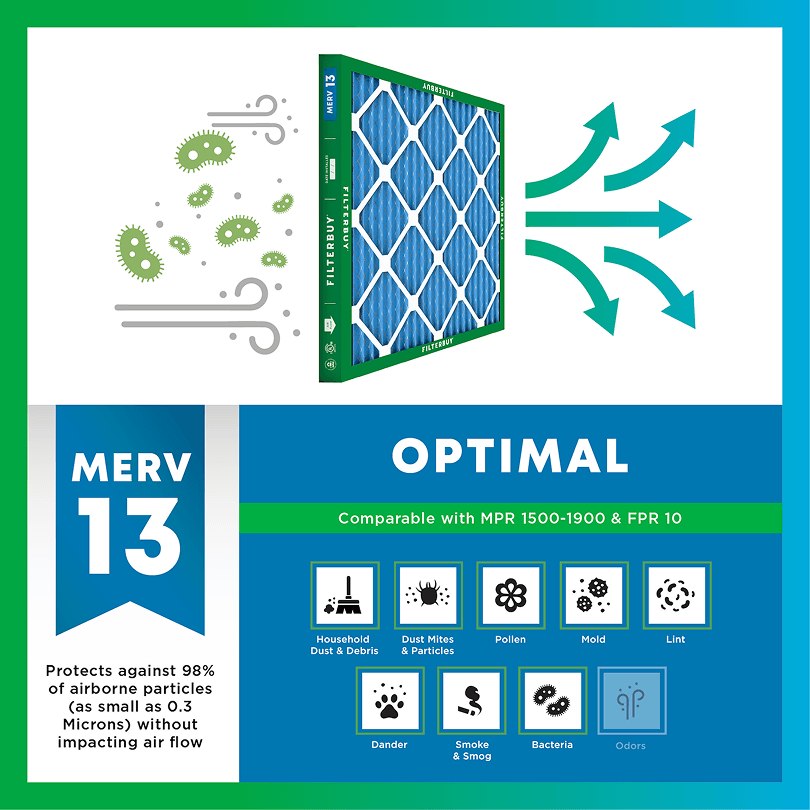
- Captures PM2.5 and other fine particulates
- Filters ash, soot, and smoke particles
- Rated to capture particles as small as 0.3 microns
- Matches the filter rating the EPA suggests during high-AQI and smoke events

AQI FAQs
What is AQI?
AQI stands for Air Quality Index, the EPA's scale for reporting daily air quality. It runs from 0 to 500. The higher the number, the greater the level of air pollution. Values at or below 100 are generally considered satisfactory; values above 100 mean air quality is unhealthy, first for sensitive groups, then for everyone as numbers climb.
What does AQI measure?
The AQI tracks five major pollutants regulated by the Clean Air Act: ground-level ozone, particle pollution (PM2.5 and PM10), carbon monoxide, sulfur dioxide, and nitrogen dioxide. The reported AQI value reflects whichever pollutant is highest at that time — most often ozone or fine particles (PM2.5).
How is AQI calculated?
Monitoring stations measure pollutant concentrations, and the EPA converts each into a standardized 0–500 score using set breakpoints. Each pollutant gets its own sub-index, and the highest sub-index becomes the reported AQI. That's why a single number can represent different pollutants on different days.
What is a good AQI?
An AQI of 0–50 is rated "Good" — air quality poses little or no risk. 51–100 is "Moderate," acceptable for most people though unusually sensitive individuals may want to limit prolonged outdoor exertion. Anything at or below 100 is generally considered satisfactory air quality.
What does an AQI of 100 (or 150) mean?
100 is the dividing line: at or below it, air quality is satisfactory for the general public. From 101–150, air is "Unhealthy for Sensitive Groups" — people with respiratory conditions, older adults, and children. From 151–200, it's "Unhealthy" and everyone may begin to feel effects.
Why is the AQI bad today?
Short-term AQI spikes usually come from wildfire smoke, temperature inversions that trap pollutants near the ground, high-ozone weather (hot, sunny, stagnant days), or heavy traffic and industrial activity. Check a real-time source like the map on this page to see which pollutant is driving today's reading in your area.
What AQI is bad for running or exercise?
Many runners follow the EPA category lines: below 50, no adjustment needed; 51–100, unusually sensitive people may shorten intense workouts; above 100, sensitive groups are advised to reduce prolonged or heavy outdoor exertion; above 150, that advice extends to everyone. Exercise increases how much air you breathe in, which is why thresholds matter more during workouts.
What AQI is safe to open windows?
A common rule of thumb is to keep windows open when the AQI is under 100 and close them when it climbs above, especially during wildfire smoke events when fine particles are elevated. When windows are closed, running your HVAC system with a fresh filter helps capture particles circulating indoors.
Should I wear a mask based on AQI?
Public health agencies generally suggest considering a well-fitted N95-style respirator outdoors when the AQI exceeds 150, particularly during smoke events. Cloth and surgical masks don't filter fine particles effectively. Follow guidance from your local health department, which may adjust recommendations during severe episodes.

Check Today's Live Real Time Air Quality Index AQI Map in Virginia Now
By Michelle Wan, Brand Manager & Air Quality Writer | Filterbuy · Reviewed by David Clark, Licensed HVAC Technician · Published July 5, 2026 · Updated July 5, 2026
What's The Air Quality In Virginia Right Now?
Check the live AQI map on this page for your ZIP code. Under 100 is fine for most people, and sensitive groups should ease off once the number climbs above 100.
Virginia's reading is driven mostly by summer ground-level ozone and by fine particle pollution (PM2.5) from wildfire smoke, and it can climb fast once smoke reaches the Mid-Atlantic. When the air turns orange or worse, the air inside your home is the air you can actually control, and a MERV 13 filter captures the fine particles and smoke that drift indoors.
- MERV 8 — larger debris like dust, lint, and pollen
- MERV 11 — finer particles like pet dander and some smoke
- MERV 13 — microscopic particles including wildfire smoke and PM2.5

Not sure which MERV rating fits your home? Answer a few quick questions and we'll match you to the right filter.
Ready to gear up before the next smoke day? Shop Filterbuy air filters and match the MERV rating to the threat.
The haze that settles over the Shenandoah Valley on a July afternoon isn't always fog. Some days it's ground-level ozone. Other days it's fine particle pollution drifting in from hundreds of miles away. At Filterbuy, we've shipped filters into Virginia homes through every smoke season we've served, and one pattern keeps repeating. The households that check a real-time number act sooner and breathe easier than the ones caught off guard. This page gives you Virginia's live Air Quality Index so you can make that call yourself, right now, whether it's a good morning for a run in Richmond or a better afternoon to keep the windows shut in Roanoke.
Quick Answers
What's The Air Quality In Virginia Right Now?
Check the live map on this page for your exact ZIP code before you plan outdoor time.
Going outside is fine for most people when the AQI is under 100, and sensitive groups should ease off above 100.
The pollutant most likely driving today's number is ground-level ozone on hot afternoons or fine particle pollution (PM2.5) during wildfire smoke.
Your strongest indoor protection is a MERV 13 filter with the windows closed when the AQI climbs.
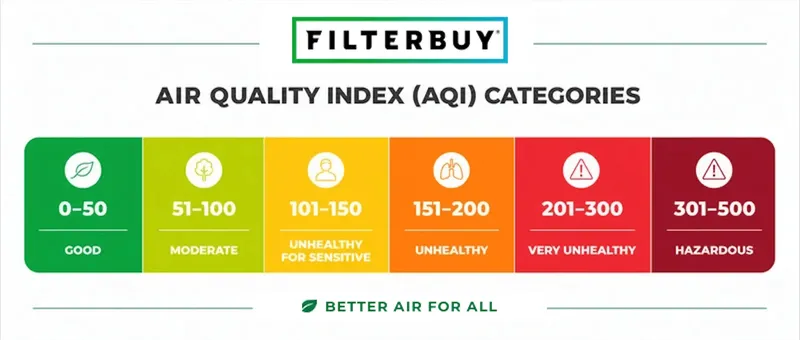
Virginia's AQI updates hourly and follows the U.S. EPA Air Quality Index scale, which spans 0–500: 0–50 is Good (green), 51–100 is Moderate (yellow), 101–150 is Unhealthy for Sensitive Groups (orange), 151–200 is Unhealthy (red), 201–300 is Very Unhealthy (purple), and 301 and above is Hazardous (maroon). On most days across the Commonwealth the reading sits in the Good to Moderate range. It spikes higher during summer ozone episodes and when wildfire smoke reaches the Mid-Atlantic. In our experience helping Virginia households, the figure people underestimate most isn't the daily high, it's how fast the number climbs once smoke arrives. If you're in a sensitive group, treat orange as your signal to move activity indoors.
AQI categories follow the U.S. EPA Air Quality Index scale. Check the live map for current conditions in your area.
Top Takeaways
Virginia's AQI is driven mostly by two pollutants: summertime ground-level ozone and fine particle pollution (PM2.5).
Readings change hour to hour, so check the live map before outdoor plans rather than trusting yesterday's forecast.
Wildfire smoke now reaches Virginia. The June 2023 Canadian smoke event pushed parts of the Mid-Atlantic into red and purple conditions.
Sensitive groups (kids, older adults, and anyone with asthma or heart disease) should act at a lower AQI than everyone else.
When outdoor air turns orange or worse, your indoor air becomes your safest space, and a MERV 13 filter helps keep it that way.
Sensitive groups should act at a lower AQI than the general public. Guidance based on U.S. EPA and CDC recommendations.
How Virginia's Air Quality Works And What Drives It
Virginia's air tells two different stories depending on the season. In summer, heat and sunlight cook vehicle and power-plant emissions into ground-level ozone, which is why smog alerts cluster in the warm months across Northern Virginia, Richmond, and Hampton Roads. Ozone irritates the lungs the way a sunburn irritates skin, and it climbs fastest on hot, stagnant afternoons.
The second story is particle pollution. PM2.5 particles are small enough to slip past your body's defenses and reach deep into your lungs. They come from traffic, industry, wood smoke, and increasingly from wildfires far outside the state. That's the shift worth understanding. Virginia used to sit downwind of very little smoke. Now the Commonwealth catches plumes from Canadian and western fires, and those events can turn a Good-air morning into an Unhealthy afternoon within hours. We noticed that change in our own inbox before the forecasts caught up, as questions from Virginia customers about smoke-rated filters climbed within days of the haze arriving.
Patterns vary by year and location. Always check the live AQI for current conditions.
Virginia's air also depends on where you stand. The mix that fuels a bad-air day in a Northern Virginia commuter suburb looks nothing like the haze that settles into a Shenandoah valley, and knowing your region tells you which pollutant to watch first. This is the part generic AQI maps leave out, so we mapped it to the Commonwealth.
Regional patterns are general and shift with weather and wildfire seasons. Always check the live map for your exact location.
A lot of Virginians assume their home is automatically a refuge. It isn't. When outdoor PM2.5 spikes, those particles work their way indoors through gaps, doors, and fresh-air intakes. The good news is that you have real control over the air you breathe most of the day. Running your HVAC system with a high-efficiency filter, keeping windows closed during smoke events, and watching the live AQI are three moves that genuinely change your exposure. Most guides skip this part. In the Virginia homes Filterbuy ships to, the ones that ride out a smoke event comfortably aren't the ones that react fastest. They're the ones that already had MERV 13 filters rated for smoke and fine particles installed before the alert, since that rating captures a large share of the particle sizes that make Virginia's worst air days dangerous.
I've spent the last few years turning Virginia's air data into plain advice, and the change that reset my own habits was how ordinary a bad-air day has become here. I check the AQI the way I check the weather now, and I keep a spare MERV 13 in the closet from May through October. If I had one sentence to leave with a Virginia family, it's this: Decide your plan on a clear day, so a smoke afternoon never catches you deciding.
Michelle Wan, Brand Manager & Air Quality Writer, Filterbuy
Expert Insight On Virginia's Air
After manufacturing filters for over a decade and serving more than two million households, we've learned that people fixate on the outdoor number while the real fix is usually indoors. When Virginia's AQI turns orange or red, the filter in your system stops being a maintenance item and starts being a health tool. Match the filter to the threat, keep it fresh, and you've done more for your family's lungs than almost anything else you can do at home.
David Heacock, Founder and CEO, Filterbuy
Seven Resources We Trust To Make Virginia's Air Visible
You can't see ozone or fine particles drifting over your street, but you can stay a step ahead of them. These are the seven resources the Filterbuy team leans on every day, and the ones we'd hand any Virginia family that wants to protect the people under their roof.
Catch A Bad Air Day Before It Reaches Your Family
Virginia's own monitors reveal the ozone and fine particles you can't see, and a quick email signup means each poor-air day lands in your inbox before it lands in your lungs.
Source: Virginia DEQ Current Air Quality and Forecast
Know Your Next Move The Moment Smoke Rolls In
When wildfire smoke arrives, this guide turns every AQI color into a clear next step, so you're acting with confidence instead of guessing when to bring the kids inside.
Source: AirNow Guidance On Fires And Your Health
Turn Your Home Into The Cleanest Room In The Neighborhood
Federal guidance shows you how to seal smoke out and points to a MERV 13 filter as the workhorse for trapping the fine particles that sneak indoors.
Source: EPA On Wildfires And Indoor Air Quality
Find Out If Someone In Your Home Needs Extra Protection
The CDC spells out who's most vulnerable to smoke, from young kids and older adults to anyone with asthma or a heart condition, plus the early symptoms worth watching for.
Source: CDC On How Wildfire Smoke Affects Your Body
Read An Air Quality Alert Like You Read The Forecast
The National Weather Service explains how it predicts ozone and smoke and what an official alert is really asking you to do that day.
Source: National Weather Service Air Quality Safety
See What's Really In The Air Over Virginia's Own Backyard
Straight from the team that watches Shenandoah's skies, you'll see how ozone and haze move through the Blue Ridge over the years, and it shows that clean air matters far from any highway.
Source: National Park Service On Shenandoah Air Quality
Understand Why Wildfire Smoke Deserves Extra Respect
Peer-reviewed research from Aguilera and colleagues found that wildfire-specific PM2.5 sends more people to the hospital for breathing trouble than everyday particle pollution, the science behind why we tell every family to have a MERV 13 ready before smoke is in the forecast.
Source: Peer-Reviewed Research On Wildfire Smoke And Respiratory Health
Three Numbers That Prove Virginia's Air Is Worth Watching
Don't take our word for it. The invisible stuff in Virginia's air shows up in the data. Here's why we tell every family to watch the AQI and keep a fresh filter in the system.
1. Virginia's Air Isn't Uniformly Clean
Frederick County earned a D for short-term particle pollution in 2026, the worst daily particle grade in the state.
Ozone pollution worsened in the Richmond metro area.
Source: American Lung Association 2026 State of the Air, Virginia
2. Wildfire Smoke Now Reaches Virginia
In June 2023, more than 86 million people across the eastern U.S. breathed particle pollution above the federal health standard.
The worst air pushed into the Mid-Atlantic on June 7–8.
3. PM2.5 Reaches Your Heart As Well As Your Lungs
Short-term PM2.5 exposure can trigger heart attacks, strokes, and cardiovascular death.
Long-term exposure shortens life expectancy in more heavily exposed communities.
Source: American Heart Association On Particle Pollution And The Heart
That's why Filterbuy treats a MERV 13 filter as a health tool rather than a maintenance item.
Final Thoughts And Opinion
Air quality in Virginia has quietly changed. For years, most residents could ignore the AQI and be fine. That's no longer a safe habit. After years of shipping filters into this state, the shift we can't unsee is how routinely a clear morning turns into a stay-inside afternoon once smoke or ozone moves in. Our honest take at Filterbuy is that the AQI now deserves a spot on your daily glance, right next to the temperature. It costs you nothing, it takes five seconds, and you can look up your AQI by ZIP code to see exactly when to protect the people under your roof.
Next Steps To Protect Your Air Today
Bookmark the live map above and check it before any outdoor exercise, yard work, or kids' sports.
Sign up for Virginia DEQ air quality alerts so bad days reach you before you head outside.
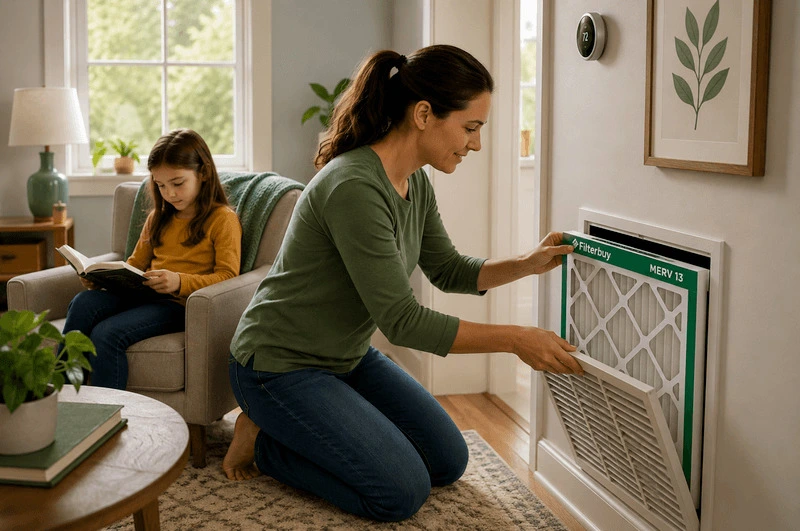
On orange or worse days, close windows, run your HVAC on the fan or recirculate setting, and stay indoors when you can.
Confirm the filter in your system is fresh and rated for fine particles. If you're unsure of your size, find your exact filter size and set a replacement reminder.
MERV stands for Minimum Efficiency Reporting Value. Higher ratings capture smaller particles.
Frequently Asked Questions About Virginia Air Quality
Breathe Easier In Virginia With Filterbuy
Clean indoor air is the part of Virginia's air quality you actually control, and it's the one we've watched families win on again and again. When the map turns orange, the right filter turns your home into the safest room in the Commonwealth. Shop Filterbuy air filters, match the MERV rating to the threat, and keep your family breathing easier on the good days and the bad ones.