
Richmond Real-Time AQI Tracker


Get Alerts For Unhealthy AQI In Your Area
When air quality in your area reaches unhealthy levels, we'll send you a quick alert, along with expert tips on how to reduce your exposure.
What's Actually In Richmond Air Today?
What High AQI Means for Your Lungs in Richmond
How to Read AQI
The Air Quality Index (AQI) measures how polluted the air is and how it may affect your health.
0–50 (Good): Air quality is satisfactory.
51–100 (Moderate): Acceptable, but some pollutants may pose minor concerns.
101–150 (Unhealthy for Sensitive Groups)
151–200 (Unhealthy)
201–300 (Very Unhealthy)
301+ (Hazardous)
Moderate
Still okay for most, but if you have asthma or allergies, take it easy and avoid long outdoor workouts.
Shop MERV 11 filters→What's the Right Filter for Your AQI Level?

Check Today's Live Real Time Air Quality Index AQI Map in Richmond, VA Now
TL;DR
The live Richmond air quality map above shows real-time air quality index (AQI) readings from Virginia Department of Environmental Quality (DEQ) monitors. The days worth planning around bring summer ozone, Canadian wildfire smoke, or spring pollen, which the AQI does not count.
Key Takeaways
The American Lung Association gave Richmond a B for ozone and a C for short-term particles in 2026.
Canadian smoke pushed Richmond into the red in June 2023 and July 2026.
The AQI skips pollen, though Richmond ranked 14th on the 2026 Allergy Capitals list.
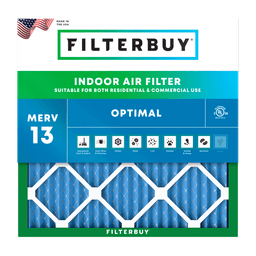
At an AQI of 100 during smoke, Filterbuy recommends MERV 13, fan On, and a portable HEPA unit in each occupied room.
Reading Richmond's Live AQI Map Before You Head Out
The number on the Richmond AQI map is a 0 to 500 Air Quality Index score based on whichever pollutant is worst. In Richmond, that is usually ozone on summer afternoons or fine particulate (PM2.5) when smoke moves in. So the first rule at Filterbuy, a U.S. air filter manufacturer, is to read the pollutant label before the number.
DEQ's regional monitors sit in Henrico, Chesterfield, Hanover, and Charles City counties and report through EPA AirNow, so a reading describes the metro, and NowCast smoothing means smoke can reach your street before the map catches up. If you smell smoke while the map shows green, close the windows.
What the AQI Colors Mean for Your Day in Richmond
The EPA Air Quality Index sorts readings into six categories. Here is what each means in Richmond.
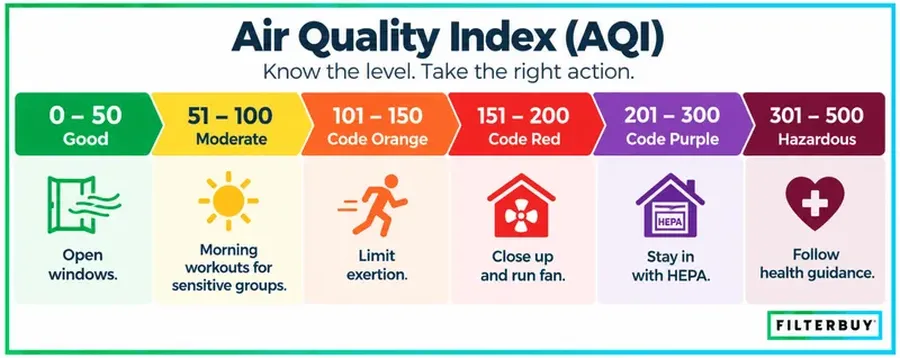
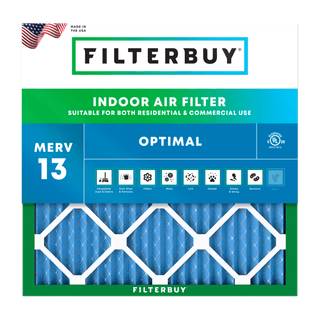
Filterbuy's action line is an AQI of 100, the top of Moderate, where we tell customers to act. When smoke pushes the map to 100, put a MERV 13 filter in the HVAC system, set the thermostat fan to On, run a portable HEPA air cleaner in each occupied room, bedrooms first, and close the house up. For ozone, closing up is enough.
Can You Breathe Easy in Richmond Today?
It depends on the live reading and your health. Below 100, most healthy adults can go about their day. Between 101 and 150, children, adults over 65, pregnant people, and anyone with asthma, COPD, or heart disease should ease off outdoor exertion. Above 150, that advice applies to everyone. These thresholds are EPA guidance, and anyone with a heart or lung condition should follow their doctor's plan.
The Richmond City Health District notes that the city ranked 16th on the 2025 Asthma Capitals list. Filterbuy's guide to what the AQI means for asthma and COPD explains each threshold.
Richmond Air Quality Forecasts, Action Days, and Health Alerts
Virginia DEQ issues a daily Richmond forecast from April through September.
DEQ uses two terms. An Air Quality Action Day forecasts Code Orange or worse for tomorrow, so mow or work out in the morning. An Air Quality Health Alert means conditions have crossed Code Orange, so close the windows. Sign up on Virginia DEQ's air monitoring page, and the National Weather Service office in Wakefield carries the same alerts.
How Air Quality Shifts Across Richmond Neighborhoods
Ozone is regional, but traffic pollution is local: homes beside the I-95 and I-64 overlap or the Chippenham and Powhite Parkways get more diesel exhaust.
Heat varies too. In July 2017, a Science Museum of Virginia heat-mapping study found at least a 16 degree Fahrenheit spread, with the hottest areas tracing formerly redlined neighborhoods.
The Air Pollution Behind Richmond's Readings
Ground-level ozone forms when emissions react in sunlight, so it peaks on summer afternoons. PM2.5 comes mainly from smoke, diesel engines, and wood stoves; the Filterbuy explainer on what PM2.5 is covers its health effects.
Dominion Energy retired the last coal units at its Chesterfield Power Station on May 31, 2023, and EPA redesignated the Richmond-Petersburg area to ozone attainment on June 1, 2007.
How Richmond Air Stacks Up Against Other Virginia Metros
The American Lung Association's 2026 State of the Air report gave the metro a B for ozone and a C for short-term particles, better than Northern Virginia, though ozone slipped from 165th to 143rd worst. Compare the Virginia statewide AQI map or the Hampton air quality page.
When Canadian Wildfire Smoke Settles Over Richmond
Smoke, not ozone, pushes Richmond into the red. On June 8, 2023, WTVR reported PM2.5 readings near 180 downtown and near 200 in Henrico. In July 2026, smoke from more than 800 Canadian wildfires led DEQ to forecast Code Red, according to Cardinal News, and the alert later rose to Code Purple, per The Richmonder.
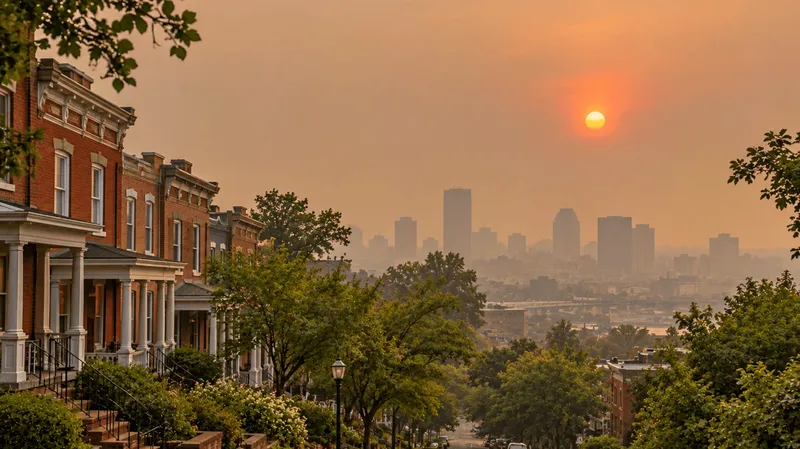
Start with official guidance: DEQ alerts and the AirNow Fire and Smoke Map come first, especially at Code Purple. The Richmond wildfire and smoke map shows the plume, and Filterbuy's seven steps to keep wildfire smoke out of your house cover prep.
Filterbuy's Richmond Smoke-Day Action Plan
Once the map reaches 100 during a smoke event, Filterbuy recommends these steps:
Put a MERV 13 filter in the HVAC system for the whole house.
Set the thermostat fan to On. Auto only filters while heating or cooling.
Run a portable HEPA air cleaner in each occupied room, bedrooms first.
Close the house up, including window-unit vents. Skip candles, frying, smoking, and non-HEPA vacuuming.
Check the filter during the event and replace it when it looks dirty, often well before its normal interval. Keep spares.
Set the car to recirculate on I-95 and I-64.
Separately, the EPA's wildfire smoke guidance recommends a filter rated MERV 13 or higher during smoke events, used alongside portable air cleaners. Filtration reduces smoke indoors; it does not remove it all.
Our Take: Richmond's Air Problem Follows the Calendar
At Filterbuy, we have built air filters in the U.S. since 2013, and Richmond shows a clear pattern: one AQI number hides several problems, and some never reach the map.
So instead of one glance at the map, we suggest three questions:
What is driving the number? Ozone means close up and wait. Smoke means close up and filter.
Is it March through May? Check a pollen count. Yellow pine pollen on cars is too large to reach deep airways. Smaller, invisible oak and hardwood pollen is the bigger trigger.
Has smoke lasted more than a day? Check your filter and replace it once it looks dirty.
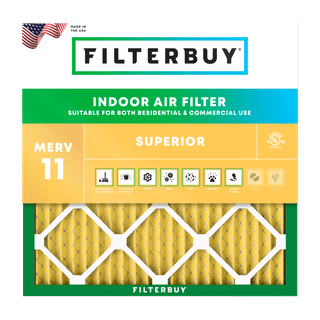
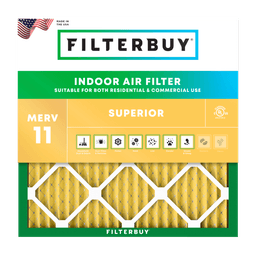
I tell Richmond readers to check two numbers in spring, not one. The map can read Good while oak pollen you cannot see fills the air, along with the yellow dust on every car. Those are the days to close the windows and run a MERV 11 filter.
Michelle Wan, Brand Manager and Air Quality Writer, Filterbuy
Every figure on this page ties to a published source, and David Clark, a licensed HVAC technician, reviewed the filter guidance.
Older Richmond Homes Without Ductwork
Many row houses in the Fan, the Museum District, and Church Hill predate central air, so there is no filter slot to upgrade.
In these homes, portable HEPA air cleaners are the primary defense, not a supplement, and Filterbuy recommends them over any HVAC filter we sell. The EPA Guide to Air Cleaners in the Home sizes them by room: a 300-square-foot bedroom needs a clean air delivery rate (CADR) of about 200. Skip ionizers and ozone generators, which EPA advises against.
Matching Your Filter to Richmond's AQI Readings
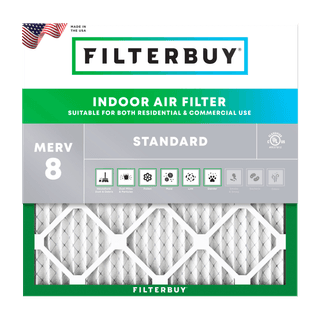
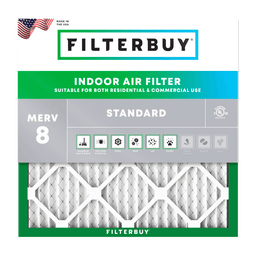
Filtration works on particles, not ozone, so choose a filter for the pollutant behind the reading. For smoke, that is MERV 13. Filterbuy makes MERV 8, 11, and 13 filters in more than 600 sizes, plus custom sizes; confirm your size as with any filter.
The EPA Guide to Air Cleaners in the Home notes that most furnaces and HVAC systems can accommodate a MERV 13 filter without equipment problems when it is replaced often. MERV 11 suits pollen season, and for routine months, a MERV 8 filter on Filterbuy auto-delivery keeps replacements on schedule, and Filterbuy's guide on which MERV rating to use covers the rest.
Supporting Statistics
Richmond ozone sits below the federal limit
Stat: 0.058 to 0.060 ppm at four monitors, 2019 to 2021, versus a 0.070 ppm standard.
Why it matters: Code Orange ozone days are uncommon here.
Source: Federal Register
About 1 in 10 Virginia adults has asthma
Stat: 10.8% of Virginia adults, per 2024 CDC survey data.
Why it matters: They count among the sensitive groups at Code Orange.
Source: America's Health Rankings
Most exposure happens at home
Stat: Americans spend about 90% of their time indoors, where some pollutants run 2 to 5 times higher.
Why it matters: Filtration reduces what is in that indoor air.
Source: U.S. EPA
Frequently Asked Questions
What Is the Air Quality in Richmond Today?
The live map at the top of this page shows current air quality in Richmond, including the AQI and the pollutant driving it, updated through the day.
Is the Air Quality Bad in Richmond Today?
Check the live map, where tapping a monitor shows Richmond PM2.5 today alongside ozone. A reading of 101 or higher is unhealthy for sensitive groups; 151 or higher is unhealthy for everyone.
Why Does Richmond Air Quality Get Worse in Summer?
Heat and sunlight drive the reaction that forms ozone, so levels build on hot, still afternoons. Summer is also peak season for Canadian smoke.
Does the Richmond AQI Include Pollen?
No. The AQI tracks ozone, particle pollution, carbon monoxide, sulfur dioxide, and nitrogen dioxide, but not pollen. In spring, check a National Allergy Bureau pollen count alongside the map.
What MERV Rating Should I Use in Richmond?
MERV 13 for wildfire smoke. Filterbuy suggests MERV 8 for routine months and MERV 11 for pollen season.
Glossary
AQI (Air Quality Index): A 0 to 500 scale of six color-coded health categories. The EPA defines it.
PM2.5: Fine particles 2.5 micrometers or smaller; the main pollutant in smoke.
Ground-level ozone: A lung irritant formed when emissions react in sunlight; Richmond's main summer pollutant.
Air Quality Action Day: A DEQ forecast of Code Orange or worse for the next day.
Air Quality Health Alert: A DEQ notice that conditions exceed Code Orange.
NowCast: The smoothing average behind hourly AQI.
MERV: Minimum Efficiency Reporting Value, a 1 to 16 scale of filter efficiency.