filterbuy
 

Shop by

Home
>
fire smoke
>

Live California Forest Wildfire & Smoke Map Today: Real-Time Statewide Air Quality Tracking & Indoor Protection Solutions from Filterbuy.com Experts

California wildfire smoke doesn't stay outside—and your standard filter isn't stopping it.

After manufacturing millions of air filters and helping California homeowners through countless wildfire seasons, we've learned something most people discover too late: indoor air quality often becomes worse than outdoor air when smoke infiltrates HVAC systems running basic filtration.

Customers tell us the same thing every fire season—they close the windows, stay inside, and still wake up with burning eyes and scratchy throats. That's because wildfire smoke particles are 30 times smaller than what most filters capture.

This page provides live wildfire tracking, real-time AQI data across California, and the indoor protection strategies we've developed over years of working directly with families in smoke-affected areas. We'll show you exactly what's burning, where smoke is heading, and which filtration upgrades actually make a measurable difference based on particulate size—not marketing claims.

We're not just aggregating data. We're combining real-time fire and air quality information with filtration expertise that comes from manufacturing the products and hearing directly from customers about what works when California skies turn orange.

TL;DR Quick Answers

Current live forest wildfire and smoke map today in California

Best live wildfire map: CAL FIRE Incidents at fire.ca.gov/incidents

Best smoke and air quality map: EPA Fire and Smoke Map at fire.airnow.gov

What these maps show:

Protect your indoor air when maps show smoke in your area:

  1. Upgrade to a MERV 13 filter minimum

  2. Set the HVAC fan to "ON" for continuous filtration

  3. Close windows, doors, and fresh air intakes

  4. Check the filter every few days—smoke clogs filters fast

What we've learned from helping California families through fire seasons: Families who monitor these maps daily and prepare filtration before smoke arrives breathe noticeably cleaner indoor air than those reacting after infiltration begins. Your HVAC filter is either capturing smoke particles or circulating them through every room. MERV 13 is the minimum rating that actually stops smoke-sized particles.

Top Takeaways

What the Research Proves

What Our Customers Report

Three Facts We've Confirmed Over a Decade of Manufacturing

  1. Proper filtration works. The 75%+ particle reduction is real. Families feel it.

  2. Vulnerable populations need it most. Children with asthma. The elderly with COPD. Over 41 million Americans are at higher risk.

  3. California's fire threat keeps growing. Year-round vigilance is now essential.

The Pattern We See Every Fire Season

Families who prepare:

Families who react:

Bottom line: Preparation beats reaction. Every time.

Current California Wildfires: Live Statewide Tracking

California's wildfire season has become a year-round reality. The interactive map above displays active fires burning across the state right now—with real-time updates on fire perimeters, containment percentages, and evacuation zones.

Bookmark this page during fire season. Conditions change hourly, and knowing where fires are burning relative to your location determines your indoor air protection strategy.

View of live California wildfire smoke map showing real-time air quality index (AQI) levels and smoke impact across the state.

Understanding California Air Quality Index Readings

AQI numbers tell you what's actually in the air you're breathing. Here's how to interpret the readings shown on our statewide tracker:

After working with California customers through multiple severe fire seasons, we've found that most homeowners underestimate how quickly outdoor AQI affects indoor air—especially when HVAC systems cycle contaminated air through inadequate filters.

Why Wildfire Smoke Penetrates Your Home

Closing windows isn't enough. Wildfire smoke contains PM2.5 particles—fine particulate matter 30 times smaller than a human hair. These microscopic particles enter through:

Customers tell us they assumed staying indoors meant staying protected. The reality we've observed after manufacturing filters for over a decade: homes running standard MERV 8 filters during smoke events often have indoor air that's just as compromised as outdoor air within hours.

Your HVAC system becomes either your best defense or your biggest vulnerability, depending on what filter is installed.

Indoor Air Protection Strategies That Actually Work

Based on our experience helping families through California's worst fire seasons, here's what makes a measurable difference:

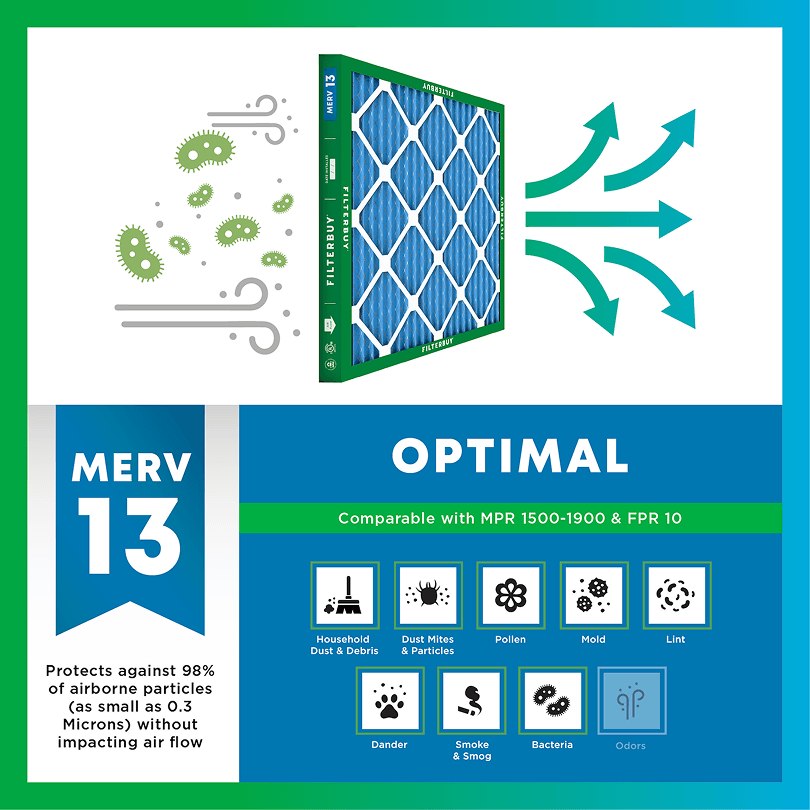
Upgrade to MERV 13 filtration minimum. MERV 13 air filters capture approximately 85% of particles in the 1.0-3.0 micron range, where most wildfire smoke particles fall. This is the baseline we recommend when smoke is present.

Run your HVAC fan continuously. Setting your thermostat fan to "on" instead of "auto" keeps air circulating through your filter constantly—dramatically increasing the number of times indoor air gets filtered per hour.

Seal obvious gaps. Weather stripping around doors and windows reduces unfiltered air infiltration. Focus on exterior doors and any windows you don't use.

Create a clean air room. If whole-home filtration isn't possible, designate one room with a portable HEPA unit as your clean air sanctuary during hazardous conditions.

Choosing the Right Filter for Smoke Conditions

Not all filters handle smoke equally. After testing and manufacturing filters across every MERV rating, here's our guidance based on current AQI levels:

Moderate smoke (AQI 100-150): MERV 11 provides meaningful protection for most households without significantly restricting airflow.

Heavy smoke (AQI 151-200): MERV 13 is our recommended minimum. Most residential HVAC systems handle this rating without strain.

Severe smoke (AQI 200+): MERV 13 or higher, combined with reduced outdoor air intake and continuous fan operation. Consider supplemental portable HEPA filtration.

One critical point from years of customer feedback: check your filter more frequently during smoke events. We've seen filters that normally last 90 days become visibly clogged within two weeks of heavy smoke exposure. A saturated filter restricts airflow and stops capturing new particles effectively.

Protect Your Family When California Skies Turn Orange

Wildfire smoke is an invisible threat that doesn't respect closed doors. The combination of real-time fire tracking, current AQI monitoring, and proper filtration gives you control over what your family breathes—even when the air outside is hazardous.

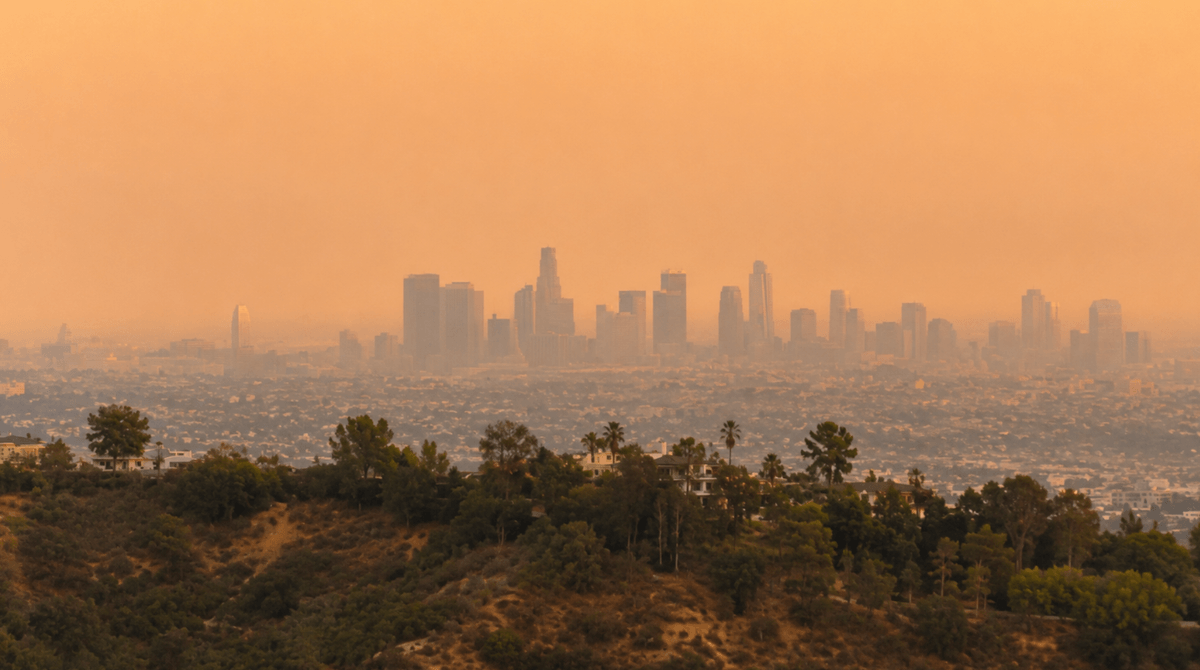
At Filterbuy, we manufacture over 600 filter sizes specifically so you're never stuck without the right protection when you need it most. California's fire reality isn't changing anytime soon. Your indoor air quality doesn't have to suffer because of it.

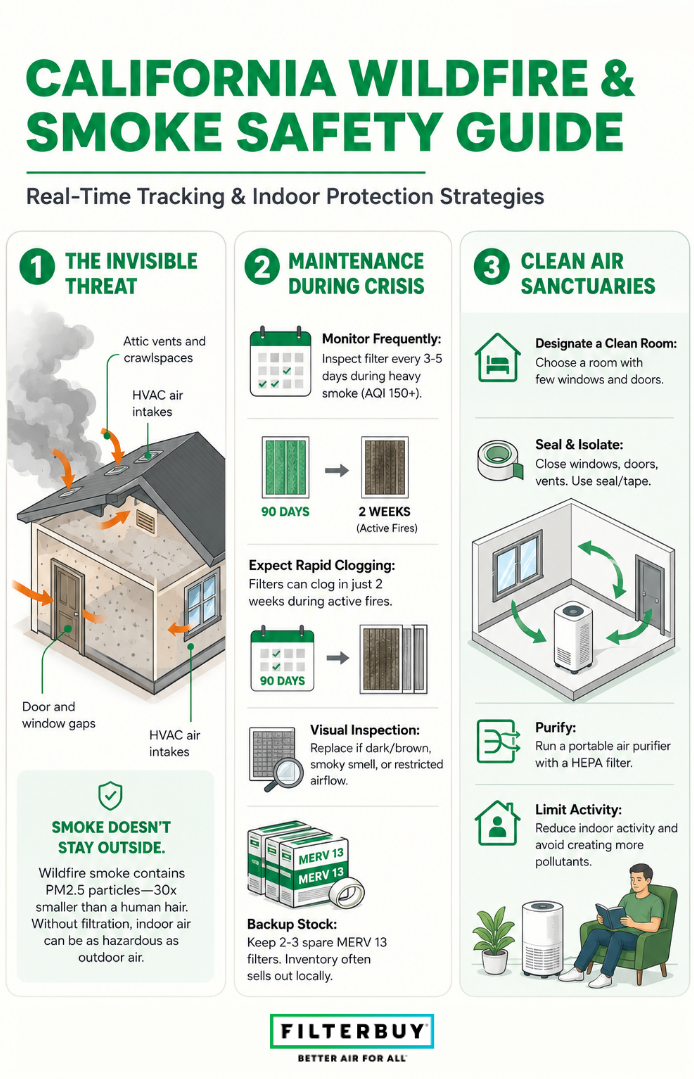
Infographic of Live California Forest Wildfire & Smoke Map Today: Real-Time Statewide Air Quality Tracking & Indoor Protection Solutions from Filterbuy.com Experts

"After manufacturing millions of filters and working with California homeowners through some of the state's worst fire seasons, we've seen one pattern repeat itself: families who upgrade to MERV 13 filtration before smoke arrives breathe noticeably cleaner air, while those running standard filters often can't tell the difference between indoors and outdoors once heavy smoke settles in."

— Filterbuy Air Quality Team

7 Essential California Wildfire & Air Quality Resources We Recommend to Every Customer

Don't take your indoor air for granted during wildfire season. After manufacturing millions of air filters and helping California families through some of the state's worst smoke events, we've learned that protection starts with reliable information.

These are the seven resources we point customers to when they call asking about smoke conditions and indoor air quality. Bookmark them now—before you need them.

1. CAL FIRE Incidents Map – See Exactly Where Fires Are Burning

What it provides: Real-time fire locations, perimeters, containment percentages, and evacuation orders for all active California wildfires.

Why we recommend it: Customers tell us they want one reliable source for fire tracking. This is it. Data comes directly from incident commanders managing the fires—not aggregated from secondary sources.

Resource: https://www.fire.ca.gov/incidents

2. EPA Fire and Smoke Map – Track Smoke Before It Reaches Your Home

What it provides: Current AQI readings, satellite-detected smoke plumes, and PM2.5 levels combining official monitors with community sensors.

Why we recommend it: After working with families across California, we've seen how quickly smoke travels. This map shows where it's heading so you can upgrade filtration before conditions deteriorate—not after you're already breathing contaminated air.

Resource: https://fire.airnow.gov/

3. California Air Resources Board Smoke Ready CA – The Indoor Protection Playbook

What it provides: State-issued guidance on indoor air quality, N95 respirator use, and DIY air cleaner construction using MERV 13 filters.

Why we recommend it: This resource aligns with everything we've learned from manufacturing filters and hearing customer feedback during smoke events. Their MERV 13 recommendation matches what we consistently see working in real California homes. It also includes the California Smoke Spotter app for mobile AQI alerts.

Resource: https://ww2.arb.ca.gov/smokereadyca

4. InciWeb California – Federal Fire Tracking for National Forests

What it provides: Detailed incident reports for wildfires burning on federal lands, including national forests and wilderness areas.

Why we recommend it: Many of California's largest fires burn in areas outside CAL FIRE jurisdiction. Customers in foothill and mountain communities need this resource to track fires that won't appear on state maps until they cross boundaries.

Resource: https://inciweb.wildfire.gov/state/california

5. PurpleAir Map – Neighborhood-Level Air Quality Updated Every 2 Minutes

What it provides: Community sensor network delivering hyperlocal air quality readings far more frequently than official monitors.

Why we recommend it: Here's something we've learned from customers across California: air quality during smoke events can vary dramatically from one block to the next. Official monitors miss these differences. PurpleAir fills the gaps. Select "US EPA" conversion for readings comparable to government data.

Resource: https://map.purpleair.com/

6. CDC Wildfire Safety Guidelines – Protect Your Family's Health

What it provides: Federal guidance on respiratory protection, vulnerable populations, evacuation procedures, and post-fire cleanup safety.

Why we recommend it: You're the hero of your household when it comes to protecting your family during smoke events. This resource covers who's most vulnerable, which respirators actually work, and warning signs that require medical attention. Essential reading for every California family.

Resource: https://www.cdc.gov/wildfires/safety/how-to-safely-stay-safe-during-a-wildfire.html

7. Genasys Protect – Know Your Evacuation Zone Before You Need It

What it provides: Address-based evacuation zone lookup and standardized California emergency alert terminology.

Why we recommend it: Customers tell us they didn't know their evacuation zone until sirens were already sounding. Enter your address now. Understanding the difference between Evacuation Warnings and Evacuation Orders helps you act decisively when seconds matter.

Resource: https://protect.genasys.com/

Supporting Statistics on California Wildfires & Indoor Air Quality

What the Data Confirms—And What We've Seen Firsthand

After manufacturing millions of air filters and helping California families through countless fire seasons, we've watched research validate what our customers tell us every year. These government statistics align with patterns we observe when smoke blankets the state.

MERV 13 Filters Reduce Indoor Smoke Particles by More Than 75%

The research:

What we've observed:

Customers who upgrade from MERV 8 to MERV 13 mid-smoke event notice the difference within hours. They report:

This isn't a marginal improvement. It's a measurable transformation in what your family breathes.

Source: Lawrence Berkeley National Laboratory – Indoor Air Quality Scientific Findings Resource Bank

https://iaqscience.lbl.gov/wildfires

Over 41 Million Americans Live with Asthma or COPD

The research:

What we've observed:

Our most urgent calls come from families with vulnerable members. Customers tell us proper filtration makes visible differences:

For these families, filter selection isn't preference—it's protection. That's why we manufacture over 600 sizes. Everyone deserves access to cleaner air.

Source: U.S. Environmental Protection Agency – Populations at Greater Risk from Wildfire Smoke

https://www.epa.gov/wildfire-smoke-course/wildfire-smoke-growing-public-health-concern

California Recorded 8,000+ Wildfires Burning 1 Million+ Acres in 2024

The research:

What we've observed:

Our order patterns mirror fire activity. When major fires ignite, California orders surge within hours.

What's changed over our years of manufacturing:

Families who wait until smoke is visible often find filters sold out. We encourage customers to stock MERV 13 replacements before fire season—not during it.

Source: California Department of Corrections and Rehabilitation / CAL FIRE

https://www.cdcr.ca.gov/insidecdcr/2025/02/18/by-the-numbers-2024-california-wildfire-season/

Final Thoughts

What government research confirms:

What our customers consistently report:

The Bottom Line

Government data validates what we hear from customers every fire season:

  1. Proper filtration works. The 75%+ particle reduction isn't theoretical—families feel the difference.

  2. Vulnerable populations need it most. Children with asthma. Elderly relatives with COPD. Over 41 million Americans fall into high-risk categories.

  3. California's fire reality isn't improving. Two of the three most destructive wildfires in state history burned by early 2025.

Next Steps

Protect Your Home Before the Next Smoke Event

Preparation beats reaction. Here's exactly what to do—based on years of helping California families through fire seasons.

Step 1: Check Your Current Filter

Open your HVAC return vent and examine what's installed.

Look for:

Pro Tip: Customers assume filters are fine until they check. Most find a clogged mess that stopped working days earlier.

Step 2: Upgrade to MERV 13 Minimum

MERV 13 is our baseline recommendation for smoke protection.

Why MERV 13:

Before upgrading:

  1. Verify your system handles MERV 13 (check manual or ask HVAC tech)

  2. Confirm correct filter dimensions

  3. Ensure a snug fit with no edge gaps

Step 3: Stock Backup Filters Now

Inventory sells out fast when fires ignite. Don't wait.

Keep on hand:

Why it matters: Filters lasting 90 days normally can clog in 2–3 weeks during heavy smoke.

Step 4: Optimize HVAC Settings During Smoke

Your filter only works when air passes through it.

During smoke events:

  1. Set fan to "ON" – Circulates air continuously through filter

  2. Close fresh air intakes – Prevents pulling smoky air inside

  3. Seal windows and doors – Weather strip exterior doors for best results

Step 5: Monitor and Inspect Regularly

Stay informed. Check your filter based on conditions.

Bookmark these:

Filter check schedule by AQI:

Replace when: Filter looks dark gray/brown, smells smoky, or airflow feels restricted.

Step 6: Create a Clean Air Room for Severe Conditions

When AQI exceeds 200, add backup protection.

Setup:

  1. Choose a room you can seal (bedroom works best)

  2. Close all windows and doors

  3. Run a portable HEPA purifier sized for the space

  4. Use for sleeping and peak smoke hours

Budget alternative: DIY box fan filter using a 20" fan + MERV 13 filter. EPA confirms effectiveness.

Quick-Reference Checklists

Before fire season:

During smoke events:

For vulnerable family members:

Ready to Protect Your Home?

Filterbuy manufactures 600+ filter sizes. Find yours, stock up before smoke season, and breathe easier.

Find Your Filter Size → https://filterbuy.com/custom-air-filters/

Questions? Our team has helped California families through every major fire season for over a decade.

Frequently Asked Questions

Q: Where can I find a live map of current wildfires burning in California today?

A: The two most reliable sources for California wildfire tracking:

CAL FIRE Incidents (fire.ca.gov/incidents)

InciWeb (inciweb.wildfire.gov/state/california)

What we've learned: Customers who bookmark both sites before fire season make faster decisions about indoor air protection. Those searching for smoke appears are already behind.

Q: What is the best website to check California air quality and smoke conditions right now?

A: Two resources provide the most complete picture:

EPA Fire and Smoke Map (fire.airnow.gov)

PurpleAir Map (map.purpleair.com)

What we've learned: Air quality varies dramatically within the same neighborhood during smoke events. Families using both resources understand their specific exposure better than those relying on single county-wide readings.

Q: How do I know when wildfire smoke is affecting my indoor air quality?

A: Common signs smoke has already infiltrated:

The problem: By the time you notice symptoms, particles have been circulating for hours.

The smarter approach:

  1. Monitor outdoor AQI before symptoms appear

  2. When AQI exceeds 100, assume smoke is entering your home

  3. Check entry points: HVAC system, door gaps, window seals

What customers tell us: They assumed closed windows meant protection. Then they discovered their HVAC had been circulating contaminated air through every room.

Bottom line: MERV 8 or lower provides no meaningful smoke defense. MERV 13 minimum is required to capture smoke-sized particles.

Q: How often should I check wildfire maps and air quality during the California fire season?

A: Recommended monitoring frequency:

Why frequent monitoring matters:

Set up automatic alerts:

What customers tell us: Warnings give them time to check filter condition and adjust HVAC settings before smoke intensifies. Families waiting until they smell smoke are already breathing contaminated air.

Q: What should I do to protect my family when the California wildfire smoke map shows unhealthy air in my area?

A: Take these steps immediately:

HVAC adjustments:

  1. Set the fan to "ON" (not "AUTO") for continuous filtration

  2. Close fresh air intakes on your system

  3. Verify the MERV 13 filter is installed—lower ratings let smoke pass through

Seal your home:

Check your filter:

For AQI above 200:

What we've observed after helping California families through countless fire seasons: The difference between protected homes and struggling homes is preparation. Families with MERV 13 installed before smoke arrives breathe cleaner air than those scrambling for solutions once infiltration begins.

Tracking California Wildfires Is Step One—Protecting Your Indoor Air Is What Matters Most

Now that you know where fires are burning and how smoke affects air quality, take the next step by upgrading to MERV 13 filtration before smoke reaches your home. Find your filter size at Filterbuy.com.