January 22, 2026

Wildfires are common in California because summers are hot and dry, seasonal winds can move embers very fast, and there is plenty of dried vegetation to burn. More people now live close to flammable landscapes, so everyday sparks can start big fires. A warmer climate also dries fuels sooner and keeps the fire season going longer. On smoky days, protect indoor air with the highest filter your system allows (ideally MERV 13 if compatible), a portable HEPA air cleaner, HVAC on recirculate, a sealed clean room, and on-time filter changes.
California's unique combination of climate, geography, and vegetation creates ideal conditions for frequent and intense wildfires. Understanding these factors helps homeowners prepare to protect their indoor air quality during fire season.
Key factors driving California wildfires:
Mediterranean climate: Hot, dry summers followed by wet winters create abundant vegetation that dries into fuel
Santa Ana and Diablo winds: Powerful, dry offshore winds can rapidly spread fires and carry smoke across vast distances
Drought conditions: Extended dry periods leave forests, grasslands, and brush extremely combustible
Dense vegetation: Chaparral and other native plants contain oils that burn intensely
Urban-wildland interface: More homes built near fire-prone areas increases ignition risk and smoke exposure
Wildfire season typically runs from late spring through fall, though climate change has extended active fire periods year-round in some regions.
What this means for your home: Wildfire smoke can degrade indoor air quality for days or weeks, even if fires burn hundreds of miles away. Fine particulate matter (PM2.5) from smoke penetrates homes through gaps, doors, and HVAC systems.
Prepare before smoke arrives: Upgrade to a MERV 13 HVAC filter to capture fine smoke particles, and consider adding a HEPA purifier in frequently used rooms. Filterbuy's Odor Eliminator filters with activated carbon also help reduce smoke odors that standard filters miss.
Wildfires are common in California because summers are hot and dry, seasonal winds are strong, and there is plenty of dry vegetation to burn.
Human-caused sparks plus wind and dry fuels drive the most damaging fires, especially near the wildland–urban interface.
Risk usually peaks from late summer into fall, but big lightning outbreaks can also trigger clusters of fires.
During smoke, protect indoor air with the highest filter your system allows (ideally MERV 13 if compatible), a portable HEPA air cleaner, HVAC on recirculate, and a sealed clean room.
Fit and maintenance matter: use the exact filter size, make sure it seals well, and replace filters on time—sooner after heavy smoke.
1. The climate dries fuels every year
Much of California has a Mediterranean pattern: cool, wet winters followed by warm, dry summers. By late summer and fall, grasses and shrubs are cured (dried) and easy to ignite.
2. Strong seasonal winds spread fire quickly
In fall, Santa Ana (Southern California) and Diablo (Bay Area/Northern California) winds bring very dry, fast-moving air. These winds can push embers miles ahead of a flame front and are linked to many of the most destructive fires.
3. Droughts, heat, and “atmospheric thirst”
Hotter conditions increase vapor pressure deficit (VPD)—the atmosphere’s “thirst” for moisture—so plants and soils dry out faster. Research shows climate warming is a major driver of the increase in Western fire weather.
4. More people, more ignitions
Most U.S. wildfires are started by people (equipment, power lines, vehicles, debris burning, and more). California’s growing wildland–urban interface (WUI) puts more ignition sources next to flammable vegetation. In Santa Ana wind events, human ignitions are especially important.
Deadliest and most destructive wildifre: the 2018 Camp Fire caused 85 deaths and destroyed 18,000+ structures.
Record year: 2020 burned about 4.3 million acres statewide—more than 4% of California’s land area.
First “gigafire”: the August Complex (2020) exceeded 1,000,000 acres across seven counties.
California wildfires start from human activities and lightning. The worst damage usually happens when dry fuels and strong winds line up with a spark. The mix of causes varies by region and season, but prevention focuses on reducing ignitions and hardening homes in the WUI.
Use the best filter your system allows. Many public-health resources recommend MERV 13–16 for fine smoke particles if your HVAC can handle it. Check your manual first.
Create a clean room. Pick one room, close doors and windows, and run a portable HEPA air cleaner sized for the space. Keep smoke-adding activities (like candles and frying) out.
Set HVAC to recirculate. Close the outdoor air intake or choose “recirculate” so you are not pulling smoky air inside.
Change filters on time. Smoke loads a filter faster. Replace on schedule and sooner after heavy smoke events.
California’s wildfire risk comes from weather, wind, fuels, and people, with a warming climate raising the baseline. You cannot control the wind, but you can prepare your home and protect indoor air when smoke arrives.
Follow EPA guidance. Upgrade your HVAC return filter to MERV 13 or higher if your system can accommodate it during smoky periods, set the system to recirculate and run the fan to move more air through the filter, and use a portable air cleaner with True HEPA in rooms you use most. Keep windows and doors closed while smoke is present and check filters more often after heavy smoke.
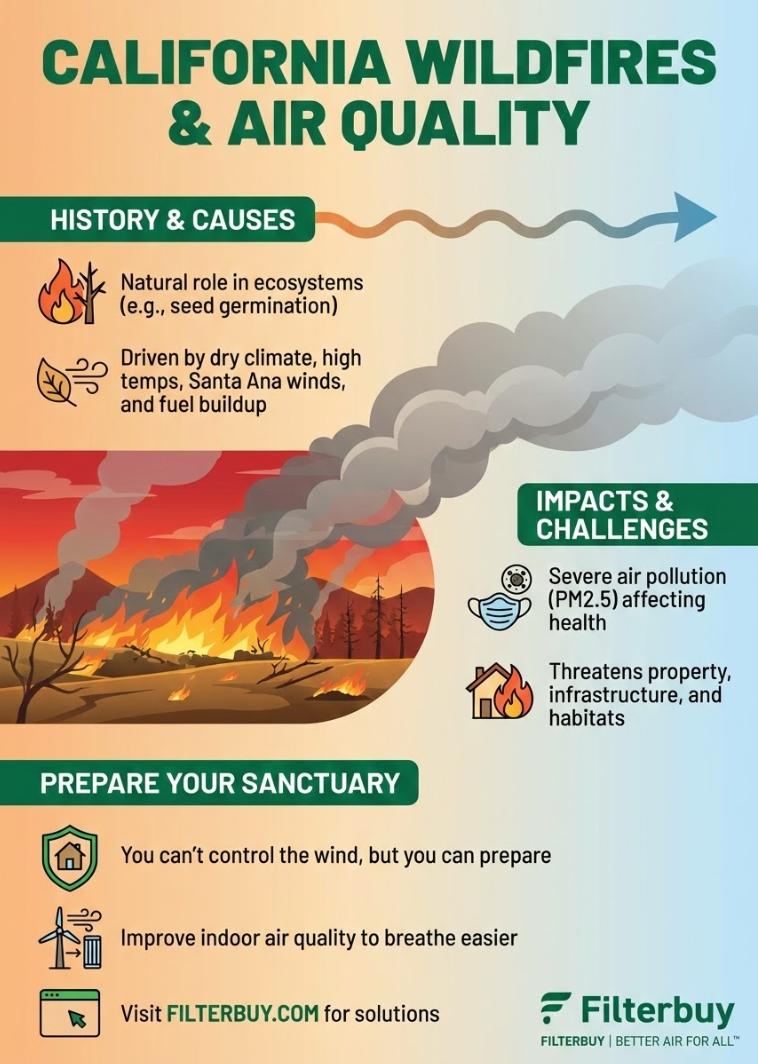
California has hot, dry summers, strong seasonal winds, and lots of dry fuel. Many ignitions are human-caused, which raises the odds of fire starts.
Risk is highest from late summer into fall, especially during Santa Ana and Diablo wind events.
Both start fires, but people cause many ignitions near communities. Wind and dry fuels determine how fast a fire grows.
The 2018 Camp Fire is the deadliest. The 2020 season burned the most area, and the August Complex topped one million acres.
Use the highest MERV your system allows (ideally MERV 13), run a portable HEPA air cleaner, set HVAC to recirculate, and make a clean room with doors and windows closed.
Not during smoke. Keep windows closed, use recirculate mode, and cool with filtered indoor air when possible.
It can if your system isn’t designed for the added resistance. Check your manual and step back to the approved rating if airflow or comfort changes.
They do different jobs. A portable HEPA unit cleans a single room very well. Your HVAC filter cleans air when the system runs. Many homes use both.
They can help in a pinch if built safely, but certified HEPA purifiers are tested for performance and safety. Never leave a DIY unit unattended.
Follow the product schedule, but check more often during smoke. Replace sooner if the filter loads up or airflow drops.
Use the exact size printed on your current filter or measured from the opening. Order a custom size if the fit is loose or the frame wobbles.
No. Houseplants do not remove fine smoke particles effectively. Use filtration instead.
Yes, set the car’s ventilation to recirculate and use the cabin filter. Keep windows closed in smoky areas.
Use official AQI tools or your local air quality agency’s website/app. Follow local health and fire alerts.
Close windows and doors, seal one room as best you can, avoid activities that create indoor particles, and use backup power safely if you have it.
It can boost vegetation in spring, which later dries and can become more fuel in summer and fall. Fire risk depends on the sequence of weather, fuels, and wind.
