
Clarksville Real-Time AQI Tracker


Get Alerts For Unhealthy AQI In Your Area
When air quality in your area reaches unhealthy levels, we'll send you a quick alert, along with expert tips on how to reduce your exposure.
What's Actually In Clarksville Air Today?
What High AQI Means for Your Lungs in Clarksville
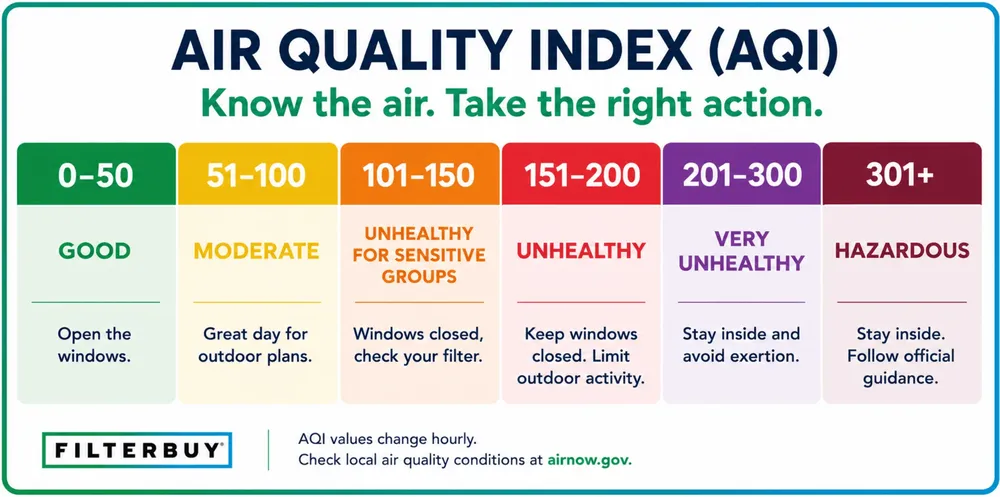
How to Read AQI
The Air Quality Index (AQI) measures how polluted the air is and how it may affect your health.
0–50 (Good): Air quality is satisfactory.
51–100 (Moderate): Acceptable, but some pollutants may pose minor concerns.
101–150 (Unhealthy for Sensitive Groups)
151–200 (Unhealthy)
201–300 (Very Unhealthy)
301+ (Hazardous)
Moderate
Still okay for most, but if you have asthma or allergies, take it easy and avoid long outdoor workouts.
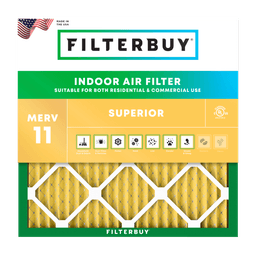
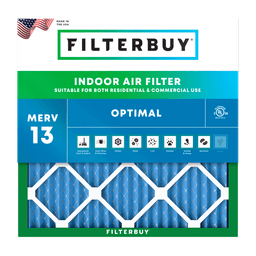
Shop MERV 11 filters→What's the Right Filter for Your AQI Level?


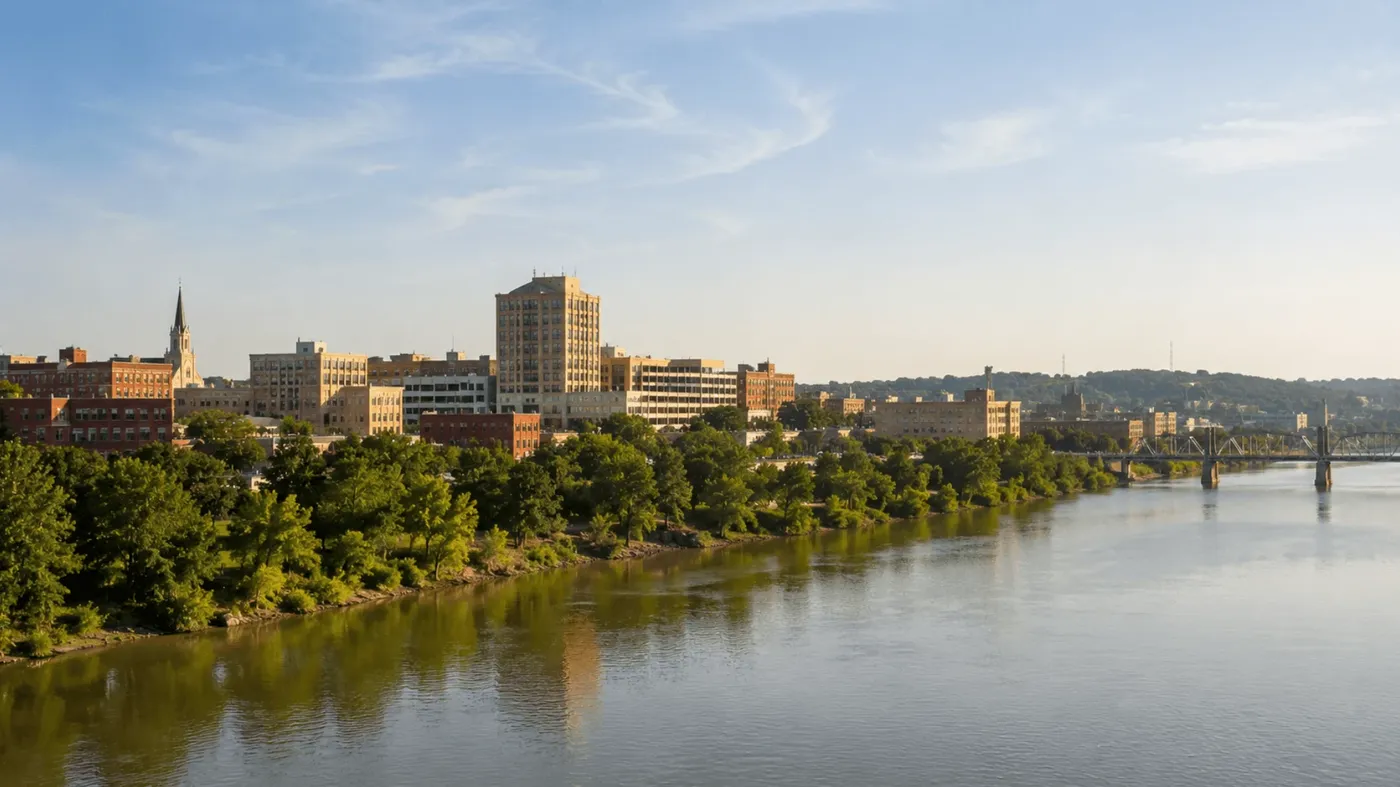
Check Today's Live Real Time Air Quality Index AQI Map in Clarksville, TN Now
By Michelle Wan, Brand Manager and Air Quality Writer · Technically reviewed by David Clark, Licensed HVAC Technician, Filterbuy HVAC Solutions · Published August 27, 2026 · Updated August 27, 2026
The Filterbuy live map above shows the current air quality index for Clarksville, Tennessee, updated in real time from EPA's AirNow network. Find Clarksville on the map, read the color and the number, then match it to the scale below. A reading of 0–50 is Good, 51–100 is Moderate, and 101 or higher means sensitive groups should start limiting time outdoors.
TL;DR
Clarksville's official reading comes from a fine-particle monitor on the city's west side, so most days the number on Filterbuy's live map is a PM2.5 number. It excludes pollen, mold, and the fumes inside your house, which is why Clarksville air can score "Good" outside on a morning your allergies are miserable indoors.
Key Takeaways
Clarksville's regulatory monitor measures PM2.5. Tennessee's monitoring plan lists the Clarksville site, at 1200 West Creek Coyote Trail, as a fine-particulate site. No ozone monitor reports from Montgomery County.
The Clarksville metro's ozone grade comes from across the state line. In the American Lung Association's State of the Air 2026, the metro's ozone grade, a C, was recorded in Christian County, Kentucky. The metro earned a B for short-term particle pollution.
The AQI covers five pollutants, and pollen isn't one. EPA calculates it for ozone, particle pollution, carbon monoxide, sulfur dioxide, and nitrogen dioxide. Pollen, mold spores, and household VOCs are absent.
What Is the Air Quality in Clarksville Today?
Clarksville's air quality today is whatever the live map above shows, refreshed continuously from EPA's AirNow network. Most days land in the Good (0–50) or Moderate (51–100) range. Readings above 100 are uncommon, though they happen during summer heat, drifting wildfire smoke, or a long windless stretch.
The scale runs from 0 to 500, and lower is better. Filterbuy's breakdown of what each AQI color means covers all six categories, and how the AQI is calculated shows the math behind it. The line that matters is 100: below it the air meets the national health standard for that pollutant, and above it effects begin showing up in sensitive groups first.
What Clarksville's AQI Number Is Actually Measuring
Clarksville's AQI is, on most days, a fine-particle measurement. Tennessee's monitoring plan lists the Clarksville site at 1200 West Creek Coyote Trail as a PM2.5 site, so fine particulate matter is what that instrument is there to measure.
That one fact explains something most air quality dashboards never mention. When the American Lung Association graded the Clarksville TN-KY metro for ozone in State of the Air 2026, the C it earned came from data recorded in Christian County, Kentucky, because Montgomery County had none to supply. The same report gave the metro a B for particle pollution.
So when a Clarksville AQI map shows green on a hot, still July afternoon, all that green really tells you is that particles are low. Ground-level ozone, which peaks on exactly those afternoons, may not be measured locally at all. Forecast maps fill the gap with modeled regional estimates, which are useful but are not the same as an instrument sitting in Montgomery County.
Because Filterbuy builds live AQI pages for cities nationwide, we spend a lot of time comparing how thin or thick the monitoring is from one metro to the next. Clarksville stands out. It is one of the few metros we cover where the headline ozone grade is recorded in another state.
None of this makes the number wrong. It makes it specific, and knowing what it is specific about is what makes it useful. On a smoky day, trust it. On a hot, windless afternoon, treat it as one input among several and pay attention to how you feel outside.
Why the AQI Can Say "Good" When Your Allergies Say Otherwise
The AQI does not include pollen. EPA calculates it for five pollutants regulated under the Clean Air Act: ozone, particle pollution, carbon monoxide, sulfur dioxide, and nitrogen dioxide. Pollen, mold spores, dust mite allergens, pet dander, and household VOCs sit outside the index entirely.
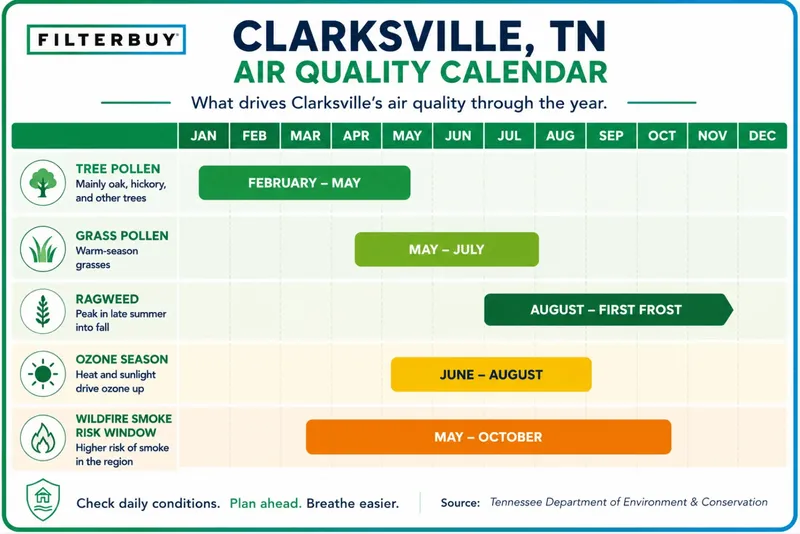
This is the question Filterbuy's support team fields more than any other in spring, and the local calendar explains why. Clarksville's spring runs on oak, maple, hickory, and ash pollen, summer shifts to Bermuda, timothy, and fescue grasses, and fall belongs to ragweed until the first frost. A heavy oak-pollen morning can still register as AQI 25, comfortably green. Our guide to allergy-proofing your home covers what helps once pollen is indoors.
There is a second gap, and for most families it is the bigger one: the AQI is an outdoor measurement. The air you spend most of the day breathing is the air inside your house, which carries cooking particles, dander, dust, and whatever drifted in through gaps in the building envelope.
Your HVAC filter is the one piece of that you control. Everything else requires an act of Congress or a change in the wind.
Supporting Statistics
Three numbers sit behind the guidance above.
1. One PM2.5 Monitor Serves 249,935 People
Montgomery County population, July 1, 2025: 249,935 (U.S. Census Bureau)
County land area: 539 square miles
Regulatory PM2.5 monitors: one
Why it matters: TDEC keeps it running because it is the region's only one, so a reading a few miles away is a signal, not your street.
2. You Spend 90% of Your Time Where the AQI Doesn't Measure
Time Americans spend indoors: about 90% (EPA)
How much higher some indoor pollutants run: 2 to 5 times
Why it matters: the outdoor number covers a fraction of what you breathe.
3. A Better Filter Plus a Running Fan Cuts Indoor PM2.5 by About Half
High-efficiency filter, fan running continuously: about 50% less indoor PM2.5 (EPA)
Low-efficiency filter, same fan setting: about 24% less (EPA, citing Fisk and Chan, 2017)
Why it matters: the fan setting matters as much as the filter.
When Clarksville's Air Quality Is Usually Worst
Clarksville's air follows a fairly predictable annual rhythm, and learning it beats reacting to the number every morning.
Spring (February–May): tree pollen builds fast, and the AQI usually stays green even when symptoms do not.
Summer (June–August): heat and stagnant air favor ozone, and grass pollen peaks in June. This is when the local particle reading is least likely to capture what is bothering you.
Smoke season (May–October): long-range smoke transport has become routine, so it is worth watching fires and smoke across Tennessee whenever a plume moves in. In July 2026, more than 860 wildfires burned in Canada while Middle Tennessee was spared, though winds can change that within days. When smoke does reach the mid-South, the local monitor catches it accurately, because smoke is PM2.5.
Fall and winter: ragweed runs until first frost. After that, homes seal up, furnaces cycle, and indoor pollutants concentrate while outdoor readings look fine.
What to Do When Clarksville's AQI Climbs Above 100
At AQI 101–150, the category is Unhealthy for Sensitive Groups: children, adults over 65, pregnant women, and anyone with asthma, COPD, or heart disease. Those groups should shorten outdoor activity and move hard exercise indoors. Above 150, the same advice applies to everyone.
Indoors, four things genuinely help:
Keep windows and doors closed while the number stays above 100.
Run your HVAC fan continuously. A filter only cleans air passing through it, and a fan on "auto" sits idle most of the hour.
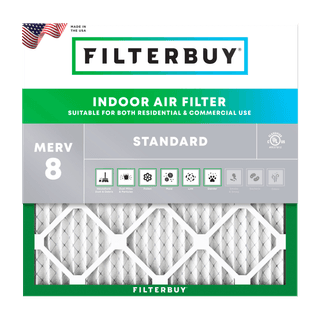
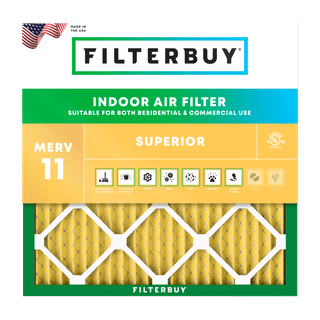
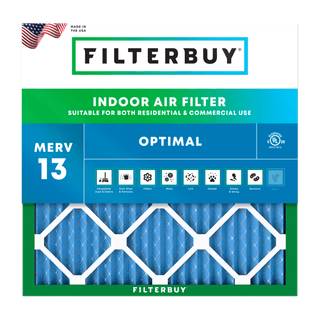
Use a filter that catches fine particles. MERV 13 is the residential rating built for the PM2.5 range. MERV 8 handles everyday dust and lint, MERV 11 adds pollen and dander, and MERV 13 is the one worth having through smoke season. It pays to compare MERV ratings first.
Change it on schedule, and early after smoke. A loaded filter restricts airflow, so the system works harder and cleans less. Filterbuy's replacement schedule covers intervals by filter thickness.
Step two is the one people skip:
The mistake I see most often isn’t the filter rating. It’s the thermostat. People spend the money on a MERV 13, leave the fan on ‘auto,’ and the blower runs maybe fifteen minutes an hour. You bought filtration you aren’t using.
David Clark, Licensed HVAC Technician, CEO of Filterbuy HVAC Solutions
It is worth being clear-eyed about the limits. No HVAC filter reduces outdoor ozone, and none removes carbon monoxide. Filtration is a particle tool, which makes it right for smoke, dust, dander, and pollen already inside, and wrong for gases, which need ventilation and a working CO detector.
Filterbuy has cut and pleated filters in its own U.S. plants since 2013, which is why we talk about airflow rather than marketing tiers.
If You Rent, or You Just PCS'd In
Roughly four in ten Montgomery County households rent, and Fort Campbell, which straddles the state line between Montgomery and Christian County, Kentucky, cycles families through Clarksville on two- and three-year tours. That same state line is why the metro's ozone grade ends up recorded in Kentucky.
If you rent or have just arrived, most air-quality advice does not apply, because you cannot reseal a building envelope or replace a system you do not own. Three things are still within reach:
Change the filter the day you move in. You don't know when the last one went in, and neither does your landlord. Assume it's overdue.
Measure before you order. The size is printed on the edge of the filter in there now. Rental systems tend to run older and take odd sizes, which is why Filterbuy cuts 600+ sizes plus custom.
Switch the thermostat fan from "auto" to "on." It costs nothing, needs no landlord approval, and it is the highest-return change a renter can make.
Clarksville Air Quality FAQ
Glossary
AQI. EPA's 0–500 scale for daily outdoor air quality, in six color-coded categories from Good to Hazardous. See what each AQI color means.
PM2.5. Fine particles 2.5 micrometers or smaller, able to reach deep into the lungs, and the main component of wildfire smoke.
Ground-level ozone. A lung irritant formed when sunlight reacts with vehicle and industrial emissions.
MERV. Minimum Efficiency Reporting Value, the 1–16 scale for how effectively a filter captures airborne particles.
TDEC. Tennessee Department of Environment and Conservation, which runs the state's air monitoring network, including the Clarksville site.
Sources
EPA AirNow: Air Quality Index (AQI) Basics
EPA AirNow: Clarksville-Montgomery County conditions
TDEC: 2025 Annual Air Monitoring Network Plan (PDF)
American Lung Association: State of the Air 2026, Clarksville TN-KY, Tennessee findings
CDC: Air Pollutants
About the author. Michelle Wan is Brand Manager and Air Quality Writer at Filterbuy, turning MERV ratings and HVAC efficiency into plain-English guidance for homeowners.
About the reviewer. David Clark is a Licensed HVAC Technician and CEO of Filterbuy HVAC Solutions, whose crews take residential service calls year-round.