
Lincoln Real-Time AQI Tracker


Get Alerts For Unhealthy AQI In Your Area
When air quality in your area reaches unhealthy levels, we'll send you a quick alert, along with expert tips on how to reduce your exposure.
What's Actually In Lincoln Air Today?
What High AQI Means for Your Lungs in Lincoln
How to Read AQI
The Air Quality Index (AQI) measures how polluted the air is and how it may affect your health.
0–50 (Good): Air quality is satisfactory.
51–100 (Moderate): Acceptable, but some pollutants may pose minor concerns.
101–150 (Unhealthy for Sensitive Groups)
151–200 (Unhealthy)
201–300 (Very Unhealthy)
301+ (Hazardous)
Moderate
Still okay for most, but if you have asthma or allergies, take it easy and avoid long outdoor workouts.
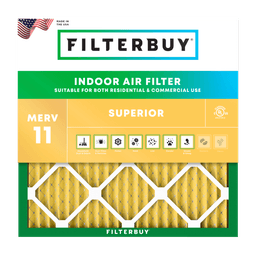
Shop MERV 11 filters→What's the Right Filter for Your AQI Level?



Check Today's Live Real Time Air Quality Index AQI Map in Lincoln, NE Now
TL;DR
The live map above shows Lincoln air quality in real time, with the current air quality index fed by the county monitor at 3140 N Street. Lincoln's monitoring records, which Filterbuy built this page around, show most days read Good. The bad days usually blow in as prairie-burn smoke in spring or wildfire smoke in summer. At AQI 100 and above, follow Filterbuy's four smoke steps below.
How to Read Lincoln's Live AQI Map in Under a Minute
The Lincoln AQI map turns hourly monitor data into a 0 to 500 number and a color. It also names the pollutant behind the number, which decides what you do inside.
Read the color first, then the number.
Check which pollutant is named. Ozone is a timing problem; PM2.5, the fine particles in smoke and soot, is a filtration problem.
Compare the time stamp with the sky. If the haze got there first, trust the haze.
If a plume is on its way, open Filterbuy's Lincoln wildfire and smoke map.
Key Takeaways
Lincoln runs cleaner than Omaha: 90% of the federal ozone standard versus 97.1%.
Most high-AQI days here are imported smoke from prairie burns and wildfires.
Ozone breaks down indoors; smoke particles need filtration.
Is It Safe to Be Outside in Lincoln Today?
That depends on the live number. Find the map's color on the six-category AQI scale below and read across. With a diagnosed condition, follow your doctor's plan first.
Categories per EPA AirNow.
Filterbuy's action line is AQI 100, the top of the Moderate range. That is where we tell customers to put MERV 13 in the HVAC, set the fan to On, run a portable HEPA cleaner in each occupied room and close the house up.
Why the Lincoln Number Can Trail What You See
A hazy sky with a yellow reading is usually a timing gap. EPA reports current AQI as a NowCast blending up to 12 hours of data, so a plume arriving at dusk takes hours to register fully.
Lincoln also leans on one continuous particle monitor, on N Street. In DWEE's 2026 monitoring plan, Filterbuy found a detail most AQI apps skip: that monitor reads roughly 8.5% low against the lab-weighed filters beside it (2022 annual averages). If you smell smoke, act first, then check nearby sensors on the AirNow Fire and Smoke Map.
Who Issues Lincoln's Air Quality Advisories
The Lincoln-Lancaster County Health Department Air Quality Program (LLCHD) issues Air Quality Advisories for Lancaster County. Nebraska DHHS and the Department of Water, Energy, and Environment (DWEE) issue joint smoke advisories, and the National Weather Service posts Air Quality Alerts.
Subscribe on the DHHS Smoke from Fires page and add EnviroFlash emails via DWEE's smoke awareness page. In spring, check the Kansas Flint Hills smoke forecast each afternoon.
One Monitor, Many Neighborhoods Across Lancaster County
Two LLCHD regulatory sites feed the Lincoln AQI, and a state site near Beatrice watches for smoke from the south.
Source: Nebraska DWEE 2026 Network Plan.
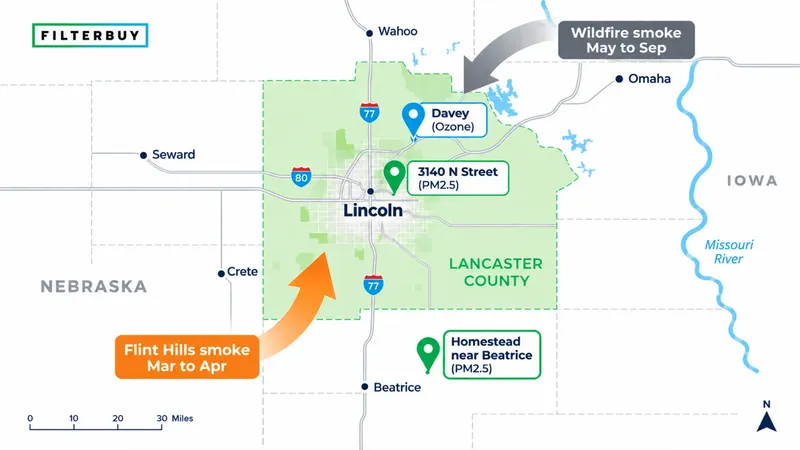
The metro passed 350,000 residents in 2024, triggering a second required ozone site. LLCHD also uses PurpleAir sensors; see why PurpleAir and AirNow readings differ. When a plume crosses eastern Nebraska, compare the Omaha live AQI map too.
What Drives Lincoln's AQI, and How It Behaves Indoors
Nearly every spike in Lincoln air pollution comes down to two pollutants.
Ozone forms when sunlight reacts with vehicle and industrial emissions, so it peaks on hot afternoons downwind of town, right where the Davey monitor sits. Smoke pushes it higher: DWEE tied Nebraska's worst ozone days of 2025 to wildfire plumes.
PM2.5 is particles a thirtieth the width of a hair, from exhaust, wood smoke and, on the worst days, distant fires.
Indoors, the two behave very differently. Ozone breaks down quickly indoors, so closed windows handle much of it. PM2.5 drifts in and lingers, and filtration is what reduces it.
Two clocks, two strategies. Ozone peaks on sunny afternoons, so mornings are usually cleaner. Flint Hills smoke tends to settle in overnight, so on smoke days the afternoon can be clearer.
The AQI leaves out pollen; Nebraska Wesleyan posts a daily Lincoln pollen count.
How Lincoln's Air Compares with Omaha and the Region
Lincoln breathes easier than Omaha. Davey's 2023 to 2025 ozone design value was 63 ppb, 90% of the federal standard, against 97.1% at Omaha's main NCore monitor. The American Lung Association's 2026 report gave Omaha's Douglas County an F for ozone (7.8 unhealthy days a year).
The gap is shrinking: Davey rose from 56 ppb in 2021 to 63 in 2025. See the Nebraska live AQI map.
Lincoln's Two Smoke Seasons, and What an Advisory Changes
Flint Hills burns, March and April. Ranchers burn tallgrass prairie each spring. In the 2025 and 2026 advisories Filterbuy reviewed, most smoke windows opened in the evening and ran into morning. One March 2026 state advisory ran from 8 p.m. to 9 a.m.
Wildfire smoke, May through September. In May 2023, Canadian fires put all of Nebraska under Air Quality Alerts.
When an advisory covers Lancaster County, check AirNow and LLCHD guidance first. Then, at AQI 100 and above:
Put MERV 13 in the HVAC. It is the whole-home layer.
Set the thermostat fan to On. Auto only filters while heating or cooling, and in March and April the system may barely run.
Run a portable HEPA cleaner in each occupied room, bedrooms first. It treats that room harder than the central system can.
Close the house before bed, since Flint Hills smoke tends to arrive after dark. Skip candles, frying and vacuuming.
Check the filter during the event and replace it when it looks dark brown or black, which EPA notes can come well before the normal interval. Keep spares on hand.
To a filter, smoke is smoke. Grass or timber, it’s fine particulate either way. What changes is how long you’re breathing it, and that’s what decides whether one filter gets you through or you need spares on hand.
David Clark, Licensed HVAC Technician and Technical Reviewer for Filterbuy
More in Filterbuy's smoke and AQI guide.
No Ducts? Smoke Steps for Lincoln Apartments and Older Homes
If your home runs on a boiler or wall units with window ACs, there is no central filter slot, and portable HEPA air cleaners are your primary defense. Filterbuy makes HVAC filters and does not sell portable air cleaners, so the HEPA advice here comes with nothing to sell.
Put a portable HEPA air cleaner in each occupied room. EPA sizing guidance calls for a smoke CADR of at least two-thirds of the room's square footage, so a 300 sq ft bedroom needs roughly 200. Skip ionizers and ozone generators; EPA advises against cleaners that produce ozone.
Close the windows and set window units to recirculate, but never seal yourself into a hot house without cooling.
No purifier? EPA's tested stopgap is a MERV 13 filter on a box fan: use a certified fan from 2012 or newer and never leave it unattended.
Renters can call LLCHD, which assesses indoor air in Lincoln rentals.
Our Take: Lincoln's Clean Air Runs on a Calendar
Filterbuy makes HVAC filters in U.S. plants and ships them factory-direct, so our read of Lincoln's record starts inside the house.
1. The timing is predictable. Our calendar:
Sources: DWEE, state advisories, NWU.
2. Preparation beats reaction. A filter ordered the morning of an advisory usually arrives after the smoke. Our advice: put a fresh MERV 13 in before mid-March and set up auto-delivery so a spare arrives before summer.
I hear the same assumption from homeowners near highways and industrial parks: they think changing their filter more often will fix a high pollution problem. The rating matters far more than the schedule. A fresh MERV 8 filter still lets most fine particles through, while a MERV 13 filter catches far more of them.
Michelle Wan, Brand Manager and Air Quality Writer, Filterbuy, in PM10 vs. PM2.5
The Right Filter for Each Lincoln AQI Level
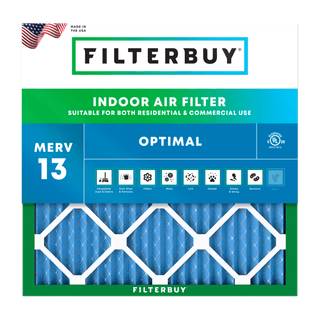
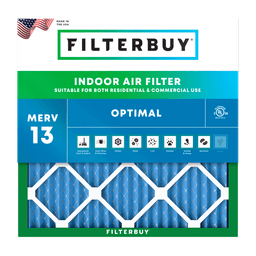
This is the part Filterbuy makes. EPA recommends MERV 13 or higher in a central system during smoke events, and notes that most furnaces and HVAC systems can use it without equipment problems when the filter is replaced often. Check your size and manual as you would for any filter. HEPA belongs in portable units, never the furnace; see MERV 13 vs. HEPA.
Check your filter size and system manual, as with any filter.
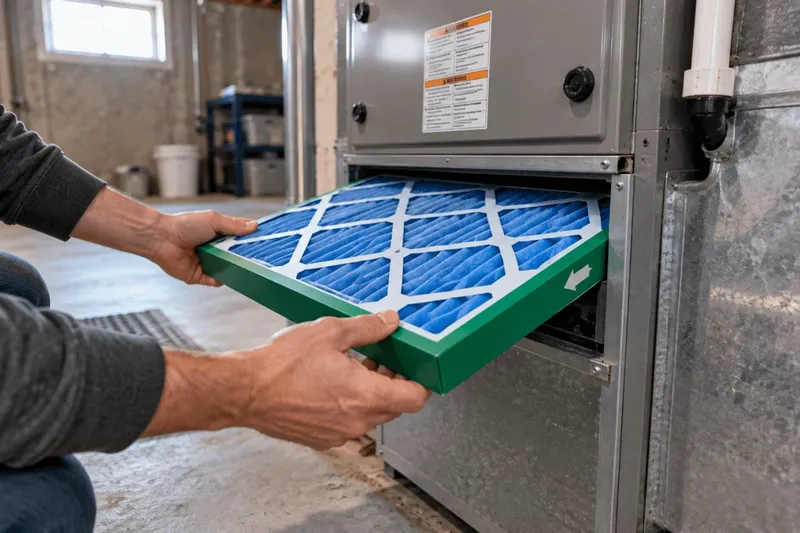
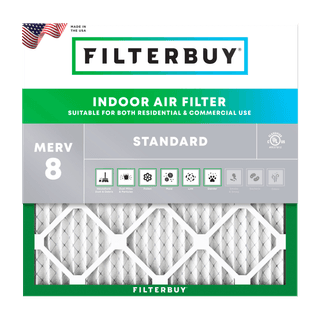
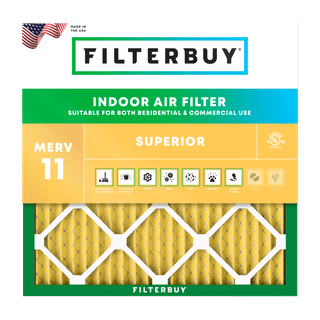
Shop Filterbuy MERV 8, MERV 11 or MERV 13 filters by size, or start with our MERV guide for wildfire smoke.
Supporting Statistics
1. 94.1% Good days at Lincoln's Davey ozone monitor in 2025.
Zero orange days all season.
2. 55% to 60% of outdoor PM2.5 is typical indoors during wildfire smoke.
Assumes windows shut and no air cleaner running.
Ranges from 30% to 100%, home to home.
A closed-up house alone falls short, so add MERV 13 and room HEPA.
3. 94% of new Midwest homes built for sale in 2024 had a forced-air furnace.
Most newer Lincoln homes have a filter slot, so the MERV advice applies.
Source: U.S. Census Bureau, 2024 Characteristics of New Housing
Frequently Asked Questions
Glossary
AQI (Air Quality Index): The EPA's 0 to 500 outdoor air scale, split into six color categories. See how the AQI is calculated.
PM2.5: Fine particles 2.5 micrometers or smaller, and the main pollutant in smoke.
MERV: Minimum Efficiency Reporting Value. Higher numbers catch finer particles.
Filterbuy: A family-owned U.S. maker of HVAC air filters, founded in 2013 and based in Talladega, Alabama.