
Lincoln, NE Live Wildfire Smoke Map
Get Alerts For Wildfires In Your Area
The moment a wildfire starts near you, you'll get an instant alert and simple tips to reduce your smoke exposure.
What's In The Smoke
30xSmaller than a human hair
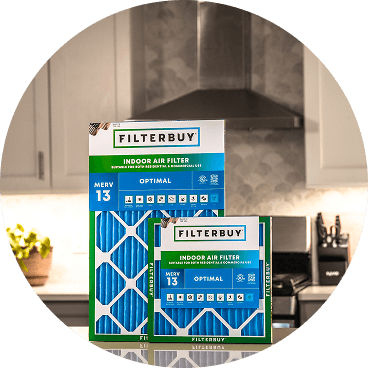
Fine enough to reach deep into the lungs. A MERV 13 is built to capture it.
How Far It Travels


It Doesn't Stay Local
Smoke rides the wind far downwind — you can get smoky air with no fire nearby.
What To Do During A Smoke Event
Simple steps to reduce indoor exposure.
- Stay In, Close UpShut windows and doors to keep smoke out.
- Set Fan To "On"Keeps air cycling through your filter, not just when heating or cooling.
- Recirculate AirSwitch off fresh-air intake so you're not pulling smoke in.
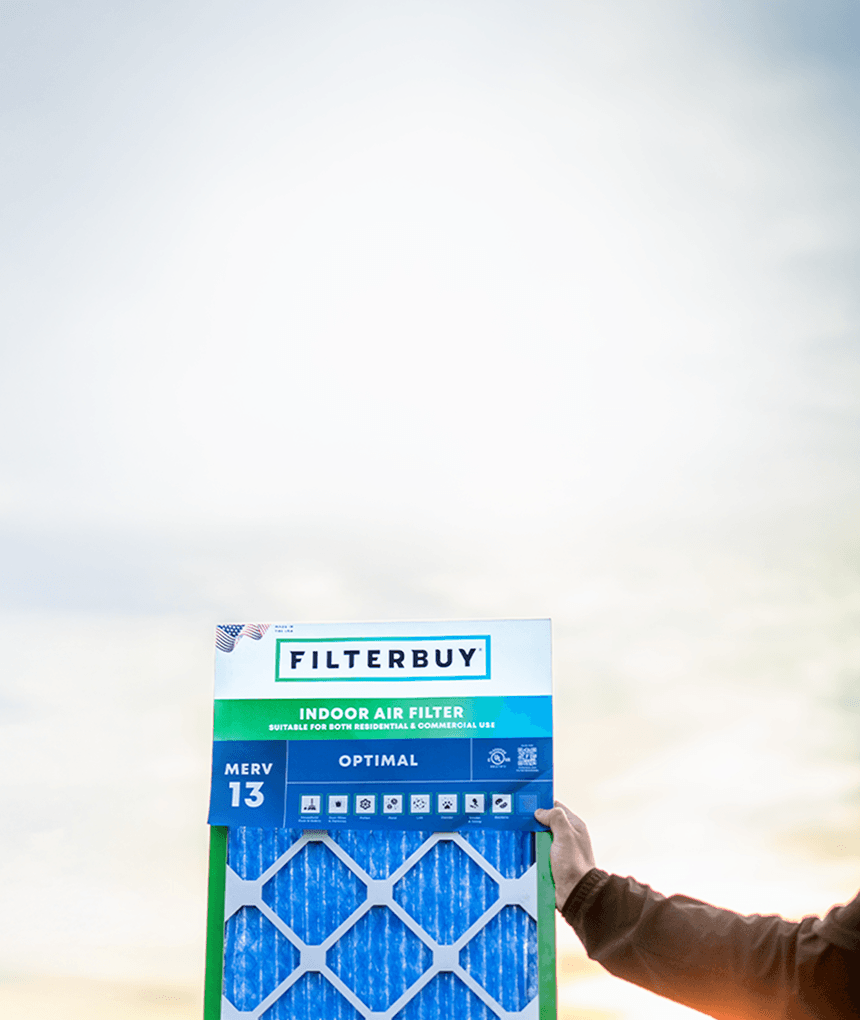
- Run A MERV 13Built to capture the fine PM2.5 in smoke.
- Add A PurifierExtra filtration for the room you use most.
- Wear an N95 if OutsideFits snug to block fine particles — a cloth mask won't.


The Best Air Filter For Wildfire Smoke
During smoke events, the EPA recommends upgrading to a MERV 13 filter — or the highest-rated filter your system can handle — to help reduce the fine particles smoke brings indoors. MERV 13 is the level most home HVAC systems can run while still capturing PM2.5, the fine particulate that makes up the bulk of wildfire smoke.
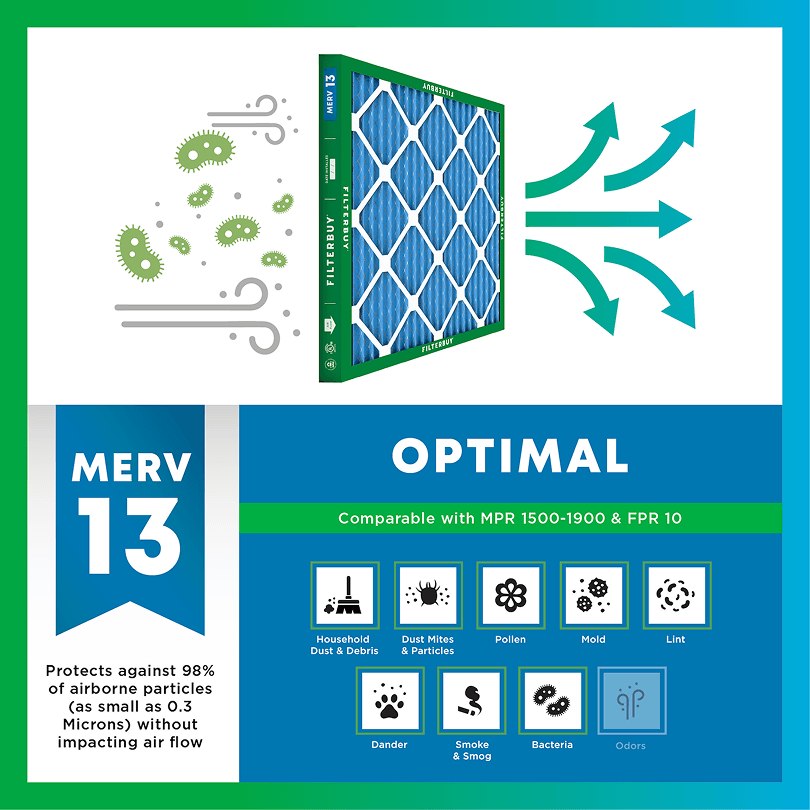
- Captures PM2.5 particles
- Blocks ash, soot, and smoke odor
- Keeps your indoor air safe—even when the outdoor air is dangerous
- Meets the EPA's recommended rating for filtering fine wildfire smoke particles.

Wildfire Smoke FAQs
Facts About Wildfires
Over 70,000 wildfires burn in the U.S. every year.
Wildfire smoke can travel 1,000+ miles, affecting states that aren't even near the blaze.
Exposure to wildfire smoke can worsen asthma, trigger heart issues, and lead to ER visits.
Indoor air can hold more fine particles during wildfire events unless it's properly filtered.
The EPA advises using MERV 13 filters or portable HEPA air cleaners during wildfire smoke events.
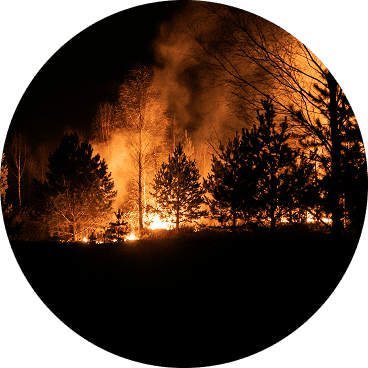
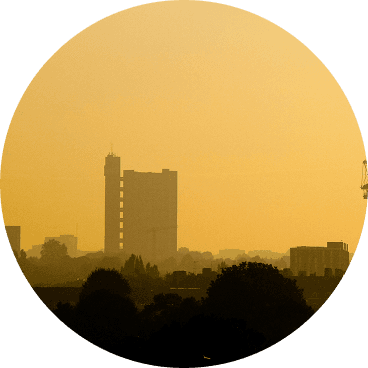
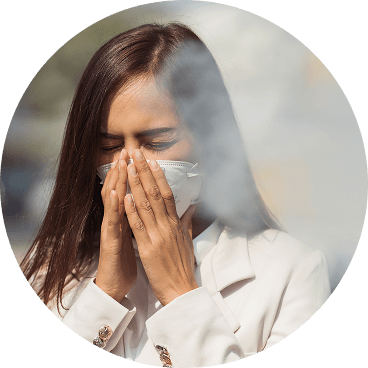
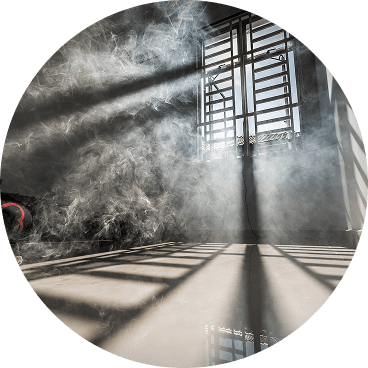
Don't Wait Until The Smoke's Inside.
Use the live wildfire smoke tracker and upgrade your air filters today to protect your lungs and your home.
Shop Filters For Smoke Protection
Live Lincoln, NE Forest Wildfire & Smoke Map Today: Local Air Quality Tracking & Indoor Protection Solutions From Filterbuy.com's Air Obsessed Experts
By Michelle Wan· Reviewed by David Clark, Licensed HVAC Technician
Published: August 3, 2026 · Updated: August 3, 2026
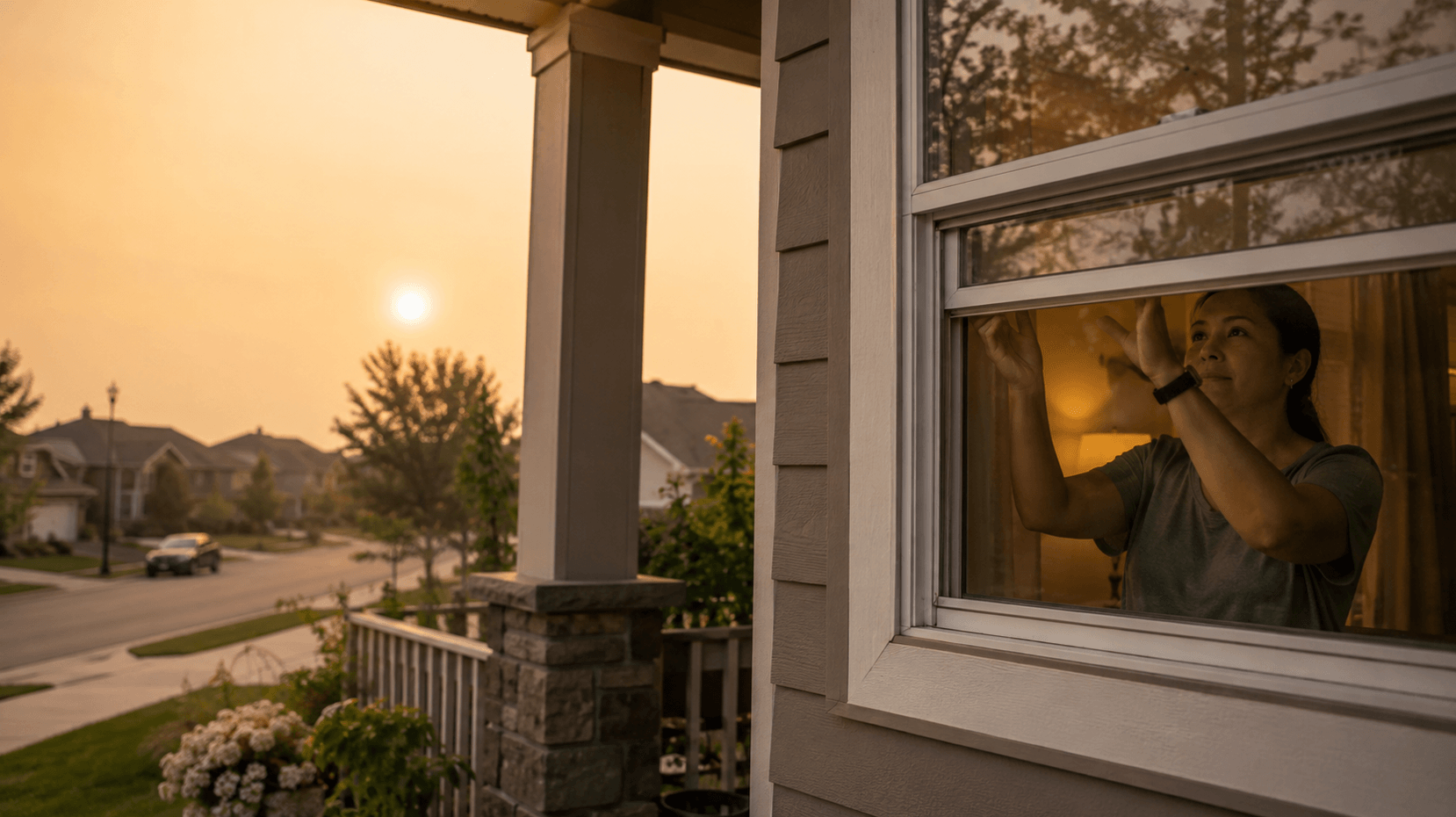
Most "Lincoln wildfire map" pages hand you a widget and generic advice. Filterbuy built this one around the question a widget cannot answer: where is this smoke coming from? Nebraska is barely 3% forested, so the answer is never a forest near Lincoln. It is one of four sources, each hundreds or thousands of miles away, each with its own season.
The search term said 'forest wildfire,' so the first thing I checked was how much forest Nebraska actually has. That one number reframed the whole page: the useful question for a Lincoln homeowner isn't what's burning nearby, it's what's burning upwind.
Michelle Wan, air quality writer, Filterbuy
TL;DR
Four sources put smoke over Lincoln, Nebraska: Flint Hills prescribed burns to the south in spring, Nebraska rangeland fires to the west in late winter, and Canadian or Western U.S. forest fires in summer. Each lasts from hours to over a week. Use the live map above for current fires, plumes, and Lincoln's PM2.5 reading, then close the house up and run a MERV 13 filter with the fan set to ON.
Key Takeaways
Nebraska is approximately 3% forested (1,433,521 acres, USDA Forest Service FIA, 2020). Local forest fire smoke is not Lincoln's realistic threat.
Four distinct sources put smoke over Lincoln, each with its own season: Flint Hills prescribed burns, Nebraska rangeland fires, Canadian boreal forest fires, and Western U.S. forest fires.
The EPA recommends MERV 13 or higher during smoky periods, noting most systems accommodate it if the filter is replaced frequently.
Wildfire smoke is dominated by PM2.5, particles fine enough to pass through a standard MERV 8 filter and deep into the lungs.
What Is the Air Quality in Lincoln, NE Right Now?
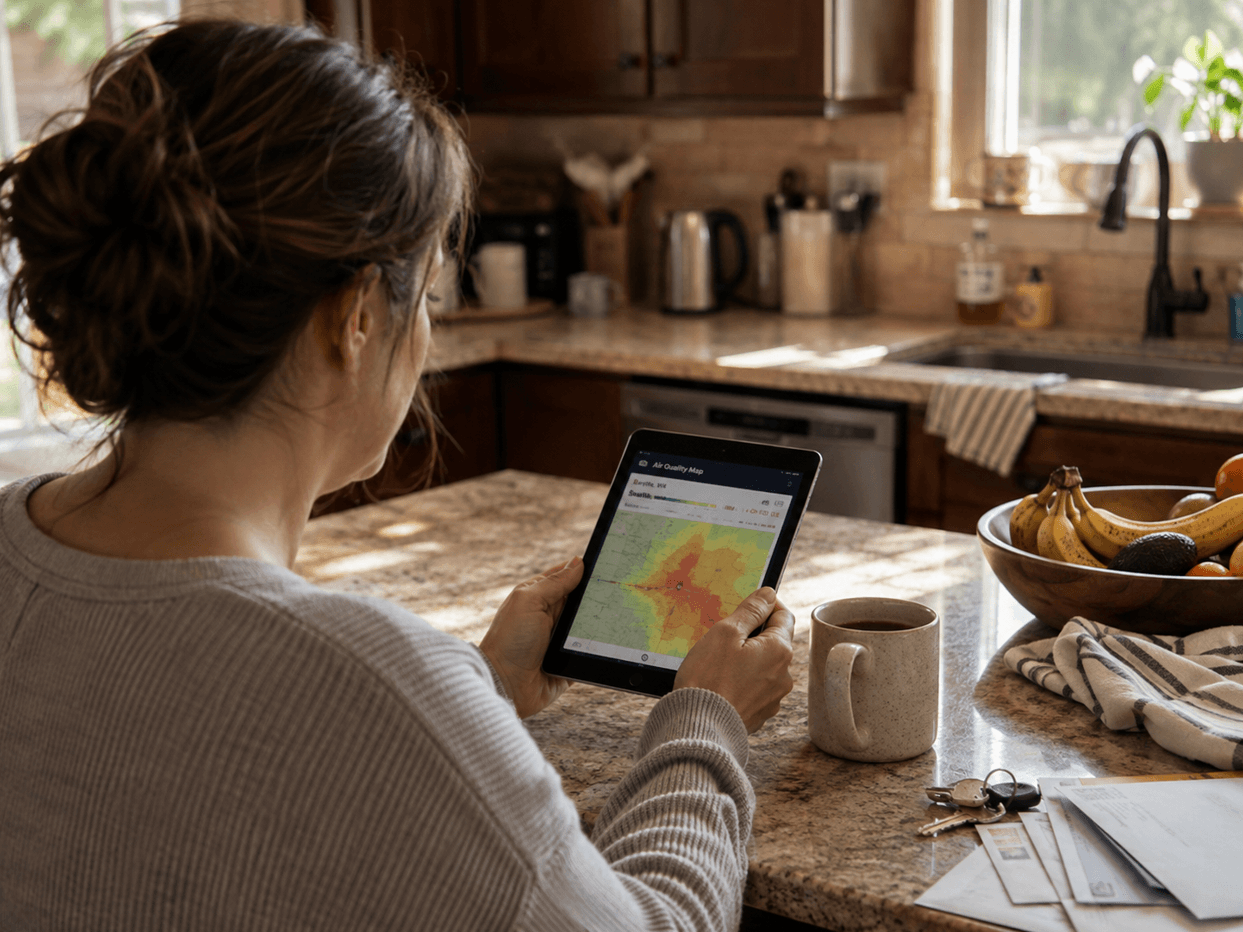
Lincoln's current air quality is on the live map above, part of Filterbuy's Nebraska air quality map coverage, drawing on the EPA's AirNow network and satellite detection. It shows three layers: active fires, the plume overhead, and the nearest monitor's PM2.5 reading as an AQI color. Green and yellow are safe for most people. Orange means sensitive groups should limit outdoor exertion.
A regulatory monitor sits behind that number. The Lincoln-Lancaster County Health Department operates Lincoln's sites within the Nebraska Ambient Air Monitoring Network, and the state consults it before issuing an advisory. One caveat: Nebraska officials note that AirNow can lag a fast-moving event, because the AQI shown is often a rolling average. If the sky looks and smells like smoke but the map says yellow, trust your eyes.
Where Does the Smoke Over Lincoln Actually Come From?
Smoke over Lincoln is almost always imported. Nebraska holds an estimated 1,433,521 acres of forest, roughly 3% of the state, per the USDA Forest Service's Forest Inventory and Analysis program. Lancaster County is cropland and prairie, with no forest large enough to produce a multi-day smoke event. Four distant sources reach the city instead.
Framework original to Filterbuy, synthesized from Nebraska DWEE guidance, USDA Forest Service Forest Inventory & Analysis data, and NOAA/AirNow plume tracking.
The source tells you the duration. A Flint Hills advisory usually clears by mid-morning. A Canadian episode can settle in for a week or more, which is what ruins a filter.
The Lincoln Timing Problem Nobody Mentions
Two of the four, Flint Hills burns and Nebraska rangeland fires, overlap in March and April. That is Lincoln's shoulder season, when the furnace has mostly stopped, and the AC has not started.
A filter cleans nothing while the blower is off. In July, Canadian smoke arrives while the AC cycles all day and the house gets filtered as a side effect of cooling. In March, it does not. You can own the right filter, freshly installed, and still breathe unfiltered air for a week because the system never asked the blower to run. On a smoky April day, moving the thermostat fan from AUTO to ON is what turns your filter back into a filter.
Is There a Wildfire Burning Near Lincoln Today?
Check the live map first; it shows active fire detections in real time. For Lincoln itself, historically no. For Nebraska in 2026, it was very different.
The 2026 season was the most destructive on record. The Morrill Fire, ignited March 12, 2026, in the Panhandle, burned 643,361 acres to become the largest wildfire in state history, killing one person. Note what burned: grassland and rangeland, not forest. That is Nebraska's fire profile, and it explains why the smoke travelled so fast.
Summer is different. As of late July 2026, smoke reaching the Midwest is overwhelmingly Canadian, with roughly 900 active fires nationally and western Ontario a primary source. That is genuine forest smoke, starting a thousand miles from Lincoln.
What Should You Do When Smoke Reaches Lincoln?
Stop smoke getting in, then filter what already did. Nebraska DHHS and the EPA agree on the same list.
Close the house. Windows, doors, and the HVAC fresh-air intake.
Move the thermostat fan from AUTO to ON, so it filters continuously instead of only while heating or cooling.
Run a MERV 13 filter, as the EPA recommends during smoky periods.
Check the filter weekly, not monthly, and keep spares on hand.
Make one clean room. Bedroom, door closed, portable HEPA cleaner sized for it. Avoid ozone-generating purifiers.
Skip outdoor exercise; keep asthma rescue medication within reach.
Some households should start sooner. Nebraska DHHS names those who feel smoke first and hardest: people with asthma, COPD or other lung disease; people with heart conditions; older adults; young children; and pregnant women. Outdoor workers have the highest exposure of anyone. If that describes your household, act at yellow rather than waiting for orange.
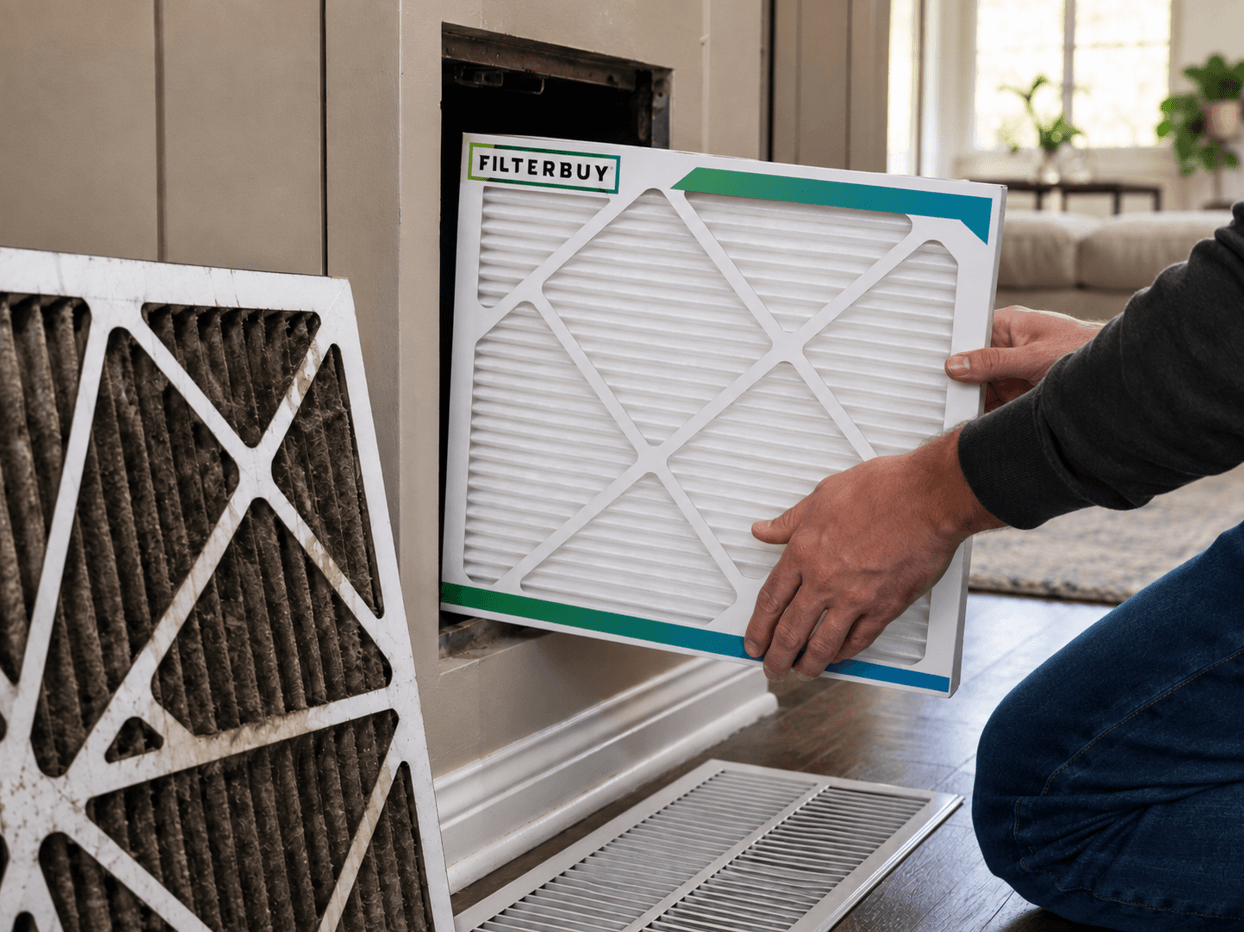
What MERV Rating Filters Wildfire Smoke?
MERV 13 is the residential benchmark for wildfire smoke, because smoke is dominated by PM2.5: particles roughly thirty times finer than a human hair. Lower ratings protect equipment from visible dust, not fine smoke.
No fiber filter of any MERV rating removes the gases in wildfire smoke. Confirm your system supports MERV 13 before upgrading. Source: U.S. EPA, Preparing for Smoke and Heat.
What We See From the Manufacturing Side
Filterbuy has built pleated filters in the United States since 1958, and what catches most homeowners out during a smoke event is this: a filter loaded with wildfire smoke often does not look dirty.
Coarse dust collects on the pleat face where you can see it. PM2.5 travels into the depth of the media and lodges between fibers, so smoke loading shows up as a faint gray cast and a system working harder, not the thick mat a season of dust leaves. The EPA's "replace it when it looks dark brown or black" guidance is a floor during an active event, not a schedule.
One honest limit: no fiber filter removes the gases in wildfire smoke. Carbon monoxide, benzene, formaldehyde, and other VOCs pass straight through. Sealing the house handles those.
Before upgrading, confirm your system can handle MERV 13. Most modern ones can. If yours is older, MERV 11 changed frequently beats MERV 13 left in until it chokes airflow. Our MERV 13 vs. HEPA comparison weighs portable units against whole-home filtration.
To a filter, smoke is smoke. Grass or timber, it's fine particulate either way. What changes is how long you're breathing it, and that's what decides whether one filter gets you through or you need spares on hand.
David Clark, Licensed HVAC Technician and technical reviewer for Filterbuy
Essential Resources for Tracking Lincoln Wildfire Smoke
The sources the Filterbuy editorial team keeps open during a smoke event. Together they tell you what is burning, whether Lincoln is affected, and what to do about it.
See every active fire and smoke plume in real time
AirNow Fire and Smoke Map (EPA / U.S. Forest Service): The authoritative live map of fire locations, smoke plumes, and ground-monitor readings across most of North America.
Get notified the moment Lincoln is under a smoke advisory
Nebraska DHHS: Smoke from Fires Nebraska's health department posts every advisory affecting Lincoln here, with a subscribe link that emails you when one is issued.
Check the monitor that actually measures Lincoln's air
Lincoln-Lancaster County Health Department: Air Quality. LLCHD operates Lincoln's regulatory air monitor and issues county-level guidance. The most local source available.
Know before spring smoke arrives from Kansas
Kansas Flint Hills Smoke Management: KDHE publishes daily burn forecast maps for the Flint Hills, the largest single source of Lincoln's March and April smoke.
Supporting statistics
Three agency findings behind the guidance on this page.
At roughly 40% of EPA regulatory monitors, wildfire smoke drove over 25% of daily PM2.5 for more than a month a year between 2007 and 2018.
Source: Environmental Science & Technology, archived by NIH
Americans spend about 90% of their time indoors. Some indoor pollutants run 2–5× outdoor levels.
Source: EPA, Report on the Environment
The Flint Hills burn an average of 2,074,969 acres each spring.
Source: KDHE acreage analysis, 2000–2025
Frequently Asked Questions
Track the Smoke. Filter What Gets In.
Bookmark this page so Lincoln's live wildfire and smoke map is one tap away the next time the sky goes hazy. Then get a Filterbuy MERV 13 filter in before the next event arrives. Tracking the air only helps if your home is ready for what it finds.
Shop MERV 13 filters by size → · Set up auto-delivery →
Glossary
AQI (Air Quality Index): The EPA's 0–500 scale converting pollutant levels into a color-coded health category, Good (green) to Hazardous (maroon).
PM2.5: Particulate matter 2.5 microns or smaller. The dominant health hazard in wildfire smoke, and what MERV 13 filters are rated to capture.
MERV (Minimum Efficiency Reporting Value): The 1–16 scale rating how effectively an HVAC filter captures particles.
HEPA (High-Efficiency Particulate Air): A standard capturing at least 99.97% of 0.3-micron particles. Used in portable room cleaners; most residential HVAC systems cannot run true HEPA without airflow problems.
Prescribed burn: A managed fire used to restore grassland and control invasive species such as eastern redcedar. The Flint Hills burns are the largest regular source of springtime smoke in eastern Nebraska.
Subscribe to wildfire smoke alerts for Lincoln, NE, to get a heads-up before the next event reaches your area.