
Air Quality in Nebraska
Air quality index (AQI⁺) and PM2.5 air pollution in Nebraska •


Get Alerts For Unhealthy AQI In Your Area
When air quality in your area reaches unhealthy levels, we'll send you a quick alert, along with expert tips on how to reduce your exposure.
Live Air Quality Ratings in Nebraska
Live Most Polluted City Ranking
Real-time most polluted cities in Nebraska
Live Cleanest City Ranking
Real-time cleanest cities in Nebraska
The Right Air Filter For High AQI Days
When outdoor air quality drops, the EPA recommends upgrading to a MERV 13 filter — or the highest-rated filter your HVAC system can handle — to help capture more of the fine particulate (PM2.5) that comes with poor air quality. MERV 13 is the highest rating most residential systems can run without restricting airflow.
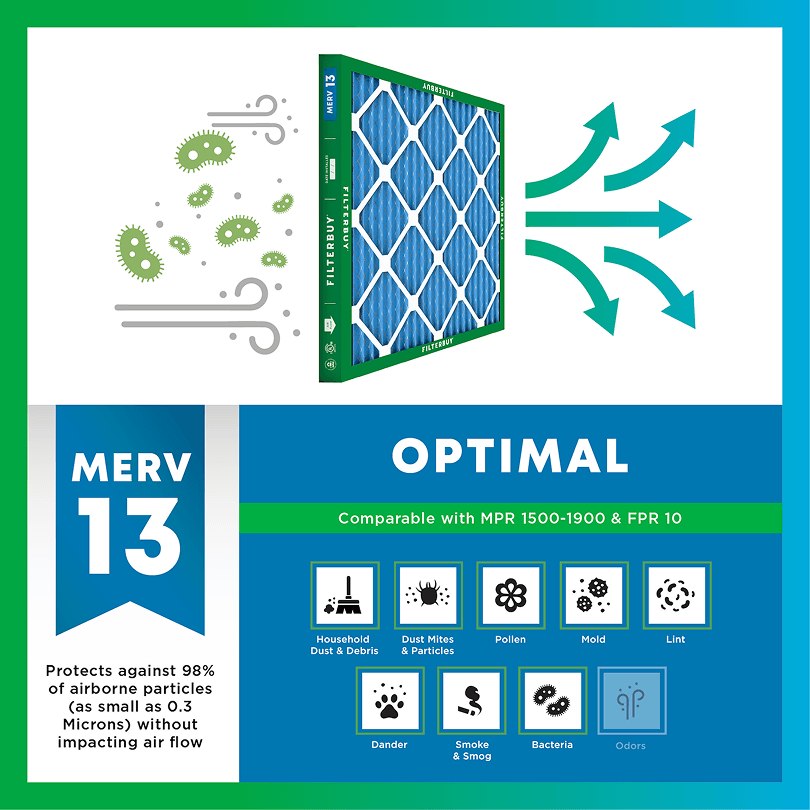
- Captures PM2.5 and other fine particulates
- Filters ash, soot, and smoke particles
- Rated to capture particles as small as 0.3 microns
- Matches the filter rating the EPA suggests during high-AQI and smoke events

AQI FAQs
What is AQI?
AQI stands for Air Quality Index, the EPA's scale for reporting daily air quality. It runs from 0 to 500. The higher the number, the greater the level of air pollution. Values at or below 100 are generally considered satisfactory; values above 100 mean air quality is unhealthy, first for sensitive groups, then for everyone as numbers climb.
What does AQI measure?
The AQI tracks five major pollutants regulated by the Clean Air Act: ground-level ozone, particle pollution (PM2.5 and PM10), carbon monoxide, sulfur dioxide, and nitrogen dioxide. The reported AQI value reflects whichever pollutant is highest at that time — most often ozone or fine particles (PM2.5).
How is AQI calculated?
Monitoring stations measure pollutant concentrations, and the EPA converts each into a standardized 0–500 score using set breakpoints. Each pollutant gets its own sub-index, and the highest sub-index becomes the reported AQI. That's why a single number can represent different pollutants on different days.
What is a good AQI?
An AQI of 0–50 is rated "Good" — air quality poses little or no risk. 51–100 is "Moderate," acceptable for most people though unusually sensitive individuals may want to limit prolonged outdoor exertion. Anything at or below 100 is generally considered satisfactory air quality.
What does an AQI of 100 (or 150) mean?
100 is the dividing line: at or below it, air quality is satisfactory for the general public. From 101–150, air is "Unhealthy for Sensitive Groups" — people with respiratory conditions, older adults, and children. From 151–200, it's "Unhealthy" and everyone may begin to feel effects.
Why is the AQI bad today?
Short-term AQI spikes usually come from wildfire smoke, temperature inversions that trap pollutants near the ground, high-ozone weather (hot, sunny, stagnant days), or heavy traffic and industrial activity. Check a real-time source like the map on this page to see which pollutant is driving today's reading in your area.
What AQI is bad for running or exercise?
Many runners follow the EPA category lines: below 50, no adjustment needed; 51–100, unusually sensitive people may shorten intense workouts; above 100, sensitive groups are advised to reduce prolonged or heavy outdoor exertion; above 150, that advice extends to everyone. Exercise increases how much air you breathe in, which is why thresholds matter more during workouts.
What AQI is safe to open windows?
A common rule of thumb is to keep windows open when the AQI is under 100 and close them when it climbs above, especially during wildfire smoke events when fine particles are elevated. When windows are closed, running your HVAC system with a fresh filter helps capture particles circulating indoors.
Should I wear a mask based on AQI?
Public health agencies generally suggest considering a well-fitted N95-style respirator outdoors when the AQI exceeds 150, particularly during smoke events. Cloth and surgical masks don't filter fine particles effectively. Follow guidance from your local health department, which may adjust recommendations during severe episodes.
Live Air Quality Index AQI Map Nebraska Today | Filterbuy.com
Nebraska's outdoor air quality is shifting right now — and what's happening outside is already making its way into your home. Check today's live AQI conditions across the state with our real-time Air Quality Index map below. Most Nebraska homeowners don't realize that agricultural dust, seasonal wildfire smoke, and ozone spikes don't stop at the front door — they infiltrate your HVAC system and circulate through every room your family breathes in. After manufacturing millions of air filters and helping over two million households protect their indoor air, we've learned something most air quality resources won't tell you: your outdoor AQI reading is only half the picture. What matters most is how well your home's filtration is equipped to handle what's coming in. Use our live Nebraska AQI map to monitor conditions in your area, then discover how to turn that knowledge into cleaner, healthier air inside your home.
TL;DR Quick Answers
Live Air Quality Index AQI Map Now Today in Nebraska
Nebraska's current air quality conditions are displayed in real time on our live AQI map above. The Air Quality Index measures pollution on a 0–500 scale — the lower the number, the cleaner the air.
What to know right now:
Green (0–50) — Safe for all activities
Yellow (51–100) — Sensitive individuals should monitor
Orange (101–150) — Close windows and run your HVAC system
Red (151+) — Stay indoors with filtered air circulating
Key Nebraska AQI factors:
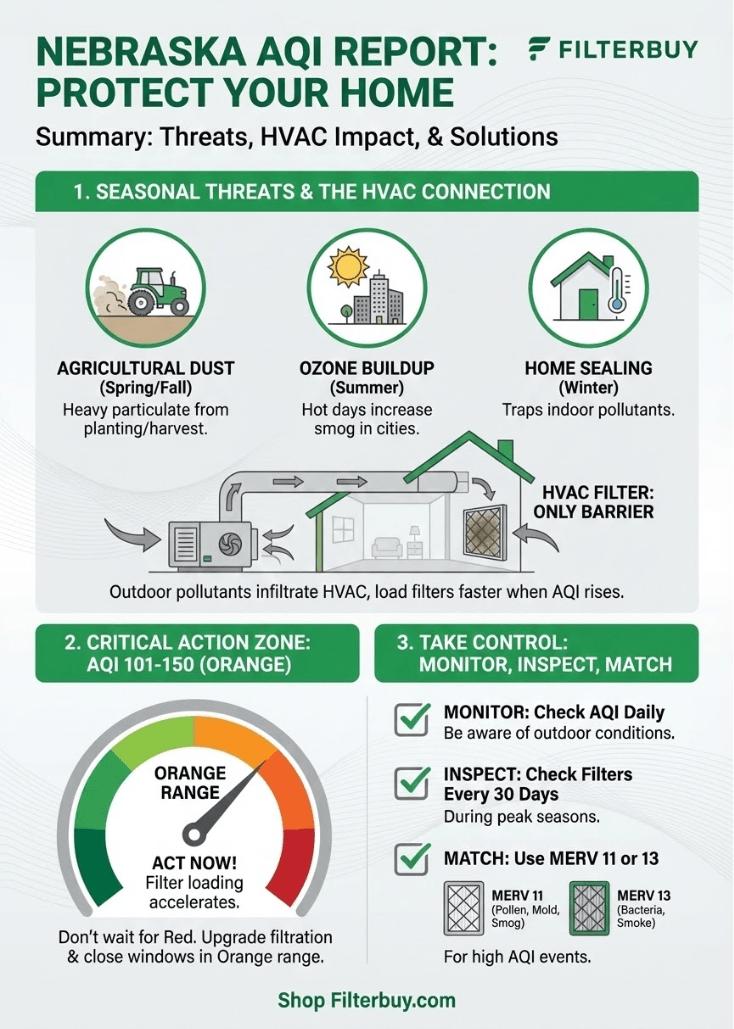
Agricultural dust during planting and harvest seasons
Wildfire smoke drifting across the Plains
Summer ozone buildup around Omaha and Lincoln
Winter home sealing that traps indoor pollutants
Filterbuy Pro Tip: Most AQI resources stop at telling you what's happening outside. After manufacturing millions of filters and serving over two million households, we've learned the real question is whether your indoor filtration can handle what's coming in. When Nebraska's AQI rises above 100, a fresh MERV 11 or MERV 13 filter is your family's most effective line of defense.
Top Takeaways
Outdoor AQI directly impacts indoor air.
Every HVAC cycle pulls outside pollutants in. Your air filter is the only barrier between Nebraska's air quality and your family's lungs.
Nebraska's air quality challenges are seasonal and unique.
Spring brings agricultural dust. Summer produces ozone around Omaha and Lincoln. The fall harvest generates heavy particulate. Winter traps pollutants indoors. Each season demands different filtration — not a generic 90-day schedule.
Orange is the real action zone — not red.
Our data shows filter loading accelerates fastest when AQI hits 101–150. Families who act at orange consistently breathe cleaner indoor air than those who wait.
Match your MERV rating to current conditions.
MERV 8 — Everyday dust and pollen protection
MERV 11 — Best year-round upgrade for Nebraska homes
MERV 13 — Maximum defense during harvest and wildfire smoke
Monitoring alone doesn't protect your family.
Checking AQI is step one. The real difference comes from maintaining fresh, properly rated filtration based on what's actually happening outside your door — and that's a lesson we've confirmed after serving over two million households nationwide.
What Is the Air Quality Index (AQI) and Why Does It Matter in Nebraska?
The Air Quality Index is a standardized measurement scale developed by the EPA that translates complex air pollution data into a simple number ranging from 0 to 500. The lower the number, the cleaner the air. For Nebraska homeowners, understanding AQI isn't just about checking a number — it's about knowing when outdoor conditions are pushing pollutants into your home through windows, doors, and your HVAC system's fresh air intake. After over a decade of manufacturing air filters and analyzing customer patterns across the Midwest, we've consistently seen that homes in agricultural states like Nebraska experience heavier filter loading during peak AQI events, which tells us outdoor conditions directly accelerate indoor air quality decline.
Understanding AQI Levels and What They Mean for Your Family
AQI readings are broken into six color-coded categories. Green (0–50) signals good air quality with minimal concern. Yellow (51–100) is moderate, meaning unusually sensitive individuals should take precautions. Orange (101–150) is unhealthy for sensitive groups, including children, elderly family members, and anyone with asthma or respiratory conditions. Red (151–200) means everyone may begin experiencing health effects. Purple (201–300) triggers health alert territory, and maroon (301–500) represents hazardous emergency conditions. For Nebraska specifically, most days fall within the green-to-yellow range, but seasonal agricultural activity, wildfire smoke events drifting from western states, and summer ozone formation can push readings into orange or higher with little warning.
Common Nebraska Air Quality Threats by Season
Nebraska's air quality challenges shift throughout the year in ways that many homeowners don't anticipate. Spring brings elevated pollen counts and wind-driven dust from freshly tilled agricultural land across the Plains. Summer introduces ground-level ozone buildup during hot, stagnant days — particularly around urban areas like Omaha and Lincoln. The fall harvest season kicks up significant particulate matter from crop processing and field clearing. Winter generally offers the cleanest outdoor readings, but tighter home sealing during cold months means whatever pollutants are inside get recirculated without fresh air dilution. Each of these seasonal patterns places different demands on your home's air filtration, which is why a one-size-fits-all approach to filter maintenance doesn't work for Nebraska households.
How Outdoor AQI Directly Impacts Your Indoor Air
Here's what most air quality resources miss: outdoor air doesn't stay outdoors. Every time your HVAC system cycles, it pulls in air from outside and pushes it through your ductwork and into your living spaces. When AQI levels rise, your air filter becomes the primary line of defense standing between those outdoor pollutants and your family's lungs. Based on our experience working with millions of customers, we've found that homeowners in agricultural and Plains states often need to replace filters more frequently than the standard recommendation — especially during high-AQI seasons. A filter that's already loaded with captured particulate simply can't keep up when outdoor conditions deteriorate, leaving your indoor air unprotected exactly when protection matters most.
Practical Steps to Protect Your Home When AQI Rises
Monitoring Nebraska's AQI is the critical first step, but acting on that information is what actually protects your family. When readings climb into the orange range or above, keep windows and doors closed to minimize unfiltered air entry. Run your HVAC system's fan to keep air cycling through your filter even if heating or cooling isn't needed. Check your current air filter — if it's been in use for more than 60 days during a high-AQI season, it's likely already working harder than it should.
Upgrading to a higher MERV-rated filter system during times of elevated AQI value allows for much more effective particulate capture without compromising other functions of additions, such as allowing much smaller particulates that may pass through lower-rated filters. At Filterbuy, we manufacture filters in MERV 8, MERV 11, and MERV 13 ratings right here in the USA, so you could match your filtration level to what your household needs - be it your everyday maintenance water filtration, or a poor air quality event that is happening right now outside your door.
"After manufacturing millions of air filters and serving over two million households across the country, we've seen a clear pattern — homes in agricultural states like Nebraska consistently show heavier filter loading during peak AQI events, which tells us most families don't realize their indoor air is only as clean as their filtration system is prepared to handle what's coming in from outside."
— Filterbuy Air Quality Team
Your Nebraska Air Quality Toolkit: Resources Every Household Should Bookmark
Don't feel good about Nebraska's air quality - what you can't see outside is heading into your home anyway. We've gathered the most trusted resources to help you stay informed, understand what those AQI numbers really mean, and confidently take action when things change. Because if you are protecting your greatest assets, it all begins with knowing what exactly you are breathing.
Check Nebraska's Live AQI Conditions Right Now
Your go-to for real-time AQI data from monitoring stations across Nebraska, including Omaha, Lincoln, and surrounding areas. It also provides 24–48 hour forecasts so you can plan outdoor activities — or know when to close the windows and let your HVAC system handle the heavy lifting.
Resource: https://www.airnow.gov/
Stay Ahead of Nebraska Air Quality Alerts
Nebraska's environmental agency issues air quality advisories before conditions deteriorate, giving you time to prepare. After years of helping Nebraska families improve their indoor air, we know that households that catch these alerts early and adjust their filtration stay more comfortable during pollution events.
Resource: https://dee.ne.gov/
Decode What Those AQI Numbers Really Mean for Your Family
Green, yellow, orange, red — what does it all mean for your household? This straightforward guide breaks down the 0–500 scale and explains exactly when sensitive groups should take precautions. We reference these same guidelines when helping customers choose the right MERV rating to match current outdoor conditions.
Resource: https://www.airnow.gov/aqi/aqi-basics/
Understand How Outdoor Air Pollution Affects Your Health
The CDC provides clear, science-backed guidance on how particulate matter, ozone, and wildfire smoke impact respiratory and cardiovascular health. This resource is especially valuable for families with children, elderly members, or anyone managing asthma and allergies — the groups we hear from most when AQI spikes across the Plains.
Resource: https://www.cdc.gov/air-quality/
See How Nebraska's Long-Term Air Quality Stacks Up
This annual report grades Nebraska's counties on ozone and particulate pollution trends over time. It's the kind of data that helps you understand whether your area's air quality is improving or declining — and whether your current filtration approach is keeping pace with changing conditions.
Resource: https://www.lung.org/research/sota
Learn What the EPA Recommends for Indoor Air Protection
Here's something most homeowners don't realize: indoor air can be two to five times more polluted than outdoor air. The EPA's guide explains exactly why proper filtration, ventilation, and filter maintenance matter — and it confirms what we've seen after manufacturing millions of filters: the right MERV-rated filter matched to your home's needs is your most effective line of defense.
Resource: https://www.epa.gov/indoor-air-quality-iaq
Pro Tip from Filterbuy: Bookmark AirNow and consult it in conjunction with this page before you open windows or plan outdoor activities. When the outside air quality index (AQI) in Nebraska is greater than a 100 it's best to filter the air through your heating, ventilation and air conditioning (HVAC) system and keep time outside to a minimum because outside air quality is generally worse than it is inside - and this is also the time when your filter is working extra hard to provide proper air filtration and protect your family.
Supporting Statistics: Nebraska Air Quality by the Numbers
Understanding the data behind Nebraska's air quality helps you make smarter decisions about protecting your family indoors. These statistics from leading authorities confirm what we've observed after manufacturing millions of filters and serving over two million households nationwide.
1. Indoor Air Can Be 2–5x More Polluted Than Outdoor Air
Americans spend roughly 90% of their time indoors
Indoor pollutant concentrations often exceed outdoor levels significantly
When Nebraska's outdoor AQI rises, those pollutants migrate inside and concentrate
Without proper filtration, your HVAC system recirculates what comes in
We see this pattern firsthand — rising outdoor AQI consistently leads to heavier filter loading in Midwest homes.
Source: U.S. EPA — Indoor Air Quality
2. 134+ Million Americans Live in Counties With Unhealthy Air
Nebraska's agricultural activity generates seasonal particulate spikes
Summer ozone formation puts Omaha and Lincoln at recurring risk
Our Midwest customers confirm this through accelerated filter replacement cycles during peak growing season
Source: American Lung Association — State of the Air
3. Fine Particulate Matter Contributes to 100,000–200,000 Premature U.S. Deaths Annually
PM2.5 particles are common during Nebraska harvest and wildfire smoke events
These microscopic pollutants penetrate deep intothe respiratory systems
Higher-MERV-rated filters are specifically engineered to capture PM2.5 before it reaches your family's lungs
Source: National Institutes of Health
Pro Tip from Filterbuy: When Nebraska's AQI climbs above 100, your air filter shifts from routine maintenance to active family protection. That's exactly when the right MERV rating matters most.
Final Thoughts: Why Monitoring Nebraska's AQI Is Only Half the Battle
Checking Nebraska's air quality is a smart first step — but after over a decade of manufacturing filters and serving more than two million households, we can tell you most families stop short of where real protection begins. Your outdoor AQI tells you what's happening outside. It doesn't tell you what's already circulating through your ductwork and into every room your family breathes in.
What makes Nebraska's air quality challenges unique:
Agricultural dust during spring planting and fall harvest
Wildfire smoke drifting hundreds of miles across the Plains
Summer ozone buildup in Omaha and Lincoln corridors
Tightly sealed homes in winter trap pollutants inside
These aren't isolated events — they're seasonal cycles that repeat every year, each placing different demands on your filtration.
What we've learned working with Midwest families:
A reactive approach doesn't work — waiting until your filter looks dirty means pollutants have already been circulating unchecked
Households that breathe the cleanest indoor air treat AQI awareness as a trigger for action
Adjusting filter replacement based on real conditions outperforms a generic 90-day timeline every time
The bottom line: You don't need to be an air quality scientist to protect your family. You need two things:
A reliable way to monitor what's happening outside your door
The right filter inside your HVAC system to handle it
That's exactly why we built this page — to give Nebraska homeowners both real-time data and expert guidance to take control of their indoor air. Because at Filterbuy, we believe better air isn't a luxury. It's a standard every family deserves.
Next Steps: Take Control of Your Indoor Air Today
You've got the knowledge — now put it to work. Here's what we recommend based on over a decade of helping families breathe cleaner air.
1. Bookmark This Page and Monitor Daily
Check Nebraska's AQI each morning to decide whether to open windows or keep your HVAC system filtering incoming air.
2. Inspect Your Current Filter Right Now
Pull it out and look. If it's visibly gray or has been in use 60+ days during a high-AQI season, your family's air quality is already compromised.
3. Match Your MERV Rating to Nebraska's Demands
MERV 8 — Everyday protection against dust, pollen, and lint
MERV 11 — Enhanced capture for pet dander, mold spores, and smog
MERV 13 — Maximum residential protection against fine particles, bacteria, and smoke
4. Replace Based on Real Conditions
Skip the generic 90-day rule. During peak agricultural season, wildfire smoke, or high-ozone months:
Inspect every 30 days
Replace when visibly loaded
Upgrade MERV rating during extended AQI events
5. Sign Up for Air Quality Alerts
Register through EPA AirNow for automatic notifications when Nebraska's conditions change — before pollutants reach your home.
6. Stock Up So You're Always Prepared
We manufacture MERV 8, MERV 11, and MERV 13 filters across 600+ sizes — all made in the USA and shipped directly from our facilities to your door. Find your size and have replacements ready when Nebraska's air quality demands action.
Frequently Asked Questions
Q: Where can I check the live air quality index in Nebraska right now?
A: Use our live AQI map above for real-time data across Nebraska. EPA AirNow (airnow.gov) provides additional station data from Omaha, Lincoln, and surrounding areas. Families who check daily maintain cleaner indoor air because they adjust filtration before pollutants accumulate.
Q: What AQI level is considered unhealthy in Nebraska?
A: AQI above 100 is unhealthy for sensitive groups. Key action levels:
0–50 (Green) — Good. Routine filter maintenance.
51–100 (Yellow) — Moderate. Filter loading increases.
101–150 (Orange) — Action zone. Close windows, run HVAC, check filter.
151–200 (Red) — Use MERV 11+. Limit outdoor activity.
201+ (Purple) — Emergency. Run filtered air continuously.
Q: Why does Nebraska's AQI change so much seasonally?
A: Spring brings agricultural dust. Summer produces ozone in Omaha and Lincoln. The fall harvest generates heavy particulate. Winter traps pollutants in sealed homes. Each season demands different filtration.
Q: How does outdoor AQI affect indoor air?
A: Every HVAC cycle pulls outdoor air inside. The EPA confirms indoor air can be 2–5x more polluted. Our data shows Nebraska homes experience heavier filter loading during peak AQI events than national averages.
Q: What filter should I use when Nebraska's AQI is high?
A: Match your MERV rating to conditions:
MERV 8 — Everyday dust and pollen protection
MERV 11 — Best year-round Nebraska upgrade
MERV 13 — Maximum protection during harvest and wildfire smoke
Now That You Know What Nebraska's Air Looks Like Today, Make Sure Your Home Is Ready for It
Find your exact filter size in MERV 8, MERV 11, or MERV 13 — all American-made and shipped directly from our facilities to your door. Shop now at Filterbuy.com.