
Heat Pump Parts Explained: Compressor, Thermostat, Reversing Valve, Capacitor, Coil, Contactor, and the Defrost Cycle
November 22, 2026
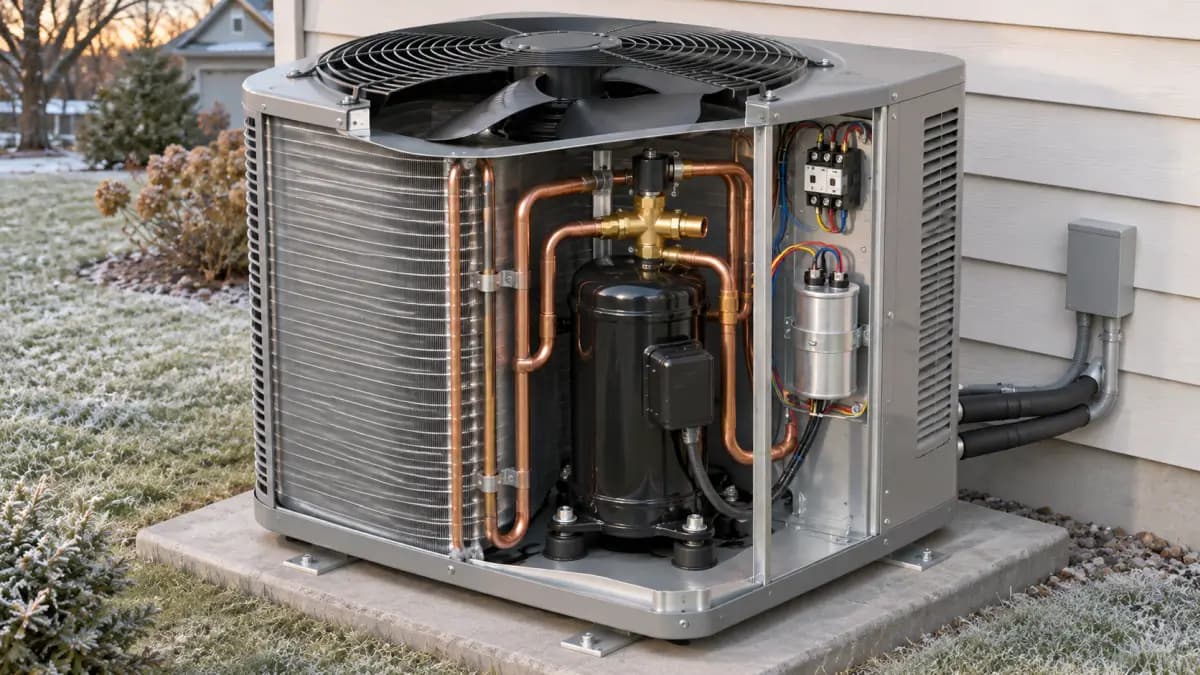
Every heat pump relies on the same short list of parts. The compressor pumps refrigerant while the reversing valve sets its direction. Two coils trade heat with the air. A capacitor and contactor start the outdoor unit, and the thermostat directs the whole system, including the defrost cycle that keeps ice off the outdoor coil. At Filterbuy, we make HVAC air filters, so we look at every one of these parts from the airflow side. Here is what each part does and who should fix it when it fails.
TL;DR
A heat pump runs on a compressor, reversing valve, two coils, a capacitor, a contactor, defrost controls, and a compatible thermostat. Electrical and refrigerant parts are technician repairs. Homeowners protect all of them by changing the air filter on schedule and keeping the outdoor unit clear.
Key Takeaways
The heat pump compressor pressurizes refrigerant and is the costliest part to replace.
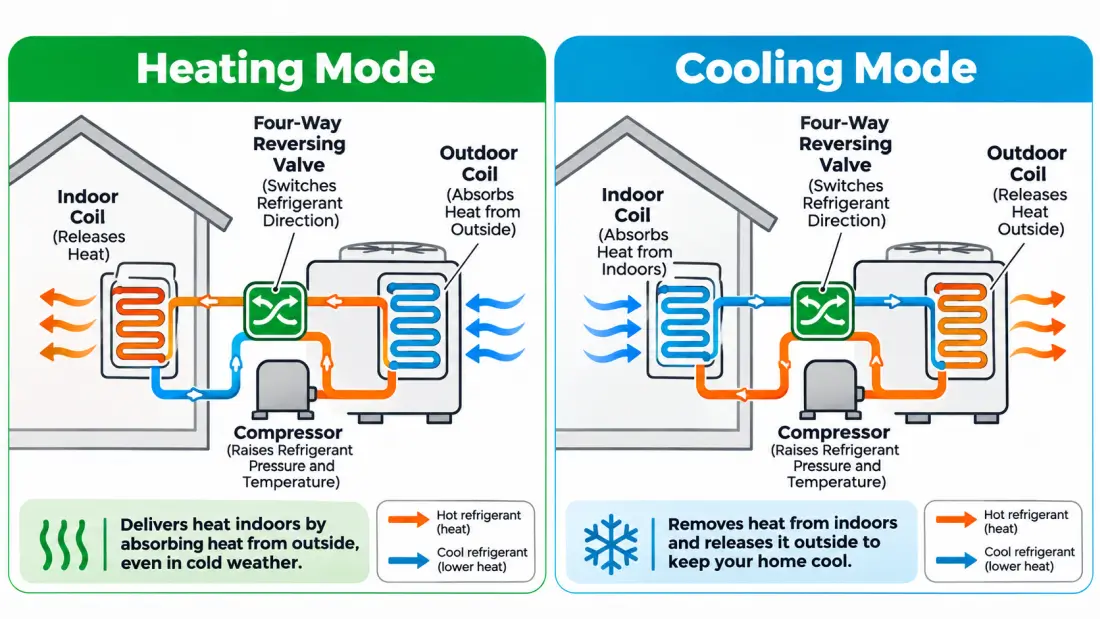
The heat pump reversing valve flips refrigerant flow so one system can heat and cool.
A heat pump thermostat needs O/B and W2 or AUX terminals, so a furnace-only thermostat is not a safe swap.
The heat pump capacitor and contactor start the outdoor unit, and both are technician-only repairs.
The heat pump defrost cycle briefly runs in cooling mode to melt coil frost, and brief steam is normal.
Heat Pump Parts at a Glance
Heat pump parts fall into three groups: refrigerant parts (compressor, reversing valve, coils), electrical parts (capacitor, contactor, defrost board), and the thermostat that controls them. Most sit in the outdoor unit. Each section below covers one part and its warning signs.
Filterbuy's Airflow-First Rule: before suspecting an expensive part, check the air filter, the outdoor coil, and the thermostat mode. Each check takes minutes and needs no tools.
Filterbuy Sight and Sound Decoder
A click, then a hum, but nothing starts: often a failed capacitor.
Buzzing or chattering at the outdoor unit: a pitted contactor or weak capacitor.
Outdoor unit runs with the thermostat off: a contactor stuck closed. Shut off the breaker and call a technician.
A whoosh, then steam in winter: a normal defrost cycle.
Outdoor coil buried in ice for hours: a defrost sensor, board, or reversing valve fault.
Ice on the indoor coil or refrigerant lines: low airflow, so check the filter first.
What Does a Heat Pump Compressor Do?
A heat pump compressor is the electric pump that squeezes refrigerant vapor, raising its pressure and temperature so it can carry heat. Most residential heat pumps use a scroll compressor in the outdoor unit, in single-stage, two-stage, or variable-speed form. Variable-speed compressors match output to demand, which steadies temperatures and reduces backup heat use.
A failing compressor hums, trips its breaker, or runs without changing the temperature. In Filterbuy's view, homeowners worry about the compressor most and touch it least. Many compressor failures are really a weak capacitor or worn contactor, so technicians test those first. Filterbuy's heat pump repair cost guide lists typical costs, and our heat pump cycle explainer shows the full refrigerant loop.
How Does a Heat Pump Reversing Valve Work?
A heat pump reversing valve is a four-way valve beside the compressor that changes the direction refrigerant travels. A 24-volt solenoid on the valve shifts an internal slide when the thermostat signals on the O or B wire, letting one heat pump both heat and cool.
Most brands energize the valve in cooling through the O terminal. A few brands, traditionally Rheem and Ruud, use B in heating. A stuck valve locks the system in one mode and blocks defrost.
What Are Heat Pump Coils?
A heat pump has two coils, outdoor and indoor, made of finned metal tubing. In heating mode the outdoor coil absorbs heat from outside air and the indoor coil releases it into your ducts. In cooling mode they trade jobs. Dirty heat pump coils make the compressor work harder, which is why Filterbuy treats the air filter as coil protection.
The U.S. Department of Energy advises cleaning outdoor coils whenever they look dirty, with fan power shut off first.
Heat Pump Capacitor and Contactor: The Parts That Start the Outdoor Unit
The heat pump capacitor and heat pump contactor get the outdoor unit running. The capacitor stores a charge that helps those motors start. Both are common, inexpensive failure points.
Heat Pump Capacitor
Many heat pumps use a dual run capacitor that serves both the compressor and outdoor fan. Replacements must match the original microfarad and voltage ratings. A capacitor can hold a dangerous charge with the breaker off, so never touch one.
Heat Pump Contactor
A heat pump contactor is a relay switch in the outdoor unit. The thermostat's Y wire energizes its 24-volt coil, which closes the contacts and sends 240-volt power to the compressor and fan. Pitted or welded contacts are the usual failure.
What Is a Heat Pump Defrost Cycle?
A heat pump defrost cycle is a short, automatic routine that melts frost from the outdoor coil in cold, damp weather. The defrost board shifts the reversing valve into cooling mode and stops the outdoor fan, so hot refrigerant warms the coil from inside.
Three parts run defrost: the board, a coil sensor, and the reversing valve. Demand-defrost controls start only when frost cuts performance, avoiding needless cycles. A coil encased in ice for hours points to a failed sensor, board, or valve. Filterbuy's guide to how a heat pump works in winter covers cold-weather behavior in full.
Do You Need a Special Heat Pump Thermostat?
Yes. A heat pump thermostat must control the reversing valve through an O/B terminal and backup heat through a W2 or AUX terminal. A furnace-only thermostat lacks that logic, so it can run the wrong mode or overuse costly auxiliary heat.
Aux heat and emergency heat are not the same setting.
Table 1: Aux Heat vs. Emergency Heat on a Heat Pump
Both settings use backup heat, which costs more to run than the heat pump alone.
The Department of Energy advises against thermostat setbacks that trigger backup heat. Filterbuy's guides to the heat pump balance point and thermostat modes go deeper.
What Is the Best Thermostat for a Heat Pump?
The best thermostat for a heat pump matches your exact system type and controls auxiliary heat intelligently. It also needs constant power from a C wire. Variable-speed systems often need the manufacturer's communicating control. The Filterbuy Heat Pump Thermostat Checklist:
An O/B setting you can switch between O and B.
Aux heat lockout or balance controls, such as Heat Pump Balance on Google Nest models.
Staging that matches your compressor.
Smart recovery that warms with the compressor, not aux heat.
A C wire or approved power adapter.
ENERGY STAR certification, verified with field data.
How the Air Filter Protects Heat Pump Parts
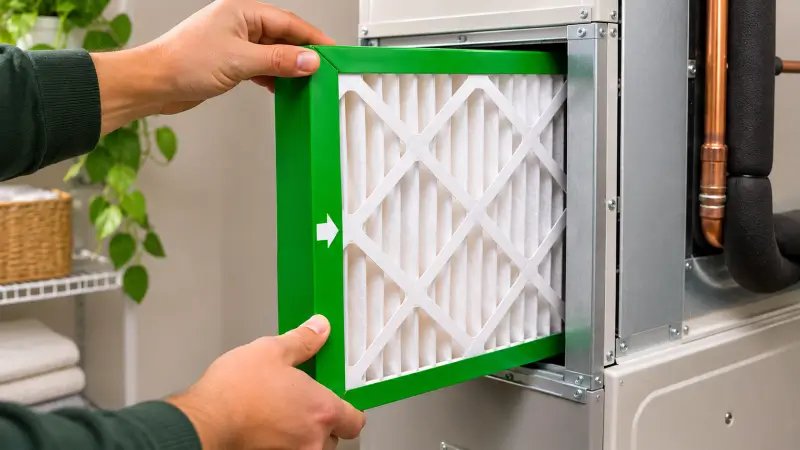
The air filter is the one heat pump part every homeowner can replace, and it is the part we know best. Making filters in hundreds of sizes has taught us that fit matters as much as rating. A filter that leaves a gap lets dust slip past it and settle on the indoor coil. A clogged filter can cause coil icing and extra backup heat.
MERV 8 air filters are the standard choice for most homes. MERV 11 air filters suit homes with allergies, pets, or pollen, and MERV 13 suits wildfire smoke. Check your heat pump manual for the highest MERV rating your system handles. Filterbuy makes MERV 8, 11, and 13 filters in more than 600 sizes, plus custom air filters. The Filterbuy heat pump filter guide covers sizing and fit.
What Can Homeowners Safely Do to Protect Heat Pump Parts?
Homeowners can protect every heat pump part with a few low-risk habits. Filterbuy's rule is simple: if a task needs a tool or opens a panel, it belongs to a licensed HVAC technician. Use Filterbuy's heat pump troubleshooting guide when a part acts up.
Table 2: Filterbuy Heat Pump Parts Map: Your Job vs. a Technician's Job
Shut off power at the outdoor disconnect before rinsing the coil. Never open the electrical panel.
How We Built This Guide
Michelle Wan wrote this guide from Filterbuy's filter-manufacturing perspective. David Clark, a licensed HVAC technician, reviewed the wiring and safety guidance. Every statistic links to a U.S. government source checked November 22, 2026.
Filterbuy's Take on Heat Pump Parts
"We make filters, so we see heat pumps from the airflow side. The hardest-working parts sit outside, but the part you control sits inside. Change the filter on schedule and keep the outdoor unit clear. The rest of the system works with less strain when air moves freely."
Michelle Wan, Brand Manager and Air Quality Writer, Filterbuy
Supporting Statistics
70–90% of air conditioner and heat pump systems have at least one performance fault.
Cause: improper installation or inadequate maintenance, per DOE research.
Why it matters: a yearly technician check catches charge, airflow, and electrical faults.
Airflow problems can cut system efficiency by up to 15%.
ENERGY STAR advises inspecting the air filter monthly.
Why it matters: the filter is the airflow fix you control.
Energy use differs by 10% to 25% between a well-maintained heat pump and a severely neglected one.
Why it matters: routine care shows up on your energy bill.
Frequently Asked Questions
What Should I Tell a Technician About My Heat Pump?
Share the model number from the outdoor unit's data plate, what you heard or saw, when it happens, and your thermostat's O/B setting.
Can I Replace a Heat Pump Thermostat Myself?
Often, yes, if the new model supports heat pumps and you label each wire before removing the old one. Call a technician if there is no C wire or the system is two-stage or variable-speed.
Can the Wrong Thermostat Setting Keep a Heat Pump From Switching Modes?
Yes. A wrong O/B setting makes the heat pump heat when you call for cooling. Changing the O/B setting usually fixes it.
What Happens When a Heat Pump Contactor Goes Bad?
It can stop the outdoor unit from starting or keep it running after the thermostat shuts off. A technician replaces it.
Is It Normal for a Heat Pump to Steam and Whoosh in Winter?
Yes. Steam and a whoosh are normal signs of the heat pump defrost cycle, which usually lasts a few minutes.
Keep Every Heat Pump Part Breathing Easy
Find your size among Filterbuy's heat pump replacement air filters, then set up Filterbuy auto-delivery for fast and free 2-day delivery to most US states.
Glossary
Heat Pump Compressor: The outdoor pump that pressurizes refrigerant.
Heat Pump Reversing Valve: A four-way valve that switches heating and cooling.
O/B Terminal: The thermostat terminal that energizes the reversing valve.
Outdoor and Indoor Coils: Finned coils that trade heat with the air.
Heat Pump Capacitor: Stores a charge to start the compressor and fan motors.
Heat Pump Contactor: A 24-volt relay that switches 240-volt power to the outdoor unit.
Heat Pump Defrost Cycle: A brief reversal that melts outdoor coil frost.
Auxiliary Heat: Backup heat that turns on automatically.
Emergency Heat: Manual backup heat with the compressor off.
C Wire: The wire that gives a thermostat constant power.
MERV: Minimum Efficiency Reporting Value, a filter capture rating.