
How Does a Heat Pump Work in Winter? Guide to Heat Pump Performance in Cold Weather, Defrost Cycles, and Auxiliary Heat
November 8, 2026
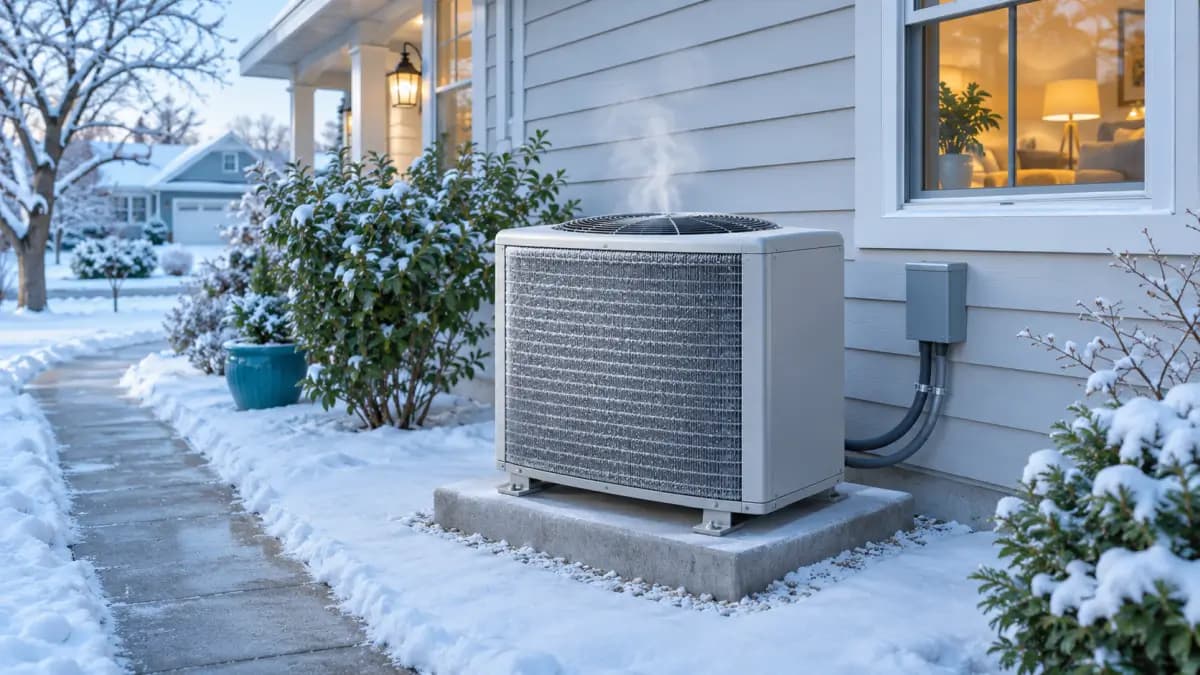
Your heat pump keeps heating when it is freezing outside, but it behaves differently as temperatures drop. At Filterbuy, we manufacture the pleated air filters that heat pumps pull air through all winter, so airflow is the part of this story we know best. This guide covers what your heat pump does in the cold and when a problem needs a pro.
TL;DR
A heat pump heats your home in winter by moving heat, not making it. Its outdoor coil runs colder than outside air, so it absorbs heat even on freezing days. As it gets colder, output drops. A short defrost cycle clears frost, and auxiliary heat covers any shortfall.
Key Takeaways
A heat pump moves heat rather than making it, so it uses far less electricity than resistance heat.
Output falls as it gets colder. The point where the heat pump needs help is the balance point.
Auxiliary heat helps automatically. Emergency heat is a manual setting for a failed heat pump.
Judge comfort by whether your home holds its set temperature, not by how hot the vent air feels.
How We Built This Guide
Filterbuy air quality writer Michelle Wan built this guide from U.S. Department of Energy, ENERGY STAR, NIST, and InterNACHI guidance. David Clark, a licensed HVAC technician, reviewed it for accuracy.
How Does a Heat Pump Work in Winter?
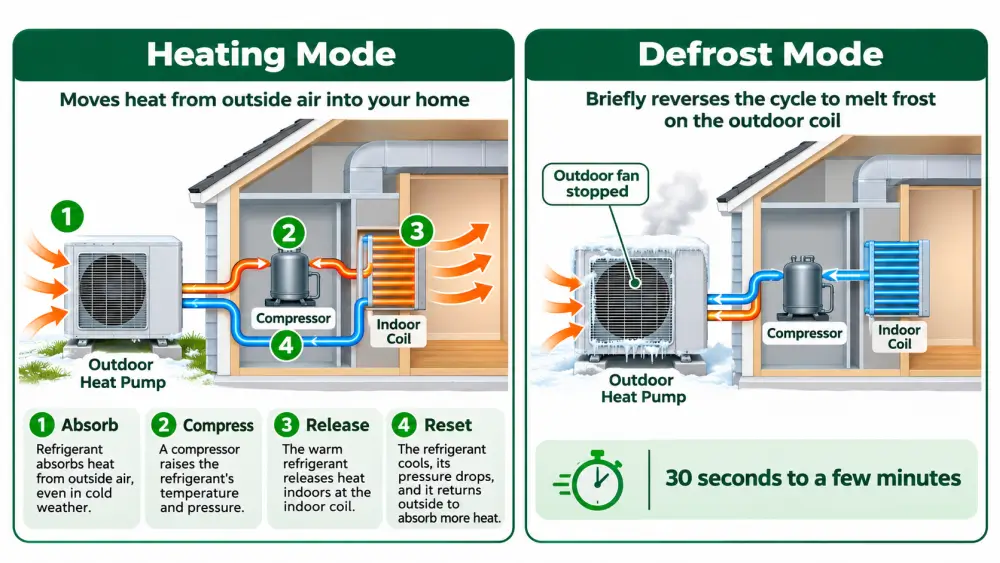
A heat pump works in winter by running its refrigeration cycle in reverse. The outdoor coil absorbs heat from outdoor air, and the compressor concentrates it. The indoor coil then releases that heat, and the blower sends it through your ducts.
Cold air still holds heat energy. Heat pump refrigerant boils at a very low temperature, so the outdoor coil runs colder than a 20°F day and heat flows into it. If you are new to the equipment, start with what a heat pump is and how it works.
The Winter Heating Cycle in Four Steps
Absorb. Cold refrigerant in the outdoor coil picks up heat from outside air and evaporates.
Compress. The compressor squeezes the gas, raising its temperature well above room temperature.
Release. The hot gas gives off heat at the indoor coil and condenses back into a liquid.
Reset. An expansion valve drops the pressure, and the refrigerant returns outside.
A reversing valve in the outdoor unit switches refrigerant flow between heating and cooling. For a closer look at each part, see how a heat pump heater works step by step.
How Does a Heat Pump Work in Cold Weather as Temperatures Drop?
In cold weather, a heat pump keeps working but delivers less heat per hour and per unit of electricity as temperatures fall. Below the home’s balance point, the outdoor temperature where heat pump output matches the home’s heat loss, auxiliary heat supplements the heat pump. The LibreTexts energy conservation chapter on home heating systems notes the balance point usually falls between 30°F and 45°F.
Heat Pump Performance by Outdoor Temperature
A well insulated home has a lower balance point, so the heat pump does more of the work. See our air source heating guide for ducted and ductless systems.
Filterbuy’s take: Judge a heat pump by your thermostat, not the vents. Steady heat over long cycles feels warm rather than hot.
What Is a Heat Pump Defrost Cycle?
A heat pump defrost cycle is a short, automatic routine that melts frost off the outdoor coil. When frost builds up, the heat pump briefly switches into cooling mode, sending hot refrigerant to the outdoor coil to melt the ice. A typical defrost cycle lasts from 30 seconds to a few minutes.
Frost forms when moisture settles on a below freezing coil and blocks airflow. The InterNACHI guide to the heat pump defrost cycle from the International Association of Certified Home Inspectors notes that a cycle typically ends once the coil warms to around 57°F. During defrost, the outdoor fan stops and steam may rise from the unit. You may also hear a brief whoosh.
What Is Auxiliary Heat on a Heat Pump?
Auxiliary heat is a backup heat source, usually electric heat strips inside the indoor air handler, that turns on automatically when the heat pump cannot meet the thermostat setting alone. Heat strips have a coefficient of performance (COP) of 1.0, one unit of heat per unit of electricity. A heat pump beats that, so backup heat should support it.
Auxiliary Heat vs. Emergency Heat
Filterbuy’s take: Treat the AUX light like a dashboard gauge. Short bursts on cold mornings are fine. For running costs, read our electric heat pump guide to backup heat costs.
Many smart thermostats also let a technician set an outdoor temperature above which AUX cannot run, often called an auxiliary heat lockout. Ask about it at your next tune-up.
Is My Heat Pump Working Normally in Winter?
Most winter heat pump behavior is normal. Steam during defrost and long run times below freezing are expected, and light frost on the outdoor coil should clear on its own. Run this quick check before you book a service call.
The Five-Minute Winter Heat Pump Check
Confirm the mode. The thermostat should read Heat, not Cool or EM Heat.
Read AUX against the weather. AUX on a 15°F morning is normal. AUX for hours at 40°F is not, so check the filter first and replace it if the pleats look gray.
Look at the outdoor coil. Frost that clears after a defrost cycle is normal. Ice that stays for hours is not.
Call with notes. Note the outdoor temperature, how long the problem has lasted, which thermostat lights are on, and your last filter change.
How Do Air Filters Affect Heat Pump Performance in Winter?
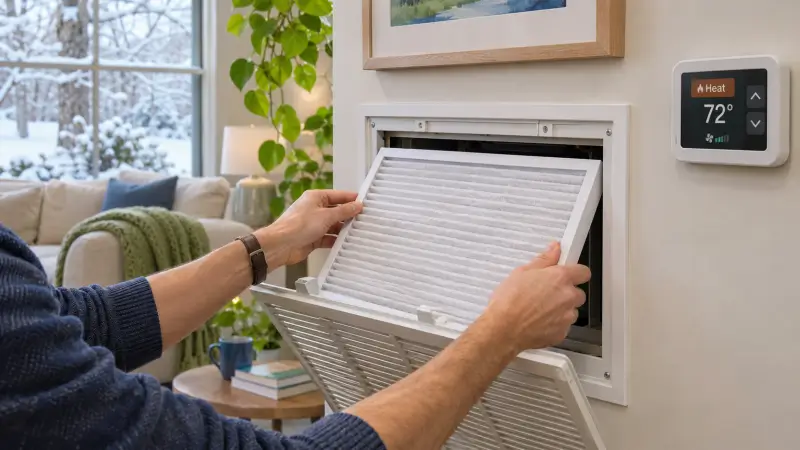
An air filter affects winter heat pump performance by controlling how much air moves across the indoor coil. A clogged filter cuts airflow, so heat leaves the coil more slowly and the system runs longer. Auxiliary heat may then turn on sooner. If ice forms on the indoor side, see why a heat pump filter can freeze in winter.
The Filterbuy Winter Airflow Rule
Check on the first of every heating month. Winter run times load filters faster than spring or fall.
Replace when the pleats turn gray. Do not wait for the usual change date.
Check again after any AUX surprise. A clogged filter is the fastest thing to rule out.
Automate the reminder. A Filterbuy air filter subscription ships a new filter every 1, 2, 3, or 6 months.
Most ducted residential heat pumps work with a MERV 8 air filter or a MERV 11 air filter, and some systems are rated for a MERV 13 air filter. MERV ratings follow ASHRAE Standard 52.2, explained by the ASHRAE Journal. Our guide to the difference between MERV 8, MERV 11, and MERV 13 filters can help you choose. Always check your HVAC manual for the highest MERV rating your system supports. Filterbuy makes all three ratings as pleated filters in standard and custom sizes.
How Can You Keep a Heat Pump Efficient on the Coldest Days?
On the coldest days, a steady thermostat setting and strong airflow do the most to keep a heat pump efficient. Both reduce how often auxiliary heat runs, and backup heat costs more to run than the heat pump.
Hold a steady setting. Large overnight setbacks can trigger AUX during morning recovery.
Leave the thermostat on Heat. Save emergency heat for a breakdown.
Clear the outdoor unit. Brush off snow and keep about two feet of open space. Never chip ice off the coil.
Keep the unit raised. A pad or stand stops defrost melt water from refreezing at the base.
For a full seasonal checklist, see our winter prep guide for heat pumps.
Do You Need a Cold Climate Heat Pump?
You may need a cold climate heat pump if your winters stay below freezing for long stretches. Cold climate models use variable speed inverter compressors to keep producing useful heat at 5°F and below. Standard heat pumps suit mild and moderate winters.
Rebate programs often rely on the NEEP cold climate air source heat pump specification and product list from Northeast Energy Efficiency Partnerships, and our walkthrough on how to use the NEEP cold climate heat pump list shows how to read a model’s 5°F capacity. Field results from the DOE Cold Climate Heat Pump Challenge validated new designs in real homes. To weigh costs and fit, read do heat pumps work in cold climates and our guide to heat pump efficiency ratings.
“The most useful advice I can give a heat pump owner in winter is to watch the thermostat, not the vents. If the house holds its setting, steam and long run times are the system doing its job, and a clean filter is the easiest way to keep it that way.”
Michelle Wan, Brand Manager and Air Quality Writer, Filterbuy
Supporting Statistics
Up to 75% less heating electricity
Compared with electric resistance heat.
Why it matters: Every hour on the heat pump, not AUX heat strips, saves more.
Source: Heat Pump Systems, U.S. Department of Energy
A COP of 1.75 or higher at 5°F
Required for ENERGY STAR cold climate heat pumps, along with 70% of 47°F capacity.
Why it matters: That is 75% more heat per kilowatt-hour than heat strips (COP 1.0).
Source: Heat Pump Equipment Key Product Criteria, ENERGY STAR
About 30% more energy from installation faults
Top causes: leaky ducts, low refrigerant charge, and wrong indoor airflow.
Why it matters: A tune-up checks these faults. A clean filter protects airflow.
Source: Underperforming? Energy Efficiency of HVAC Equipment Suffers Due to Poor Installation, National Institute of Standards and Technology
Frequently Asked Questions
Do Heat Pumps Work Below Freezing?
Yes. Heat pump refrigerant runs colder than outdoor air, so it keeps absorbing heat below freezing.
How Long Does a Heat Pump Defrost Cycle Last?
A heat pump defrost cycle usually lasts from 30 seconds to a few minutes. Normal heating resumes once the outdoor coil sheds its frost.
Should I Use Emergency Heat When It Is Very Cold Outside?
Should I Use Emergency Heat When It Is Very Cold Outside?
Can a Dirty Air Filter Make a Heat Pump Use More Auxiliary Heat?
Yes. A dirty air filter restricts airflow across the indoor coil, so the thermostat may call for auxiliary heat sooner.
Help Your Heat Pump Through Winter With a Fresh Filter
Find your air filter size at Filterbuy and choose a pleated MERV 8, MERV 11, or MERV 13 filter that fits your system, with fast and free 2-day delivery to most US states.
Glossary
Defrost Cycle: A brief, automatic switch into cooling mode that melts frost from the outdoor coil.
Auxiliary Heat (AUX): Backup heat, usually electric strips, that turns on automatically to help a heat pump.
Emergency Heat (EM): A manual setting that runs backup heat alone.
Balance Point: The outdoor temperature where heat pump output equals a home’s heat loss.
Coefficient of Performance (COP): Heat delivered divided by electricity used.
MERV: Minimum Efficiency Reporting Value, a 1 to 16 filter particle capture scale.