
How Long Do Heat Pumps Last? Guide to Heat Pump Life Expectancy, Average Lifespan, and How to Extend Yours
November 28, 2026
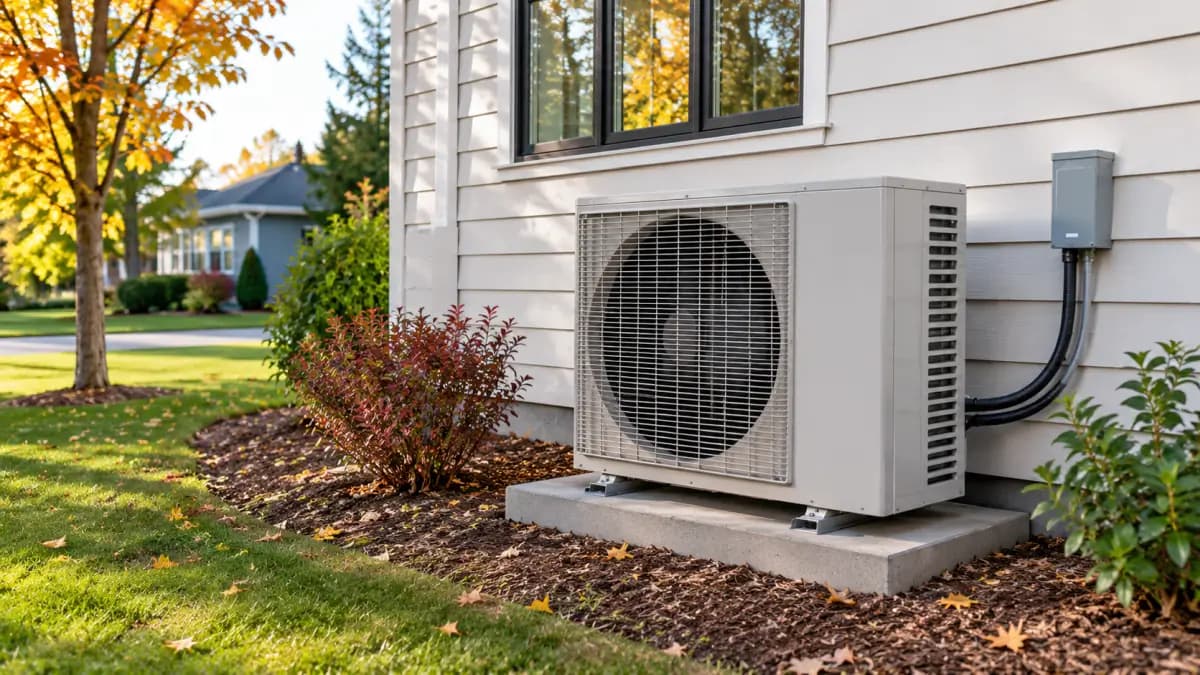
How long do heat pumps last? A heat pump heats and cools from one system, so it works more months of the year than a furnace or an air conditioner. Filterbuy has made air filters for more than a decade, so we look at heat pump life from the filter slot outward.
TL;DR
Most air-source heat pumps last 10 to 15 years, and well-maintained modern units often reach 15 to 20 years. Geothermal heat pumps last longer, with indoor components estimated at about 25 years and ground loops rated 50 years or more. Filterbuy's take: installation, annual service, filter changes, and climate decide where your system lands.
Key Takeaways
Air-source heat pumps last 10 to 15 years on average, and well-maintained modern units often reach 15 to 20 years.
Heat pumps (10 to 15 years) usually wear out before furnaces (15 to 25 years), per InterNACHI.
Geothermal heat pumps last longest, with indoor components estimated at 25 years and ground loops at 50 years or more.
Homeowners can influence lifespan through correct sizing at install and steady maintenance, including yearly tune-ups and clean filters.
Filterbuy's rule of thumb: get a replacement quote before approving a major repair on a heat pump older than 10 years.
What Is The Average Lifespan Of A Heat Pump?
The average lifespan of a heat pump is 10 to 15 years for a typical air-source unit, and a well-maintained modern unit can last 15 to 20 years. InterNACHI's estimated life expectancy chart from the International Association of Certified Home Inspectors lists heat pumps at 10 to 15 years, assuming regular maintenance and normal wear. Geothermal systems follow their own range.
Ranges assume correct installation and routine maintenance.
The Building America Solution Center geothermal heat pump guide from Pacific Northwest National Laboratory estimates 25 years for the inside components and 50 years or more for the ground loop. For ductless homes, Filterbuy's single-zone mini split carries a 7-year compressor warranty and a 3-year parts warranty.
Why Do Heat Pumps Have A Shorter Lifespan Than Furnaces?
InterNACHI lists furnaces at 15 to 25 years against 10 to 15 years for heat pumps. The clearest difference is workload: a heat pump's compressor and outdoor fan run in both winter and summer, while a furnace only heats.
Filterbuy's rule for reading heat pump age: count working seasons. A 12-year-old heat pump has worked 12 heating seasons and 12 cooling seasons. A 12-year-old furnace has worked 12 heating seasons. Defrost cycles also briefly reverse the system in cold weather, as Filterbuy's heat pump cycle guide explains.
What Affects Heat Pump Life Expectancy?
Heat pump life expectancy depends on installation quality, maintenance, filter condition, climate, and thermostat habits. InterNACHI notes that life expectancy varies with usage, weather, installation, maintenance, and quality of materials.
Installation and sizing. The International Code Council links an oversized heat pump to on-off cycling, uneven room temperatures, and more service calls. Ask your installer for a Manual J load calculation.
Maintenance. The U.S. Department of Energy recommends professional service at least once a year, including checks for correct refrigerant charge, refrigerant leaks, and airflow. Filterbuy's heat pump maintenance checklist lays out the seasonal tasks.
Airflow and the air filter. This is the factor Filterbuy knows best as an air filter maker. ENERGY STAR's maintenance checklist warns that a dirty filter can increase energy costs and damage equipment, leading to early failure. A heat pump runs in both seasons, so its filter works year-round.
Climate. Weather is one of the variables InterNACHI names. Ask your installer if your area calls for a cold-climate model.
Cycling and thermostat habits. Large setbacks can pull in costly backup heat during recovery, so Bonneville Power Administration guidance advises keeping heat pump setbacks to 2°F or less.
How Can You Tell How Old Your Heat Pump Is?
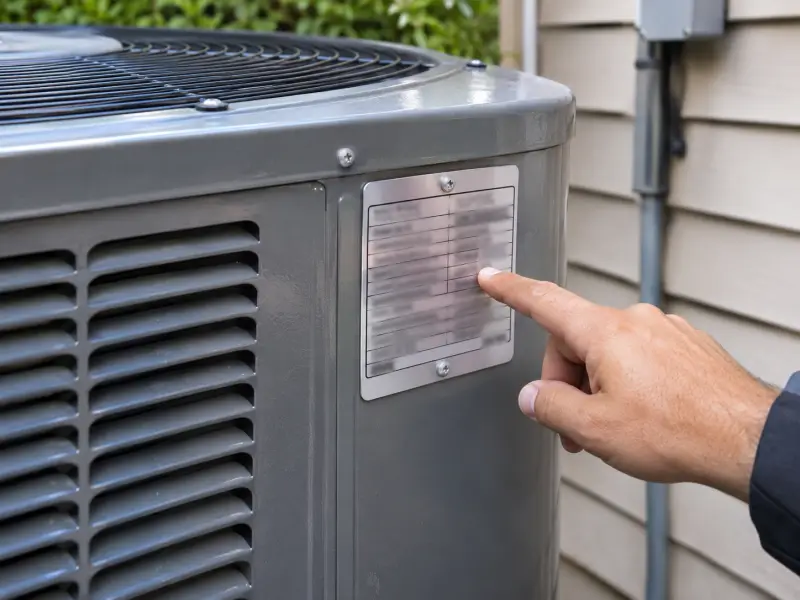
The fastest way to find your heat pump's age is the data plate on the outdoor unit, which lists the model and serial number. Many manufacturers encode the build year in the serial number, and an installer's invoice or permit record shows the install date. Filterbuy tip: write that date inside the filter access door next to your filter size, so you see the system's age every time you swap.
Check the refrigerant type on the same plate. A unit charged with R-22 is an older system. According to EPA's guide to residential air conditioning and the HCFC-22 phaseout, U.S. production and import of R-22 ended January 1, 2020, though existing systems can keep running on recovered and reclaimed refrigerant.
Buying a home with a heat pump? Ask the seller for the install date and service records, and have the inspector photograph the data plate. Those facts place the system in the age guide below.
Signs Your Heat Pump Is Nearing The End Of Its Lifespan
The clearest signs a heat pump is near the end of its lifespan are age past 10 years, frequent repairs, rising energy bills, uneven room temperatures, and new noise. Filterbuy built this five-question check from ENERGY STAR's signs it may be time to replace equipment, plus EPA's R-22 phaseout. Count your yes answers.
Is the system more than 10 years old?
Does it use R-22 refrigerant?
Does it need frequent repairs?
Are your energy bills going up?
Are some rooms too hot or too cold, or is the system noisy?
0 to 1 yes (Filterbuy's suggested next steps): keep up maintenance and recheck each fall.
2 to 3 yes: book an inspection and ask for a replacement quote.
4 to 5 yes: start planning replacement before a failure forces it.
Filterbuy's filter-first rule: when comfort drops, check the filter before booking a repair, because ENERGY STAR notes that a dirty filter slows airflow and makes the system work harder. Filterbuy's guide to heat pump repair costs and warning signs helps separate fixable issues from end-of-life wear.
Should You Repair Or Replace An Aging Heat Pump?
ENERGY STAR suggests considering replacement after 10 years, and InterNACHI's range tops out at 15. Filterbuy's guidance: repair minor issues before 10 years, price a replacement before any major repair after 10, and plan replacement past 15.
Filterbuy guidance for air-source heat pumps. Geothermal indoor units run on a longer clock.
Filterbuy's heat pump replacement cost guide covers pricing and timing. More guides live in Filterbuy's heat pump resource library.
How To Extend Your Heat Pump's Lifespan
You can extend a heat pump's lifespan by changing the air filter on schedule, booking a yearly tune-up, keeping the outdoor unit clear, cleaning a dirty outdoor coil, and using steady thermostat settings. Filterbuy recommends starting with the filter.
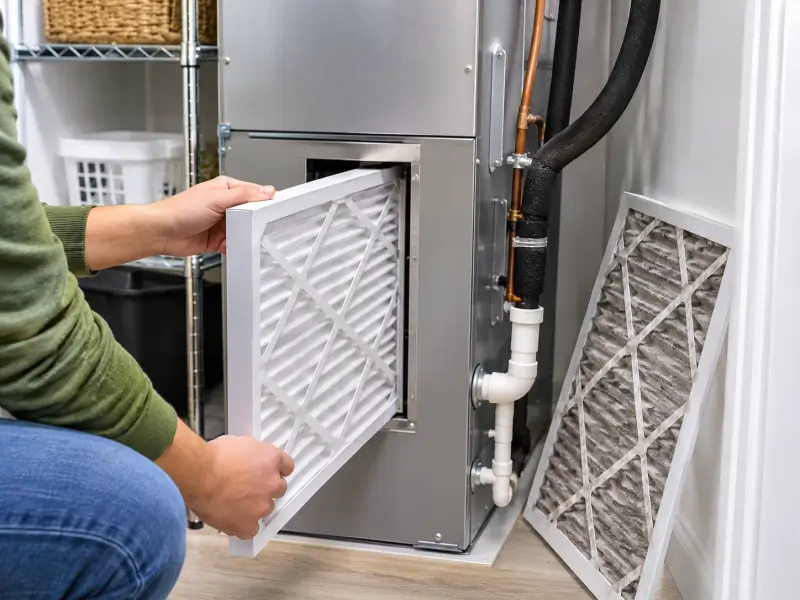
Change the air filter on schedule. ENERGY STAR advises inspecting it monthly, and DOE recommends changing it every 3 months or as the manufacturer recommends. Pro tip: the filter you pull is a report card. If it looks dirty early, change it sooner. A MERV 8 air filter is the standard choice for most homes, MERV 11 air filters suit homes with allergies, pets, or pollen, and MERV 13 air filters are the pick for wildfire smoke. Always confirm the MERV rating your heat pump's manual allows, and see everything you need to know about heat pump filters for sizing tips.
Book a tune-up once a year and keep the records. ENERGY STAR's contractor checklist includes tightening electrical connections, measuring voltage and current on motors, and checking refrigerant level. Ask for those results in writing and keep them with your filter records.
Keep the outdoor unit clear. Trim shrubs back and clear away leaves and snow from the sides and top.
Clean the outdoor coil when it looks dirty. DOE advises turning off power to the fan before clearing debris around the unit.
Set the thermostat and leave it. Use moderate settings and a heat pump compatible thermostat so the system does not lean on backup heat strips.
"I think of the air filter as a heat pump's cheapest insurance. It is the one part homeowners handle every few months, and a clean one keeps air moving through the system. My advice is simple: every time you change the filter, walk outside and make sure the outdoor unit can breathe too." Michelle Wan, Brand Manager and Air Quality Writer, Filterbuy
Supporting Statistics
Three U.S. government findings back Filterbuy's guidance here.
15 to 20 years: average heat pump lifespan
HUD's Cityscape research journal reports this range.
InterNACHI's more conservative planning range is 10 to 15 years.
Source: Heat Pumps: An Attractive Choice for Heating and Cooling Needs
About 30%: extra energy use from poor installation
NIST spent three years measuring and modeling installation faults.
Commonly reported faults include leaky ducts, improper refrigerant charge, oversizing, and restricted airflow.
Source: Underperforming? Energy Efficiency of HVAC Equipment Suffers Due to Poor Installation
10% to 25%: energy gap between maintained and neglected heat pumps
The U.S. Department of Energy reports this range.
DOE's maintenance list includes filter changes every 3 months and annual professional service.
Frequently Asked Questions
How Long Do Heat Pumps Last On Average?
Expect 10 to 15 years from a typical air-source heat pump, per InterNACHI. HUD's Cityscape journal reports a 15 to 20 year average, and geothermal indoor units are estimated at about 25 years.
Can A Heat Pump Last 20 Years?
Yes. HUD's Cityscape journal puts the average heat pump lifespan at 15 to 20 years, so 20 years is realistic at the high end.
Do Heat Pumps Last As Long As Furnaces?
Usually not. Gas furnaces often last 15 to 25 years because they only heat, while a heat pump works in both seasons.
What Shortens A Heat Pump's Life The Most?
ENERGY STAR names several: a dirty filter can lead to early failure, faulty electrical connections can shorten component life, and the wrong refrigerant level can reduce equipment life.
Does A Dirty Air Filter Shorten Heat Pump Life?
Yes. ENERGY STAR warns that a dirty filter can damage equipment and lead to early failure. Filterbuy suggests checking it monthly and changing it at least every 3 months.
Protect Your Heat Pump With The Right Air Filter
You are the one who keeps your heat pump breathing. Filterbuy makes MERV 8, MERV 11, and MERV 13 air filters in hundreds of standard and custom air filter sizes, with fast and free 2-day delivery to most US states. Set up Filterbuy air filter auto-delivery so the right size arrives when it is time to swap.
Glossary
Air-source heat pump: A heat pump that moves heat between indoor and outdoor air.
Backup heat: Also called auxiliary heat. Electric heat strips that back up a heat pump in very cold weather.
Compressor: The pump in the outdoor unit that pressurizes refrigerant.
Defrost cycle: A short reversal that melts frost off the outdoor coil.
Ductless mini split: A heat pump that uses indoor wall or ceiling units instead of ducts.
Filterbuy: An air filter manufacturer selling MERV 8, 11, and 13 filters in standard and custom sizes, plus single-zone mini splits.
Geothermal heat pump: A ground-source heat pump that exchanges heat with the earth through a buried loop.
MERV: Minimum Efficiency Reporting Value, the scale that rates how well a filter captures particles.
R-22: An older refrigerant, also called HCFC-22, whose U.S. production ended in 2020.