
How Does Air Source Heating Work? Complete Guide to Air Source Heat Pumps for Heating, Cooling, and Maintenance
October 22, 2026
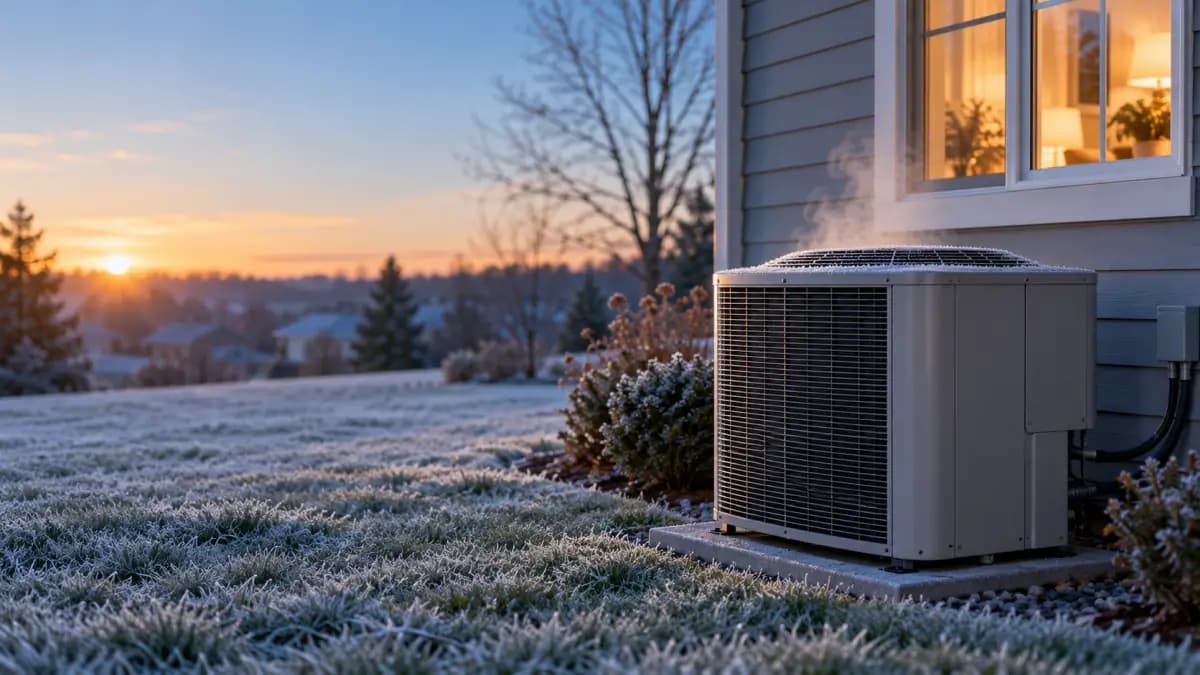
Air source heating works by moving heat instead of making it. An air source heat pump pulls warmth from outdoor air, even on cold days, then uses a compressor to concentrate that heat indoors. In summer, it runs in reverse like central AC. At Filterbuy, we make the air filters these systems rely on, so this guide also covers what most explainers skip: what year-round operation means for your filter.
TL;DR
An air source heat pump is an electric system that moves heat between outdoor air and your home through a refrigerant loop. It heats in winter and cools in summer. Because it runs all year, its air filter works harder than a furnace-only filter, so monthly checks matter.
Key Takeaways
An air source heat pump moves existing heat rather than burning fuel, so it can deliver more heat energy than the electricity it uses.
The same heat pump cools in summer by reversing its refrigerant flow.
Cold-climate models keep heating well below freezing.
A ducted heat pump filter works in every season, so check it monthly and plan on a professional tune-up at least once a year.
How We Built This Guide
Filterbuy manufactures pleated MERV 8, 11, and 13 air filters and sells ductless mini split systems. Michelle Wan, our Brand Manager and Air Quality Writer, wrote this guide. Licensed HVAC technician David Clark reviewed it for technical accuracy. Every statistic links to a U.S. government or industry source.
How Does Air Source Heating Work?
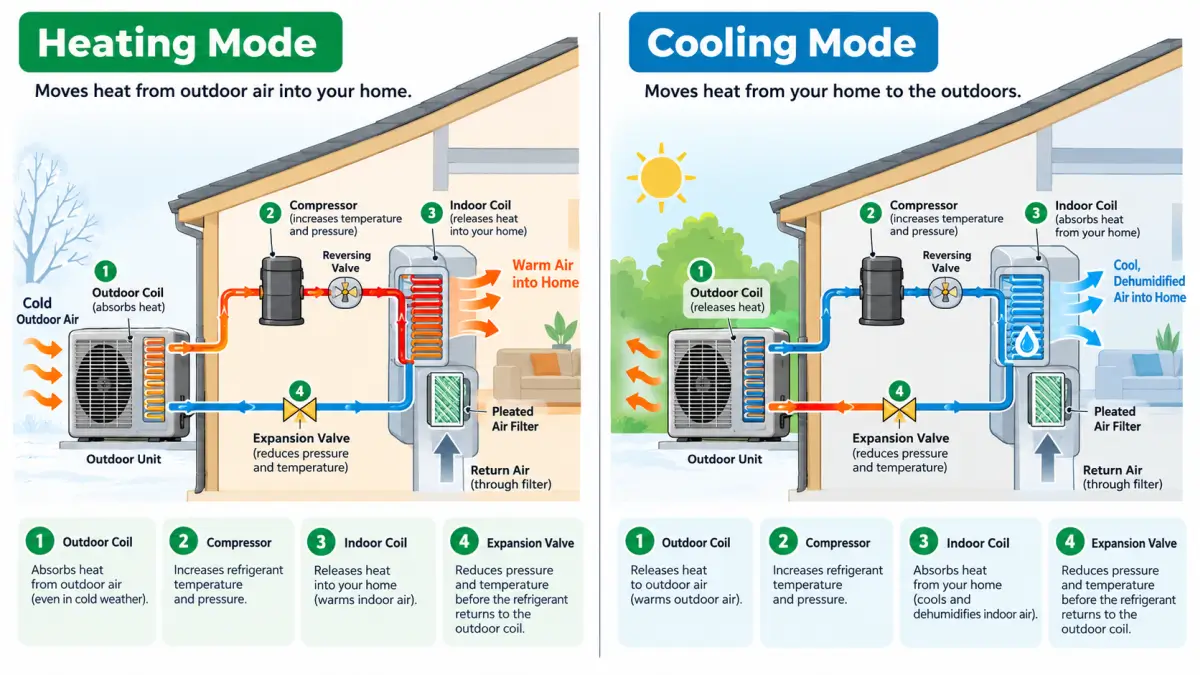
Air source heating uses refrigerant to absorb heat from outdoor air and release it indoors. Outdoor air still holds usable heat when it feels cold. Heat pump refrigerant boils at very low temperatures, so it soaks up that heat, and a compressor raises its temperature high enough to warm your home.
Absorb. A fan pulls outdoor air across the outdoor coil. Cold liquid refrigerant inside absorbs heat and turns into a low-pressure gas.
Compress. The compressor squeezes the gas, sharply raising its pressure and temperature.
Release. The hot refrigerant reaches the indoor coil, and a blower pushes household air through the filter and across the coil into your home.
Reset. The cooled refrigerant passes through an expansion valve that drops its pressure, and the loop starts over.
According to ENERGY STAR guidance on air source heat pumps, an air source heat pump can deliver up to three times more heat energy to a home than the electrical energy it consumes.
All the air the blower moves passes through the filter before reaching the indoor coil, in heating and cooling alike. As a filter maker, Filterbuy sees that as the easiest part of the system to control.
What Happens When It Gets Cold Outside?
An air source heat pump keeps heating in cold weather, but its output drops as outdoor temperatures fall. Cold-climate models hold more capacity below freezing, and ENERGY STAR certification requires verified performance testing down to 5°F. The nonprofit Northeast Energy Efficiency Partnerships keeps a cold climate air source heat pump product list.
Defrost mode. In damp cold, the system briefly switches into cooling mode to melt frost off the outdoor coil, so steam may rise from the unit. This is normal.
Backup heat. Electric heat strips or a gas furnace turn on during deep cold or after a large thermostat jump, and they cost more to run.
Filterbuy tip: raise the thermostat a degree or two at a time on cold mornings so the heat pump, not the backup heat, does the work. For sizing details, read Filterbuy's guide to cold-climate heat pump performance.
Can an Air Source Heat Pump Be Used for Cooling?
Yes. An air-to-air source heat pump cools your home the same way a central air conditioner does. A reversing valve flips the refrigerant flow, so the indoor coil absorbs heat and moisture from your rooms and the outdoor unit releases the heat outside.
Heat pump cooling is rated in SEER2, the same scale as central air conditioners, and heating in HSPF2. UK guides often describe air-to-water systems, which usually cannot cool. U.S. air-to-air heat pumps do.
Heating vs. Cooling vs. Defrost Mode
Ducted vs. Ductless Air Source Heat Pumps
A ducted system pairs an outdoor unit with an indoor air handler that pushes air through your ductwork. A ductless mini split pairs it with wall-mounted indoor units linked by a small refrigerant line.
Ducted vs. Ductless at a Glance
For one room, Filterbuy ductless mini split systems start at $749 for a 12,000 BTU single-zone unit, carry a 7-year compressor and 3-year parts warranty, and come with fast and free 2-day delivery to most US states. Professional installation is required and arranged separately.
Air Source Heat Pump Maintenance: What to Do and When
Air source heat pump maintenance means clean airflow and a yearly checkup, split between simple homeowner tasks and a licensed technician visit.
The U.S. Department of Energy guide to operating and maintaining your heat pump states that the difference in energy consumption between a well-maintained heat pump and a severely neglected one can range from 10% to 25%.
Homeowner Tasks
Check the air filter monthly, and clean or replace it every 3 months or as the manufacturer directs.
With the power off, clear snow and debris from around the outdoor unit.
Rinse the outdoor coil whenever it looks dirty.
Clean supply and return registers each season and straighten bent fins.
Licensed Technician Tasks, At Least Once a Year
Measure airflow and refrigerant charge, and check for leaks.
Inspect ducts, blower, indoor coil, wiring, and thermostat operation.
Filterbuy suggests booking the technician visit in spring or fall, before peak season. See our heat pump tune-up checklist, full heat pump maintenance guide, and winter heat pump prep guide.
Three Heat Pump Mistakes to Avoid
These carryover habits from furnaces and AC work against a heat pump.
Covering the outdoor unit for winter. A heat pump heats all winter and needs open airflow. Keep it uncovered and clear of snow and ice.
Using emergency heat as a boost. The EM Heat setting shuts off the heat pump and runs only the costlier backup heat. Save it for a breakdown while you wait for a technician.
Checking the wrong filter slot. Heat pump filters sit at the air handler, behind a return grille, or both. Find every one before you set a reminder.
Which Air Filter Works Best in a Heat Pump?
The best heat pump air filter fits your filter slot exactly and matches the MERV rating your system's manual allows. Check the manual before moving up a MERV level.
MERV 8 air filters capture household dust and pollen.
MERV 11 air filters capture finer particles such as pet dander.
MERV 13 air filters reach the highest capture level in Filterbuy's residential lineup, including fine particles such as smoke.
Filterbuy's Take: Put Your Heat Pump Filter on a Seasonal Clock
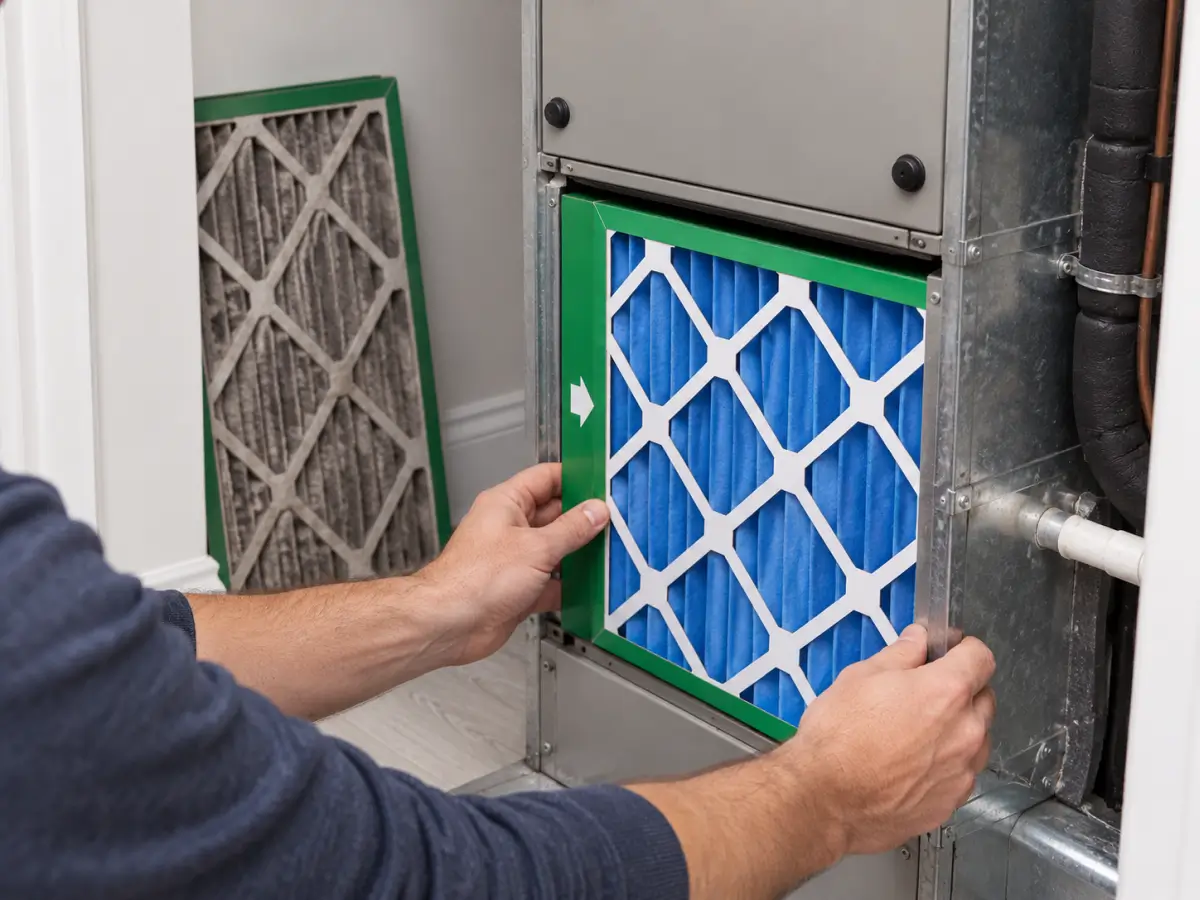
A heat pump has no real off-season. The same blower and filter handle heating in winter and cooling in summer. That is why we suggest checking a heat pump filter monthly and changing it as soon as it looks gray, even if three months have not passed. Quick check: hold it to a light. If light barely passes through the pleats, replace it.
Size matters as much as MERV. The size printed on a filter frame is rounded, so read it from your current filter or measure the slot before ordering. For unusual slots, Filterbuy makes custom sizes.
Shop pleated heat pump replacement air filters, shop air filters by size, or set up a filter subscription so the next filter arrives before the old one is due.
Signs Your Heat Pump Needs a Technician
Call a licensed technician if you notice:
Ice that stays on the outdoor unit for hours instead of clearing during defrost
Backup heat running constantly in mild weather
Weak airflow from the vents with a clean filter in place
Grinding or hissing sounds
Weak airflow is why we always say to rule out the filter first. Refrigerant handling falls under the EPA's Section 608 technician certification rules, so leave the refrigerant circuit and wiring to a licensed professional.
“You should have a professional technician service your heat pump at least once a year.”
U.S. Department of Energy, Energy Saver
Is an Air Source Heat Pump Right for Your Home?
Filterbuy's view: an air source heat pump makes the most sense when you need both heating and cooling and want one system to maintain instead of two. Choose a model sized for your climate, and plan for backup heat if your winters run well below freezing.
Budget note: the federal Section 25C heat pump tax credit ended for systems placed in service after December 31, 2025. Filterbuy's roundup of heat pump rebates and incentives tracks what applies in 2026.
Supporting Statistics
Heat pumps outshipped gas furnaces in 2025.
3,644,596 air source heat pumps shipped.
3,247,426 gas furnaces shipped.
Source: 2025 year-end shipment data from AHRI, the Air-Conditioning, Heating, and Refrigeration Institute.
63% of new homes in the South had a heat pump.
Counts single-family homes completed in 2025.
36% of those homes had a forced-air furnace.
Source: U.S. Census Bureau 2025 Characteristics of New Housing.
A cold-climate prototype saved more than 40%.
Savings were measured against the home's baseline heat pump.
The test ran in an occupied Ohio home during a month that averaged 20°F.
Frequently Asked Questions
Can an Air Source Heat Pump Replace My Air Conditioner?
Yes. An air-to-air heat pump provides full central cooling, so it can replace both a central air conditioner and a furnace.
How Often Should an Air Source Heat Pump Be Serviced?
The U.S. Department of Energy recommends professional heat pump service at least once a year. Between visits, check the filter monthly and keep the outdoor unit clear.
How Often Should I Change My Heat Pump Filter?
Filterbuy recommends changing or cleaning a heat pump filter about every three months, or sooner if it looks gray. Check it monthly, because a ducted heat pump filter works in every season.
Why Is Steam Coming Off My Heat Pump in Winter?
Steam from the outdoor unit in winter usually means the heat pump is in defrost mode, melting frost off the outdoor coil.
Glossary
Air Source Heat Pump: An electric system that moves heat between outdoor air and a home to heat and cool it.
Reversing Valve: A valve that switches refrigerant flow so a heat pump can heat or cool.
Backup Heat: Electric strips or a furnace that run when the heat pump alone cannot keep up.
Ductless Mini Split: A system, usually a heat pump, with wall-mounted indoor units and no ductwork.
EM Heat: A thermostat setting that runs only backup heat.
SEER2 and HSPF2: Federal ratings for heat pump cooling (SEER2) and heating (HSPF2) efficiency.
Nominal Filter Size: The rounded size printed on a filter frame, slightly larger than its actual dimensions.
MERV: Minimum Efficiency Reporting Value, a scale that rates how well an air filter captures particles.
Keep your heat pump ready all year. Visit Filterbuy to find your exact size and get fast and free 2-day delivery to most US states.