
Heat Pump Replacement Guide: When to Replace, Cost, New Unit Selection, and What to Expect from the Process
November 23, 2026
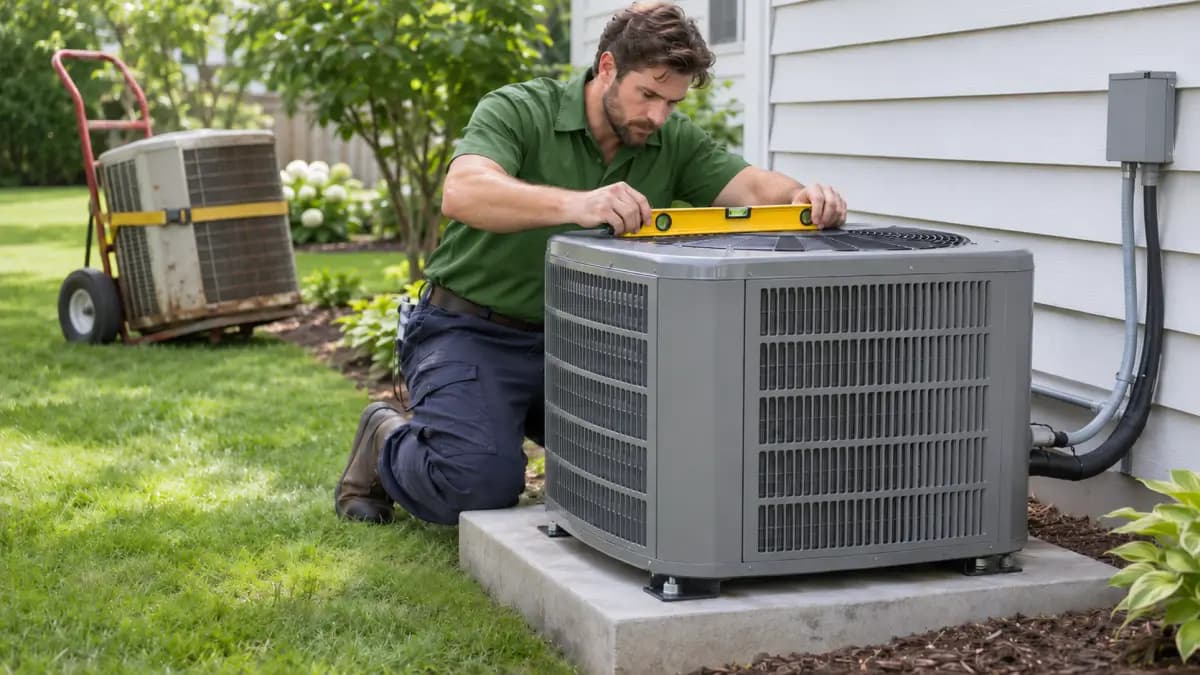
Heat pump replacement means retiring an aging or failing heat pump and installing a new system sized for your home as it is today. At Filterbuy, we manufacture the pleated MERV 8, 11, and 13 filters heat pumps breathe through, in hundreds of sizes, and we sell single-zone ductless mini splits. That gives us an airflow-first view of replacement: the filter slot and the startup check decide how well a new heat pump runs.
TL;DR
Replace an old heat pump when it is more than 10 years old and needs costly repairs, or when one repair costs more than half the price of a new system. Cost depends mostly on job scope, and Filterbuy's advice is to check airflow first. The federal Section 25C tax credit ended for systems placed in service after December 31, 2025.
Key Takeaways
ENERGY STAR recommends considering replacement once a heat pump is more than 10 years old.
Replace a 10-plus-year-old heat pump when one repair costs more than half of a new system.
New split-system heat pumps must meet a federal minimum of 14.3 SEER2 and 7.5 HSPF2.
The Section 25C tax credit does not apply to heat pumps placed in service after December 31, 2025.
EPA removed the 2026 installation deadline for residential R-410A systems made before 2025, though New York still enforces it.
When Should You Replace an Old Heat Pump?
Replace an old heat pump when its age and repair costs both point toward a new one. A heat pump past 10 years with rising bills and repeat service calls is near the end of its useful life, especially when one repair costs more than half of a new system.
ENERGY STAR advises homeowners to consider replacing a heat pump that is more than 10 years old. Filterbuy's heat pump lifespan guide covers what shortens or extends a unit's service life. These signs point toward replacement:
The unit needs a major part such as a compressor or reversing valve.
Energy bills climb with no change in how you use the system.
Rooms heat unevenly, or auxiliary heat runs more in winter.
The system uses R-22 refrigerant, which became costly to service after new production ended in 2020.
Start where Filterbuy starts: the filter slot. A clogged filter or blocked outdoor coil can mimic a failing heat pump, and Filterbuy's heat pump troubleshooting guide walks through those checks. If you already have a repair quote, compare it with Filterbuy's heat pump repair cost guide.
How Much Does Heat Pump Replacement Cost?
Heat pump replacement cost depends on the scope of the job more than the brand. A like-for-like swap that reuses working ductwork and wiring sits at the low end. Projects that add ducts, upgrade the electrical panel, or convert a furnace and air conditioner to a heat pump cost more, and whole-home cold-climate projects cost the most.
The National Renewable Energy Laboratory (NREL) cost model prices a standard ducted heat pump rated SEER 15 and HSPF 9 at about $3,900 plus $155 per 1,000 Btu/h of capacity, installed, in 2022 dollars. By Filterbuy's math, a typical 3-ton (36,000 Btu/h) replacement works out to roughly $9,500 before any duct work.
Use that number, or your own quote, to test a repair bid. Under the 50 percent rule, a repair above about $4,750 on a 10-plus-year-old 3-ton heat pump points to replacement.
Table 1. Heat Pump Replacement Cost Drivers by Job Scope
For full electrification projects with new ducts and panel work, Rewiring America, a nonprofit, models $17,000 to $23,000 installed for a 1,500 to 2,500 square foot home.
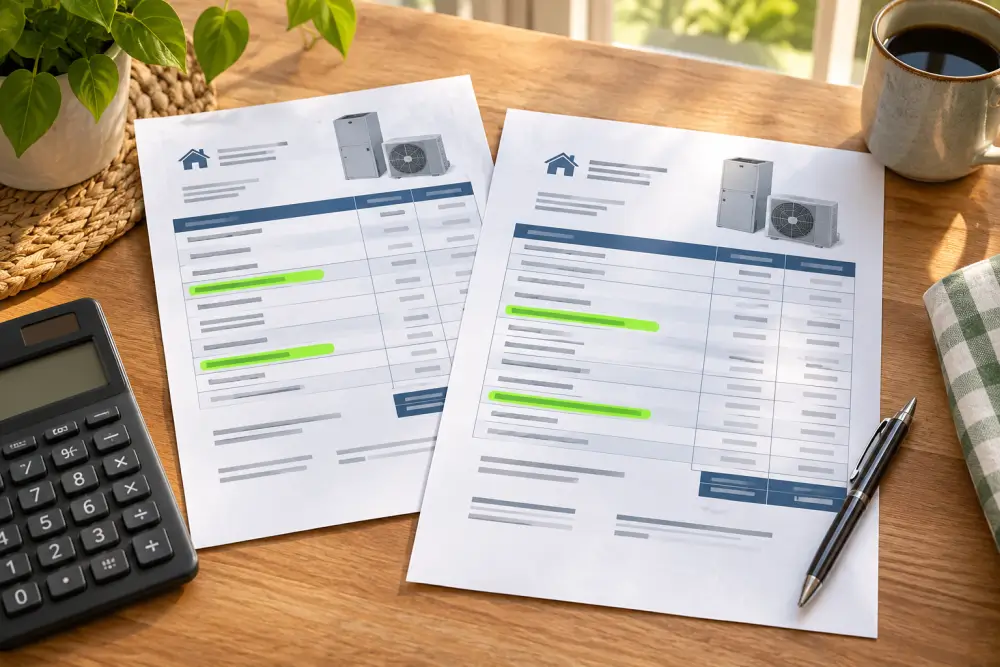
A fair quote itemizes the load calculation, model numbers, labor, electrical work, permit, and refrigerant recovery. Filterbuy adds one more line from the airflow side: the filter size the new air handler takes. Filterbuy's guide to heat pump prices explains why quotes for the same home can differ by thousands of dollars.
What Changed for Heat Pump Replacement in 2026?
Three 2026 rule changes affect replacement: the federal tax credit ended, EPA lifted its R-410A installation deadline, and state rebates are arriving slowly.
Tax credit: Section 25C ended for property placed in service after December 31, 2025.
Refrigerant: EPA's May 2026 rule removed the installation deadline for residential R-410A heat pumps made before 2025. The Air Conditioning Contractors of America (ACCA) notes that New York still enforces it. Most new equipment uses lower global warming potential refrigerants such as R-454B.
Rebates: State-run HEAR programs offer income-qualified heat pump rebates, but some exclude replacing an existing heat pump, and none are retroactive. Get approval before work starts.
Buying tip: If a quote names an R-410A unit, ask its build date and service plan, since ACCA warns refrigerant prices could rise.
How Do You Choose the Right Replacement Heat Pump?
Choose a replacement heat pump by sizing it to your home, not the old unit. A Manual J load calculation measures your home's heat loss and gain. Then compare SEER2 and HSPF2 ratings, cold-climate performance, compressor type, and whether your ducts and indoor coil can stay.
Table 2. Replacement Heat Pump Selection Checklist
The U.S. Department of Energy notes that ducted homes switch most easily and minisplits suit homes without ducts. Cold climate models perform down to 5°F.
What Happens During Heat Pump Replacement?
Heat pump replacement runs in a set order: assessment, quote, permit, removal, installation, and commissioning. Like-for-like swaps are quickest, and conversions with ductwork or electrical work take longer.
Assessment: The installer inspects the old system, ducts, and panel, then runs the load calculation.
Quote and permit: You get model numbers, ratings, and warranty terms, and the contractor pulls the permit and any rebate approval.
Refrigerant recovery: An EPA Section 608 certified technician recovers refrigerant before the old unit is removed.
Installation: The outdoor unit is set on its pad, and the indoor coil or air handler is matched to the new refrigerant.
Line set and electrical: The line set is flushed or replaced, and wiring is checked against the new unit.
Leak test and charge: The system is pressure tested, evacuated, and charged to the manufacturer's specification.
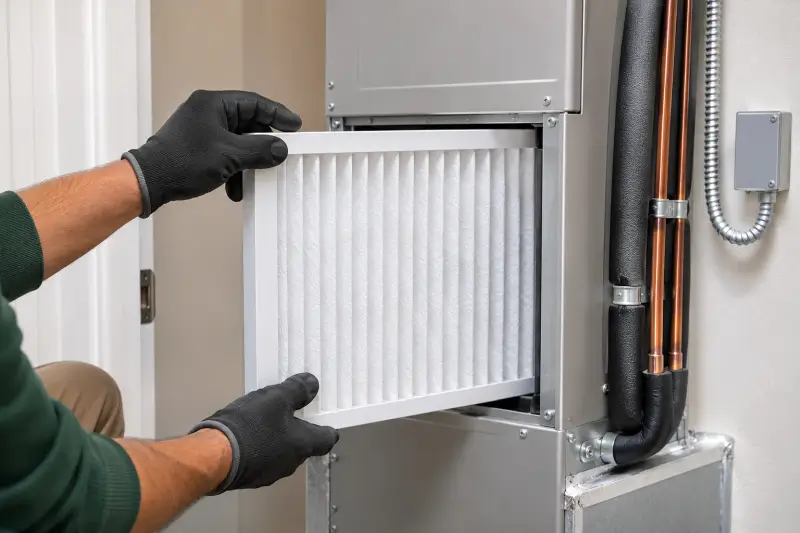
Commissioning and handoff: The technician checks airflow, defrost, and thermostat setup, installs a new air filter, and registers the warranty.
Where Does a Filterbuy Mini Split Fit in a Heat Pump Replacement?
Filterbuy ductless mini split heat pumps cost $749 to $1,349 for the equipment, ship with fast and free 2-day delivery to most US states, and carry a 7-year compressor and 3-year parts warranty. Filterbuy sells them, so we will be plain: each is a single-zone system for one room or an addition, and a licensed installer is required. For whole-home, multi-zone, or extreme cold-climate replacement, a ducted or multi-zone system from a full-line HVAC manufacturer is the better match.
What Does Filterbuy Check Before and After a Heat Pump Replacement?
Filterbuy calls it the airflow-first check. A new heat pump is rated for clean, unrestricted airflow, and these four steps protect it.
Before the quote: Replace the filter and clear the outdoor coil, then see if the problem remains.
During the quote: Ask what filter size and depth the new air handler takes.
At startup: Ask the technician to confirm airflow and refrigerant charge in writing.
After startup: Choose MERV 8 air filters for most homes, MERV 11 for allergies, asthma, pets, and pollen, and MERV 13 for wildfire smoke. Check your manual before moving up a MERV rating, and follow Filterbuy's heat pump maintenance checklist.
"We make air filters, so we read every heat pump replacement through airflow. The new system is only as good as the air reaching its coil, and the filter slot is where that starts. Check the size on the new air handler before you reorder, because it may not match the old one."
Michelle Wan, Brand Manager and Air Quality Writer, Filterbuy
Supporting Statistics
30 percent more energy from a bad install (NIST)
Improper installation can raise heating and cooling energy use by about 30 percent.
Typical faults: leaky ducts, wrong refrigerant charge, oversizing.
Filterbuy's take: get commissioning results in writing.
Source: Underperforming? Energy Efficiency of HVAC Equipment Suffers Due to Poor Installation
49 percent of U.S. homes heat with 10-plus-year-old equipment (EIA)
60.5 million of 123.5 million homes, per 2020 survey data.
That is past ENERGY STAR's replacement-check age.
Filterbuy's math from EIA tables.
Source: Table HC6.1 Space Heating in U.S. Homes, 2020 Residential Energy Consumption Survey
47 percent of new homes now heat with a heat pump (NAHB, Census data)
Up from 23 percent in 2000.
At 10 to 15 years of service, they reach replacement age from 2034 to 2039.
Source: HVAC in New Construction in 2024
Frequently Asked Questions
How Long Does a Heat Pump Last Before Replacement?
Typically 10 to 15 years for a ducted air source unit. Clean filters and annual service push it toward the top.
Is It Worth Replacing a 10 Year Old Heat Pump?
Yes, when it needs a major repair or bills are rising. If it still runs well, keep maintaining it and budget for replacement.
Can I Replace Only the Outdoor Unit?
Sometimes, but the indoor coil must match the new refrigerant and capacity, or efficiency and warranty coverage can suffer.
Do I Need New Ductwork When I Replace a Heat Pump?
Usually not, if existing ducts are sealed and sized for the new system. Fix leaky or undersized ducts during the job.
Are There Tax Credits for Heat Pump Replacement in 2026?
No federal tax credit applies to a heat pump installed in 2026. State, utility, and HEAR rebates may still apply, so check your state energy office before work begins.
Keep Your New Heat Pump Breathing Easy
A new heat pump runs only as well as the air moving through it. Find the size printed on your current filter frame, order a heat pump replacement air filter from Filterbuy, and set up auto-delivery so fresh filters arrive on schedule.
Glossary
Ductless Mini Split: A heat pump with a wall-mounted indoor unit and no ductwork.
SEER2: The federal cooling efficiency rating for heat pumps tested since 2023.
HSPF2: The federal heating efficiency rating for heat pumps tested since 2023.
Manual J: The ACCA method for calculating a home's heating and cooling load.
R-410A: An HFC refrigerant used in most heat pumps built before 2025.
R-454B: A lower-emission refrigerant in many heat pumps built since 2025.
Section 25C: The federal home efficiency tax credit, ended for property placed in service after 2025.
HEAR: Home Electrification and Appliance Rebates, a state-run, income-qualified rebate program, renamed HEEHR by DOE in 2026.
MERV: Minimum Efficiency Reporting Value, the ASHRAE particle-capture rating Filterbuy uses for its MERV 8, 11, and 13 filters.