
Olive Tree Pollen: Season, Identification, and Local Planting Restrictions
October 2, 2026
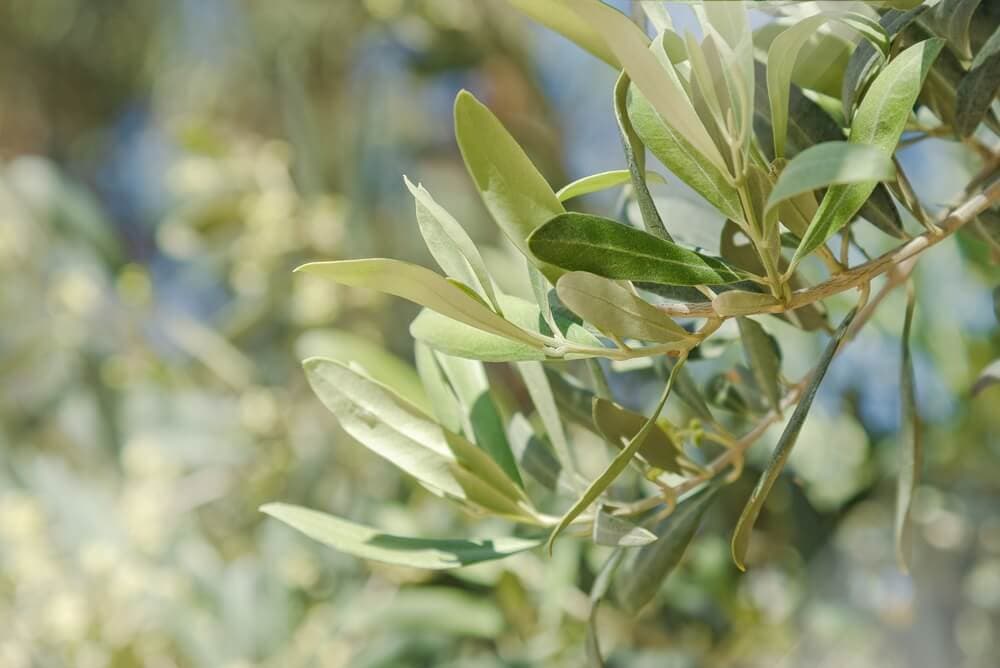
The olive tree (Olea europaea) is a Mediterranean native (NC State Extension) that now lines streets and fills gardens across California and the desert Southwest, with silvery evergreen leaves and a graceful, gnarled shape. In spring, it also releases windborne pollen (California Rare Fruit Growers), and UC IPM describes that pollen as "highly allergenic" (UC IPM).
Here is the surprise worth knowing up front: fruitless and pollen-free are not the same thing. UC Master Gardeners note that while the Swan Hill cultivar produces essentially no pollen or fruit, other fruitless varieties may still produce flowers and occasional fruit (UC Master Gardeners of Napa County). This page focuses on California and the Southwest, where olive trees anchor landscaped developments and where some local governments restrict new planting.
Olive Pollen Quick Facts
| Field | Detail |
|---|---|
| Plant type | Broadleaf evergreen tree; dwarf cultivars such as Little Ollie are grown as shrubs (UC Master Gardeners of Napa County) |
| Scientific name | Olea europaea, olive family (Oleaceae) (NC State Extension) |
| Pollination method | Largely wind-pollinated (California Rare Fruit Growers) |
| Pollen grain size | About 22 to 28 micrometers (Pollen.com) |
| Typical season | Spring; local flowering and airborne windows vary |
| Time of day | No universal peak release hour has been established. Weather and local observations matter. |
| U.S. focus | California and planted landscapes in Arizona and southern Nevada; not native to the U.S. |
| Share of local pollen | Olive made up 14% of all pollen counted at the San Jose, California, monitoring station (Lo et al., Aerobiologia, 2019) |
| Common cross-reactions | Ash, privet, and lilac pollen (see Cross-Reactions) |
Fruiting, fruitless, low-pollen, and pollen-free are different classifications. Don't treat them as one.
Is Olive Pollen High Near You Today?
Olive pollen won't show up in your local Air Quality Index. Intact pollen grains are too large for the PM2.5 and PM10 monitors the AQI relies on, which we explain in How Pollen Affects Air Quality Readings. For daily tree pollen counts, check the certified station nearest you on the AAAAI National Allergy Bureau pollen map. To see air quality where you live, use Filterbuy's Live Air Quality Index Map.
How to Identify an Olive Tree
Olive trees have a few reliable clues once you know what to check:
- Leaves. Opposite, narrow, gray-green on top and silver underneath (NC State Extension). That silvery underside is why an olive seems to shimmer in a breeze.
- Bark and shape. Young bark is smooth and gray. As the tree ages, the trunk becomes gnarled, furrowed, and twisted (NC State Extension). A young nursery tree won't have that dramatic trunk yet.
- Flowers. Small, fragrant, whitish flowers grow on stalks from the leaf axils, where leaves meet the stem, and are often hidden by the foliage (California Rare Fruit Growers). They are not the dangling catkins you see on oak or birch.
- Fruit. Oval green drupes about 1½ inches long turn purplish-black when ripe (NC State Extension). But fruit isn't required to identify the tree or to tell whether it has flowered.
A dust film can't identify olive pollen, and no coating on a car is a species test. Recognizing the flowering tree is far more useful.
Olive Look-Alikes: Not Every "Olive" Is Olea europaea
Russian Olive (Elaeagnus angustifolia)
A different genus in a different family, Elaeagnaceae. Russian olive is deciduous, with alternate silvery leaves rather than opposite pairs, and its fragrant flowers are insect-pollinated (USDA Forest Service FEIS). It is classified as a noxious weed in Colorado and New Mexico (USDA Forest Service FEIS).
Tea Olive (Osmanthus fragrans)
A member of the olive family but a different genus. It is a dense evergreen shrub with leathery, dark green leaves and very fragrant small white flowers in spring and fall (NC State Extension). A shared name doesn't mean it shares the olive tree's pollen season or output.
| Feature | Olive (Olea europaea) | Russian Olive | Tea Olive |
|---|---|---|---|
| Family | Oleaceae | Elaeagnaceae | Oleaceae |
| Leaves | Opposite, evergreen, silver underneath | Alternate, deciduous, silvery | Opposite, evergreen, dark green and glossy |
| Pollination | Largely wind | Insects | Not covered here |
This section is about recognition only. A look-alike is not automatically a better choice for people sensitive to pollen.
When Is Olive Pollen Season? Timing by Region
Olive timing depends on cultivar, weather, and location, and flowering records are not the same as measured airborne peaks. The entries below stick to what named sources support.
| Region and Observation | What the Source Reports |
|---|---|
| Central Las Vegas monitoring site | Olive pollen from late March to late April (2018 report) |
| Clark County, Nevada (1988 to 2010 monitoring) | High olive pollen levels every spring; peaks as high as 3,924 grains per cubic meter at one site in 1996 |
| San Jose, California | Olive accounts for 14% of all pollen counted at the station |
| Arizona and other Southwest cities | Local peak varies; no verified city-specific calendar |
These are site-specific observations, not statewide calendars. Don't translate Mediterranean or other regional dates into Southwest dates.
In the Southwest or California? Check current conditions for Las Vegas, Phoenix, Tucson, and Sacramento, or find your city on the Live Air Quality Index Map. Our seasonal allergy calendar shows how olive fits into spring.
How Olive Pollen Behaves
Fruitless Olives Can Still Flower
Fruit production and pollen release are different parts of reproduction. UC Master Gardeners list Swan Hill, Majestic Beauty, Wilsonii, Bonita, and Little Ollie as fruitless options, and note that fruitless varieties other than Swan Hill may still produce tiny flowers and occasional fruit (UC Master Gardeners of Napa County).
Swan Hill shows why wording matters. UC IPM describes it as "noted for little fruit and pollen" (UC IPM). An AAAAI expert answer says fruitless olives produce much less pollen than fruit-bearing trees and that Swan Hill produces about 1% of what most olive trees generate (AAAAI). Low pollen is not the same as zero pollen, and a marketing label alone doesn't prove a local exemption.
Wind Carries the Pollen
Olive flowers are largely wind-pollinated (California Rare Fruit Growers), so a flowering tree in your yard is not the only possible source of olive pollen in the air. There is no reliable universal travel distance or peak release hour to cite here. The useful takeaway is simpler: local trees and the wind both matter.
Why Some Places Restrict Olive Planting
If you have searched "olive tree ban," the real story is about local rules, not a statewide or national ban. Based on official provisions reviewed October 1, 2026:
| Jurisdiction | What the Rule Says | Exception or Qualifier |
|---|---|---|
| Clark County, Nevada (Las Vegas area) | After April 1, 1991, no one may plant, sell, offer to sell, or authorize the planting of European olive or fruitless mulberry trees (Clark County Section 44) | Low-pollinating cultivars can apply for a Certificate of Exemption if they release less than 15% of the pollen of a mature traditional European olive (Clark County Section 44) |
| Pima County, Arizona | Olive and mulberry trees may not be sold or planted; doing so is a nuisance (Pima County Code 7.41.030) | Check the full chapter for current exceptions |
| Tempe, Arizona | Planting and replacing pollen-producing olive or mulberry trees is prohibited (City of Tempe) | Pollenless, fruitless varieties such as Swan Hill may be planted (City of Tempe) |
| Oro Valley, Arizona | Olive trees are prohibited for their allergy-producing pollen (Town of Oro Valley) | Swan Hill and Wilson Hill varieties may be used (Town of Oro Valley) |
The purpose is pollen control. Clark County's rule states that pollen from fruitless mulberry and European olive trees contributes to high spring pollen levels in its urban areas (Clark County Section 44). These are local restrictions with their own exceptions, not proof that olives or olive oil are illegal, and not a requirement to remove existing trees. Codes change, so check the current rules with your local authority. This is general information, not legal advice.
Olive Pollen Myths vs. Facts
MYTHFruitless means pollen-free.
FACTSome fruitless varieties can still flower and occasionally fruit (UC Master Gardeners of Napa County). Even low-pollen Swan Hill is described as producing little pollen, not none, in some sources (UC IPM; AAAAI).
MYTHOlive trees are banned everywhere in Arizona and Nevada.
FACTRestrictions are local, with jurisdiction-specific exceptions or exemption procedures (Clark County Section 44; Pima County Code 7.41.030; City of Tempe).
MYTHRussian olive is just another olive tree.
FACTRussian olive is a deciduous plant in a different family, Elaeagnaceae, and its flowers are insect-pollinated (USDA Forest Service FEIS).
Olive Pollen Cross-Reactions
This section is descriptive only and is not medical advice.
Olive pollen cross-reacts with pollen from other olive-family plants. Thermo Fisher Scientific reports that the main olive allergen, Ole e 1, is present in white ash, privet, and lilac (Thermo Fisher Scientific: privet), and that the major ash allergen shares 88% of its amino acid sequence with Ole e 1 (Thermo Fisher Scientific: ash). Pollen.com also notes ash cross-reacts with olive pollen (Pollen.com).
Related proteins can be recognized by the immune system in similar ways, but that doesn't predict how any individual will respond or mean someone will react to every olive-family plant. It is also separate from any question about eating olives or olive oil. For questions about symptoms or diagnosis, speak with a board-certified allergist.
How to Keep Olive Pollen Out of Your Home
In the desert Southwest, spring pollen season often lines up with the first days the AC kicks on. A few steps help:
- Keep windows closed when outdoor pollen is high, especially from late March through spring.
- Take shoes off at the door and wipe tracked-in dust with a damp cloth rather than dry sweeping.
- Match your HVAC filter to your household. MERV ratings measure how well a filter captures particles between 0.3 and 10 micrometers. A MERV 8 filter must capture at least 70% of particles in the 3 to 10 micrometer range, and a MERV 11 filter at least 85% (EPA). Intact olive pollen grains, at roughly 22 to 28 micrometers, are larger than anything in that test. For most homes, MERV 8 is the standard choice. For households with allergies or pets, step up to MERV 11. Our MERV 8 vs. MERV 11 guide breaks down the difference.
- Change filters on schedule. Standard 1-inch filters are typically replaced about every 90 days. Filterbuy 4-inch filters last 6 to 12 months.
These steps reduce how much pollen circulates indoors. They are not a substitute for medical care, and no specific symptom outcome is claimed. Filtration also can't cancel out a flowering tree next door, so think of it as reducing what gets in, not eliminating exposure.
If your filter is due before spring, Filterbuy makes MERV 8 and MERV 11 filters in more than 600 standard sizes, plus custom sizes, so it's easy to find one that fits your system before the olive trees bloom.
Shop MERV 8 Filters Shop MERV 11 FiltersFrequently Asked Questions
When is olive tree pollen season?
It is mainly a spring concern in California and the Southwest. UNLV recorded olive pollen from late March to late April at its central Las Vegas site (UNLV). Cultivar, weather, and location all shift the dates.
Do fruitless olive trees produce pollen?
They can. Fruitless olives produce much less pollen than fruiting trees (AAAAI), and some fruitless varieties still flower and occasionally fruit (UC Master Gardeners of Napa County). Less pollen isn't the same as none.
Is Swan Hill olive pollen-free?
Why are some olive trees restricted in the Las Vegas area?
Clark County's Air Quality Regulation Section 44 has prohibited planting and selling European olive trees since April 1, 1991, because of their spring pollen. Low-pollinating cultivars can apply for a Certificate of Exemption (Clark County Section 44).
Are olive trees banned in Pima County?
Pima County Code 7.41.030 prohibits selling and planting olive and mulberry trees (Pima County Code). Nearby towns such as Oro Valley allow Swan Hill and Wilson Hill varieties (Town of Oro Valley). Check current local code for exceptions.
How can I identify an olive tree when it has no fruit?
Look for opposite leaves that are gray-green on top and silver underneath, plus a smooth gray trunk on young trees that becomes gnarled with age (NC State Extension).
Are olive and ash pollen related?
Yes. Both are in the olive family, and the major ash allergen shares 88% of its sequence with olive's main allergen (Thermo Fisher Scientific). That is a pollen-and-protein relationship, not an individual diagnosis.
What air filter should I use during olive season?
It depends on your household. MERV 8 is the standard choice for most homes. For households with allergies or pets, MERV 11 captures a higher share of larger airborne particles (EPA). See our MERV 8 vs. MERV 11 guide to compare.