
Spokane Valley Real-Time AQI Tracker


Get Alerts For Unhealthy AQI In Your Area
When air quality in your area reaches unhealthy levels, we'll send you a quick alert, along with expert tips on how to reduce your exposure.
What's Actually In Spokane Valley Air Today?
What High AQI Means for Your Lungs in Spokane Valley
How to Read AQI
The Air Quality Index (AQI) measures how polluted the air is and how it may affect your health.
0–50 (Good): Air quality is satisfactory.
51–100 (Moderate): Acceptable, but some pollutants may pose minor concerns.
101–150 (Unhealthy for Sensitive Groups)
151–200 (Unhealthy)
201–300 (Very Unhealthy)
301+ (Hazardous)
Moderate
Still okay for most, but if you have asthma or allergies, take it easy and avoid long outdoor workouts.
Shop MERV 11 filters→What's the Right Filter for Your AQI Level?

Check Today's Live Real Time Air Quality Index AQI Map in Spokane Valley, WA Now
TL;DR
The live map at the top of this page shows the air quality index (AQI) for Spokane Valley, Washington, right now. Most bad-air days come from summer wildfire smoke and winter inversion smoke. Filterbuy's action line is an AQI of 100: put MERV 13 in your HVAC, set the thermostat fan to On, run a portable HEPA air cleaner in each occupied room and close up the house.
Key Takeaways
Fine particulate matter (PM2.5), the tiny particles in smoke, is what usually pushes the Spokane Valley AQI into unhealthy ranges.
The American Lung Association ranked the Spokane-Spokane Valley-Coeur d'Alene metro 11th worst in the U.S. for short-term particle pollution in its 2025 report (2021 to 2023 data).
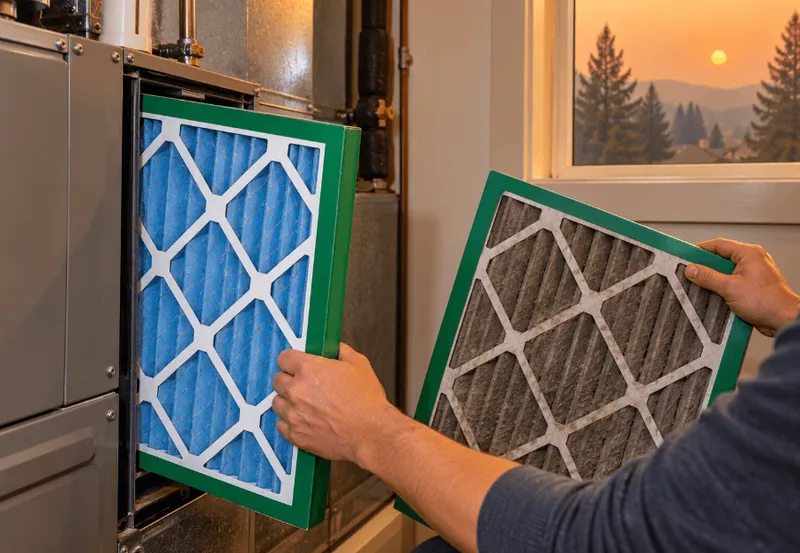
MERV 13 is Filterbuy's tier for smoke. During smoke, replace it when it looks dark brown or black.
How to Use the Live Map to Check Spokane Valley Air Right Now
Start with Filterbuy's live map above, which shows Spokane Valley's current AQI and the pollutant behind it.
Check the color first. Green (0 to 50) and yellow (51 to 100) mean most people can carry on with their plans.
Then check the pollutant. PM2.5 points to smoke.
Zoom out when smoke is moving. The Spokane air quality map, Washington air quality map and Idaho air quality map show whether it's regional or local.
Spokane Valley AQI Levels and the Right Move for Each
The U.S. AQI runs from 0 to 500 in six color categories set by the U.S. Environmental Protection Agency (EPA), explained in AirNow AQI basics.
Filterbuy's action line sits at 100, the top of the Moderate range, so you move at the threshold. At 100 and above, take four steps in order:
Put MERV 13 in your HVAC. The central system treats the whole house.
Set the thermostat fan to On. Auto only filters while the system heats or cools. On filters continuously.
Run a portable HEPA air cleaner in each occupied room, bedrooms first. It treats that room harder than the HVAC can.
Close up the house. Shut windows and doors, and skip candles, frying, smoking and vacuuming without a sealed unit.
| AQI Range | Category | Who Should Adjust | What to Do at Home |
|---|---|---|---|
| 0–50 | Good | No one | Air out the house. |
| 51–100 | Moderate | Unusually sensitive people | Get MERV 13 in and a spare on hand. At 100, start the four steps. |
| 101–150 | Unhealthy for Sensitive Groups | Children, older adults, people with lung or heart disease | The four steps above. |
| 151–200 | Unhealthy | Everyone | Hold the four steps; inspect the filter more often. |
| 201–300 | Very Unhealthy | Everyone | Follow AirNow and local guidance first; use a clean room. |
| 301–500 | Hazardous | Everyone | Follow official guidance first, including any advice to relocate. |
Categories, ranges and colors per EPA AirNow. Household actions are Filterbuy guidance, with the action line at 100.
Why the Spokane Valley Reading Can Differ from What You See Outside
The map can lag behind what you see or smell. The hourly AQI uses EPA's NowCast, which weights recent hours, and monitors sit miles apart. Spokane Clean Air, the Spokane Regional Clean Air Agency, posts data at 35 minutes past each hour, including from a Liberty Lake monitor.
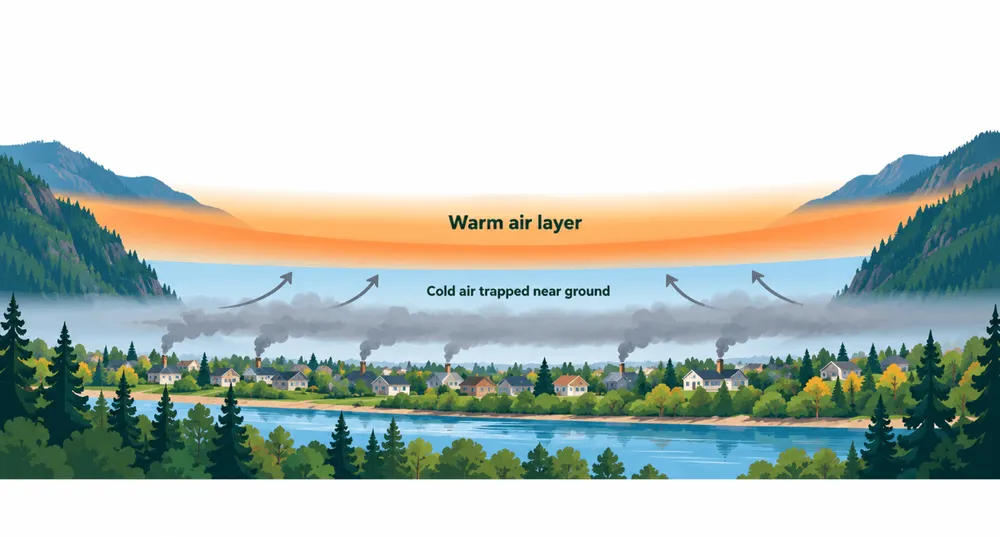
On calm winter nights, a temperature inversion settles cold air on the valley floor and holds wood smoke near rooftops in ZIP codes such as 99206, 99212, 99216 and 99037. On November 7, 2024, Spokane Valley neared Unhealthy for Sensitive Groups while most of the county stayed Moderate. Our cue: during Stage 1 or 2 burn restrictions, set the thermostat fan to On overnight, when inversion smoke tends to peak.
Is the Air Safe to Breathe in Spokane Valley Today?
It depends on the live number. At 100 or below, the air is acceptable for nearly everyone. From 101 to 150, sensitive groups should limit long or hard outdoor activity, and above 150, everyone should. That's EPA's category guidance, and if you have asthma, COPD or heart disease, your doctor is the right person to tailor it.
Check AirNow and Spokane Clean Air for local advice first, then see what to do when the AQI is above 100. On alert days, turn off swamp coolers and whole-house fans, which pull smoke inside.
Where to Find Spokane Valley Forecasts and Burn Restrictions
Spokane Clean Air posts a two-day forecast by about 10:35 each morning and issues Spokane Valley's burn restrictions.
Email alerts: Spokane Clean Air's sign-up page, or call 509-477-4727.
Stage 1 (yellow): bans wood fireplaces, uncertified stoves and outdoor burning. See current burn restrictions.
Stage 2 (red): bans all wood-burning devices except approved sole-heat-source homes.
Smoke tracking: the AirNow Fire and Smoke Map and Filterbuy's Spokane Valley wildfire and smoke map.
Health guidance: the Spokane Regional Health District and Smoke Ready Spokane.
What's in Spokane Valley's Air, Month by Month
Fine particulate matter (PM2.5) matters most in Spokane Valley, but its sources change with the season. Filterbuy built this calendar so you can prepare a month ahead.
| Months | Main Driver | What the Live Map Often Shows | Home Move |
|---|---|---|---|
| Mar–Jun | Pollen, road dust | Mostly Good, with short Moderate spells | Get MERV 13 and a spare in before July. |
| Jul–Sep | Regional wildfire smoke | PM2.5 spikes and multi-day Unhealthy stretches | At 100 and up, the four steps; inspect the filter often. |
| Oct–Nov | Prescribed burns, first inversions | Hazy mornings, clearer afternoons | Replace the filter if it looks dark. |
| Dec–Feb | Wood smoke trapped by inversions | Overnight PM2.5 rises on calm days | Fan On overnight during burn restrictions. |
Filterbuy synthesis of Spokane Clean Air data; the live map always comes first.
Spokane Valley Wildfire Smoke from 2020 to 2026
Smoke from fires across the West pushed Spokane's AQI to 479 on September 13, 2020, the worst reading in at least two decades of Spokane Clean Air records.
In 2026, the Upriver Fire near Camp Sekani Park destroyed more than 15 homes in June, and the Spokane Complex fires in north Spokane destroyed more than 900 in August. By August 13, the region had logged 14 days of air failing federal standards for the year, two short of the 2017 record, according to The Spokesman-Review.
Before the next season, keep wildfire smoke out of your house. After smoke clears, check the furnace filter first, then HEPA-vacuum and damp-wipe surfaces. Filterbuy's wildfire smoke recovery checklist and indoor air cleanup guide cover each step.
Clean-Air Options for Spokane Valley Homes Without Ductwork
No ducts, no filter slot. In homes with baseboard heat, wall heaters or mini-splits, portable HEPA air cleaners are the primary defense, not a supplement. EPA's cleaner air room guidance calls for a smoke CADR (clean air delivery rate) of at least two-thirds of the room's square footage, so a 300-square-foot bedroom needs about 200. EPA also advises against ozone-producing cleaners, so skip ionizers. Start by setting up a clean-air room in the bedroom.
A box-fan cleaner with MERV 13 filters is a reasonable stopgap, not a replacement for a certified cleaner. EPA research found these builds reduce smoke in lab tests. Use a certified fan from 2012 or newer, and don't leave it unattended.
Which Filter the Spokane Valley AQI Calls For
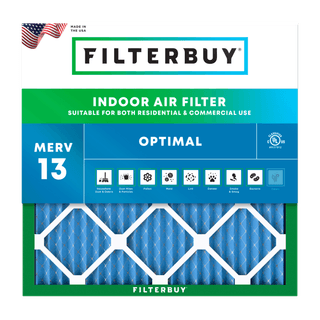
For smoke, the answer is MERV 13. EPA recommends MERV 13 or higher in central systems during smoke events (EPA wildfire indoor air guidance).
| Situation | What to Use | Why It Fits |
|---|---|---|
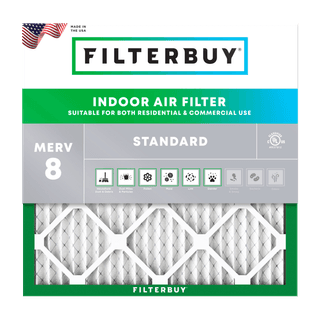
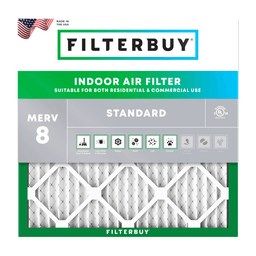
| Everyday dust and spring pollen | MERV 8 | Normal filtration for good-air days. |
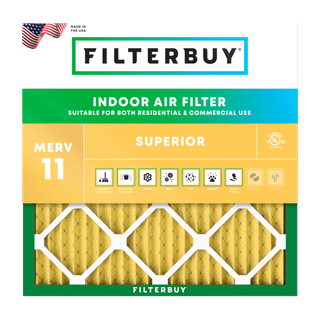
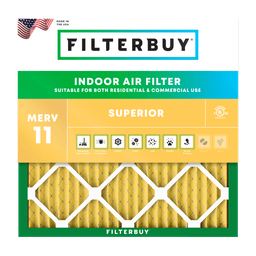
| Pets, allergies, moderate dust | MERV 11 | A step up for dander and fine dust. |
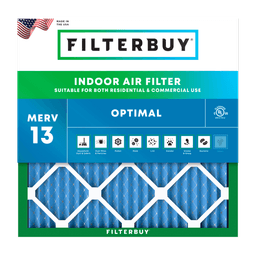
| Wildfire or inversion smoke | MERV 13 | The tier Filterbuy recommends for smoke. |
| Lingering smoke odor | Odor Eliminator line | Pleated filters capture particles, not odor gases. |
| Any occupied room, or homes without ducts | Portable HEPA air cleaner | The room-level layer. HEPA never goes in the HVAC. |
Fit check: confirm your filter size and slot depth, the same as any filter change.
Shop MERV 13 air filters in your size, including 2-inch and 4-inch depths, or MERV 8 and MERV 11 for everyday use. For odors, see the Odor Eliminator line. Filterbuy's MERV 13 vs. HEPA guide explains why HEPA belongs in a portable unit, not your furnace.
Spokane Valley Filters Need Event-Based Checks
Filterbuy has made pleated air filters in the U.S. since 2012, and from the factory side, the 90-day rule misleads most during smoke. August smoke and December inversions load filters far faster. Filterbuy's filter replacement guidance for high-AQI events comes down to an inspection test:
Check the filter during every smoke or inversion stretch.
Replace it when it looks dark brown or black, even well before the normal interval.
Keep a spare on hand before fire season, or let Filterbuy auto-delivery handle it.
EPA gives the same test in its wildfire smoke guidance for indoor air. Its fire-season preparation guide adds that most furnaces and HVAC systems can run MERV 13 without equipment problems when the filter is replaced often.
Supporting Statistics
Two layers, 22% of outdoor levels
In a 2024 study of one Pacific Northwest home during extreme smoke, MERV 13 plus a portable air cleaner kept indoor PM2.5 at 22% of outdoor levels.
Source: Pacific Northwest National Laboratory, U.S. Department of Energy
90% of time spent indoors
Americans spend about 90% of their time indoors, where some pollutants run 2 to 5 times higher than outdoors.
Source: U.S. Environmental Protection Agency
7.3 smoke days a year
The Spokane region's yearly average of unhealthy wildfire smoke days over the last decade (checked October 2026).
Frequently Asked Questions
How do I check the air quality in Spokane Valley right now?
Use the live AQI map at the top of this page, which shows the current AQI and the pollutant behind it.
Is the air quality bad in Spokane Valley today?
Check the map color. Green or yellow is acceptable for most people. At 100 or higher, check AirNow, then use MERV 13, set the fan to On, run HEPA cleaners in occupied rooms and close up the house.
What MERV rating do I need for wildfire smoke?
MERV 13. It's Filterbuy's tier for smoke, and EPA recommends MERV 13 or higher during smoke events. Pair it with portable HEPA cleaners; the two do different jobs.
What does PM2.5 mean on the Spokane Valley map?
Fine particles 2.5 microns or smaller, mostly smoke in Spokane Valley. When it leads the map, check that MERV 13 is in place.
When should I change my furnace filter during wildfire smoke?
Check it during the event and replace it when it looks dark brown or black, which can be well before the normal interval.
Glossary
Air Quality Index (AQI): The EPA's 0 to 500 scale of six color-coded health categories.
PM2.5: Fine particles 2.5 microns or smaller, the main pollutant in smoke.
Temperature inversion: Warm air sitting over cold air near the ground, trapping smoke in valleys.
MERV: Minimum Efficiency Reporting Value, a 1 to 16 rating for HVAC filters.
HEPA: High-efficiency particulate air filtration, used in portable air cleaners, never in a home HVAC slot.