
Air Quality in Idaho
Air quality index (AQI⁺) and PM2.5 air pollution in Idaho •


Get Alerts For Unhealthy AQI In Your Area
When air quality in your area reaches unhealthy levels, we'll send you a quick alert, along with expert tips on how to reduce your exposure.
Live Air Quality Ratings in Idaho
Live Most Polluted City Ranking
Real-time most polluted cities in Idaho
Live Cleanest City Ranking
Real-time cleanest cities in Idaho
The Right Air Filter For High AQI Days
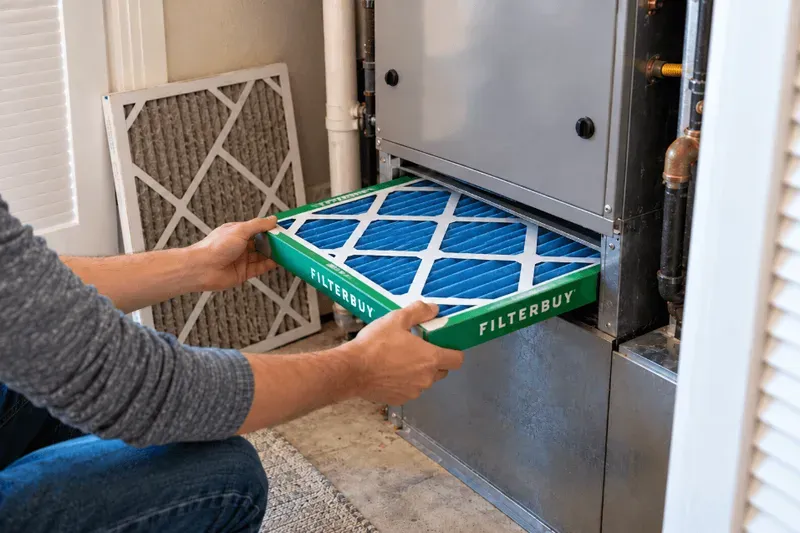
When outdoor air quality drops, the EPA recommends upgrading to a MERV 13 filter — or the highest-rated filter your HVAC system can handle — to help capture more of the fine particulate (PM2.5) that comes with poor air quality. MERV 13 is the highest rating most residential systems can run without restricting airflow.
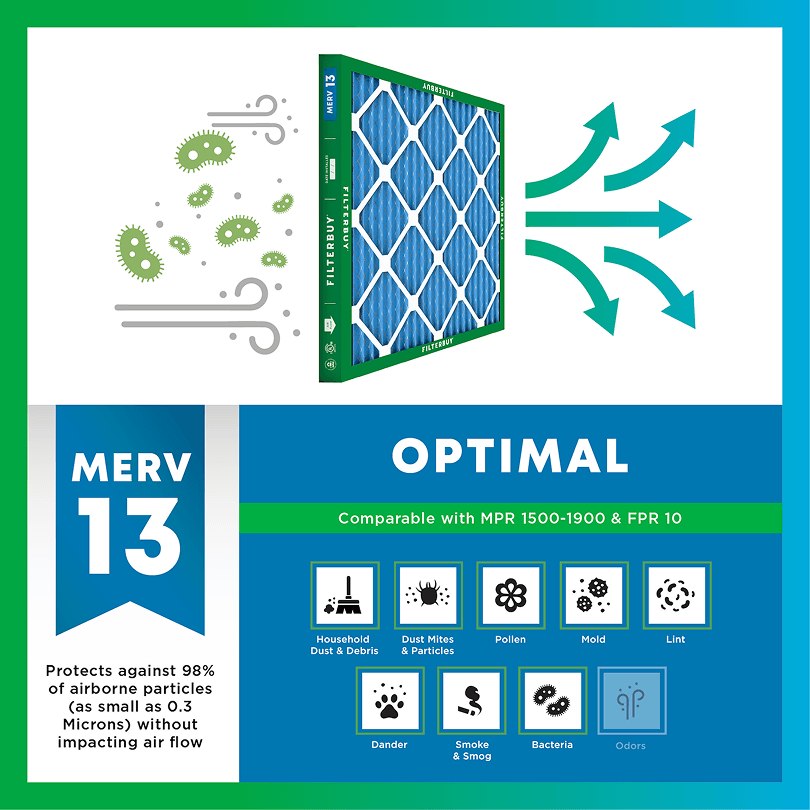
- Captures PM2.5 and other fine particulates
- Filters ash, soot, and smoke particles
- Rated to capture particles as small as 0.3 microns
- Matches the filter rating the EPA suggests during high-AQI and smoke events

AQI FAQs
What is AQI?
AQI stands for Air Quality Index, the EPA's scale for reporting daily air quality. It runs from 0 to 500. The higher the number, the greater the level of air pollution. Values at or below 100 are generally considered satisfactory; values above 100 mean air quality is unhealthy, first for sensitive groups, then for everyone as numbers climb.
What does AQI measure?
The AQI tracks five major pollutants regulated by the Clean Air Act: ground-level ozone, particle pollution (PM2.5 and PM10), carbon monoxide, sulfur dioxide, and nitrogen dioxide. The reported AQI value reflects whichever pollutant is highest at that time — most often ozone or fine particles (PM2.5).
How is AQI calculated?
Monitoring stations measure pollutant concentrations, and the EPA converts each into a standardized 0–500 score using set breakpoints. Each pollutant gets its own sub-index, and the highest sub-index becomes the reported AQI. That's why a single number can represent different pollutants on different days.
What is a good AQI?
An AQI of 0–50 is rated "Good" — air quality poses little or no risk. 51–100 is "Moderate," acceptable for most people though unusually sensitive individuals may want to limit prolonged outdoor exertion. Anything at or below 100 is generally considered satisfactory air quality.
What does an AQI of 100 (or 150) mean?
100 is the dividing line: at or below it, air quality is satisfactory for the general public. From 101–150, air is "Unhealthy for Sensitive Groups" — people with respiratory conditions, older adults, and children. From 151–200, it's "Unhealthy" and everyone may begin to feel effects.
Why is the AQI bad today?
Short-term AQI spikes usually come from wildfire smoke, temperature inversions that trap pollutants near the ground, high-ozone weather (hot, sunny, stagnant days), or heavy traffic and industrial activity. Check a real-time source like the map on this page to see which pollutant is driving today's reading in your area.
What AQI is bad for running or exercise?
Many runners follow the EPA category lines: below 50, no adjustment needed; 51–100, unusually sensitive people may shorten intense workouts; above 100, sensitive groups are advised to reduce prolonged or heavy outdoor exertion; above 150, that advice extends to everyone. Exercise increases how much air you breathe in, which is why thresholds matter more during workouts.
What AQI is safe to open windows?
A common rule of thumb is to keep windows open when the AQI is under 100 and close them when it climbs above, especially during wildfire smoke events when fine particles are elevated. When windows are closed, running your HVAC system with a fresh filter helps capture particles circulating indoors.
Should I wear a mask based on AQI?
Public health agencies generally suggest considering a well-fitted N95-style respirator outdoors when the AQI exceeds 150, particularly during smoke events. Cloth and surgical masks don't filter fine particles effectively. Follow guidance from your local health department, which may adjust recommendations during severe episodes.
Check Today's Live Real Time Air Quality Index AQI Map in Idaho Now
Filterbuy's live Idaho air quality map above shows real-time Air Quality Index (AQI) readings statewide. Tap a station to see its reading and main pollutant, usually PM2.5 (fine particles from smoke and combustion) or ozone. Below, we explain what the air quality in Idaho today means for your home.
TL;DR
Idaho air pollution runs on two seasons: summer wildfire smoke and ozone, and winter inversions that trap woodsmoke in valleys from Boise to Pocatello. When the AQI near you reaches 100, Filterbuy's action line, close up the house, put a MERV 13 filter in your HVAC, set the fan to On, and run a portable HEPA cleaner in each occupied room.
Key Takeaways
The Idaho Department of Environmental Quality (DEQ) issues official forecasts and Air Quality Advisories.
AQI 100 is Filterbuy's action line: MERV 13, fan On, and a HEPA cleaner in each occupied room.
Treasure Valley burn rules start at AQI 60, well inside the yellow Moderate range.
EPA recommends a MERV 13 or higher filter in central HVAC during smoke events.
How to Read Idaho's Live Air Quality Map
Each dot is a monitoring station showing the current AQI, which runs from 0 to 500 and is set by the worst single pollutant at that site. Filterbuy's rule of thumb for Idaho: read the station in your valley, not the nearest city, because an inversion can hold a valley floor in orange while a nearby ridge stays green.
For a closer look, open Filterbuy's live pages for Boise air quality, Meridian, Nampa, Idaho Falls, and Pocatello. To compare states, open the live USA AQI map.
What Each AQI Color Means for Idaho Households
Here is how each EPA AQI category tends to show up in Idaho, along with a practical step for your household.
EPA categories. Filterbuy's action line is AQI 100, the top of Moderate.
What to Do When the AQI Reaches 100
AQI 100 is where Filterbuy tells customers to act. EPA's Unhealthy for Sensitive Groups category starts at 101, so we move at the threshold rather than after it. Check AirNow and DEQ first, then:
Put a MERV 13 filter in your HVAC system.
Set the thermostat fan to On so it filters continuously, not just while heating or cooling.
Run a portable HEPA air cleaner in each occupied room, bedrooms first.
Keep windows and doors shut, and skip candles, frying, and vacuuming while smoke is in.
No central HVAC? Portable HEPA cleaners are your main defense, not a backup. Above 150, inspect the filter more often and keep spares. Above 200, follow local guidance and treat filtration as one layer.
Why Idaho AQI Readings Can Lag or Miss a Valley
Idaho DEQ reports a NowCast AQI, an average of recent hours, so it can trail a sudden smoke surge. Terrain adds a second gap: valleys hold smoke after the hills clear, and many rural canyons have no monitor. If you smell smoke, act before the number catches up.
Is Idaho's Air Safe to Breathe Today?
It depends on the station nearest you. Above 100, the Unhealthy for Sensitive Groups line, children, older adults, pregnant people, and anyone with asthma, COPD, or heart disease should cut back on outdoor exertion, and past 150, everyone should. People with those conditions should follow their doctor's advice and official guidance.
Where to Get Idaho Air Quality Forecasts and Burn Rules
DEQ regional offices post daily Idaho air quality forecasts (here is how AQI forecasts work) and issue an Air Quality Advisory when air is degraded or expected to be. DEQ's free AIR Idaho app shows three-day outlooks, and EnviroFlash sends email alerts.
What an Air Quality Advisory Means for Your Weekend
While an advisory is in effect, DEQ bans all outdoor burning in the affected area, including campfires, fire pits, and burn barrels; barbecue grills are still allowed. At Filterbuy, we treat a campfire ban as a household cue to close up and switch to MERV 13.
Idaho Burn Rules Start Below the Unhealthy Line
Most AQI guides treat yellow as safe to ignore, but Idaho burn rules do not. Boise and Ada County stop open burning at AQI 60, Treasure Valley woodstove limits start at 74, and Franklin County sets a separate trigger. If you heat with wood, check the forecast first.
Sources: Idaho DEQ and local ordinances.
Idaho Air Quality by Region
Source: Idaho DEQ.
What's Actually in Idaho's Air?
According to DEQ, fine particulate matter (PM2.5) and ground-level ozone matter most in Idaho. PM2.5 comes from smoke, woodstoves, and vehicles, while ozone forms on hot, still afternoons, and winter inversions trap both near the ground.
DEQ lists Ada and Canyon counties as an area of concern for PM2.5 and ozone, yet the valley meets every national standard, which is why the state ended vehicle emissions testing on July 1, 2023. Woodstove changeouts helped the West Silver Valley earn redesignation in December 2021, and Idaho now has no nonattainment areas.
How Idaho's Air Compares with Other States
Idaho air is cleaner than most on an average day, but spikes drive the rankings. In State of the Air 2026, Boise-Mountain Home ranked 24th worst for ozone, up from 46th, and 17th for short-term particle pollution. See Filterbuy's worst air quality cities rankings.
Wildfire Smoke: Idaho's Biggest Air Quality Event
Much of Idaho's smoke starts out of state: the southwest sits downwind of Oregon fires, and the Panhandle catches Washington and Montana smoke. In-state fires run large too, with more than 826,000 acres burned by October 1, 2024, the most since 2012.
See Idaho Health and Welfare smoke guidance, and follow plumes on Filterbuy's live Idaho wildfire and smoke map.
No Ducts? Air Cleaners for Idaho Woodstove and Baseboard Homes
Woodstove and baseboard homes, common in North Idaho, have no ducts and no filter slot. Filterbuy makes HVAC filters, but in these homes a portable HEPA air cleaner is the right first buy. EPA's clean room guidance sizes one by smoke CADR (clean air delivery rate) at two-thirds of the floor area, so a 300-square-foot bedroom wants a smoke CADR of about 200. Skip ionizers and ozone generators, since EPA advises against cleaners that produce ozone. A DIY box fan cleaner built with MERV 13 filters is a fair stopgap if it uses a certified fan made in 2012 or later and never runs unattended. See our portable air purifier vs. HVAC filter and MERV 13 vs. HEPA guides.
Filterbuy's Take: Idaho Has Two Smoke Seasons
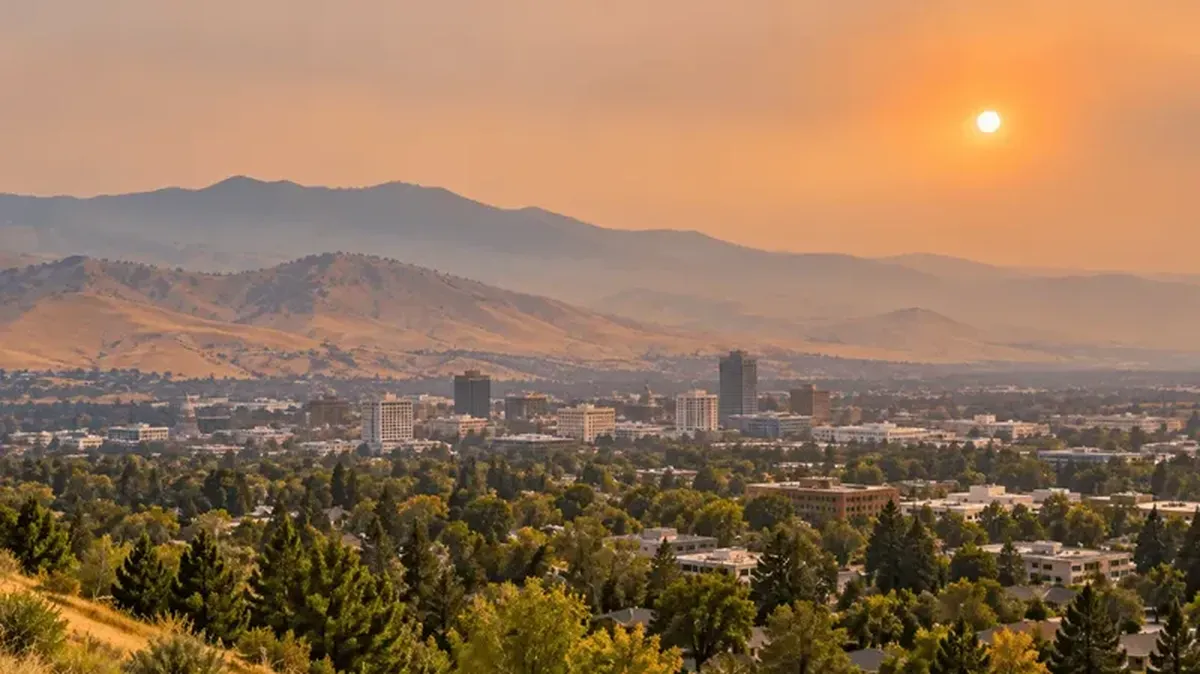
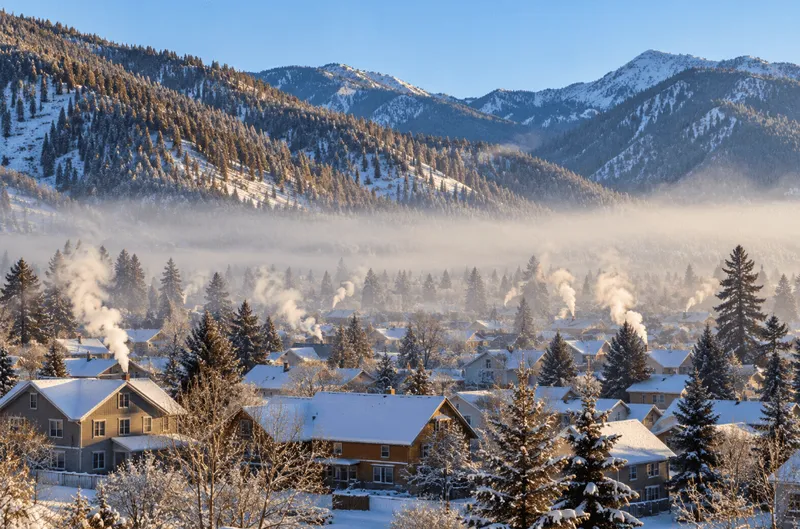
Idaho gets smoke twice: wildfire smoke in summer, woodsmoke under winter inversions. Filterbuy sees it firsthand, as orders and support calls climb after stagnation advisories and smoke events. So we plan Idaho homes around two filter checkpoints:
June, before fire season: put in a fresh MERV 13 and a spare on the shelf.
October, before inversion season: swap again, then inspect it monthly through February.
“Most people assume bad air quality is somebody else's problem, from a fire or a factory far away. The number on your phone tells you what's happening outside. What happens inside your home once that air comes through the door is still up to you, and that's the part people forget to plan for.”
- David Heacock, Founder and CEO, Filterbuy
Which Air Filter Your Idaho AQI Level Calls For
Start with DEQ's advice, then match the filter to the air using Filterbuy's MERV rating by AQI guide. MERV 8 air filters handle everyday dust and pollen, and MERV 11 air filters add finer dust and dander capture on clean-air days. For smoke, MERV 13 air filters are the tier we recommend.
EPA recommends a MERV 13 or higher filter in central systems during smoke events, and notes that most furnaces and HVAC systems can take MERV 13 without equipment problems when the filter is replaced often. Filterbuy's cue for that switch is AQI 100.
A lesson from the Filterbuy exchange desk: most fit problems start with measuring the old filter instead of the slot. Measure the opening.
During smoke, replace the filter when it looks dark brown or black, which can be well before its normal interval, and keep spares on hand. Pleated filters capture particles, not odors or gases; for lingering smell, see the Odor Eliminator line. Filterbuy makes filters in the U.S. in 600+ standard sizes plus custom sizes, with fast, free shipping and auto-delivery for your June and October checkpoints.
Supporting Statistics
1 in 10 Idaho adults has asthma
10.5% of Idaho adults, about 157,500 people.
The national rate is 9.8%.
Many households should act at AQI 100.
Closing windows is only a start
In a closed home with no air cleaner, indoor PM2.5 runs around 55 to 60% of outdoor levels.
Source: U.S. EPA
Idaho gets smoke in both seasons
Salmon's PM2.5 has topped the 2006 federal standard since 2011.
Causes: summer wildfire smoke and winter woodstove smoke.
Frequently Asked Questions
Is air quality bad in Idaho today?
Check the live map above for the station in your valley. Readings climb most in summer smoke and winter inversions.
How do I check Idaho PM2.5 today?
Tap any station on the live map to see its PM2.5 reading.
Can I have a campfire during an Idaho air quality advisory?
No. Inside a DEQ Air Quality Advisory area, campfires and fire pits are banned; barbecue grills are allowed.
Why is Boise air quality bad in winter?
An inversion traps exhaust and woodsmoke in the valley until a storm clears it.
What air filter should I use during Idaho wildfire smoke?
MERV 13. EPA recommends MERV 13 or higher in central systems during smoke events. Filterbuy's cue to switch is AQI 100, and homes without ducts should rely on portable HEPA cleaners.
Glossary
Air Quality Index (AQI): The federal 0 to 500 scale for daily air pollution.
PM2.5: Fine particles 2.5 micrometers or smaller, mainly from smoke and combustion.
Temperature inversion: Warm air over cold ground air, trapping pollution.
Air Quality Advisory (AQA): An Idaho DEQ notice of degraded air that bans all outdoor burning while in effect.
MERV: Minimum Efficiency Reporting Value, a 1 to 16 rating of HVAC filter particle capture.
HEPA: A filter standard for portable air cleaners, never HVAC slots.