
Federal Way Real-Time AQI Tracker


Get Alerts For Unhealthy AQI In Your Area
When air quality in your area reaches unhealthy levels, we'll send you a quick alert, along with expert tips on how to reduce your exposure.
What's Actually In Federal Way Air Today?
What High AQI Means for Your Lungs in Federal Way
How to Read AQI
The Air Quality Index (AQI) measures how polluted the air is and how it may affect your health.
0–50 (Good): Air quality is satisfactory.
51–100 (Moderate): Acceptable, but some pollutants may pose minor concerns.
101–150 (Unhealthy for Sensitive Groups)
151–200 (Unhealthy)
201–300 (Very Unhealthy)
301+ (Hazardous)
Moderate
Still okay for most, but if you have asthma or allergies, take it easy and avoid long outdoor workouts.
Shop MERV 11 filters→What's the Right Filter for Your AQI Level?

Check Today's Live Real Time Air Quality Index AQI Map in Federal Way, WA Now
The Filterbuy live map above shows the current air quality index (AQI) for Federal Way, Washington, a southwest King County city between Seattle and Tacoma, drawn from nearby monitors and sensors in King and Pierce counties. Find your neighborhood, note the number and its color, then use the level guide below.
TL;DR
Most people can go about their day on green or yellow. At orange, sensitive groups should ease off outdoors, and at red or higher, everyone should limit time outside. Filterbuy's action line for wildfire smoke is AQI 100.
Key Takeaways
Federal Way has no monitor inside city limits, so its live AQI comes from nearby stations such as Kent and Tacoma.
Most bad air days come from fine particles (PM2.5) in wildfire smoke and wood smoke.
EPA recommends a MERV 13 or higher filter in central HVAC systems during smoke events.
Filterbuy's action line is AQI 100, with a HEPA air cleaner in each occupied room.
Reading Federal Way's Live AQI Map Step by Step
Federal Way's live AQI map boils sensor data down to one color and one number, from Steel Lake to Dash Point. The pollutant label beside it shows what is driving the reading, usually fine particles (PM2.5) or ozone.
Find your part of town and note the AQI number and color.
Check the pollutant: PM2.5 means filter indoor air; ozone means ease off in the afternoon.
Under EPA's May 2024 update, a 24-hour PM2.5 average above 35.4 µg/m³ reaches orange. Compare the Washington air quality map, Seattle air quality and Tacoma air quality map.
Federal Way AQI Levels and What to Do at Each One
The AQI runs from 0 to 500 in six color bands. Each band comes with EPA health advice, and Washington State Department of Ecology uses the same scale in its wildfire smoke guidance.
Federal Way AQI Levels at a Glance
Filterbuy's action line is AQI 100. That is still the top of EPA's Moderate band, so customers move before conditions turn orange.
Why Federal Way's Reading Can Differ from What You See Outside
Federal Way has no regulatory monitor inside city limits, so the map estimates local conditions from stations a few miles away. Filterbuy mapped the closest stations from Washington Ecology's 2026 Ambient Air Monitoring Network Plan.
Monitors Closest to Federal Way
That is why the reading can look off:
Distance. Smoke can sit heavier on your street than at a station miles away.
Averaging. The NowCast weights recent hours, so a sudden plume shows up late.
Sensor type. Ecology's SensWA sensors fill gaps on the AirNow Fire and Smoke Map but are not regulatory grade.
How we read it: we put Kent and Tacoma side by side. When they match, we trust the Federal Way estimate. When they split, we plan around the higher one.
Can You Breathe Easy in Federal Way Today?
Whether Federal Way's air is safe to breathe today depends on the live AQI shown above. EPA advises sensitive groups to cut back on hard outdoor activity at orange, and everyone to limit time outside at red. With a heart or lung condition, follow your doctor's plan. During smoke alerts, Public Health – Seattle & King County advises moving indoors and filtering the air.
Where Federal Way Gets Air Forecasts, Smoke Updates and Burn Bans
The Puget Sound Clean Air Agency (PSCAA) is the regional air regulator for King, Kitsap, Pierce and Snohomish counties. For smoke, Washington Ecology's smoke forecast map looks five days ahead in summer and two in winter.
As the Puget Sound Clean Air Agency explains, burn bans come in two stages:
Stage 1 is called in King County when 24-hour PM2.5 is forecast above 35 µg/m³ within 48 hours. It stops fireplaces and uncertified stoves and inserts, barring approved exemptions.
Stage 2 is called once PM2.5 reaches the state trigger and shuts down all wood stoves, inserts and pellet stoves, certified or not.
In either stage, all outdoor burning is off limits, recreational fires included.
What Shapes Federal Way's Air, from I-5 to Fireplace Season
Fine particles (PM2.5) are the pollutant that matters most in Federal Way, and PSCAA monitoring names wood smoke, vehicles, wildfires and industry as sources, with the worst spikes from smoke.
Wildfire smoke drifts in from fires in the Cascades, Oregon and British Columbia.
Wood smoke builds on cold, calm nights, when inversions trap air near the ground.
Traffic runs along I-5 and SR 99.
Ozone forms on hot afternoons but breaks down indoors; King County earned an F for it in the 2026 State of the Air.
Smoke or Wood Smoke? How to Tell on the Federal Way Map
How Federal Way Air Compares Across the Puget Sound
In the American Lung Association's 2026 State of the Air, the Seattle-Tacoma metro, which includes Federal Way, ranked 8th worst in the nation for short-term particle pollution. Winter counts too: EPA held neighboring Tacoma-Pierce County in PM2.5 nonattainment from 2009 to 2015, resolved mainly through wood smoke controls.
Smoke Season in South King County
Wildfire smoke brings Federal Way its worst air days. In September 2020, PSCAA recorded harmful air on 12 days during the September 8 to 18 smoke event.
When smoke is in the area, the Tacoma wildfire and smoke map and Seattle wildfire and smoke map show active fires and plume direction. The Filterbuy rule: if smoke is in the forecast, put the MERV 13 in before the plume arrives and keep a spare.
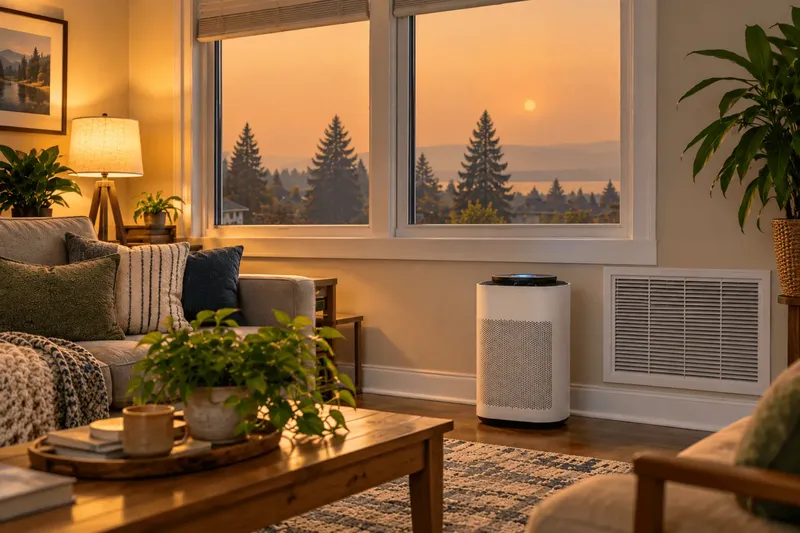
What to Do When a Federal Way Air Quality Alert Hits
Start with official guidance: check AirNow and PSCAA for stay-indoors advice. Then, at AQI 100 and above, Filterbuy recommends four steps:
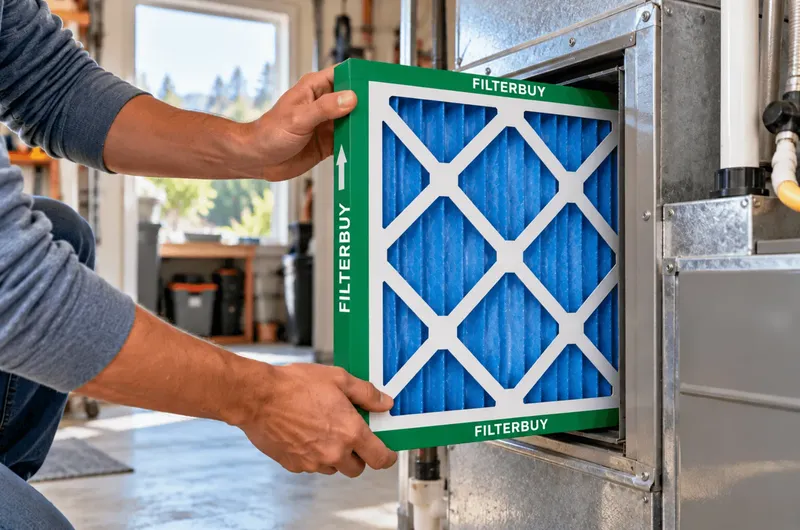
Put a MERV 13 filter in the HVAC if it runs a lower tier.
Set the thermostat fan to On. Auto only filters while heating or cooling.
Run a portable HEPA air cleaner in each occupied room, bedrooms first. If you have one unit, put it where you sleep.
Close windows and doors, and skip candles, frying, the fireplace and smoking while smoke is in.
During a long smoke event, check the filter often and replace it when it looks dark brown or black, which can be well before the normal interval. After the smoke clears, see how to recover from wildfire smoke exposure.
Filtering Smoke in a Federal Way Home Without Ducts
In apartments and homes heated by baseboards or ductless mini-splits, a portable HEPA air cleaner is the primary defense, not a supplement. Size it with EPA's cleaner-air room guidance: a smoke CADR (clean air delivery rate) of at least two-thirds of the room's square footage, so a 300 sq ft bedroom needs about 200. Skip ionizers and ozone generators; EPA advises against cleaners that produce ozone.
A DIY box fan with a MERV 13 filter is a reasonable stopgap, not a replacement for a certified unit. EPA says to use a UL- or ETL-marked fan made after 2012 and never leave an older fan running unattended. Compare MERV 13 vs. HEPA for smoke.
Filterbuy's Take: Plan for Federal Way's Two Air Seasons
Filterbuy has built air filters in the U.S. for more than a decade. Federal Way's worst air arrives in two windows, late-summer smoke and winter burn bans, so we suggest a fresh filter in early August and another before the first cold snap.
The filter already in your system matters more than the one you plan to order. Put the upgrade in before August.
The Filterbuy Team
Filterbuy auto-delivery can ship spares in your size on that schedule. Neighbor's chimney? See wood stove smoke from neighbors.
Matching Your Filter to the Federal Way AQI
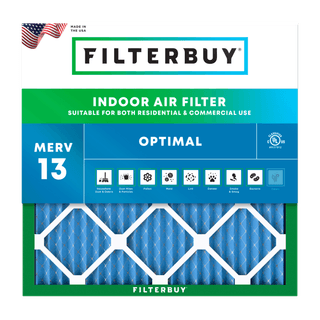
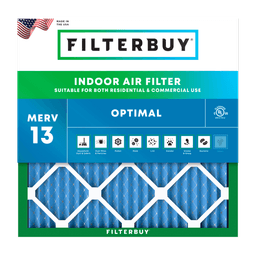
MERV 13 is the filter for wildfire smoke. EPA recommends a MERV 13 or higher filter in central HVAC systems during smoke events. Filterbuy's action line for the switch is AQI 100. More in our best MERV filter for wildfire smoke guide.
Which Filter Federal Way AQI Levels Call For
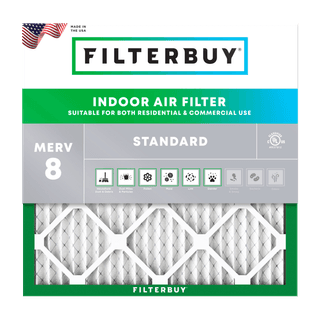
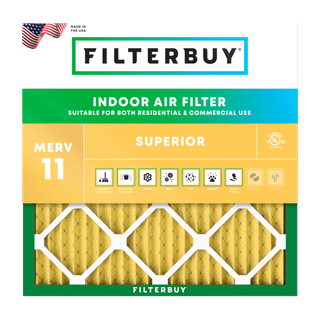
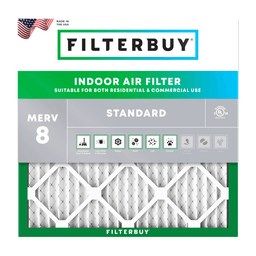
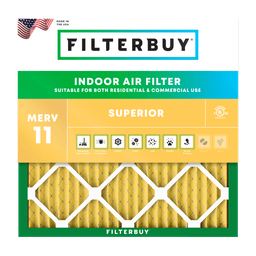
Pleated filters capture particles, not odors; for smoke smell, see Filterbuy Odor Eliminator filters. Confirm fit as you would a size, with your HVAC manual or a technician. Shop MERV 8 air filters, MERV 11 air filters or MERV 13 air filters, all made in the USA.
Supporting Statistics
12 days of harmful air in the Puget Sound region, September 8–18, 2020
Highest fine-particle levels since monitoring began in 1999.
Source: Puget Sound Clean Air Agency
8th worst in the U.S. for short-term particle pollution (Seattle-Tacoma, 2022–2024)
Year-round rank: 75th.
Source: American Lung Association
35.4 µg/m³: the top of EPA's Moderate range for 24-hour PM2.5
In effect since May 6, 2024.
Source: U.S. EPA AQI fact sheet
Frequently Asked Questions
What Is the Air Quality in Federal Way Today?
Federal Way's current AQI, color category and main pollutant appear on the live map at the top of this page.
Is the Air Quality Bad in Federal Way Today?
Check the live map above. In Federal Way, an AQI above 100 (orange) is unhealthy for sensitive groups, and above 150 (red) it is unhealthy for everyone.
Where Is the Closest Air Quality Monitor to Federal Way?
The nearest regulatory PM2.5 monitors are in Kent (S 236th St) and SeaTac (Sunset Park).
Why Does Federal Way Have Burn Bans in Winter?
Cold, calm weather traps wood smoke, so PSCAA calls bans when fine particles are forecast to climb.
What MERV Filter Helps with Wildfire Smoke in Federal Way?
MERV 13. EPA recommends MERV 13 or higher in central HVAC systems during smoke events. Filterbuy tells Federal Way customers to switch at AQI 100.
Glossary
AQI (Air Quality Index): A 0 to 500 scale with six color-coded health categories.
PM2.5: Fine particles 2.5 micrometers or smaller that can reach deep into the lungs.
Puget Sound Clean Air Agency (PSCAA): The regional air agency that forecasts air quality and issues burn bans.
Burn ban: A temporary order limiting wood burning and outdoor fires during rising PM2.5.
MERV: Minimum Efficiency Reporting Value, a 1 to 16 rating of HVAC filter particle capture.
HEPA: High-efficiency particulate air filtration, used in portable air cleaners, not home HVAC systems.