
Tacoma, WA Live Wildfire Smoke Map
Get Alerts For Wildfires In Your Area
The moment a wildfire starts near you, you'll get an instant alert and simple tips to reduce your smoke exposure.
What's In The Smoke
30xSmaller than a human hair
Fine enough to reach deep into the lungs. A MERV 13 is built to capture it.
How Far It Travels


It Doesn't Stay Local
Smoke rides the wind far downwind — you can get smoky air with no fire nearby.
What To Do During A Smoke Event
Simple steps to reduce indoor exposure.
- Stay In, Close UpShut windows and doors to keep smoke out.
- Set Fan To "On"Keeps air cycling through your filter, not just when heating or cooling.
- Recirculate AirSwitch off fresh-air intake so you're not pulling smoke in.
- Run A MERV 13Built to capture the fine PM2.5 in smoke.
- Add A PurifierExtra filtration for the room you use most.
- Wear an N95 if OutsideFits snug to block fine particles — a cloth mask won't.


The Best Air Filter For Wildfire Smoke
During smoke events, the EPA recommends upgrading to a MERV 13 filter — or the highest-rated filter your system can handle — to help reduce the fine particles smoke brings indoors. MERV 13 is the level most home HVAC systems can run while still capturing PM2.5, the fine particulate that makes up the bulk of wildfire smoke.
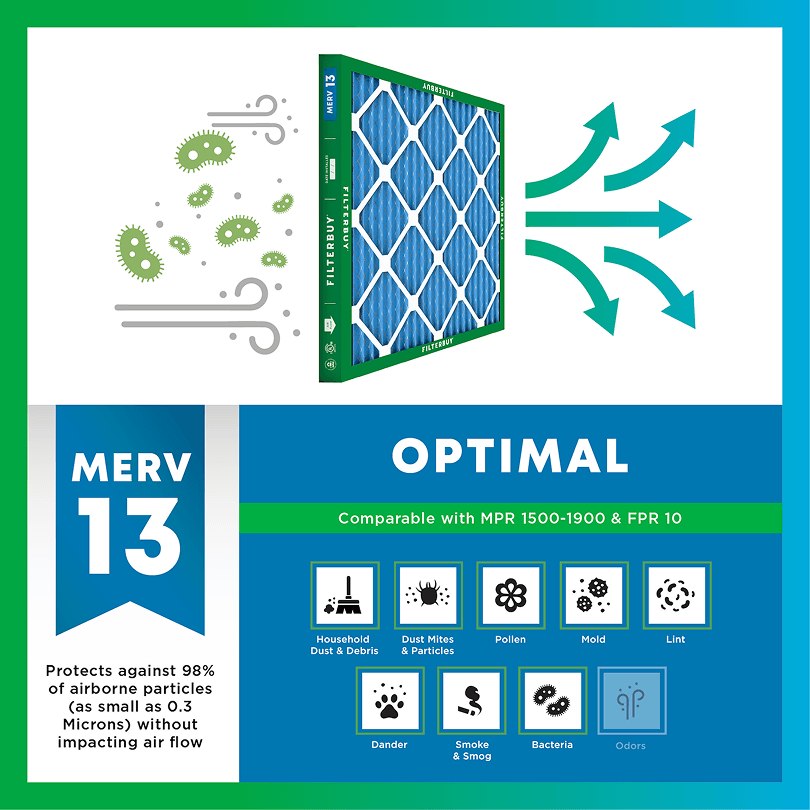
- Captures PM2.5 particles
- Blocks ash, soot, and smoke odor
- Keeps your indoor air safe—even when the outdoor air is dangerous
- Meets the EPA's recommended rating for filtering fine wildfire smoke particles.

Wildfire Smoke FAQs
Facts About Wildfires
Over 70,000 wildfires burn in the U.S. every year.
Wildfire smoke can travel 1,000+ miles, affecting states that aren't even near the blaze.
Exposure to wildfire smoke can worsen asthma, trigger heart issues, and lead to ER visits.
Indoor air can hold more fine particles during wildfire events unless it's properly filtered.
The EPA advises using MERV 13 filters or portable HEPA air cleaners during wildfire smoke events.
Don't Wait Until The Smoke's Inside.
Use the live wildfire smoke tracker and upgrade your air filters today to protect your lungs and your home.
Shop Filters For Smoke Protection
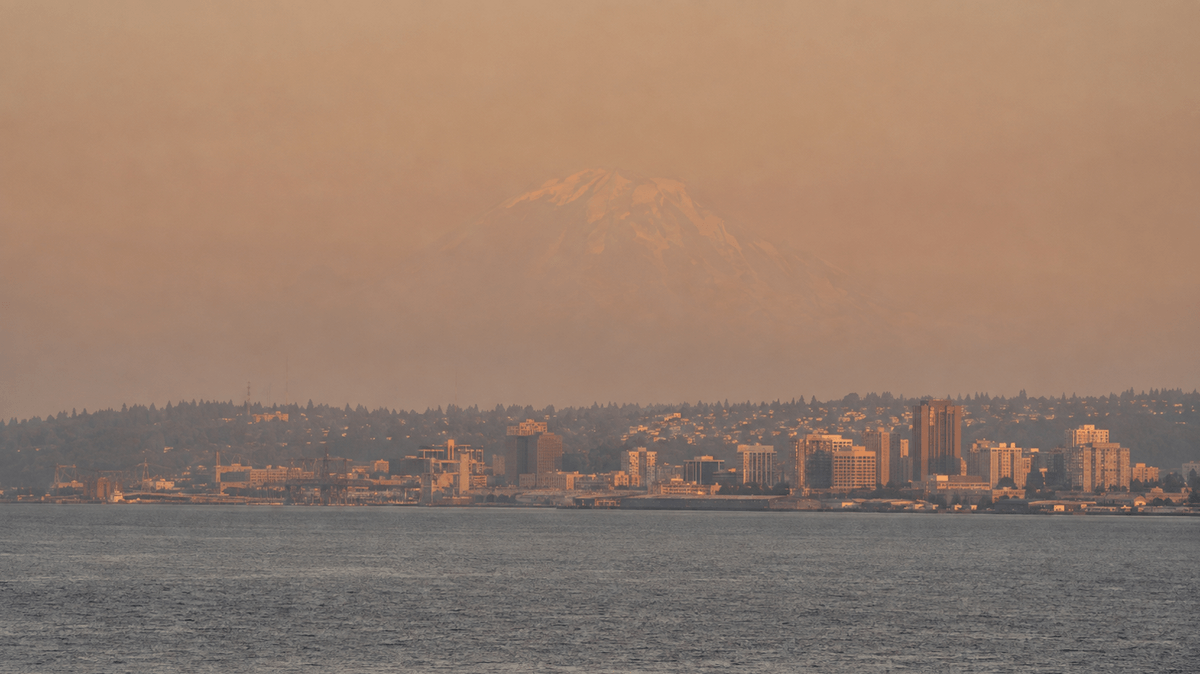
Live Tacoma, WA Forest Wildfire & Smoke Map Today: Local Air Quality Tracking & Indoor Protection Solutions
By Michelle Wan · Technically reviewed by David Clark, Licensed HVAC Technician · Published August 21, 2026 · Updated August 21, 2026
TL;DR
Check current Tacoma conditions on the AirNow Fire and Smoke Map paired with the Washington Smoke Blog outlook, since neither settles it alone. Hazy skies here often mean smoke riding well above the surface rather than unhealthy air at street level, so trust the monitor over the view. When the AQI does climb, seal the house and run a MERV 13 on recirculate.
Key Takeaways
Governor Bob Ferguson declared a statewide wildfire emergency and burn ban on August 1, 2026, halting most outdoor burning statewide through September 30. Pierce County alerts followed within days.
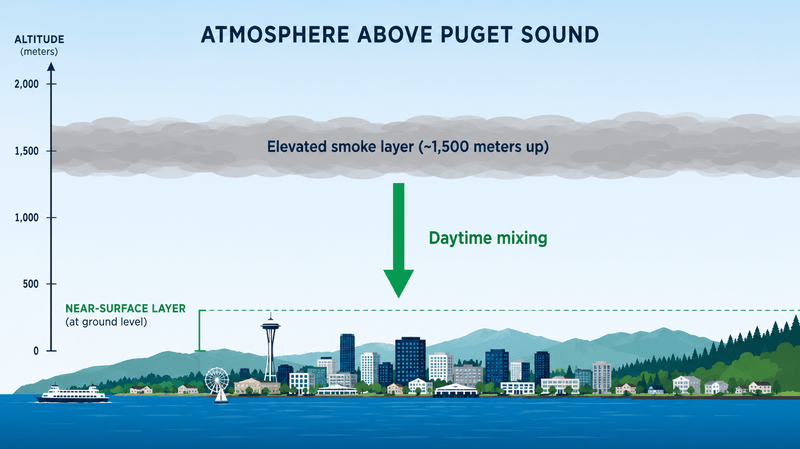
Smoke over Tacoma is frequently aloft, not at the surface. Ceilometer data on August 13, 2026 put the layer roughly 1,500 meters up.
Tacoma and Pierce County form a federal PM2.5 maintenance area, so particle levels carry a baseline before smoke arrives.
EPA recommends a MERV 13, or the highest a system safely handles, plus recirculation and one clean room.
Where To Check The Live Tacoma Wildfire And Smoke Map Right Now
Use all three, since each answers a different question. The AirNow Fire and Smoke Map puts fire detections and plumes on one screen with monitor readings, the Washington Smoke Blog adds a written outlook from state atmospheric scientists, and Puget Sound Clean Air Agency publishes the Pierce County monitors.
What Tacoma Skies Look Like Versus What The Monitors Say
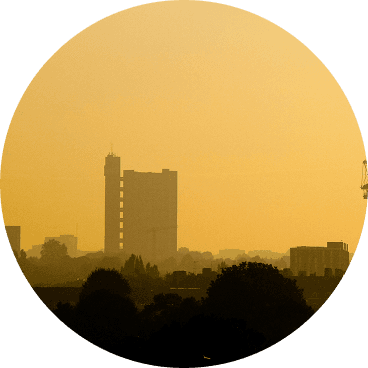
A copper sky over Commencement Bay does not mean a high AQI at street level, because much of the smoke reaching western Washington travels above the surface rather than through it. On August 13, 2026, ceilometer data placed the layer about 1,500 meters up, giving Tacoma haze and vivid sunsets while ground-level air stayed clean.
That separation is temporary. Daytime heating can pull the layer down for a few afternoon hours, which Washington Ecology forecast when it warned that smoke would mix down into the Puget Sound lowlands and issued Pierce County alerts. By evening, it usually lifts again.
The question we field most from Pacific Northwest households is not which filter to buy. It is why the sky looks apocalyptic while the AQI reads Good. Once someone understands the smoke is sitting a kilometer over their roof and has not come down yet, they stop guessing from the window and start checking the monitor.
Michelle Wan, Brand Manager and Air Quality Writer, Filterbuy
Terrain shapes this too. Smoke drains down river valleys overnight, so the Puyallup valley and foothills east of Tacoma often read higher than downtown. Toward Puyallup or Orting, check the closest monitor rather than a city average.
Why Tacoma Starts Fire Season With A Head Start On Fine Particles
Tacoma starts fire season with a fine particle burden most Puget Sound cities do not carry. The area spent years as a federal PM2.5 maintenance area under the Clean Air Act, with a second ten-year plan now finishing. Smoke lands on top of that, so your filter works on Moderate days, not only emergency days.
How To Read Your AQI Number And What To Do Inside
Each AQI band calls for a different indoor response, as our wildfire smoke and AQI guide explains. The breakpoints come from the Washington Labor and Industries wildfire smoke rule.
PM2.5 and NowCast AQI thresholds are published by the Washington State Department of Labor and Industries wildfire smoke rule. Indoor recommendations are Filterbuy guidance drawn from EPA clean room guidance and are editorial, not regulatory.
How To Protect Indoor Air In A Tacoma Home During A Smoke Event
Seal the house first, then filter what is already inside. Our walkthrough on how to keep wildfire smoke out of your house covers this room by room. The short version runs three steps.
Seal. Close windows and doors, block the gaps, and shut any fresh air intake.
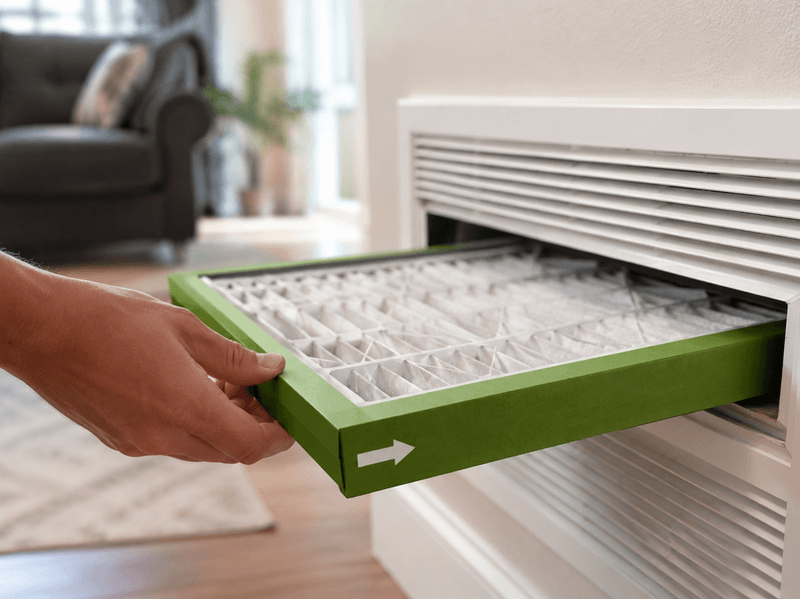
Filter. Switch the HVAC to recirculate with a snug MERV 13, then set the fan to On.
Concentrate. Pick one clean room and skip candles and frying until the haze clears.
Then use a portable air cleaner that meets Washington Department of Health recommendations, ruling out ozone and ionizer units.
Which MERV Rating Handles Wildfire Smoke
MERV 13 is the rating EPA points to for wildfire smoke in most homes, because it captures the fine PM2.5 fraction lower-rated filters let through. MERV 8 and MERV 11 suit dust and pollen but fall short of the range smoke calls for. Filterbuy has manufactured pleated filters in Talladega, Alabama, since 2013 across all three tiers in over 600 sizes.
MERV 13 is not equivalent to True HEPA. HEPA applies to portable room air cleaners, not central furnace filters.
MERV 13 is not True HEPA. HEPA belongs to portable room cleaners, while a central MERV 13 treats the whole house on every pass, a trade-off unpacked in MERV 13 versus HEPA for wildfire smoke.
When It Is Safe To Open The Windows Again In Tacoma
Reopen when onshore flow returns, not when the AQI happens to dip. Puget Sound smoke sits while a high-pressure ridge holds and winds blow from the north-northeast, then breaks when marine air pushes inland and scours the lowlands. Watching for that wind shift tells you a day ahead rather than an hour late.
Ecology attributed this season’s persistence to that ridge and north-northeast pattern, which also explains why the two halves of the state clear on different schedules. Tacoma has a marine relief valve where the Columbia Basin has none, so alerts east of the Cascades ran far longer. Onshore flow is the shift Filterbuy watches for, because it separates a two-day event from a two-week one.
Aloft and surface episodes reverse the timing. While the layer rides high, the cleanest air is overnight and early morning, before daytime heating mixes it down, and that is your window to air out. Once smoke reaches the surface, no window opens. Either way, wait for two or three consecutive hours below an AQI of 50.
Washington Department of Health puts the regional smoke season at roughly July through September, though it has started as early as May and run into October. Install a fresh MERV 13 before July, not after the first alert, and pair it with running an air purifier during wildfire season where someone sensitive sleeps.
Smoke season changed what people expect from a furnace filter. After manufacturing filters for over a decade and serving more than two million households, we hear the same thing every August from the Pacific Northwest. People want one room to feel normal again. A MERV 13 in the return, running continuously, is the simplest way there.
David Heacock, Founder and CEO, Filterbuy
Supporting Statistics
Required workplace protections in Washington begin once fine particle levels reach 20.5 micrograms per cubic meter, a NowCast AQI of 72 for PM2.5. The full threshold table appears in the Washington State Department of Labor and Industries wildfire smoke rule.
A MERV 13 or higher filter in a central HVAC system, with the fan set to On rather than Auto, is the household filtration standard set out in EPA clean room guidance for wildfire smoke events.
The U.S. Air Quality Index runs across six color-coded categories, and the NowCast value uses shorter averaging windows during a wildfire so the reading responds quickly, as explained in EPA AirNow guidance on using the Air Quality Index.
Frequently Asked Questions
Check Your Filter Size Before The Next Smoke Push Reaches Tacoma
Smoke conditions in Pierce County turn over in a single afternoon, and the worst time to learn your filter size is the morning the AQI jumps. Pull the filter from your return grille now, read the nominal size on the frame, and keep a spare. Shop MERV 13 pleated filters built in the USA, and if your size is not standard, Filterbuy cuts custom filters to any dimension.
About The Author And Reviewer
Michelle Wan is Brand Manager and Air Quality Writer at Filterbuy, where she writes about indoor air quality and filtration for homeowners. [AUTHOR INPUT NEEDED]
Reviewed by David Clark, Licensed HVAC Technician, for accuracy on airflow and filter fit.
Glossary
AQI. The EPA Air Quality Index, a 0 to 500+ scale for pollutant levels.
PM2.5. Fine particles 2.5 micrometers or smaller, the main concern in wildfire smoke.
NowCast. The weighted average AirNow uses to turn hourly PM2.5 readings into a current AQI.
MERV. Minimum Efficiency Reporting Value, the ASHRAE filter efficiency scale.
Ceilometer. A ground-based laser that measures how high a smoke layer sits.
PM2.5 Maintenance Area. An area that once violated the federal particle standard and now runs under a compliance plan.
Onshore Flow. Marine air moving inland from the coast; the pattern that usually clears Puget Sound smoke.
Subscribe to wildfire smoke alerts for Tacoma, WA, to get a heads-up before the next event reaches your area.