
Beaverton Real-Time AQI Tracker


Get Alerts For Unhealthy AQI In Your Area
When air quality in your area reaches unhealthy levels, we'll send you a quick alert, along with expert tips on how to reduce your exposure.
What's Actually In Beaverton Air Today?
What High AQI Means for Your Lungs in Beaverton
How to Read AQI
The Air Quality Index (AQI) measures how polluted the air is and how it may affect your health.
0–50 (Good): Air quality is satisfactory.
51–100 (Moderate): Acceptable, but some pollutants may pose minor concerns.
101–150 (Unhealthy for Sensitive Groups)
151–200 (Unhealthy)
201–300 (Very Unhealthy)
301+ (Hazardous)
Moderate
Still okay for most, but if you have asthma or allergies, take it easy and avoid long outdoor workouts.
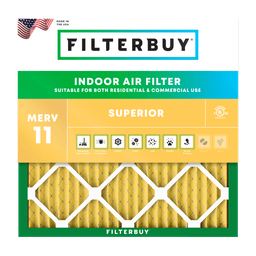
Shop MERV 11 filters→What's the Right Filter for Your AQI Level?


Check Today's Live Real Time Air Quality Index AQI Map in Beaverton, OR Now
TL;DR
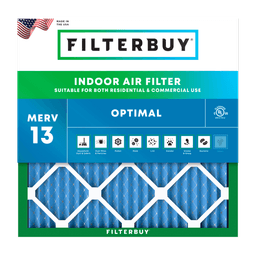
The live map above shows Beaverton's current air quality index (AQI), reported by EPA AirNow from Oregon DEQ monitors, including a site at Highland Park School. Most days are clean. The exceptions are late-summer wildfire smoke and still winter mornings when wood smoke settles into the Tualatin Valley. Once the map reaches 100, Filterbuy's advice is to close up the house, run a MERV 13 filter with the fan on and add a portable HEPA cleaner in each occupied room.
Key Takeaways
Beaverton's live AQI comes from EPA AirNow, using Oregon DEQ data.
Wildfire smoke brings Beaverton's worst air; Portland hit a record AQI of 477 in 2020.
MERV 13 captures smoke particles but not ozone, so check which pollutant the map names.
How to Read Beaverton's Live Air Quality Map
The number on the map is the U.S. AQI, a 0 to 500 scale where higher means dirtier air. AirNow converts each pollutant to that scale and reports the highest, so the pollutant beside the number is the one driving Beaverton's air that hour. Read that label first; smoke and ozone call for different moves.
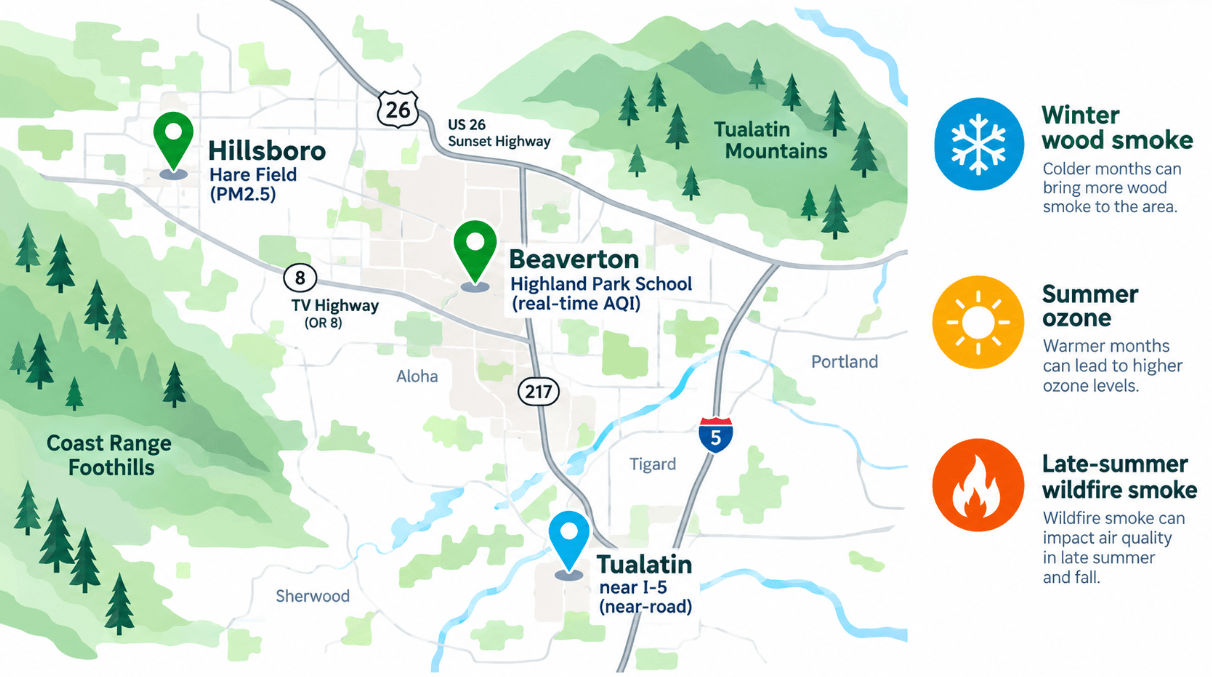
Readings come from DEQ sites listed in its monitoring network plan: a real-time AQI site at Highland Park School in Beaverton, a monitor in Hillsboro for PM2.5, the fine particles in smoke and exhaust, and a near-road station in Tualatin. To tell a local shift from a regional one, check the Portland air quality map and the Oregon air quality map.
Beaverton AQI Levels and What Each One Asks of You
Filterbuy's action line is AQI 100, the top of the yellow band, because we'd rather households act before smoke settles in. At 100, switch the HVAC to a MERV 13 filter, set the fan to On, run a portable HEPA air cleaner in each occupied room and close the house up.
| AQI on the map | EPA category | What to do in Beaverton |
|---|---|---|
| 0–50 | Good | Open windows and air out the house. |
| 51–100 | Moderate | Normal plans. Get MERV 13 in before smoke arrives and keep a spare. |
| 101–150 | Unhealthy for Sensitive Groups | MERV 13, fan On, HEPA cleaner in each occupied room, house closed. |
| 151–200 | Unhealthy | Same steps; inspect the filter more often and keep spares. |
| 201–300 | Very Unhealthy | AirNow and DEQ guidance first; keep a clean room. Filtration is one layer. |
| 301+ | Hazardous | Official guidance leads; 211 lists clean-air shelters. Filtration only supports it. |
If you have asthma, COPD or heart disease, follow your doctor's plan and official guidance.
Why the Beaverton Number Can Lag the Sky Outside
When the sky looks smokier than the map, Filterbuy goes by the sky. For particles, AirNow's NowCast weights the last 12 hours of readings, so when smoke drifts in over the Coast Range, or a marine push clears it out, the number needs a few hours to catch up.
Winter brings a different gap. On still nights, fireplace smoke can pool in low spots that no monitor covers, so if you smell smoke, close the windows.
Is Beaverton's Air Safe to Breathe Today?
That depends on the live number above. EPA's guidance is that above 100, children, adults over 65 and people with asthma, COPD or heart disease should limit long or hard time outdoors. Above 150, everyone should cut back, whether it's a Fanno Creek Trail run or Saturday soccer.
Where Beaverton Gets Air Advisories, Red Days and Forecasts
Oregon DEQ issues air quality advisories for the Portland metro, for summer ozone, smoke and stagnant winter air. Sign up for DEQ text or email alerts; the free OregonAIR app shows active advisories, and the Oregon Smoke Blog posts smoke forecasts.
Washington County adds its own red day wood smoke program, which runs November 1 to March 1. On a red day, fireplaces and wood stoves are off limits in unincorporated areas unless a household is exempt. Hillsboro and Cornelius have matching rules but Beaverton doesn't, so inside city limits skipping the fire is voluntary. Get alerts through PublicAlerts or the Air Quality Status Line at 503-846-8744.
How Air Differs Across Beaverton Neighborhoods
Beaverton's ZIP codes, including 97005, 97006, 97007, 97008 and 97078, share one airshed, so smoke and ozone usually reach them all at once. Homes close to OR 217, US 26 or TV Highway sit nearer to exhaust than any monitor does, and DEQ's Portland Air Toxics Solutions study named engines and residential wood burning as the metro's main air toxics risks. Filterbuy's founder sees the same pattern across the homes we serve:
For a street-level view, AirNow's Fire and Smoke Map layers in EPA-corrected PurpleAir sensors.
What's in Beaverton's Air Through the Year
PM2.5 is fine particulate from wildfire smoke, wood stoves and diesel exhaust, and once it slips indoors it lingers until a filter captures it. Ground-level ozone forms when sunlight reacts with emissions on hot, still days, then breaks down indoors fairly quickly, so closing up helps more than any filter.
| Season | What to watch | Household move |
|---|---|---|
| Winter (Nov–Feb) | Wood smoke trapped on cold, still mornings | Skip the fireplace on red days |
| Spring (Mar–May) | Mostly clean air; pollen is not in the AQI | Swap in a fresh filter |
| Summer (Jun–Aug) | Ozone on hot afternoons | Exercise early in the day |
| Late summer (Jul–Sep) | Wildfire smoke from Oregon and Washington fires | MERV 13 at AQI 100; HEPA cleaner per room |
Typical patterns, not forecasts.
When Wildfire Smoke Settles Over the Tualatin Valley
Portland hit an AQI of 477 on September 13, 2020, per the Lane Regional Air Protection Agency. DEQ put Washington County under a smoke advisory on August 3, 2026, and by August 5 Portland averaged an AQI of 160 and briefly ranked worst among world cities on IQAir, OPB reported.
When smoke arrives, start with AirNow, DEQ and county guidance, then track the plume on the Portland wildfire smoke map or the Oregon wildfire smoke map. Inside the house, Filterbuy recommends this order:
1. Install a MERV 13 filter once the map reaches 100.
2. Set the thermostat fan to On so air keeps passing through the filter.
3. Run a portable HEPA air cleaner in each occupied room, bedrooms first.
4. Keep doors and windows shut, and skip candles, frying, vacuuming and smoking.
The two layers do different jobs: MERV 13 treats the whole house, while a portable unit cleans one room harder.
Check the filter during smoke events. EPA advises replacing it once it looks dark brown or black, which can be well before the usual interval, so keep spares on hand.
What If Your Beaverton Home Has No Ducts?
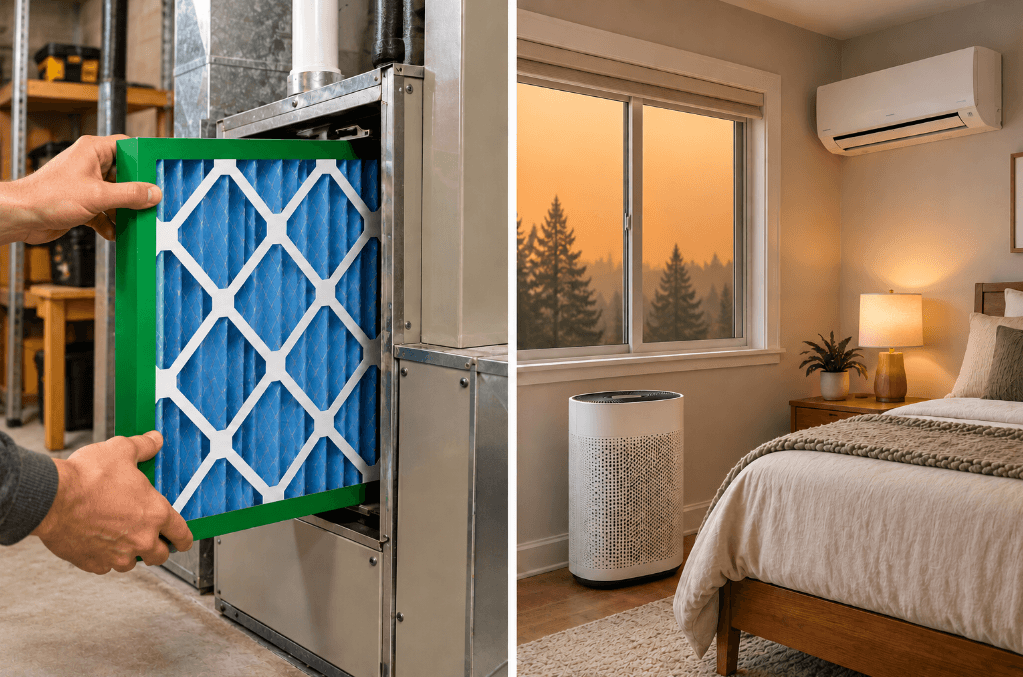
No ducts, no filter slot. In homes that rely on ductless heat pumps, baseboard heat or window units, a portable HEPA air cleaner becomes the main smoke defense. Filterbuy doesn't sell portable cleaners, so this advice runs against our own interest. Skip any model that produces ozone, which EPA advises against. EPA advises a smoke CADR of at least two-thirds of the room's square footage, roughly 200 for a 300-square-foot bedroom. Mini-split mesh filters are built for pet hair and dust, so a ductless system still needs a portable cleaner.
Without central air, hot, smoky days are hardest. DEQ suggests keeping windows shut, running any AC on recirculate and, if the house gets too hot, going somewhere cooler; 211 lists clean-air sites. During the August 2026 smoke, Washington County added shelter space in Hillsboro and Tigard, OPB reported.
Matching Your Filter to Beaverton's AQI
MERV 13 is the filter for wildfire smoke, and it's the part Filterbuy makes. EPA recommends MERV 13 or higher in central systems during smoke events. Filterbuy's rule is to make that switch at AQI 100. Most furnaces and HVAC systems can accommodate MERV 13 without equipment problems when the filter is replaced often, EPA notes, so a normal fit check of size and your HVAC manual is all most homes need.
| AQI on the map | Filter | Best for |
|---|---|---|
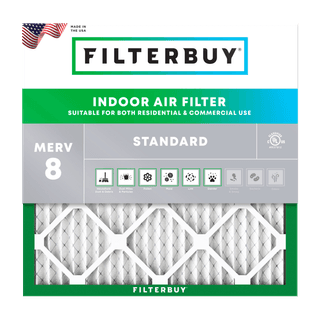
| 0–50 | MERV 8 | Everyday dust and lint |
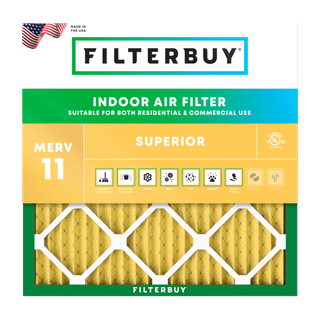
| 51–99 | MERV 11 | Finer dust, pollen and pet dander |
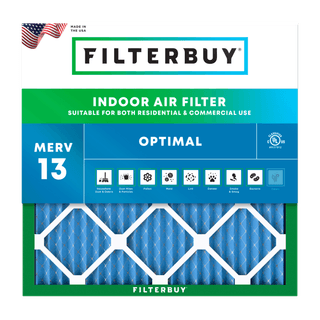
| 100+ | MERV 13 | Wildfire smoke and other fine particles |
HVAC filters capture particles, not ozone gas.
Shop Filterbuy MERV 8, MERV 11 or MERV 13 air filters, see choosing a MERV rating, or start an air filter subscription.
The Wildfire Math Behind Beaverton's Air
As a U.S. filter manufacturer, Filterbuy reads Beaverton's numbers as a smoke problem. Wildfire days raised the metro's 2020 to 2022 PM2.5 design value by about 24%, per Oregon DEQ's network plan. So readiness matters most: a MERV 13 on the shelf before July does more than maximum filtration all year. Our sky check tells Beaverton's three kinds of bad air apart:
Hazy sky or a campfire smell in summer: smoke. Close up and run MERV 13.
Clear sky on a hot afternoon: probably ozone. Go out early, since a filter adds little here.
Cold, still morning with fireplace smell: trapped wood smoke. Skip your own fire until the air mixes.
"I hear the same assumption from homeowners near highways and industrial parks: they think changing their filter more often will fix a high pollution problem. The rating matters far more than the schedule. A fresh MERV 8 filter still lets most fine particles through, while a MERV 13 filter catches far more of them."
- Michelle Wan, Brand Manager and Air Quality Writer, Filterbuy
Supporting Statistics
1. AQI 477 in Portland, Sept. 13, 2020
Triple the 2017 record; smoke sets Beaverton's ceiling.
2. D for ozone in 2026
Metro ranked 84th worst for ozone.
Source: American Lung Association
3. PM2.5: 8.8 vs. 7.1 µg/m³
2020–2022 level with vs. without wildfire days, a 24% gap.
Frequently Asked Questions
What is the air quality in Beaverton today?
The live map at the top of this page shows Beaverton's current AQI, its color and the pollutant driving it, updated hourly from EPA AirNow.
Is the air quality bad in Beaverton today?
Check the live map's color. Green and yellow are fine for most people, while orange and above call for cutting back outdoors.
What PM2.5 level is unhealthy in Beaverton?
Under EPA's current AQI breakpoints, a 24-hour PM2.5 average of 35.5 µg/m³ or more reaches AQI 101, the start of orange. The live map shows the current reading.
Can I use my fireplace in Beaverton tonight?
Between November 1 and March 1, check Washington County's red day status first. Inside Beaverton, skipping the fire on a red day is voluntary. Pellet stoves are never restricted.
Why does Beaverton's air get worse on winter mornings?
On cold, calm nights, a layer of warm air can cap the valley and hold wood smoke near the ground.
Glossary
AQI: EPA's 0 to 500 air quality index, with six color-coded categories.
NowCast: AirNow's current-AQI method; for particles it weights the last 12 hours.
PM2.5: Fine particles 2.5 micrometers or smaller, found in smoke and exhaust.
Ground-level ozone: A gas formed when sunlight reacts with emissions on hot days.
Oregon DEQ: Oregon's environmental agency, which runs the state's air monitors.
Red day: A Washington County winter alert to stop wood burning.
MERV: A 1 to 16 rating of how well an HVAC filter captures particles.
HEPA: High-efficiency particulate air filtration, used in portable cleaners.
CADR: Clean Air Delivery Rate, a portable cleaner's filtered airflow.