
Fort Wayne Real-Time AQI Tracker


Get Alerts For Unhealthy AQI In Your Area
When air quality in your area reaches unhealthy levels, we'll send you a quick alert, along with expert tips on how to reduce your exposure.
What's Actually In Fort Wayne Air Today?
What High AQI Means for Your Lungs in Fort Wayne
How to Read AQI
The Air Quality Index (AQI) measures how polluted the air is and how it may affect your health.
0–50 (Good): Air quality is satisfactory.
51–100 (Moderate): Acceptable, but some pollutants may pose minor concerns.
101–150 (Unhealthy for Sensitive Groups)
151–200 (Unhealthy)
201–300 (Very Unhealthy)
301+ (Hazardous)
Moderate
Still okay for most, but if you have asthma or allergies, take it easy and avoid long outdoor workouts.
Shop MERV 11 filters→What's the Right Filter for Your AQI Level?
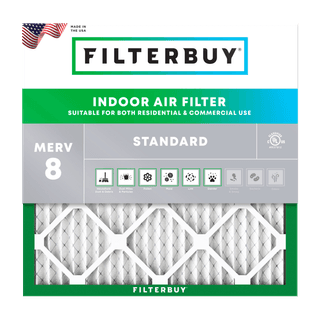
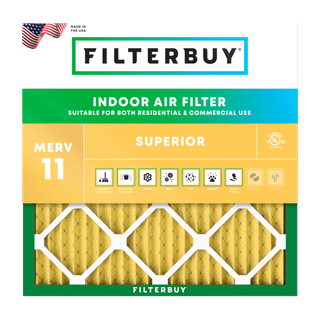
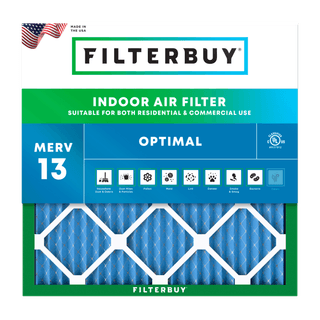

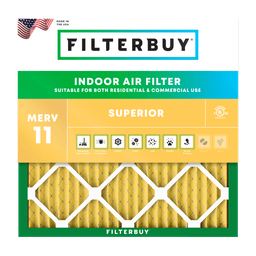
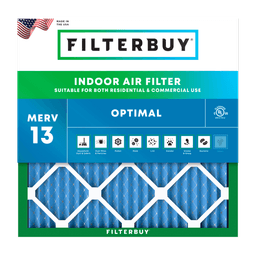


Check Today's Live Real Time Air Quality Index AQI Map in Fort Wayne, IN Now
TL;DR
The live AQI map on this page shows Fort Wayne's current air quality. Readings of 0–50 are Good. Above 100, children, older adults, and anyone with asthma, COPD, or heart disease should scale back time outdoors. Summer ozone and PM2.5, the tiny particles in smoke and exhaust, drive most of Fort Wayne's air pollution swings, while Canadian wildfire smoke now brings the worst days. At AQI 100, Filterbuy's action line, put in a MERV 13 filter and set your thermostat fan to On.
Key Takeaways
Fort Wayne's official AQI rests on two IDEM monitors, and only the one on Coliseum Boulevard measures PM2.5.
Recent smoke alerts for Fort Wayne all fell between early June and early August.
Ozone breaks down indoors, but PM2.5 lingers, so smoke days call for filtration.
Reading the Fort Wayne AQI Map: What Today's Colors Tell You
The map color-codes Fort Wayne's current reading to the six official EPA AQI categories, so the color tells you what to do before the number does. It also names the pollutant behind the reading.
When we pulled the monitor list for this page, the network turned out smaller than most people would guess. IDEM's 2026 monitoring network plan lists two active Allen County sites. The station at 707 N. Coliseum Blvd. has measured ozone and PM2.5 continuously since October 2023, and the one at Leo High School, northeast of the city, measures ozone only. In Aboite, Waynedale, or New Haven, treat the map as a county-wide signal.
What Each AQI Range Means for Fort Wayne Families
The U.S. AQI runs 0 to 500 across six categories. Categories and precautions follow EPA AirNow guidance.
| AQI | Category | When Fort Wayne Sees It | What To Do |
|---|---|---|---|
| 0–50 | Good | Breezy days after a cold front clears the region | Normal activity for everyone |
| 51–100 | Moderate | Warm, humid days and light haze | Fine for most; unusually sensitive people watch for symptoms |
| 101–150 | Unhealthy for Sensitive Groups | Hot, still summer afternoons and lighter smoke; the range that typically prompts an IDEM Action Day | Children, adults over 65, and people with asthma, COPD, or heart disease shorten outdoor exertion |
| 151–200 | Unhealthy | Heavier wildfire smoke | Everyone cuts back. Keep the AQI 100 steps in place and inspect the filter more often |
| 201–300 | Very Unhealthy | Reached across northern Indiana on July 16, 2026 | Follow AirNow and IDEM guidance first. Stay in your cleanest room; filtration is only one layer |
| 301+ | Hazardous | Reached in northeast Indiana on July 17, 2026 | Stay indoors; follow IDEM and National Weather Service guidance |
AQI 100 is Filterbuy's action line. The EPA's orange category starts at 101. We tell customers to move one step early, at 100. Check AirNow and IDEM guidance first, then at AQI 100 or higher:
Put a MERV 13 filter in your HVAC system.
Switch the thermostat fan from Auto to On so the system filters all day.
Run a portable HEPA air cleaner in each occupied room, bedrooms first.
Close windows and doors, and skip candles, frying, and smoking indoors.
Why the Fort Wayne AQI Can Lag Behind the Haze You See
If the sky looks gray while the dial still reads yellow, the monitor isn't broken. The EPA reports the current AQI as a NowCast, a weighted average of up to 12 recent hours, so the number trails a fast-moving smoke plume. A single county PM2.5 monitor can also miss pockets of smoke.
Is Fort Wayne's Air Safe to Breathe Today?
That depends on the map. In orange (101–150), people with asthma, COPD, or heart disease, plus children and adults over 65, should limit time outdoors; in red and above, everyone should. If you have a diagnosed condition, follow your doctor's action plan and official guidance first.
Fort Wayne Air Quality Forecasts and Action Days: Where to Check
For tomorrow's outlook, check IDEM SmogWatch, which issues an Air Quality Action Day for the Northeast Indiana region whenever ozone or PM2.5 is forecast to reach unhealthy levels. The National Weather Service in Northern Indiana passes these along as Air Quality Alerts, and AirNow's EnviroFlash emails them free.
Every Action Day names its pollutant, and that tells you what to do at home.
| Action Day For | Usual Cause | Best Home Response |
|---|---|---|
| Ozone | Hot, sunny, still afternoons | Close windows in the afternoon and run the AC; a pleated filter won't capture ozone gas. Delay refueling and mowing until after 7 p.m., per IDEM. |
| PM2.5 | Wildfire smoke, stagnant air | Follow the AQI 100 steps above and inspect the filter often. |
What's Actually in Fort Wayne's Air: Ozone, PM2.5, and Traffic
On most bad-air days in Fort Wayne, the culprit is ground-level ozone or fine particulate. Ozone forms when sunlight cooks vehicle and industrial exhaust on hot, still afternoons. PM2.5 refers to particles roughly a thirtieth the width of a human hair, and here they come mainly from combustion and wildfire smoke.
EPA redesignated Allen County to attainment of the eight-hour ozone standard in January 2007, but ozone still flares. IDEM's 2025 ozone data shows the Coliseum Boulevard monitor hitting the 71 ppb Action Day threshold on three days that year.
Traffic adds to the mix along I-69, the I-469 beltway, and US 24 and US 30 through New Haven.
How Fort Wayne's Air Quality Compares With Other Metros
In the American Lung Association's 2025 State of the Air report, Allen County's grade fell from a B to a D, and the metro ranked 92nd worst of 228 for high ozone days, mid-pack nationally.
We checked the newer numbers ourselves. For 2022–2024, the years the 2026 report covers, IDEM's network plan puts Fort Wayne under all three federal standards: ozone at 0.069 ppm (standard 0.070), annual PM2.5 at 8.1 µg/m³ (standard 9.0), and daily PM2.5 at 23 µg/m³ (standard 35). Compare nearby cities on Filterbuy's Indiana air quality map or the Indianapolis air quality map.
Canadian Wildfire Smoke in Fort Wayne: What to Do When It Rolls In
Fort Wayne's worst air now comes from fires hundreds of miles north in Canada. We lined up the recent smoke alerts that named Fort Wayne:
| When | What Happened |
|---|---|
| July 16–17, 2026 | Very Unhealthy PM2.5 across northern Indiana, then Hazardous levels, the region's worst since 1980 |
| Aug. 1–3, 2025 | Smoke Action Day extended through the weekend |
| June 5–6, 2025 | Action Day as Canadian smoke raised fine particles |
| June 19–21, 2023 | Action Days for lingering smoke, then ozone |
Every episode on the list fell between early June and early August, and each lasted at least two days. That makes Memorial Day a good deadline for stocking filters.
When smoke does move in, start with official guidance. Check AirNow and IDEM SmogWatch, and follow any advice to stay in, relocate, or evacuate. Then:
Work through the four AQI 100 steps above.
Check the filter often, and replace it when it looks dark brown or black. Smoke can load it well before the normal interval, so keep spares on hand.
Skip hard outdoor exercise.
Follow the plume on Filterbuy's Fort Wayne wildfire and smoke map, and see CDC wildfire smoke guidance for the health side.

Which Filter Your Fort Wayne AQI Reading Calls For
Here is how Filterbuy matches a filter to the map. The EPA recommends a filter rated MERV 13 or higher in the central system during smoke events. Filterbuy's trigger for that switch is AQI 100.
| AQI ON THE MAP | FILTER | WHAT TO DO |
|---|---|---|
| 0–50 (Good) | MERV 8 or MERV 11 | Everyday filtration; replace on your normal schedule |
| 51–99 (Moderate) | MERV 8 or MERV 11 | Keep a MERV 13 in your size on the shelf before smoke season |
| 100 and up (Filterbuy's action line) | MERV 13 | Install it, set the fan to On, and add HEPA cleaners room by room |
Pleated filters capture particles, and smoke odor is a gas. For odors, look at Filterbuy's Odor Eliminator line.
According to the EPA, most furnaces and HVAC systems can run MERV 13 without equipment problems as long as the filter is replaced often.
Apartments and homes with window units or boiler heat have no whole-home layer, so a portable HEPA air cleaner in each occupied room is the main defense. The EPA's sizing rule calls for a smoke CADR of at least two-thirds of the room's square footage, so a 300-square-foot bedroom needs a smoke CADR of about 200. Filterbuy doesn't make portable purifiers, and we still recommend them.
What a Filter Manufacturer Sees in Fort Wayne's Numbers
Filterbuy has made air filters in U.S. plants since 2013. Two things stand out to us in Fort Wayne's data:
Fort Wayne's worst day is no longer an ozone day. The record air of July 2026 was smoke, which means particulate, which means filtration.
The forecast gives you an ordering window. Action Days are forecast a day ahead. We treat the season's first Action Day as a reminder to check the filter, not a scramble to buy one.
“The pattern we see across the Midwest is not people choosing the wrong filter. It is people choosing the right one mid-event, when the useful window closed a week earlier.”
David Heacock, Founder and CEO, Filterbuy
Supporting Statistics
Three numbers behind Filterbuy's recommendations:
1. 1 in 9 Indiana adults, roughly 746,000 people, has asthma.
• Only 1 in 3 of them uses an air cleaner at home.
Source: Indiana Department of Health, 2025
2. Smoke days drove asthma ER visits up 17% in 2023.
• Indiana's region logged 172 extra visits in one day.
Source: CDC MMWR, 2023
3. Closing up alone leaves indoor PM2.5 at 55–60% of outdoor levels during smoke.
Source: U.S. EPA
Frequently Asked Questions
What is the air quality in Fort Wayne today?
Filterbuy's live AQI map at the top of this page shows Fort Wayne's reading right now, color-coded to the EPA's six categories.
Is the air quality bad in Fort Wayne today?
Look at the map's color. Orange (101–150) means sensitive groups should limit outdoor exertion, and red (151–200) or higher means everyone should cut back.
What is Fort Wayne's PM2.5 level today?
The live map shows the current PM2.5 reading, the pollutant that usually drives Fort Wayne's AQI during smoke.
What MERV rating do I need for wildfire smoke in Fort Wayne?
MERV 13. The EPA recommends a filter rated MERV 13 or higher in the central system during smoke events. Filterbuy tells customers to make that switch at AQI 100.
Why does it look hazy when Fort Wayne's AQI says Moderate?
The AQI is a NowCast weighted toward recent hours, so it lags fast-moving smoke, and one PM2.5 monitor can miss a plume. When your eyes and the number disagree, check the AirNow Fire and Smoke Map.
Glossary
AQI (Air Quality Index): The EPA's 0-to-500 pollution scale, from Good (0–50) to Hazardous (301+).
PM2.5: Fine particulate 2.5 micrometers or smaller, the main pollutant in wildfire smoke.
Air Quality Action Day: An IDEM advisory issued when ozone or PM2.5 is forecast to reach unhealthy levels in a region.
MERV: Minimum Efficiency Reporting Value, the 1-to-16 scale for how well an HVAC filter captures particles.
HEPA: High-Efficiency Particulate Air, a standard capturing 99.97 percent of 0.3-micron particles. It belongs in portable air cleaners, not furnace slots.