
When Should You Turn On The Heat? Timing And A First-Run Checklist
November 11, 2026
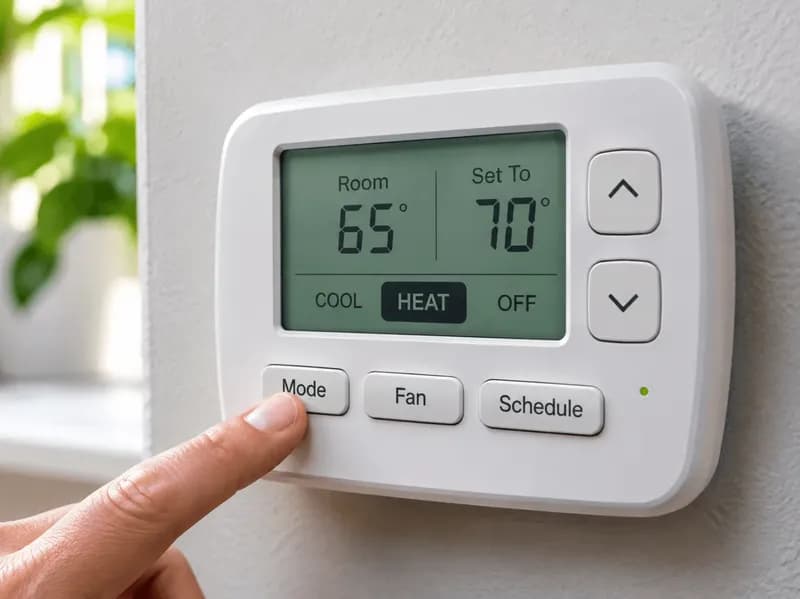
Turn on the heat once outdoor lows stay in the 50s °F for several nights and your home keeps slipping below about 64°F to 68°F. For most of the U.S., that shift arrives in October or November.
Before the first heating run, put in a fresh air filter. A clean filter lets your furnace or heat pump move air freely. Not sure which filter is right for your home? Take the quick match quiz below.
Fast, free 2-day delivery to most U.S. states.
The Filterbuy Three-Night Rule
When lows stay in the 50s °F, it's time for heat.
Night 1
Low: 50s °F
Night 2
Low: 50s °F
Night 3
Low: 50s °F
Or three mornings below your comfort setting
Then do this, in order
1. Swap the filter
Before the first run
2. Switch to Heat
3–5°F above room temp
Most U.S. homes reach this in October or November.
Find Your Filter Match
Answer a few quick questions and we'll match you to the right MERV rating for your home.
Knowing when to turn on heat comes down to two cues. Most homes are ready once indoor temperatures keep slipping below about 64°F to 68°F and outdoor lows have settled into the 50s °F for several nights in a row. For much of the U.S., that shift arrives in October or November. Before the first heating run, put in a fresh air filter and give the system a short test on a mild day.
TL;DR
Turn on the heat when your home can no longer hold a comfortable temperature on its own. That usually happens once nights stay in the 50s °F and indoor readings drop below the mid-60s. Swap in a fresh air filter first, then set the thermostat to Heat a few degrees above room temperature.
Key Takeaways
Indoor readings that stay below about 64°F to 68°F are the clearest sign it is time for heat.
Outdoors, several nights in the 50s °F are the most common trigger.
Most U.S. homes start heating in October or November, sooner in northern and mountain areas.
A fresh HVAC air filter before the first heating run helps a furnace or heat pump move air freely.
If the heat will not start, check the thermostat and furnace switch before calling for service.
When Should You Turn On The Heat?
Turn on the heat when your home can no longer stay comfortable without it. A drafty older home may need heat weeks before a well-insulated one, and homes with infants or older adults should switch on sooner. The National Institute on Aging's cold weather safety guidance for older adults recommends keeping the heat at 68°F or higher.
Indoor Temperature Cues
Watch for these signs:
The thermostat reads below 64°F in the morning, and the house never warms up by midday.
People reach for blankets or space heaters during ordinary daytime hours.
Floors and exterior walls feel cold, especially in rooms over the garage.
For a firm benchmark, New York City heat season rules require rental buildings to stay at 68°F or warmer during the day whenever it drops below 55°F outside, and at 62°F or warmer overnight, from October 1 through May 31.
At What Outside Temperature Should You Turn On The Heat?
Many homes need heat once lows settle in the 50s °F and daytime highs stop reaching the mid-60s °F. One cool night rarely calls for the furnace, but several in a row leave the house unable to recover.
The Filterbuy Three-Night Rule
Filterbuy uses a simple three-night test. If outdoor lows stay in the 50s °F for three nights in a row, or your home starts three mornings in a row below your comfort setting, switch to heat.
What Month Do Most People Turn On The Heat?
Most U.S. households turn on the heat in October or November. An early cold snap matters more than the calendar, so keep an eye on the Filterbuy freeze warning map and test your heat before the first predicted freeze. Climate shifts the typical window:
How To Switch Your Thermostat From Cool To Heat
To switch from Cool to Heat, change the mode to Heat, set the temperature 3°F to 5°F above the current room reading, and give the system a few minutes to respond. Most furnaces push warm air to the vents within several minutes, while heat pumps take a little longer.
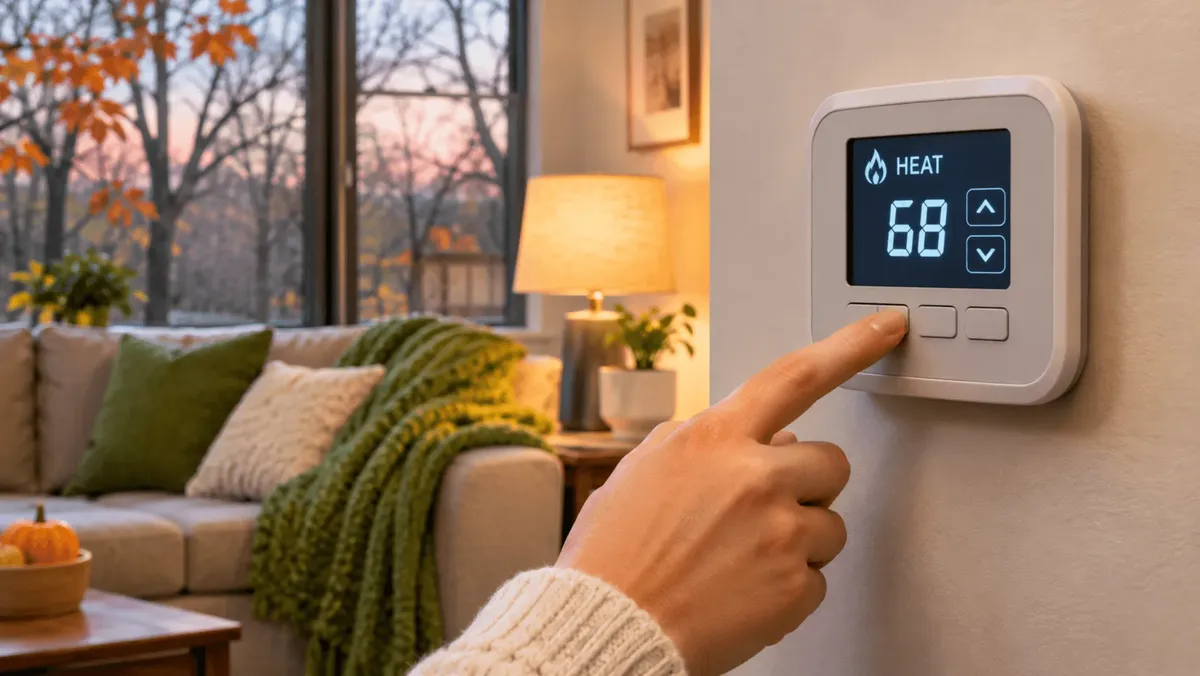
Set the mode to Off first. Pause a few minutes.
Select Heat. Press Mode or System until Heat appears, or slide the switch on older models.
Raise the set temperature. This tells the thermostat to call for heat.
Set the fan to Auto. Auto runs the blower only during heating.
Check the vents. Warm air should reach the supply registers within a few minutes.
Choose your everyday setting. The Filterbuy guide to the best thermostat setting for winter covers day and night temperatures.
Heat Pump Settings: Heat, Aux, And Em Heat
Heat pump thermostats add two backup labels, and Filterbuy HVAC Solutions explains what Em Heat means on a thermostat in more depth.
On a heat pump's first cold mornings, vent air feels warm rather than hot, and the outdoor unit may pause and steam while it defrosts. Both are normal.
First Time Turning On Heat Checklist
A short round of checks before the first heating run leaves time to fix problems in mild weather. Work through these nine steps, then run a 15 to 30 minute test.
Replace the HVAC air filter. Filterbuy puts this step first because every heating system pulls its air through the filter.
Check the thermostat batteries. A dim display usually means they need replacing.
Open supply vents and clear return grilles. Move furniture and rugs out of the airflow path.
Test smoke and carbon monoxide alarms. Carbon monoxide has no smell, which is why CPSC carbon monoxide alarm guidance calls for testing alarms monthly.
Clear the area around the furnace. U.S. Fire Administration heating fire safety tips advise keeping anything that can burn at least 3 feet from heat sources.
Check the outdoor heat pump unit. Clear away leaves and debris so the unit can pull in air.
Confirm power and fuel are on. Make sure the furnace switch is on and, for gas systems, the gas valve is open.
Run a test cycle. A light, dusty smell is common on the first run and should fade quickly. If you smell gas, leave the home and call your gas utility from outside. For any other odor, see Filterbuy's guide to what a furnace burning smell means and when to shut it off.
Book a yearly tune-up. For the full pre-season list, see Filterbuy's 7 ways to prepare your HVAC system for freezing winter weather.
What If The Heat Does Not Come On?
When the heat does not start on its first run, the cause is often a setting or switch, not a broken part. Try these checks before calling for service:
Wait five minutes. Many thermostats delay startup after a mode change.
Recheck the thermostat. It should read Heat, set above room temperature.
Check the furnace switch and breaker. The furnace switch often looks like a light switch near the unit.
Seat the furnace door panel. Many furnaces have a safety switch that keeps the system off when the blower door is loose.
Look at the filter. A badly clogged filter can cause a furnace to overheat and shut itself off.
If the system still will not start, or if it runs but blows cool air, call a licensed HVAC technician.
Why Change The Air Filter Before The First Heating Run?
At Filterbuy, we think of the first heating run as the starting line for filter season. All summer, your HVAC air filter has been catching dust and pet hair, and most systems use that same filter for heating. A clean one lets a furnace or heat pump move air freely instead of straining against a clogged one.
Once the season starts, ENERGY STAR heating and cooling guidance recommends checking the filter monthly during heavy-use months like winter and replacing it at least every three months.
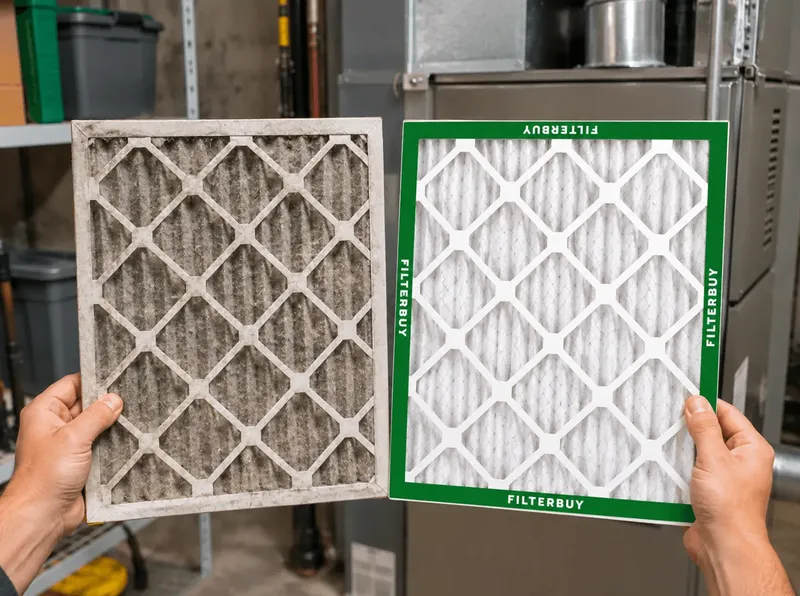
What Filterbuy Wants You To Know As A Filter Manufacturer
Order by the size printed on the frame. Labels use a rounded nominal size, so a 20x25x1 filter actually measures about 19.5 x 24.5 x 0.75 inches. Ordering tape-measure numbers can mean a poor fit. The Filterbuy HVAC filter size guide covers worn labels.
Follow the airflow arrow. The arrow on the frame should point toward the furnace or air handler.
Write the date on the frame. A marker note shows when the next change is due.
Once you know your size, shop air filters by size or order custom air filter sizes. For most homes, MERV 8 air filters are a dependable everyday choice. MERV 11 air filters and MERV 13 air filters capture finer particles, but check your HVAC system's manual before moving to a higher rating, as the EPA guide to MERV ratings advises.
Expert Insight
"I tell readers to turn on the heat when mornings stop warming up, not when the calendar says so. Switching to Heat on a mild afternoon lets problems surface before the first cold night."
Michelle Wan, Brand Manager and Air Quality Writer, Filterbuy
Supporting Statistics
47% of U.S. homes heat mainly with natural gas.
Another 42% heat with electricity, and heat pumps are helping that share grow.
Source: Electricity Use Is Becoming More Common for Residential Heating
Carbon monoxide causes more than 100,000 U.S. emergency visits a year.
It also leads to more than 14,000 hospital stays and more than 400 deaths.
Home heating equipment causes 38,881 fires a year.
These fires bring 432 deaths and 1,352 injuries a year (2019–2023 average).
They peak from December through February.
Fall is the time to clear space around the furnace and book a tune-up.
Frequently Asked Questions
What Temperature Should My House Be Before I Turn On The Heat?
Most people turn on the heat once the house stays below about 64°F to 68°F.
Is It Bad To Turn On The Heat Too Early?
No. Early heat does not harm a furnace or heat pump. It only adds energy use on mild days.
Should I Set My Thermostat To Heat Or Auto In The Fall?
Heat is the simplest choice once nights turn consistently cold. Auto switches modes on its own and suits transition weeks if the two set points sit several degrees apart.
How Long Should I Run The Heat The First Time?
Run it for 15 to 30 minutes. That confirms warm air at the vents and lets any dust odor burn off.
Do I Need To Change My Air Filter When Switching From AC To Heat?
Yes, if the filter has been in place for about three months or looks gray and dusty. Once the season is underway, see how often to change your furnace filter in winter.
Get Your Home Ready For Heat
Filterbuy makes pleated air filters in each MERV rating covered above, with fast and free 2-day delivery to most US states. With an air filter subscription, you save 5% on every order and set your own delivery schedule. Browse the Filterbuy furnace filter and winter guides.
Glossary
Carbon Monoxide (CO): A colorless, odorless gas produced when fuel burns incompletely.
Heat Pump: An electric system that moves heat indoors in winter and outdoors in summer.
HVAC Air Filter: A replaceable filter in a furnace or air handler that captures airborne particles.
MERV (Minimum Efficiency Reporting Value): A rating scale for how well an air filter captures particles, where higher numbers capture finer ones.