
Furnace Burning Smell? When It's Normal Dust and When to Shut It Off
October 7, 2026
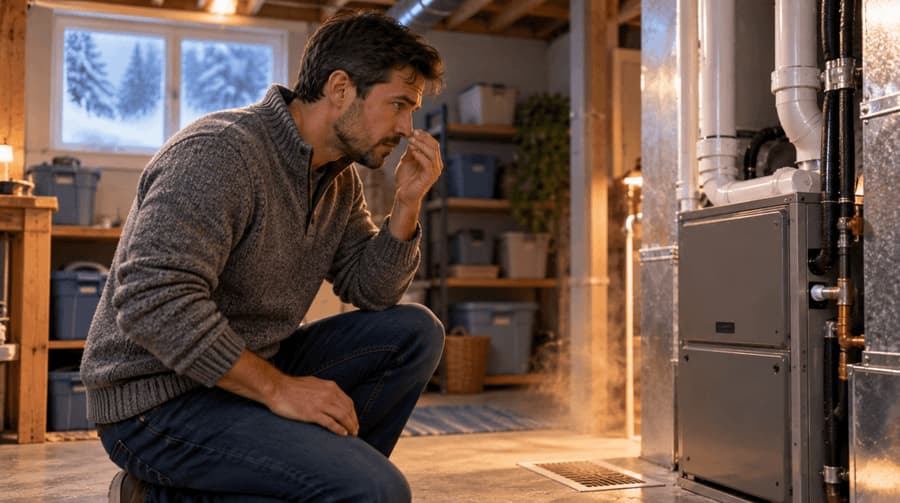
Furnace Burning Smell: Is It Normal or a Problem?
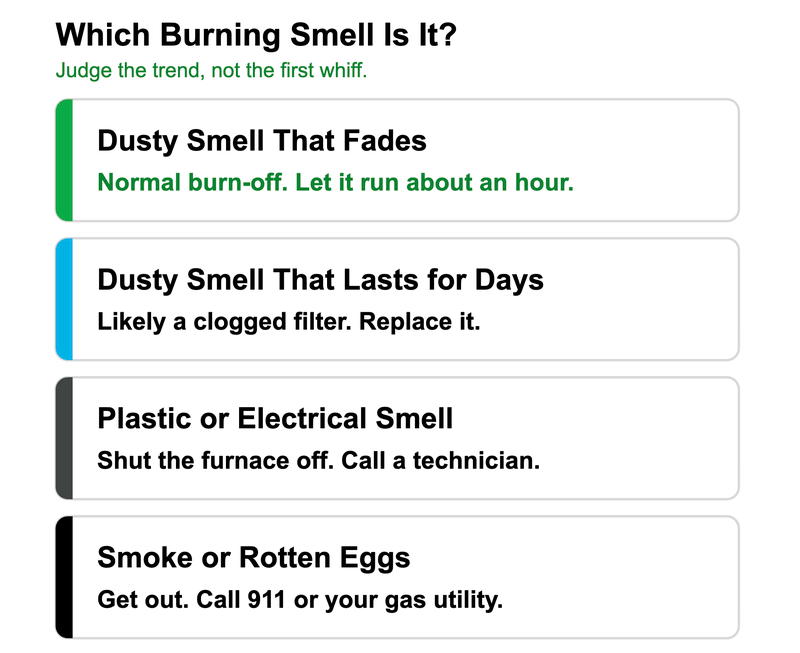
A dusty burning smell the first time your furnace runs each winter is usually normal. Summer dust is burning off the burners and heat exchanger, and the smell should fade within about an hour.
If that dusty smell keeps coming back for days, a clogged filter is the likely cause. A plastic or electrical smell is different. Turn the furnace off and call a licensed HVAC technician.
Smell smoke or rotten eggs? Leave the home first. Call 911 or your gas utility from outside.
Find Your Filter Match
A fresh filter keeps the burn-off short. Answer a few quick questions and we'll match you to the right filter.
TL;DR
A burning dust smell the first time your furnace runs each winter is usually normal. Summer dust is burning off the burners and heat exchanger, and the smell should fade within about an hour. A plastic or electrical smell is a different story. Turn the furnace off and call a licensed HVAC technician.
Key Takeaways
A dust smell on the first cold day is normal and usually clears within an hour.
If that dust smell keeps coming back for days, a clogged filter is the likely cause.
A plastic or electrical smell means shut the furnace off and call a pro.
Carbon monoxide has no smell, so trust a working CO alarm over your nose.
Is a Burning Smell From the Furnace Normal?
Usually, yes. A furnace burning smell is normal when summer dust on the burners and heat exchanger burns off at first startup, sending a dry, toasty smell through the vents for up to an hour. What matters is which way the smell is heading. Filterbuy's rule of thumb is to judge the trend, not the first whiff: a normal burn-off smell fades with every cycle, while a problem smell holds steady or grows.
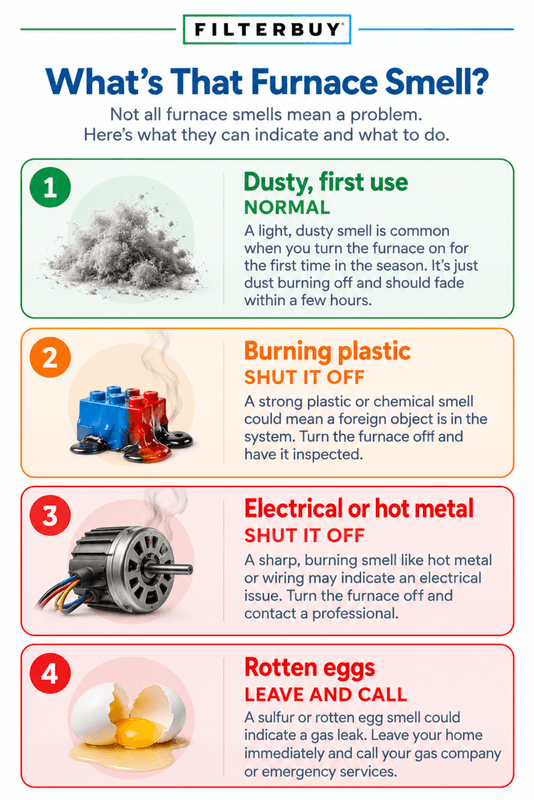
Furnace Smell Guide: What Each Burning Smell Means
Not every burning smell is dust. Act on the "Shut off?" column first.
If you smell smoke or rotten eggs, leave the home first and call 911 or your gas utility from outside.
One honest note from a filter maker: only the first two rows are filter problems. A new filter won't fix a plastic, electrical, gas, or oil smell, and Filterbuy would rather tell you that than sell you one.
Read the Smell Together With What the Furnace Is Doing
What the furnace is doing narrows the cause.
Why Does My Furnace Smell Like Burning Dust?
If a dusty smell sticks around past the first day, look at the filter first. A clogged filter cuts airflow, so the furnace runs hotter until the heat trips the high-limit switch and shuts off the burners. It is the pattern we see most often in January: a furnace that "just stopped working" wasn't broken at all. It overheated behind a clogged filter and shut itself down to stay safe.
Filterbuy recommends you replace a pleated furnace filter every 90 days and check it once a month. Winter shortens that window: a filter that lasts 90 days in spring can fill in 30 to 45 days in January. With pets or allergies, change it every 30 days.
Why a Clogged Filter Makes a Furnace Run Hot
Because Filterbuy makes its filters, we also test them in our own lab. A filter's airflow resistance, called pressure drop, climbs as it fills with dust, and the furnace has to work against that growing resistance until it overheats. That is why a monthly look beats trusting the calendar.
The filter's MERV rating is rarely the issue. The EPA notes that most furnaces and HVAC systems can use a MERV 13 filter without equipment problems, as long as it is replaced often. A dirty filter of any rating is what causes trouble.
Burning Plastic or Electrical Smell: What Is Overheating?
Both mean turn the furnace off now. A plastic smell usually means a toy or wrapper slipped through a floor register onto a hot duct, or wire insulation is melting inside the cabinet. An electrical or hot-metal smell usually points to an overheating blower motor or capacitor. Either way, cut power at the service switch or breaker and call a licensed HVAC technician.
When Should You Shut Off Your Furnace?
Shut off your furnace any time the burning smell is anything other than mild, fading dust. If you're unsure, ask:
Does it smell like plastic, rubber, wiring, or hot metal? If yes, shut it off.
Is the smell getting stronger, or do you see smoke or haze? If yes, shut it off. For smoke, get everyone out and call 911.
Has a dusty smell lasted more than a day, or does it return every cycle? If yes, replace the filter and schedule service.
A rotten-egg smell is a separate emergency. Leave the house without touching light switches, and call your gas utility once you are outside.
Before you call a technician, jot down:
What the smell is and whether it is fading or getting stronger
What the furnace was doing (short cycling, blower running nonstop, no heat)
When you last changed the filter, and its size
Any blink code on the control board
Winter raises the stakes. The National Fire Protection Association (NFPA) reports that 46% of U.S. home heating equipment fires happen between December and February (2020–2024 average) (Joint Base San Antonio (JBSA) News, citing NFPA data).
Can a Furnace Burning Smell Be Carbon Monoxide?
No. Carbon monoxide (CO) has no smell, so a burning odor tells you nothing about it. The U.S. Consumer Product Safety Commission (CPSC) carbon monoxide fact sheet describes the early symptoms as flu-like but without a fever: headache, fatigue, shortness of breath, nausea, and dizziness.
CPSC recommends a CO alarm on every level and outside sleeping areas. If one sounds or anyone has symptoms, get outside and call 911.
How to Prevent a Burning Smell Next Winter
A little prep in early fall keeps next winter's burn-off short.
Run a first-heat test on a mild fall day. Turn the heat on for an hour with a window cracked, so the burn-off happens before the first cold night closes up the house.
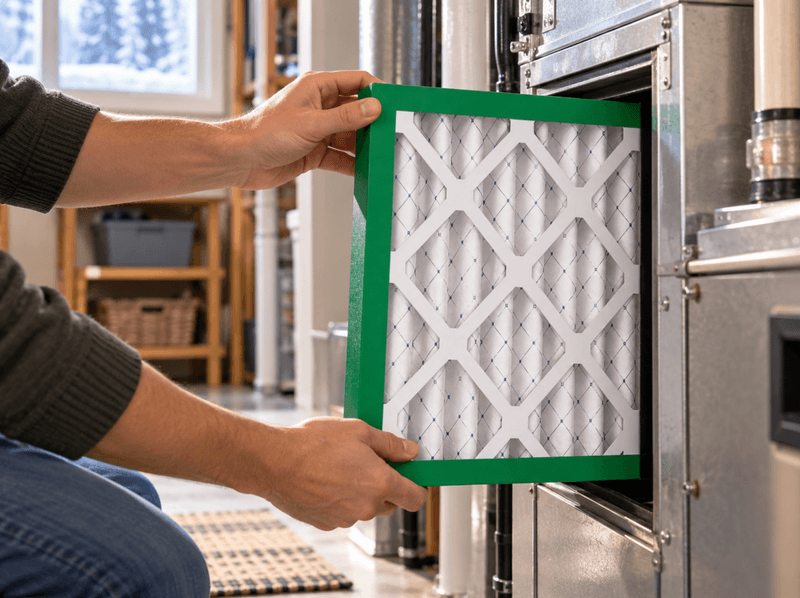
Swap in a fresh furnace filter before that test, with the airflow arrow pointing toward the furnace.
Vacuum the registers and returns.
Keep three feet clear around the furnace, as NFPA heating safety guidance recommends.
Test your smoke and CO alarms, and book an annual tune-up.
We print the arrow on every filter we make, and it is still one of the questions our team hears most.
Michelle Wan, Brand Manager and Air Quality Writer at Filterbuy
Supporting Statistics
Heating equipment fires cause an estimated 417 deaths and 1,260 injuries in U.S. homes each year. NFPA data for 2020–2024 ties heating equipment to 11% of all reported home fires. Source: JBSA News, reporting NFPA data, February 2026.
More than 200 people in the U.S. die each year from non-fire carbon monoxide poisoning linked to consumer products, and heating equipment is among the top contributors. Source: CPSC, Home Heating Equipment, accessed October 2026.
Nearly half of the energy used in a U.S. home goes to heating and cooling. ENERGY STAR advises checking the filter monthly in winter and changing it at least every 3 months. Source: ENERGY STAR, Heat & Cool Efficiently, accessed October 2026.
Filterbuy sees this every winter: a clogged filter is the most common cause of winter heating problems customers report to our team.
Glossary
Burn-off smell: The dusty odor of settled dust burning off a furnace at first startup.
Heat exchanger: The metal chamber that moves burner heat into your home's air.
Furnace filter: A replaceable filter that traps dust before air reaches the furnace.
High-limit switch: A safety switch that shuts off the burners when the furnace overheats.
Pressure drop: A filter's airflow resistance, which rises as dust builds up.
Carbon monoxide (CO): A colorless, odorless, poisonous gas produced when fuel burns.
MERV: Minimum Efficiency Reporting Value, a 1 to 16 scale that rates how well an air filter captures particles. See Filterbuy's MERV rating chart.
HVAC: Heating, ventilation, and air conditioning.
NFPA: National Fire Protection Association, a U.S. fire-safety nonprofit.
CPSC: U.S. Consumer Product Safety Commission, a federal safety agency.
EPA and ENERGY STAR: The U.S. Environmental Protection Agency and its energy-efficiency program.
Frequently Asked Questions
How Long Should a Furnace Burning Smell Last the First Time the Heat Turns On?
Usually about an hour of steady run time. If it lasts more than a day, replace the filter and schedule an inspection.
Is It Safe to Sleep With a Furnace Burning Smell?
A mild, fading dust smell is generally fine. If it smells like plastic or wiring, or you see smoke, turn the furnace off before bed and call a technician. Keep working smoke and CO alarms near bedrooms.
Does a Heat Pump or Electric Furnace Smell Like Burning Too?
Yes. Electric heat strips collect summer dust as well, so a brief dusty smell on first use is normal. A plastic or electrical smell means shut it off.
Why Does My Furnace Smell Like Burning After a Filter Change?
A new filter shouldn't cause a burning smell. Check the size and fit, then make sure the airflow arrow points toward the furnace (every Filterbuy filter has it printed on the frame). The EPA advises a snug fit so air doesn't leak around the filter. If it continues, call a pro.