
Will a Smart Thermostat Work With Your System? A Compatibility Check
November 25, 2026
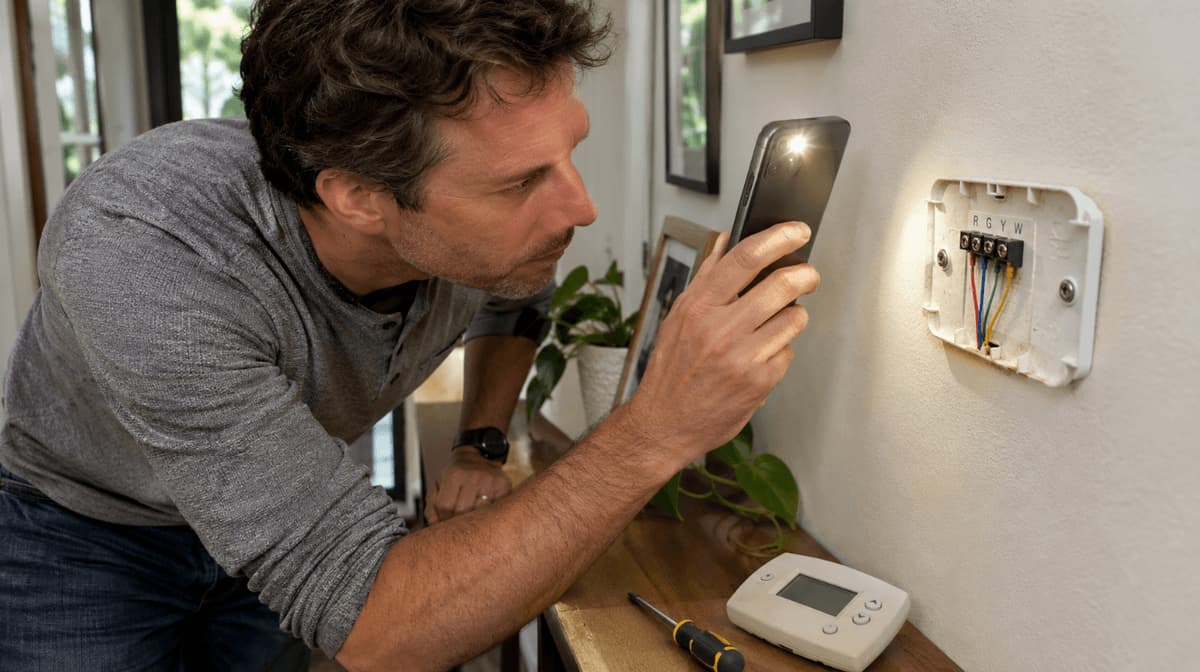
A smart thermostat will usually work with your system, even if your compatibility check turns up a snag. Most snags have a fix the makers publish, and millivolt is the one Google lists no fix for.
Find what you saw at the wall below, then follow the next step. While the cover's off, take the filter quiz, or shop air filters at Filterbuy.
Your result, your next step
Go, add a part or call a pro
WHILE THE POWER'S OFF
Your breaker is already off. Check the furnace filter too.
Slide it out and note the size printed on the frame. A new thermostat runs your system, and the filter keeps dust and debris out of it while it does.
Fixes from Google Nest compatibility guidance and ecobee.
Upgrading your thermostat? Match your filter too.
Answer a few quick questions and we'll match you to the right filter for your home.
Already know your size?
TL;DR
Smart thermostat compatibility comes down to voltage. ENERGY STAR says most smart thermostats use thin, low-voltage wires, and Google says Nest works with most 24-volt (24V) furnaces, air conditioners, boilers and heat pumps. Line-voltage and millivolt heaters are the exceptions. Check the terminal letters behind your thermostat, then run the maker’s compatibility checker before you buy.
Key Takeaways
Voltage decides compatibility, not your furnace’s age.
Thick wires, wire nuts or a 120V or 240V label mean line voltage.
Two wires can point to three different systems: 24V heat-only, millivolt or line voltage. Only the first is a likely fit.
Checkers ask for terminal letters, not wire colors, and they leave out jumper wires.
Will a Smart Thermostat Work With My HVAC?
A smart thermostat will usually work with your HVAC system if the wires behind your thermostat are thin, low-voltage (24V) wires on lettered terminals such as R, W, Y, G and C. Thick wires with wire nuts, a 120V or 240V label or a millivolt gas heater mean a standard smart thermostat can’t control it.
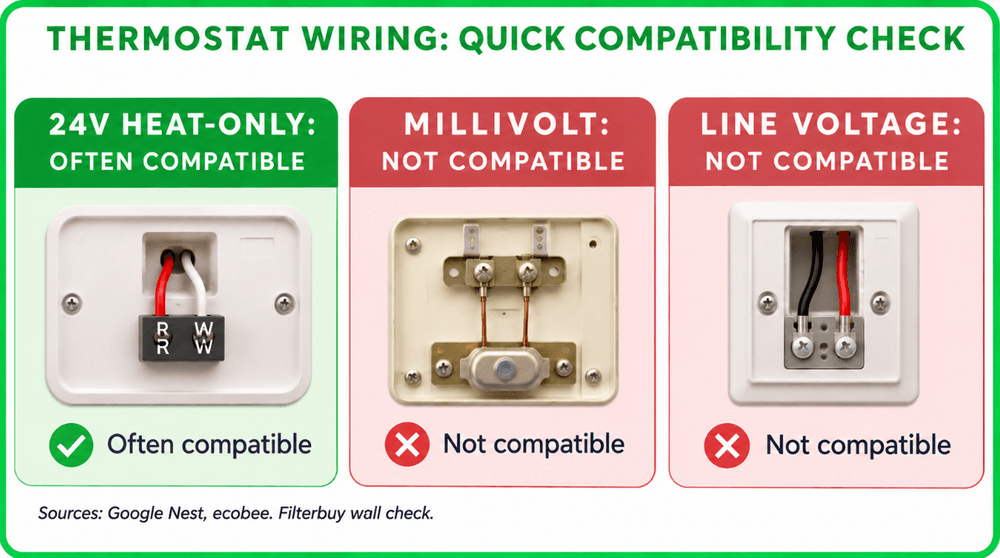
To find out, turn off the power, take the cover off and compare what you see with Filterbuy’s wall check, built from Google Nest and ENERGY STAR guidance.
Sources: compiled by Filterbuy from Google Nest compatibility guidance, ENERGY STAR’s smart thermostat installation guidance and ENERGY STAR’s How to Choose a Smart Thermostat.
Filterbuy’s thermostat wiring colors guide explains each terminal.
Check Smart Thermostat Compatibility Before Buying
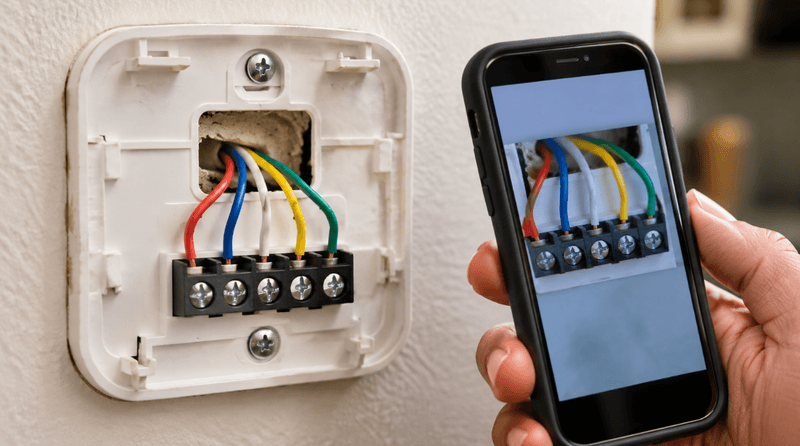
To check smart thermostat compatibility before buying, turn off the HVAC breaker, remove the thermostat cover and photograph the wires. Note which lettered terminals are in use and any voltage label, then enter those letters into the maker’s free online compatibility checker.
Turn off power at the breaker for your heating and cooling system.
Remove the cover and photograph the wires and their terminal letters.
Look for voltage clues, such as a 120V or 240V label, thick wires or wire nuts.
Write down each lettered terminal with a wire, skipping jumpers (short wires linking two terminals).
Check for a C wire. If there’s none, Filterbuy’s C wire guide covers adapters, no-C models and new wire.
Run the checker for each brand you’re considering.
“When I compiled this check, every maker’s answer started in the same place: the letters on your wall plate. Photograph them before you shop, and you’ll have what any checker or technician asks for first.”
How to Use a Smart Thermostat Compatibility Checker
A smart thermostat compatibility checker is a free online tool from the thermostat maker. You enter the terminals that have wires, and it tells you whether your system is compatible, then names the models that fit and any adapter you’d need. Google Nest’s version adds a custom wiring diagram.
Go by the terminal letter, not the wire color, as Google Nest compatibility guidance advises.
Pick the right label set. Some terminals carry two labels, one for conventional systems and one for heat pumps.
Compare brands. The Google Nest checker (open it from Google Nest compatibility guidance) and the ecobee compatibility checker support different setups, so one brand’s “no” isn’t final.
Is My Thermostat Compatible With Nest?
Your thermostat is likely compatible with Nest if it runs on 24V wiring with standard lettered terminals. Google Nest thermostats don’t work with high-voltage systems like electric baseboard heaters, millivolt heaters, proprietary systems or stranded wiring. If yours passes, the right model depends on your heating stages and C wire.
Smart Thermostat for a 2-Wire System
A smart thermostat for a 2-wire system works only if those two wires carry 24V. Thin wires on R and W usually mean a 24V heat-only furnace or boiler, which Google Nest supports, sometimes with added power. Thin wires to a gas heater’s valve can mean millivolt; thick wires mean line voltage. Standard models can’t run either.
“2-wire” is the only row in Filterbuy’s wall check with three possible meanings, so here’s how to tell them apart:
24V heat-only (thin wires on R and W): the likely fit, though the Nest Thermostat needs a C wire or the Nest Power Connector for heat-only systems.
Millivolt (thin wires to a gas heater’s valve): not compatible, as the next section explains.
Line voltage (thick wires, wire nuts): not compatible with 24V models, though a pro can sometimes help.
One more possibility: according to Google Nest compatibility guidance, a 2-wire system running both heating and cooling is likely proprietary.
Millivolt Thermostats: Can They Go Smart?
A millivolt thermostat controls a gas heater whose valve runs on a tiny current the heater makes itself from its pilot flame, with no 24V transformer. Google Nest says its smart thermostats aren’t compatible with millivolt systems, so these heaters need a millivolt-rated thermostat.
Millivolt controls run on less than one volt; Honeywell’s VS8421 millivolt gas valve instructions, for example, list a 750 mV operator. As Google explains, millivolt systems can’t deliver enough power to a Nest thermostat. Never wire a 24V thermostat to a millivolt heater.
Smart Thermostat for 2-Stage Heat
A smart thermostat for 2-stage heat needs a W2 terminal so it can call for low and high heat separately. The Nest Learning Thermostat (4th gen) handles up to three heating stages, and ecobee says its thermostats support conventional systems with up to two heating and two cooling stages.
The Nest Thermostat and Nest Thermostat E are more limited, adding just one extra stage, heating (W2) or cooling (Y2), so 2-stage heat with 2-stage cooling needs a different model. ecobee lists conventional systems up to 2H/2C.
Google’s fan compatibility guide says variable-speed fans run at a single speed with Nest thermostats, and the Nest Thermostat and Nest Thermostat E support only single-speed fans. Google also recommends professional installation for dual-fuel systems and systems with more than one R wire. ENERGY STAR’s smart thermostat installation guidance says multi-stage, variable-speed and zoned systems will likely need a professional installer.
Smart Thermostat for an Older Furnace or HVAC System
A smart thermostat for an older HVAC system or furnace can work as long as the system runs on 24V wiring. Google says Nest thermostats are designed for most 24V systems, even older ones, with natural gas, oil or electric heat. The bigger question in older homes is the wiring.
Stranded wires. Google says wire ends with more than one large strand aren’t Nest-compatible.
A missing C wire. ENERGY STAR notes that most, but not all, smart thermostats need one.
Oil heat. ENERGY STAR says an oil boiler or furnace may need an adapter.
Filterbuy’s furnace-side check: while the furnace door is open, note the size printed on the filter frame (where the furnace filter is located by system type). ENERGY STAR’s maintenance checklist recommends checking filters monthly, and Filterbuy’s guide to thermostat fan Auto vs. On covers fan settings. Then set the thermostat’s reminder to how often to change your air filter and run Filterbuy’s first-run heating checklist.
When to Call a Licensed Pro
Call a licensed HVAC technician or electrician if your thermostat runs on line voltage or millivolt power. The same goes if the checker flags a proprietary, zoned, dual-fuel or multi-stage system. A pro also helps if you need a new C wire or can’t match your wires to the labels.
If the checker says no, these are the fixes makers publish:
No C wire: the Nest Power Connector, ecobee’s Power Extender Kit or a new wire run by a pro.
Line voltage: a pro may install a step-down transformer to 20–30V, per Google Nest compatibility guidance.
Proprietary system: some come with an adapter, and a pro can rewire others.
Stranded wires: a pro can cap, solder or replace them with solid-core wire.
Millivolt: Google lists no fix, so stick with a millivolt-rated thermostat.
Wondering about cost? See Filterbuy’s thermostat replacement cost guide. Trouble after the swap? See Filterbuy’s guide to a thermostat not working.
Filterbuy’s point of view: we make air filters, not thermostats, in our factories in Alabama, Pennsylvania, Texas and Utah, so we read compatibility from the furnace side. The C wire you need connects at the furnace control board, and Filterbuy’s blank thermostat screen guide lists a missing or loose C wire as a cause of trouble after installs. So this guide traces the wiring from the wall plate to the furnace, using facts from Google Nest, ecobee and ENERGY STAR.
Supporting Statistics
1. About 4 in 5 U.S. Homes Heat With a Furnace, Heat Pump or Boiler
99.8 million of 123.5 million homes heat mainly with a central furnace (74.4 million), heat pump (16.1 million) or steam or hot water system (9.3 million).
7.7 million use built-in electric units, and 3.5 million use built-in gas or oil room heaters.
Source: U.S. Energy Information Administration (EIA), 2020 RECS Table HC6.1
2. About 1 in 10 U.S. Homes Had a Smart Thermostat (2020)
12.8 million homes had a smart or internet-connected thermostat.
Source: EIA, 2020 RECS Table HC6.1
3. About 8% Saved on Heating and Cooling
About 8% of heating and cooling bills, or about $50 a year, with ENERGY STAR certified smart thermostats.
Frequently Asked Questions
Can a Smart Thermostat Work Without a C Wire?
Often, yes. ENERGY STAR’s How to Choose a Smart Thermostat says most, but not all, smart thermostats need a C wire. Google designed the Nest Learning Thermostat (4th gen) to run without one, and adapters like the Nest Power Connector or ecobee’s Power Extender Kit can fill the gap. Filterbuy’s C wire guide compares the options.
Will a Smart Thermostat Work With My Heat Pump?
Usually. Google Nest thermostat technical specifications list heat pump support, including auxiliary and emergency heat, for all three Nest models, though the Nest Thermostat needs a C wire or Power Connector with a heat pump. ecobee supports heat pumps up to 4 heating and 2 cooling stages, depending on the model.
Can I Use a Smart Thermostat With Electric Baseboard Heat?
Not a standard one. ENERGY STAR’s How to Choose a Smart Thermostat says most smart thermostats sold in the U.S. aren’t compatible with baseboard heating, biofuels or in-wall heaters. Baseboard heaters usually run on line voltage, so you’d need a thermostat rated for 120V or 240V.
Do Smart Thermostats Work With Boilers?
Many do, as long as the boiler uses 24V controls. Google Nest thermostat technical specifications list boilers among the systems Nest works with, and ENERGY STAR’s smart thermostat installation guidance notes an oil boiler or furnace may need an adapter, so run the checker before you buy.
Do I Need My Furnace’s Brand or Model Number to Check Compatibility?
No. Google Nest compatibility guidance says you only need to know your type of heating system, since the brand or model doesn’t matter. The terminal letters on your wall plate and the system type are what a checker asks for.
Glossary
24V (low voltage): the 24-volt control wiring that Google Nest and ecobee thermostats are built for.
Line voltage: 120V or 240V wiring that powers some electric heaters directly, such as baseboards.
Millivolt system: a self-generating gas heater control that runs on less than one volt.
C wire: the common wire that gives a thermostat constant 24V power.
Know Your Filter Size Before You Upgrade
While your thermostat cover is off, check the furnace filter too. Order by the size printed on your old filter’s frame, and if it isn’t listed, Filterbuy cuts custom sizes to the eighth of an inch. Find your air filter size
Filterbuy makes the HVAC air filters mentioned on this page and isn’t affiliated with or endorsed by Google or ecobee. Use your thermostat maker’s compatibility checker for a final answer on your model.