Why Is Your Mini Split Noisy in Winter? Causes and Solutions
August 12, 2026
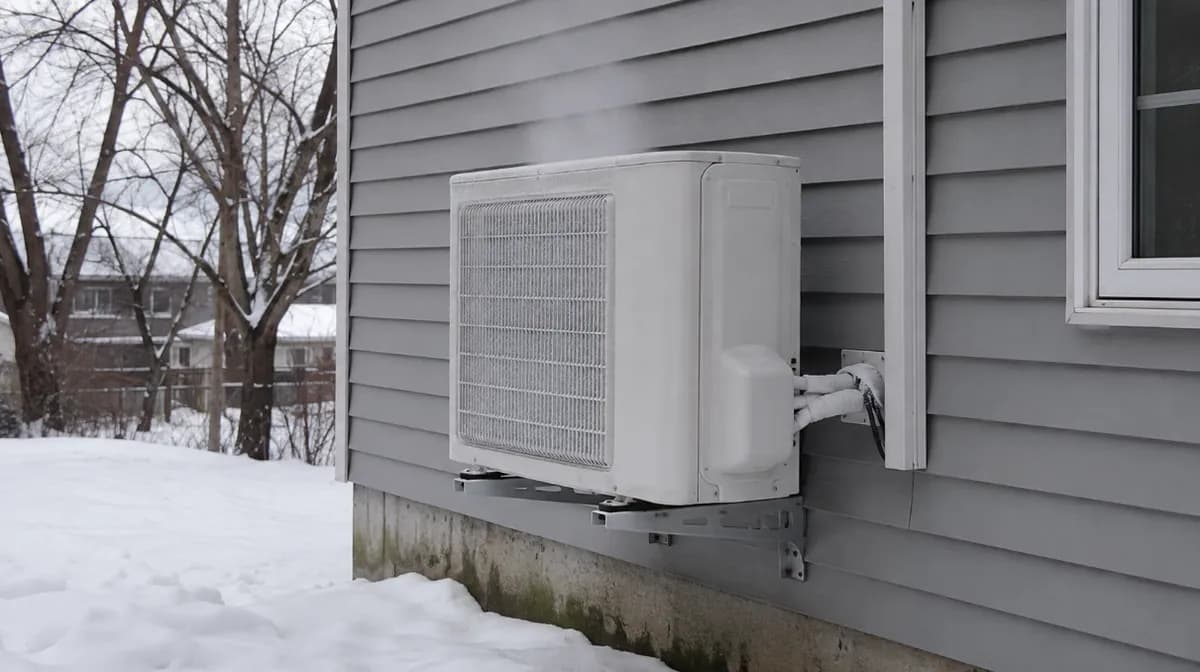
Your mini split gets louder in winter because it is running a defrost cycle. The system briefly reverses refrigerant flow to melt frost off the outdoor coil, and the reversing valve makes a whoosh, gurgle, hiss, or toilet-flushing sound. That noise is normal when it stops within 15 minutes and does not repeat more than twice an hour. Sounds that never stop are a different story.
Normal: whoosh, gurgle, hiss, pops and ticks — it ends on its own and the outdoor fan is stopped.
Call a technician: scraping, grinding, screeching, or a continuous hiss with weak heat.
Easy fix first: a sudden rush of louder airflow is usually a loaded indoor filter, not a mechanical fault.
If your unit is older and making sounds it did not make last winter, you are deciding between repair and replacement. Take the quiz below, or go straight to Filterbuy mini split systems.
Answer a few quick questions and we will point you to the right mini split system for your space.
Ready to replace instead of troubleshoot?
The Filterbuy ductless line is built around the specs that keep a system quiet in winter: intelligent defrost, multi-layer filtration, a self-cleaning drying cycle, and a 19 dB indoor sound rating — backed by a 7-year compressor and 3-year parts warranty.
Shop Mini Split SystemsTL;DR
Mini splits get louder in winter because heat pumps run a defrost cycle, briefly reversing refrigerant flow to melt frost off the outdoor coil. The reversing valve produces a whoosh, gurgle, hiss, or "flushing" sound. That noise is normal when it lasts under 15 minutes and repeats no more often than every 30 minutes. Scraping, grinding, screeching, or a hiss that never stops needs a licensed technician.
Key Takeaways
A normal defrost cycle lasts about 3 to 15 minutes and occurs every 30 to 90 minutes in cold, damp weather. Cycles longer than 15 minutes, or repeating more than twice an hour, point to a problem.
Frost can form on a heat pump coil above freezing. The outdoor coil runs roughly 10 degrees colder than surrounding air, so defrost at 40F is normal, not a malfunction.
Scraping, grinding, and metallic screeching are the emergency sounds. Ice has built up in the base pan until the fan blade strikes it, shearing the blade or burning out the motor.
A dirty indoor filter makes a mini split noticeably louder by forcing the blower to work against restricted airflow. Check it before assuming the noise is mechanical.
Why Does a Mini Split Get Louder in Winter?
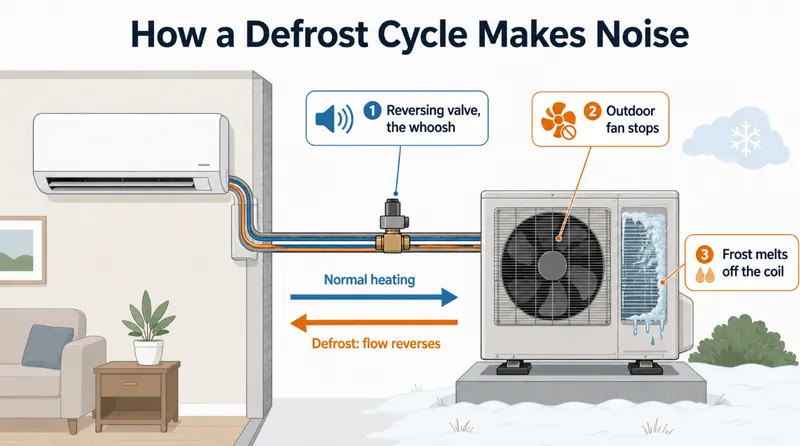
A mini split gets louder in winter because it is running a defrost cycle. A ductless heat pump pulls heat from outdoor air, chilling the outdoor coil below ambient and freezing moisture onto it. To clear that frost, the system flips a component called the reversing valve and sends hot refrigerant backward through the coil. That reversal is what you hear.
The sounds are consistent across every brand: a heavy whoosh, a gurgle, a hiss, or what homeowners describe as a toilet flushing in the wall. Underneath it, the compressor ramps higher than normal heating requires and the outdoor fan stops so the coil warms faster. A unit that sounds busier but has a silent fan is working as designed.
Frost does not require freezing weather. Because the outdoor coil sits roughly 10F below ambient air while absorbing heat, a heat pump can enter defrost with the thermometer in the low 40s. A system in coastal Oregon defrosts more often than an identical unit in Colorado at the same temperature.
Cold also amplifies year-round sounds. Plastic housings contract and produce sharp pops and ticks, the same noise a house makes when it settles.
Where our read on this comes from. Filterbuy has manufactured air filters in the United States since 2013, more than 50 million of them, for over two million households, and our HVAC Solutions team services ductless systems in the field. That gives us an unusual angle: we see the filter when the complaint arrives. In our service data, a restricted filter cuts a mini split efficiency by 5 to 30%, and it is the most common reason a system that was quiet in November is loud in January with nothing mechanically wrong.
One limit worth stating plainly: our field technicians work in Florida and Texas, not the snow belt. The cold-climate specifics here come from manufacturer documentation and the licensed technician who reviewed this article, not our own service logs. We would rather name where our experience ends than imply it covers everything.
The Winter Mini Split Noise Decoder
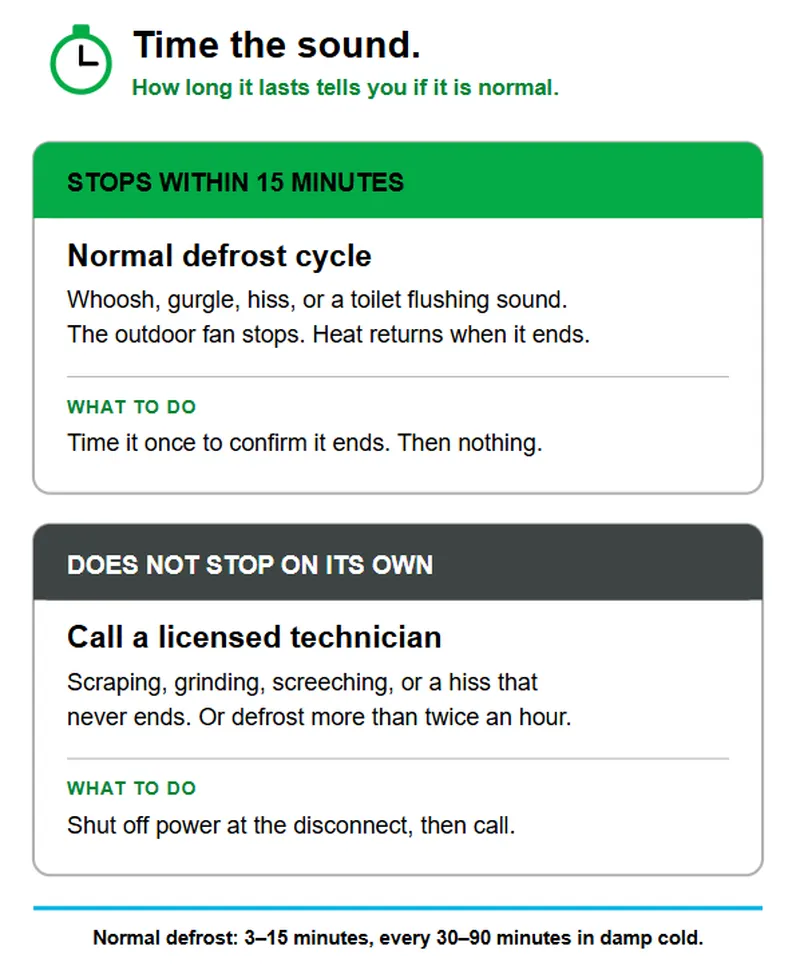
Most guides sort mini split noises by what they sound like. That is the wrong first question in winter: the same whoosh is either normal or a low-charge symptom depending on when it happens and whether it stops. This table sorts by timing.
Any sound that stops on its own within 15 minutes and returns your heat is a defrost cycle. Sounds that never stop, or repeat more than twice an hour, need a licensed technician.
How Long Should a Normal Defrost Cycle Last?
A normal defrost cycle lasts about 3 to 15 minutes and repeats every 30 to 90 minutes in cold, humid weather, per the Lennox defrost cycle guide. Modern inverter mini splits end the cycle on coil temperature, typically once the coil reaches roughly 55F. Systems outside these ranges have a defrost control or charge problem.
Ranges reflect published manufacturer guidance for residential heat pumps. Your model service manual takes precedence where it differs.
The noisiest weather is not the coldest. Defrost runs most often between roughly 25F and 40F when the air is damp, because that range puts the most moisture onto a coil already below freezing. In deep, dry cold the air holds less moisture, frost forms slowly, and a system can run a whole cycle without defrosting. That is why your mini split may sound busier on a foggy 34F morning than a clear 5F night, and why noise peaks in early winter and during thaws rather than the coldest week of January.
Frequent defrosting is the signal worth taking seriously, and rapid defrost cycling is a documented home-inspection red flag. When a system defrosts every 15 or 20 minutes, technicians most often find a low refrigerant charge or failed coil sensor. Both quietly raise your heating bill.
The 60-Second Winter Noise Triage
Walk this sequence before calling anyone. It resolves most winter noise questions without a service visit.
Start a timer. If the sound stops within 15 minutes and heat returns, it was a defrost cycle. You are done.
Name the sound. Fluid sounds (whoosh, gurgle, hiss) come from refrigerant and are usually normal if they end. Mechanical sounds (scrape, grind, screech) never are. If it is mechanical, skip ahead.
Check the outdoor unit. Thin, even frost is expected. A block of ice, ice filling the base pan, or drifted snow is not.
Pull the indoor filter. Hold it against white paper. If it reads gray, it is already costing you airflow. Follow the mini split filter cleaning schedule, then listen again.
Count the cycles. More than two defrost events in an hour is your cue to call.
With more than one indoor head, check another room. A single outdoor unit serves every zone, so defrost cools all of them at once. If only one head is affected, the fault is in that head, not the defrost cycle.
Which Winter Noises Require Immediate Attention?
Shut off power at the outdoor disconnect and call a licensed HVAC technician if you hear scraping, grinding, screeching, or a continuous hiss that does not end with the cycle. These mean mechanical damage or refrigerant loss, and running the system makes each one worse.
Scraping or grinding almost always means ice in the base pan. Defrost meltwater drains through holes in the cabinet floor. In sustained subfreezing weather, or when those holes block, that water refreezes and builds upward until the fan blade strikes it. The blade can shear, the motor can burn out, and expanding ice can crack the coil fins.
Screeching or squealing means a failing fan bearing or a compressor under distress.
A hiss that never stops, especially alongside weak heat, suggests refrigerant is escaping the sealed system. Refrigerant work requires EPA Section 608 certification, and a low charge risks the compressor.
If snow or ice has drifted around the cabinet, cut power first, then clear it by hand or with lukewarm water. Never chip at ice with a tool, because coil fins puncture easily. And never disable the defrost function to stop the noise: ice then builds unchecked until it damages the coil or the compressor.
If you rent, the steps change. Do not touch the outdoor disconnect. That is the landlord equipment and, under most leases, their liability. Time the noise, note the date and duration, and report it in writing. A dated log showing cycles over 15 minutes, or more than two an hour, turns "it is noisy" into a scheduled service call.
How to Make a Mini Split Quieter in Winter
You cannot eliminate defrost noise, but you can reduce the noise around it and prevent the ice that causes damage.
Keep the indoor filter clean. Highest return, lowest effort, and the most common cause of a system that got louder with no other change. Mitsubishi Electric, Daikin, Fujitsu, and LG all publish the same interval: every two weeks during heavy use. Filterbuy units list two to four weeks and include a filter-clean reminder, though that light tracks run hours rather than dirt, so the white-paper check still wins.
Raise the outdoor unit above your snow line and keep the base pan drain holes clear, since blocked drainage causes base pan ice. Check mounting hardware once a season; the mini split installation guide covers placement.
What Makes a Mini Split Quiet in Winter in the First Place?
Four specifications determine how a mini split behaves in cold weather: an inverter compressor, demand-based defrost, base pan heat, and filtration that holds airflow steady. A system with all four defrosts less often, ramps instead of slamming on and off, and never develops the ice that causes grinding.
Base pan heaters are brand and model specific. Confirm compatibility with your condenser before buying one.
The third row separates a system you maintain from one you replace: base pan ice damage is preventable, and comes down to a spec chosen at purchase. Where winters run below freezing, ENERGY STAR certified cold-climate systems are tested to 5F.
Where Filterbuy fits. Filterbuy is a newer name in mini splits than Mitsubishi Electric or Daikin, and it arrived from an unusual direction: a decade manufacturing air filters. That heritage shows up in the fourth row, where the ductless line is built around multi-layer filtration, a 55C self-cleaning drying cycle, and filter reminders. The spec sheet also lists intelligent defrost, the demand-based control in row two, plus refrigerant leak detection and a 19 dB indoor sound rating, under a 7-year compressor and 3-year parts warranty. See how Filterbuy compares with Mitsubishi, Daikin, and MRCOOL.
If your unit is over ten years old, has no base pan heater, and is making noises it did not make last winter, you are deciding between repair and replacement. Size it with the mini split buying guide, then shop Filterbuy mini split systems.
Essential Resources: 7 Tools for Diagnosing a Noisy Mini Split
Diagnosing the sound is step one. These seven resources cover what comes next: confirming your system is normal, deciding whether it needs service, and working out if it is time to replace it.
1. Confirm Your System Was Built for Your Winter
ENERGY STAR: Air-Source Heat Pumps · U.S. EPA energy efficiency program
Cold-climate certified heat pumps are third-party tested for heating performance down to 5F. This page explains the certification that separates a true cold-climate system from a standard one.
Use it when: your unit defrosts constantly once temperatures drop below freezing.
2. Look Up What Your Exact Model Delivers at 5F
NEEP Cold Climate Air Source Heat Pump Product List · Northeast Energy Efficiency Partnerships, a regional non-profit
A searchable database of more than 35,000 heat pumps with measured low-temperature data. It shows what your model was tested to deliver in the cold, not what the brochure implies.
Use it when: you want evidence before blaming the equipment.
3. Verify the Ratings Before You Accept a Quote
AHRI Directory of Certified Product Performance · Air-Conditioning, Heating, and Refrigeration Institute
The independent record of manufacturers certified capacity and efficiency claims, searchable by brand or model number.
Use it when: a contractor diagnosis or replacement quote needs a second opinion.
4. Find a Technician Actually Qualified for Ductless Work
NATE: Find a Contractor with NATE-Certified Technicians · North American Technician Excellence, the largest non-profit HVAC certification body in the United States
NATE certification is earned by exam and verifies working knowledge of heat pump systems. Use the locator, then ask for a NATE-certified technician by name.
Use it when: the sound is mechanical, meaning scraping, grinding, or screeching.
5. Know What a Real Tune-Up Should Include
ENERGY STAR: Heating and Cooling Maintenance Checklist · U.S. EPA
The federal checklist for a pre-season service visit. It includes lubricating moving parts and tightening electrical connections, the two items that most often resolve a squeal or a buzz.
Use it when: booking annual service, or checking what a technician actually did.
6. Fix the Most Common Cause of a Louder System Yourself
Filterbuy: How to Clean Mini Split Filters, Step-by-Step for Every Brand
A dirty filter is the first thing to rule out. Covers the universal cleaning method plus the intervals published by Mitsubishi Electric, Daikin, Fujitsu, LG, and MRCOOL.
Use it when: the system got louder with no other change.
7. Understand the Machine Making the Noise
Filterbuy: What Is a Ductless Mini Split? Complete Guide
A plain-language walkthrough of the outdoor condenser, indoor air handler, refrigerant line set, and inverter compressor.
Use it when: any part named above was unfamiliar.
Supporting Statistics
Three federal datasets, verified live on August 6, 2026.
1. 42% of U.S. Homes Now Heat With Electricity
42% of U.S. households used electricity as their main space heating fuel in 2024.
Natural gas fell to 47%, down from 49% in 2010.
The EIA credits improvements in electric air-source heat pumps, especially in colder climates.
Why it matters: More homes than ever run a system that reverses itself mid-winter. Most owners hear that reversal for the first time and assume something broke.
Source: U.S. Energy Information Administration, Electricity use is becoming more common for residential heating, October 10, 2025 at https://www.eia.gov/todayinenergy/detail.php?id=66324
2. A Mini Split Runs About 40 Decibels Below the Hearing-Risk Threshold
70 dBA is the level at or below which sounds are unlikely to cause hearing loss, even after long exposure.
Normal conversation: 60 to 70 dBA.
Indoor mini split heads: 19 to 30 decibels.
Why it matters: Even an alarming defrost cycle sits far below any level that threatens hearing. Judge winter noise by when it happens, not how loud it sounds.
Source: National Institute on Deafness and Other Communication Disorders (NIH), Noise-Induced Hearing Loss, updated April 16, 2025 at https://www.nidcd.nih.gov/health/noise-induced-hearing-loss
3. Heating and Cooling Use 52% of a Home Annual Energy
52% of the average U.S. household yearly energy goes to space heating and air conditioning.
13% of households use a heat pump as their main heating equipment.
Every defrost cycle pulls heat back out of the house to melt outdoor ice.
Why it matters: A system defrosting every 15 to 20 minutes inflates the largest line item on your energy bill. That is a service call, not a shrug.
Source: U.S. Energy Information Administration, Use of energy in homes, 2020 Residential Energy Consumption Survey at https://www.eia.gov/energyexplained/use-of-energy/homes.php
Frequently Asked Questions
Is it normal for a mini split to be loud in winter?
Yes. Heating mode runs defrost cycles that cooling never triggers. The reversing valve, the higher compressor speed, and the stopped outdoor fan all add sound that does not exist in cooling season.
Why is my mini split blowing cold air and making noise in winter?
During defrost the system runs briefly in cooling mode, because it has to send heat outdoors to melt the coil. Cool indoor air for a few minutes alongside the noise is expected. Cold air for longer than 15 minutes is not.
Why does my ductless AC sound like water running or a toilet flushing?
That is liquid refrigerant surging through the coil as the reversing valve shifts direction at the start of defrost. It is normal in cold weather and should end when the cycle does. A gurgle that continues around the clock points to a condensate drain issue.
Will covering my outdoor unit stop the winter noise?
No, and it can damage the system. A mini split outdoor unit needs airflow year-round in heating mode. Covering it traps moisture against the coil and blocks the air the system uses to pull heat from outside. Only cover a unit that has been shut down for the season.
Should I turn my mini split off in winter to stop the noise?
No. Shutting a heat pump down in freezing weather leaves existing ice in place and removes the defrost function that clears it. If the noise is bad enough that you want it off, cut power at the disconnect and call a technician.
Glossary
Mini split: A ductless system with one indoor air handler and one outdoor condenser, joined by a refrigerant lineset.
Heat pump: A system that moves heat rather than generating it. That is why it can run in reverse.
Defrost cycle: The routine that reverses refrigerant flow to melt frost off the outdoor coil. Normally 3 to 15 minutes.
Reversing valve: The part that switches refrigerant direction. The main source of winter noise.
Base pan: The tray under the outdoor unit that catches defrost meltwater.
Base pan heater: An element that keeps that meltwater from refreezing.
Inverter compressor: A variable-speed compressor that ramps instead of cycling on and off, so it runs quieter.
Demand defrost: A control that defrosts only when a sensor detects frost, not on a fixed timer.
Refrigerant charge: The sealed quantity of refrigerant. Undercharged systems defrost too often.
EPA Section 608 certification: The federal certification required to handle refrigerants.
Filterbuy: A U.S. air filtration manufacturer and HVAC retailer in Talladega, Alabama, making filters since 2013 and ductless mini splits.
About the Author
Written by Michelle Wan, Brand Manager and Air Quality Writer, Filterbuy.
Michelle Wan works directly with Filterbuy U.S.-based manufacturing team across factories in Alabama, Florida, Pennsylvania, and Utah, so her guidance is grounded in how filters are actually built, tested, and used in real homes. Filterbuy has manufactured air filters in the United States since 2013, producing more than 50 million and serving over two million households, and its HVAC Solutions team services ductless systems in the field.
Technically reviewed by David Clark, Licensed HVAC Technician.
Published: August 12, 2026. Last updated: August 12, 2026.