
What Is a Ductless Mini Split? Complete Guide (2026)
A ductless mini split is a heating and cooling system that controls the temperature of individual rooms without any ductwork. It pairs an outdoor condenser with one or more indoor air handlers, connected by a small refrigerant line that runs through a roughly three-inch hole in your wall.
Instead of making hot or cold air from scratch, it moves heat — outside to cool your room in summer, and inside to warm it in winter.
Two setups cover most homes:
- Single-zone: one outdoor unit plus one indoor unit for a single room or space.
- Multi-zone: one outdoor unit plus several indoor units for room-by-room control across the home.
Want to see your options? Browse Filterbuy mini split systems, or take the quick match quiz below to find the right fit for your space.

Answer 3 quick questions and we'll match you to the right mini split system.
Stuck with a beautiful older home that has no ductwork? When summer rolls around, you probably resort to those clunky, loud window AC units that block your view and barely cool the room.
What if there was a better way?
Ductless mini-split systems are a smarter, quieter, and more efficient alternative for controlling your home's temperature. More and more homeowners are choosing this modern technology to solve their heating and cooling problems without major renovations or sky-high energy bills.
If you're ready for year-round comfort, this guide will break down what a mini-split AC is and why it might be the perfect solution for your home.
Key Takeaways
Energy Efficiency: Ductless mini-splits consume less energy compared to traditional HVAC systems, helping you save on utility bills.
Easy Installation: These systems require no ductwork, making installation faster and less invasive.
Zoned Comfort: Mini-splits allow you to heat or cool specific rooms independently, improving comfort and reducing energy waste.
Quiet Operation: Designed to operate quietly, mini-splits won't disrupt your daily activities or sleep.
Year-Round Use: With both heating and cooling capabilities, mini-splits are a versatile solution for any season.
What Is a Ductless Mini Split?
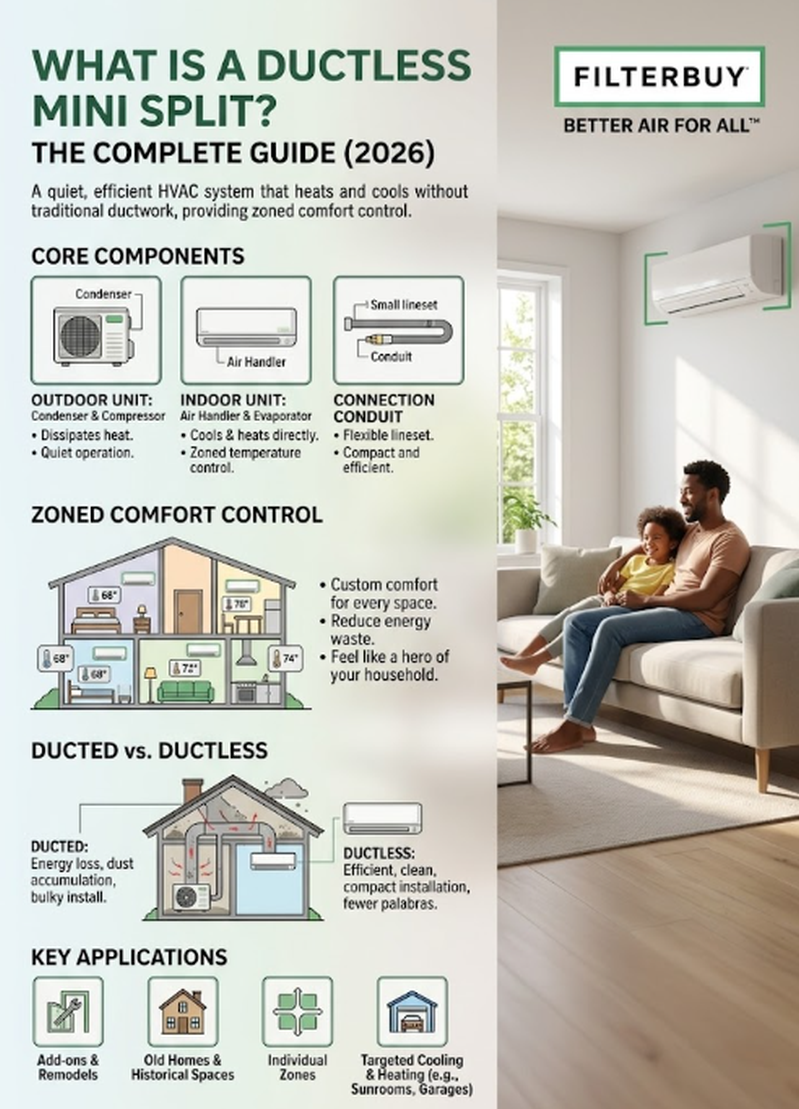
A ductless mini split is a heating and cooling system that controls the temperature of individual rooms without using ductwork. It consists of an outdoor compressor and one or more indoor air-handling units connected by small refrigerant lines. Mini splits deliver efficient, quiet, room-by-room climate control.
Think of a mini split as a smarter, quieter evolution of the window AC unit — except it can heat your home too. Because they do not rely on a centralized network of air ducts, these systems are incredibly flexible. You can mount them on walls or ceilings exactly where you need temperature control the most, completely bypassing the massive energy losses associated with leaky ductwork.
Key Components of a Mini Split AC System
To understand how a mini split ac works, it helps to know the main parts of the system. A standard ductless HVAC system features three primary physical components, plus the technology used to control them.
Outdoor Condenser Unit
The outdoor condenser unit is installed outside your home. It houses the system's compressor, which is the engine that drives the entire heating and cooling process. Depending on the mode the system is running in, this unit either releases absorbed indoor heat into the outside air or absorbs heat from the outdoors to bring inside.
Indoor Air Handler
The indoor air handler is the sleek unit mounted inside your room, usually high on a wall or suspended from the ceiling. It contains an evaporator coil and a quiet fan that distributes the conditioned air directly into your living space.
Refrigerant Line Set
A refrigerant line set connects the indoor air handler to the outdoor condenser unit. This bundle contains power cables, suction lines, and a condensation drain. It only requires a small, three-inch hole in your wall to pass through, making installation far less invasive than putting in traditional air ducts.
Controls and Smart Features
Modern mini splits come equipped with advanced controls. You can adjust settings via a remote control, and many models feature WiFi-enabled thermostats. This setup allows for highly precise, zone-specific temperature control right from your smartphone.
How Does a Mini Split AC Work?
A ductless mini split operates on the principle of heat transfer. Instead of generating cold or hot air from scratch, the system moves heat from one place to another.
Cooling Mode
When you set the system to cool, the indoor unit absorbs heat and moisture from the warm room air. The refrigerant inside the lines absorbs this heat and carries it outside. Finally, the outdoor condenser releases that absorbed heat into the outdoor environment, leaving the inside of your home cool and refreshed.
Heating Mode (Heat Pump Systems)
Many mini splits also function as heat pumps. In heating mode, the process reverses. The system pulls available heat energy from the outdoor air and transfers it indoors. Advanced ductless systems can efficiently extract heat from the outside air even in extremely cold climates.
Variable Speed Inverter Technology
One of the most impressive features of a modern mini split AC unit is variable speed inverter technology. Traditional central air conditioners run at full blast until the room reaches the desired temperature, then shut off entirely. An inverter compressor adjusts its speed dynamically to maintain a consistent temperature. This avoids constant on/off power cycles, dramatically improving energy efficiency and reducing wear and tear on the system.
Types of Mini Split Systems
When selecting a ductless mini split system, you generally have two main configurations to choose from based on your specific cooling and heating needs.
Single-Zone Mini Split
A single zone mini split consists of exactly one indoor unit connected to one outdoor unit. This setup is the perfect solution for targeting a specific, isolated space that needs dedicated climate control. Common examples of where to use a single-zone system include garages, master bedrooms, sunrooms, and home offices.
Multi-Zone Mini Split
A multi zone mini split utilizes a single powerful outdoor condenser connected to multiple indoor air handlers located in different rooms. This zoned cooling system allows you to set different temperatures in different areas of the house. You can cool the living room during the day and only heat the bedrooms at night, optimizing your overall energy usage.
Mini Split vs Central Air Conditioning
When evaluating options, homeowners frequently compare a mini split vs central air. Here is a quick breakdown of how the two systems differ:
| Feature | Mini Split | Central AC |
|---|---|---|
| Ductwork | Not required | Required |
| Efficiency | Very high | Moderate |
| Temperature Control | Room-by-room | Whole house |
| Installation | Minimal wall opening | Extensive duct installation |
| Noise Level | Very quiet | Moderate |
Benefits of Ductless Mini Split Systems
Installing a ductless heating and cooling setup offers a range of distinct advantages for homeowners looking to upgrade their indoor environment.
Energy Efficiency
According to the Department of Energy, homes can lose up to 30% of their cooling energy due to leaks in traditional ductwork. Mini splits avoid duct losses entirely. By delivering air directly into the room, they provide exceptional energy savings.
Zoned Comfort
Everyone has a different preference for room temperature. Zoned cooling allows family members to control the climate in their specific room without affecting the rest of the house.
Quiet Operation
Traditional AC systems can be incredibly loud. The indoor units of a mini split operate at a whisper-quiet 20 to 30 decibels, making them virtually unnoticeable while you sleep or work.
Flexible Installation
Because they only require a small wall opening to connect the indoor and outdoor units, ductless systems offer massive flexibility. You avoid the high costs and messy construction associated with installing or repairing ductwork.
Heating and Cooling in One
Buying a system with heat pump capabilities means you get robust air conditioning in the summer and reliable heating in the winter, all from a single piece of equipment.
Where Mini Split Systems Work Best
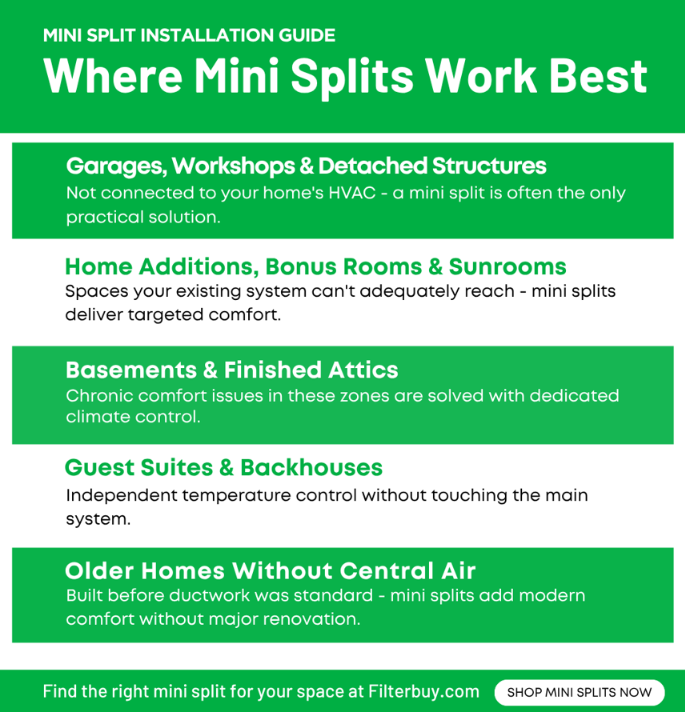
Mini splits are highly versatile, but they shine brightest in specific residential applications. They are commonly installed in areas where extending traditional ductwork would be expensive or physically impossible. Common use cases include:
Older, historic homes without existing ductwork
New room additions or guest houses
Garages converted into workshops
Sunrooms that get too hot in the summer
Finished basements
Specific bedrooms that always seem hotter than the rest of the house
Mini Split Cost Overview
Understanding the financial investment required is an important part of the decision-making process. Prices vary based on system capacity, brand, and efficiency ratings.
Typical ranges for a ductless setup:
Single-zone systems: $2,000 to $5,000 fully installed.
Multi-zone systems: $5,000 to $15,000 or more, depending on the number of indoor units.
Factors that directly affect the final cost include the total number of cooling zones, the complexity of the installation process, any necessary electrical panel upgrades, and the system's ENERGY STAR efficiency rating.
Example: 12,000 BTU Mini Split for Small Spaces
To give you a practical idea of what a system looks like, consider a 12,000 BTU unit. A 12,000 BTU mini split is typically suitable for spaces between 250 and 300 square feet, making it ideal for cooling garages, home offices, or small home additions.
The Filterbuy 12,000 BTU SEER 17 Mini Split provides an excellent example of a high-performing, single-zone design. It features a SEER 17 efficiency rating, which means it uses electricity highly effectively to cool your room. Equipped with a variable speed inverter compressor and eco-friendly R32 refrigerant, it provides quiet and consistent temperature control. Available in both 115V or 230V options, the unit also includes fast, free shipping and a 7-yr compressor / 3-yr parts warranty.
Note: To ensure safety and protect your warranty, installation should always be performed by a licensed HVAC professional.
Is a Mini Split Right for Your Home?
A ductless mini split AC system might be the perfect fit for your home comfort needs, but it depends heavily on your specific situation.
Mini splits are an excellent choice if you do not currently have ductwork installed in your home. They are also perfect if you need precise room-by-room temperature control, want to significantly boost your energy efficiency, or just need to cool one specific problem area like a hot bedroom or garage.
On the other hand, they may not be the ideal solution for sprawling, very large homes that would require dozens of indoor units to achieve adequate coverage, or for homeowners who strongly prefer their HVAC equipment to be completely hidden out of sight.
Upgrade Your Home's Climate Control With Filterbuy
Understanding the mechanics, costs, and benefits of a ductless mini split system empowers you to make a smart, energy-efficient decision for your property. By eliminating the need for bulky ductwork and offering precise zoned comfort, these systems provide a superior alternative to loud window units and inefficient central air configurations.
Ready to experience quiet, efficient cooling in your own home? Explore the Filterbuy 12,000 BTU Mini Split for efficient single-room cooling, and order online with fast, free shipping today.
Frequently Asked Questions