
How to Choose the Right Mini Split System for Your Home
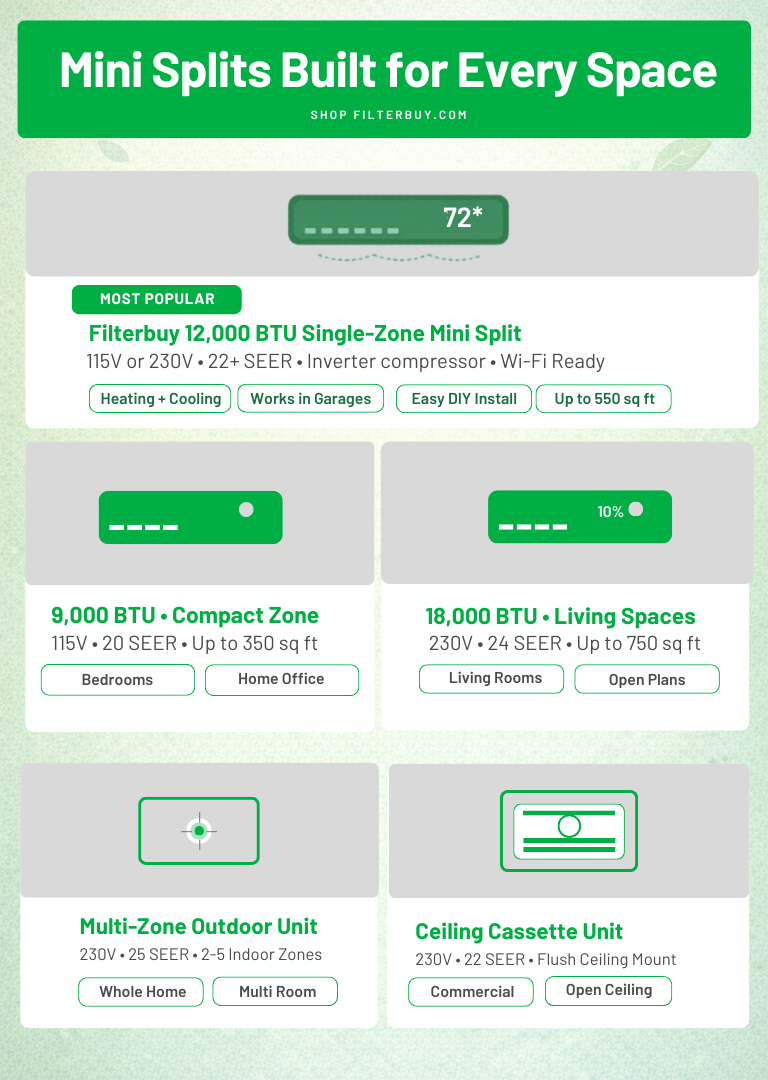
Match your room's square footage to the right BTU first, then check the SEER rating for efficiency. Sizing is the decision that matters most: too big and the unit short-cycles and leaves the room clammy, too small and it runs nonstop and drives up your bills. Use the sizing guide below, then shop by your room size or take the quick match quiz to find your fit.

Not sure which size is right? Answer 3 quick questions and we'll match you to your mini split.
Choosing the right size is the most important decision you'll make, and it's where most homeowners go wrong. A system that's too big will short-cycle, blasting cold air, shutting off, and repeating, which will leave your home humid and wear out the unit faster.
While one that's too small will run non-stop, racking up your energy bills without ever making you comfortable. This guide will help you find that "Goldilocks" sweet spot.
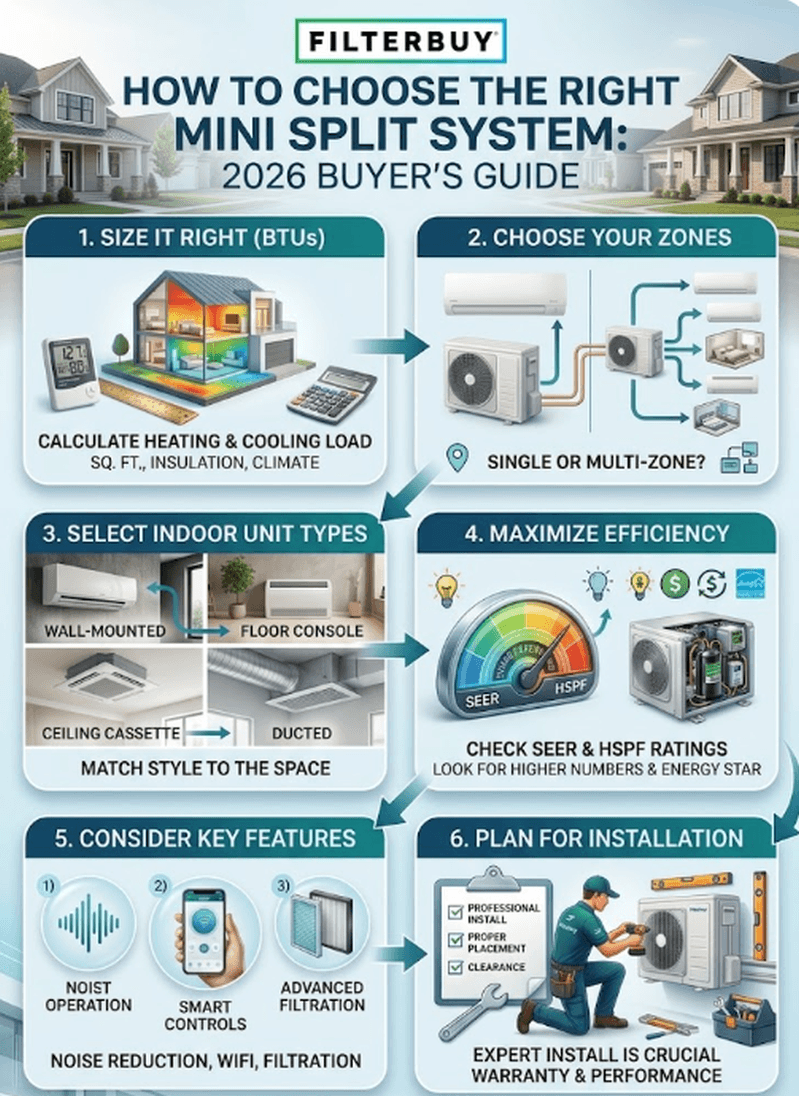
This post will help you select the perfect mini split AC. It'll cover everything from proper sizing (BTU) and energy efficiency (SEER) to essential features and installation. By the end, you'll be able to confidently choose the best system for your home, ensuring comfort and long-term savings.
Key Takeaways
Choose a BTU size based on room square footage to ensure proper cooling.
Look for SEER 17+ for good efficiency and SEER 25+ for premium systems.
Inverter compressors save energy and maintain stable temperatures.
Decide between single-zone (one room) or multi-zone (multiple rooms).
Prioritize reliable brands, solid warranties, and professional installation.
High-efficiency systems like the Filterbuy 12,000 BTU SEER 17 Mini Split balance performance, quiet operation, and smart features.
Step 1: Choose the Right Mini Split Size (BTU)
When evaluating the best mini split AC for your home, proper sizing is the most important factor. Heating and cooling capacity is measured in British Thermal Units (BTUs). The BTU rating tells you how much heat a unit can remove from a room in one hour.
Poor sizing causes a cascade of problems. An oversized unit cools the space too quickly and shuts off before it can properly dehumidify the air, leaving your room feeling cold and clammy. This constant turning on and off also causes severe system wear. An undersized unit will run continuously without ever reaching your desired temperature, resulting in higher energy bills and a shorter lifespan for the compressor.
To find the right capacity, use a reliable mini split sizing guide.
Square footage gives you a strong baseline, but you must apply adjustment factors based on your specific environment. Add 10 to 20 percent capacity if the room has high ceilings, strong sun exposure, poor insulation, or if you live in an exceptionally hot climate. Kitchens also require extra cooling power because of the heat generated by cooking appliances.
Step 2: Single-Zone vs Multi-Zone Systems
Understanding the single zone vs multi zone mini split distinction is the next major step in your buyer journey.
Single-Zone Mini Splits
A single-zone system consists of one outdoor compressor connected to one indoor air handling unit. These are the most common configurations. They are best for bedrooms, garages, home offices, and new home additions. The advantages include lower equipment costs, simpler installation, and maximum energy efficiency since the outdoor unit is dedicated to a single indoor space.
Multi-Zone Systems
A multi-zone system connects one large outdoor compressor to up to eight different indoor units. These are best for cooling multiple rooms, entire apartments, or providing whole-home climate control without ductwork. While they save outdoor space by using only one condenser, they require complex refrigerant piping and represent a much higher initial investment.
Step 3: Understand SEER Ratings (Energy Efficiency)
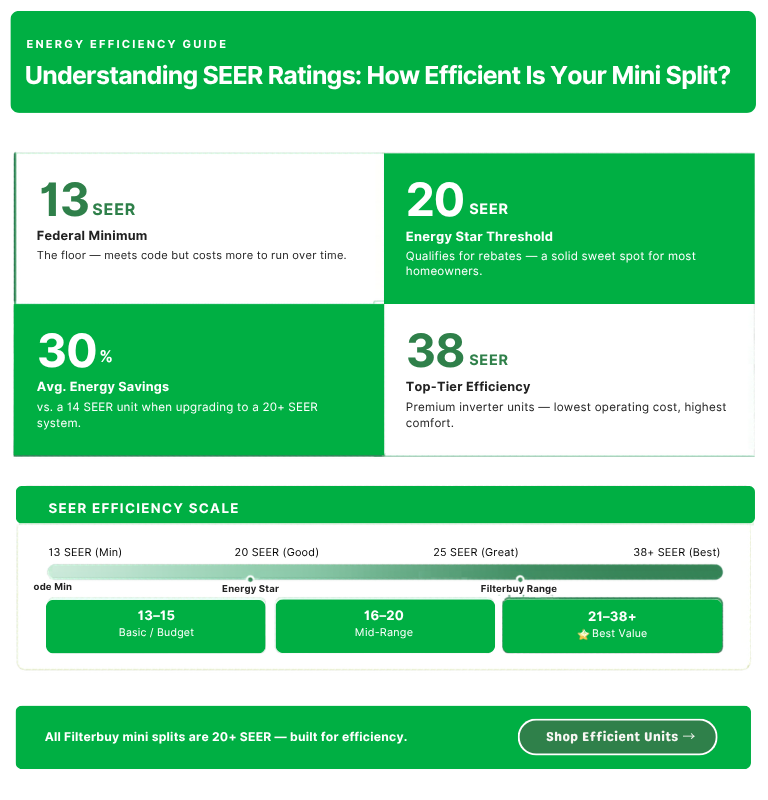
Every energy efficient mini split carries a Seasonal Energy Efficiency Ratio (SEER) rating. The SEER rating represents the cooling output of the system over a typical cooling season divided by the total electrical energy consumed.
Simply put: a higher SEER rating equals lower electricity bills. The Department of Energy regularly updates efficiency standards, and modern units are significantly more efficient than window ACs or older central systems
The secret behind the high efficiency of the best rated mini split ac systems is the inverter compressor. Traditional compressors run at 100% capacity until the room reaches the target temperature, then shut off entirely. An inverter mini split continuously adjusts its motor speed to maintain the temperature perfectly, using a fraction of the electricity.
Step 4: Check Voltage Requirements (115V vs 230V)
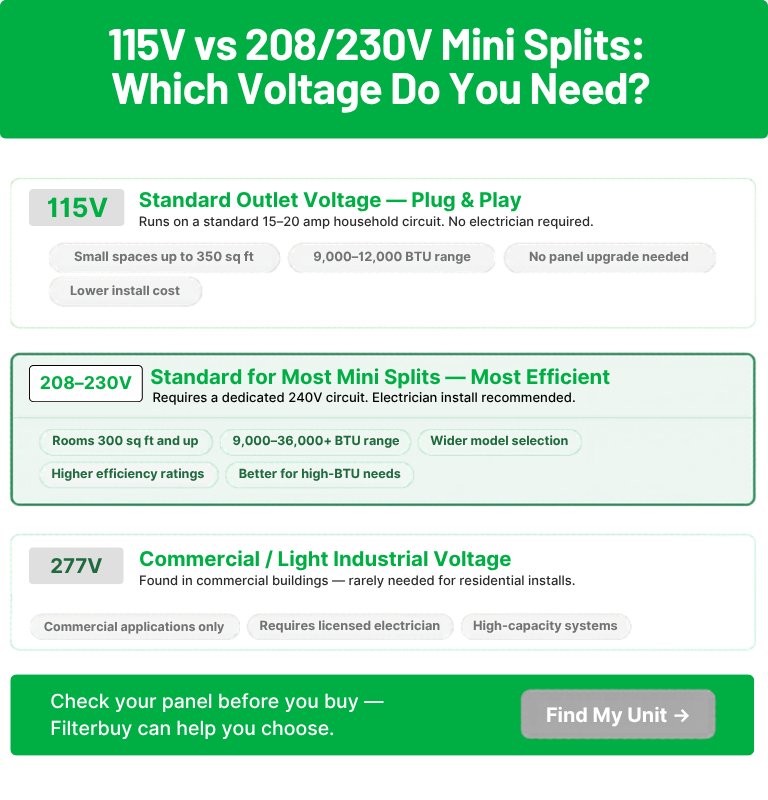
Your electrical setup dictates what kind of unit you can safely install. Mini splits typically operate on either 115V or 230V circuits.
Before purchasing, check your home's breaker panel. A 115V system generally requires a standard single-pole breaker, while a 230V system requires a dedicated double-pole breaker. Many modern 12,000 BTU units offer both 115V and 230V options to accommodate different household electrical panels. Always ask a licensed electrician or your installer if you are unsure about your home's electrical capacity.
Step 5: Features That Actually Matter
Modern systems come packed with technology, but some features provide significantly more value than others. When reading a mini split ac comparison, focus on the capabilities that directly improve performance, longevity, and ease of use.
Must-Have Features
Inverter compressor: Adjusts speed continuously for massive energy savings and perfectly stable room temperatures.
Smart WiFi control: Allows you to adjust temperatures, set schedules, and monitor your system remotely using a smartphone app.
Self-cleaning: Uses internal moisture to wash away dust and prevent mold growth on the evaporator coils, ensuring clean indoor air quality.
Quiet operation: High-quality systems operate at whisper-quiet levels (around 30 decibels), making them completely unobtrusive in bedrooms or home offices.
Cold-weather heating capability: A standard heat pump loses efficiency as temperatures drop. Advanced units can pull heat from the outside air even when temperatures dip below freezing, providing reliable heating to −15°C / 5°F.
Nice-to-Have Features
While not strictly required, these secondary features significantly improve your daily comfort and convenience.
Follow Me sensor: A temperature sensor built into the remote control. The system cools based on where the remote is located, rather than the temperature at the indoor wall unit.
Sleep mode: Gradually adjusts the temperature throughout the night to match your body's natural sleep cycle, saving energy while keeping you comfortable.
Turbo cooling: Ramps the compressor up to maximum speed to cool down a hot room in minutes.
Auto restart: Automatically powers the system back on with your previous settings after a power outage.
Intelligent defrost: Prevents ice buildup on the outdoor condenser during winter heating, running the defrost cycle only when absolutely necessary.
What Is Our Recommended Single-Zone System?
For an outstanding balance of performance, affordability, and advanced technology, the Filterbuy 12,000 BTU 17 SEER2 Mini Split is our top pick. Ideal for spaces up to 550 square feet — primary bedrooms, living rooms, home offices, and large garages.
Key Features:
• 17 SEER2 — ETL & AHRI Certified
• Variable-speed inverter compressor
• R32 refrigerant with Eco Mode
• 55°C self-cleaning cycle
• Smart WiFi app + Amazon Alexa voice control
• "I Feel" precision temperature sensor
• Multi-layer filtration with filter-cleaning reminder
• Built-in refrigerant leak detection
• Heats to -15°C / 5°F with intelligent defrost
• 24-hour timer, sleep mode, auto restart
• 7-year compressor warranty / 3-year parts warranty
• Available in 115V or 230V (12K unit)
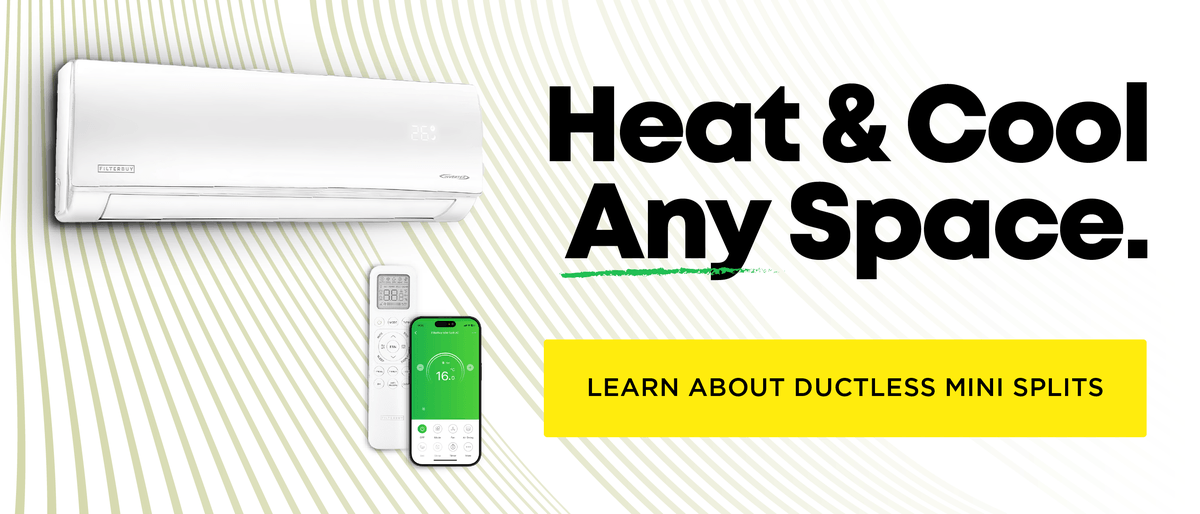
This unit handles the demands of primary bedrooms, spacious living rooms, home offices, and small apartments with ease. The inclusion of R32 refrigerant improves heat transfer while reducing environmental impact. With its comprehensive 5-year warranty, you gain peace of mind alongside superior climate control.
Mini Split Brand Comparison
Evaluating top manufacturers requires looking at reliability, warranty terms, and the availability of replacement parts.
Premium brands offer extreme efficiency and ultra-quiet operation, but they command the highest prices and require specialized installers. Value brands cater to budget-conscious shoppers, though they often sacrifice some efficiency. Systems that hit the middle tier provide the most practical return on investment for the average homeowner, balancing strong efficiency ratings with accessible pricing.
How Much Does a Mini Split Cost?
The total mini split installation cost breaks down into two main categories: the equipment itself and the professional labor required to install it.
Equipment
Single-zone systems range from $1,500 to $4,000, depending on the brand, BTU capacity, and SEER rating.
Installation
Professional installation typically ranges from $1,000 to $3,000 for a standard single-zone setup. Complex installations requiring long refrigerant lines, electrical panel upgrades, or challenging mounting locations will drive the price higher.
We strongly recommend using licensed HVAC installers. A proper installation ensures correct refrigerant levels, safe electrical connections, and proper drainage. Note that Filterbuy sells high-quality HVAC units only, not installation services. You will need to hire a local contractor to install your equipment.
Where Should You Buy a Mini Split?
You essentially have two main avenues for purchasing your new system.
Online Retailers
Pros: Lower prices, wider selection of brands, and fast shipping directly to your door.
Cons: You must coordinate with an independent local installer.
HVAC Dealers
Pros: Bundled installation services and direct contractor guidance on sizing.
Cons: Significantly higher equipment markups and limited brand options based on dealer affiliations.
Filterbuy provides a distinct advantage by offering highly competitive pricing, fast free shipping, and trusted HVAC products directly to homeowners. You save money by purchasing the equipment online and paying a local contractor strictly for the labor.
4 Questions to Ask Your Installer
To ensure a smooth installation process, ask your local contractor these crucial questions before work begins:
What size system do you recommend for this specific room layout?
Will this installation require any electrical panel upgrades or dedicated circuits?
What warranty coverage applies to your installation labor?
How often should the system be serviced to maintain peak efficiency?
Making the Final Decision on Your Cooling System
Choosing the right mini split requires careful consideration of size, efficiency, system type, features, and installation. Proper BTU sizing guarantees your room will cool down comfortably without wasting electricity. A high SEER rating and inverter technology will keep your utility bills low for the next decade.
When you balance those factors correctly, mini splits offer some of the most efficient, targeted climate control available today. You eliminate the dust and energy loss associated with traditional ductwork while gaining quiet, powerful heating and cooling right where you spend your time.
Looking for a reliable single-zone mini split?
Upgrade your home’s climate control with the Filterbuy 12,000 BTU SEER 17 Mini Split. This one delivers powerful cooling, quiet operation, smart features, and unmatched energy efficiency. Order now to get fast, free shipping and start enjoying a more comfortable home today.
Frequently Asked Questions