
Juniper and Mountain Cedar Pollen: Winter Season, Where It Grows, and How to Spot It
October 2, 2026
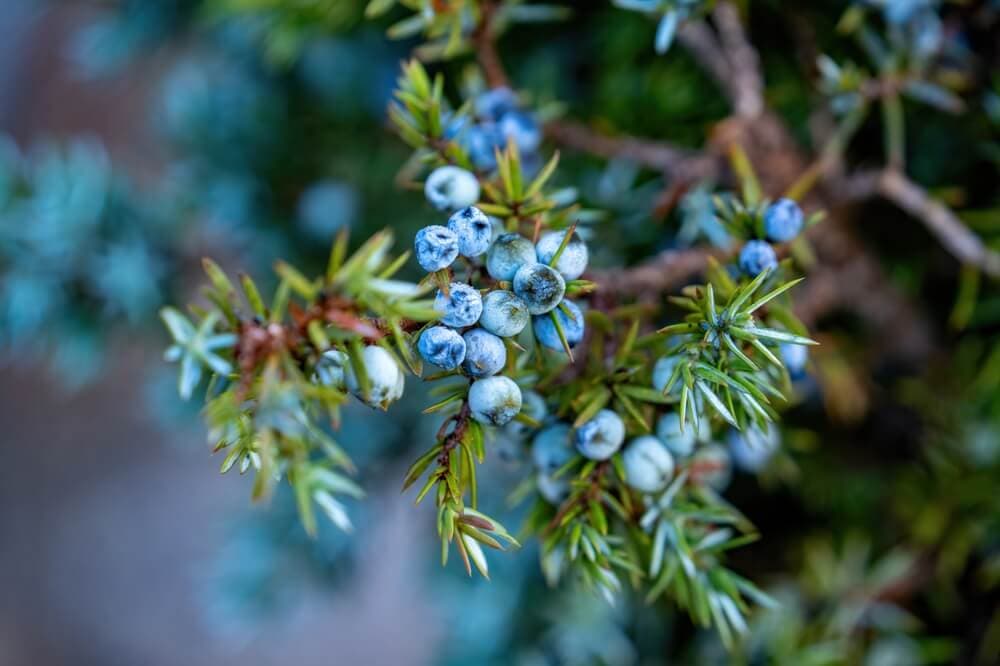
Junipers (genus Juniperus) belong to Cupressaceae, the cypress family. In Central Texas, Ashe juniper (Juniperus ashei), better known as mountain cedar, releases its pollen in the middle of winter, typically from mid-December through February (Texas A&M Forest Service).
That is the source of the season Texans call "cedar fever," even though the tree is not a true cedar. Eastern redcedar (Juniperus virginiana) is a juniper too, but its pollen season runs later and shifts across its wide range (USDA Forest Service FEIS). So not every juniper, and not every tree called "cedar," releases pollen in winter.
Juniper and Mountain Cedar Pollen Quick Facts
| Field | Detail |
|---|---|
| Type | Evergreen conifer; some junipers grow as shrubs |
| Genus | Juniperus (about 70 species worldwide) (Pollen.com) |
| Family | Cupressaceae, the cypress family |
| Season | Ashe juniper: December to February in Central Texas (Texas A&M symposium, Smeins & Fuhlendorf). Other junipers: species- and location-dependent. |
| Time of day | No universal genus-wide release hour has been verified. Release follows weather: cones open in the dry, windy air before and after cold fronts (Texas A&M Today). |
| Regions | Ashe juniper: Central Texas and the Hill Country, north into Oklahoma, Arkansas, and southern Missouri. Eastern redcedar: eastern U.S. Western species: Great Basin, Rockies, and the Southwest (USDA Forest Service FEIS). |
| Pollen grain size | About 19 to 22 micrometers for Ashe juniper (Thermo Fisher Scientific) |
| Pollination | Wind |
| Commonly cross-reacts with | Other cypress-family pollens, including Japanese cedar and Arizona cypress (see Cross-Reactions) |
Is Cedar or Juniper Pollen Active Near You?
Use the juniper pollen index on this page to see whether cedar or juniper pollen is active near your ZIP code today.
How to Identify Mountain Cedar and Other Junipers
Ashe Juniper (Mountain Cedar)
- Foliage. Evergreen, with tiny scale-like leaves pressed flat against the stem (Missouri Department of Conservation). Resin glands give the foliage its familiar aroma (Texas Master Naturalist).
- Bark. Gray to reddish brown, shredding into shaggy lengthwise strips, often with white blotches on the stems (Missouri Department of Conservation).
- Shape. Usually a shrub or small tree under about 20 feet, often with an irregular form and a fluted, twisted trunk (Texas A&M symposium, Smeins & Fuhlendorf; Texas Master Naturalist).
- Male and female trees. Ashe juniper is dioecious. Male trees carry small pollen cones at the branch tips. Female trees carry fleshy, berry-like blue cones and do not release pollen (Texas A&M Today).
Eastern Redcedar
Eastern redcedar looks similar: scale-like leaves, red-brown bark that peels in long strips, yellow male cones at branch tips, and frosted blue berry-like female cones on separate trees (NC State Extension). One field clue is that Ashe juniper leaves stay dark green year-round, while eastern redcedar often turns bronze or reddish after frost (Missouri Department of Conservation). Range and local records matter, so match the species before assuming a season.
Juniper pollen grains are microscopic, so a yellow-brown coating on a car or porch cannot tell you which tree produced it.
Cedar Look-Alikes: Why the Name Misleads
The word "cedar" is attached to several unrelated plants, and each has its own season.
| Plant | Genus and Family | How It Differs |
|---|---|---|
| Mountain cedar | Juniperus ashei, Cupressaceae | Scale-like leaves, berry-like female cones, winter pollen in Central Texas |
| True cedars (deodar, Atlas, cedar of Lebanon) | Cedrus, Pinaceae | Needles in dense clusters on woody pegs; large upright barrel-shaped cones; Old World natives |
| Japanese cedar | Cryptomeria japonica, Cupressaceae | Cypress-family ornamental, not a Cedrus |
| Arborvitae (eastern white-cedar) | Thuja occidentalis, Cupressaceae | Scale-like leaves in flattened sprays; small brown woody seed cones |
| Cedar elm | Ulmus crassifolia, Ulmaceae | Deciduous broadleaf elm; blooms July to October |
Similar foliage does not mean similar pollen behavior or allergenicity. Pollen.com notes that true cedars are not commonly associated with allergic reactions and that mountain cedar belongs to a different genus (Pollen.com).
When Is Cedar and Juniper Pollen Season? Timing by Region
The entries below are pollen-release or flowering observations from named sources, not measured airborne peaks for every city.
| Region and Species | Start | Peak | End |
|---|---|---|---|
| Central Texas (Austin, San Antonio), Ashe juniper | Mid-December (Texas A&M Forest Service) | Often mid-January; local peak varies by year (Texas A&M Today) | February, tapering by early March (Texas A&M Forest Service) |
| Eastern U.S., eastern redcedar | February in the south and east | Local peak varies | May in the north and west (USDA Forest Service FEIS) |
| Pacific Northwest to Great Basin, western juniper | May | Local peak varies | May (USDA Forest Service FEIS) |
| Arizona, Rocky Mountain juniper | April | Local peak varies | April record (USDA Forest Service FEIS) |
| Northern Sacramento Mountains, NM, one-seed juniper | March | Local peak varies | April (USDA Forest Service FEIS) |
One-seed juniper can flower as early as January or as late as June depending on location (USDA Forest Service FEIS). Check your nearest National Allergy Bureau station for current counts.
In Central Texas, check conditions for Austin and San Antonio, or find your city on Filterbuy's Live Air Quality Index Map. Our seasonal allergy calendar shows what follows cedar season into spring.
How Mountain Cedar Pollen Behaves
- Pollen clouds from male trees. When mountain cedar cones open, the pollen can look "very similar to smoke coming from a wildfire," according to Texas A&M Forest Service ecologist Karl Flocke (Texas A&M Today). UT Health San Antonio describes male trees releasing clouds of pollen from around Christmas through February (UT Health San Antonio).
- Weather sets it off. Right before and after a cold front, the air turns very dry and windy, and those pressure changes trigger the pollen cones to open (Texas A&M Today).
- A peak you can photograph. The University of Texas at Austin documented dehiscing male cones "at the peak of 'cedar season' in Central Texas" in a January 10 photo, with cones largely empty by late January (UT Austin Plant Resources Center). That is a single observation, not a city-wide calendar.
- The cypress family is a heavyweight. Across 31 National Allergy Bureau stations from 2003 to 2017, the cypress family, which includes junipers, was the second most abundant pollen type, making up 19.4% of all pollen counted (Lo et al., Aerobiologia, 2019).
- A native with a changing footprint. Ashe juniper has grown on the Edwards Plateau for tens of thousands of years, and early European observers described dense "cedar brakes" on canyon slopes (Texas Master Naturalist). Since settlement, reduced fire and grazing pressure have helped it grow denser and spread into some formerly more open areas (Texas A&M symposium, Smeins & Fuhlendorf). No single cause explains every stand.
Cedar and Juniper Pollen Myths vs. Facts
MYTHMountain cedar is a true cedar.
FACTMountain cedar is Ashe juniper, Juniperus ashei, in the cypress family. True cedars are Cedrus, in the pine family (Texas A&M Today; Pollen.com).
MYTHTree pollen only appears in spring.
FACTIn Central Texas, Ashe juniper releases pollen from mid-December into February (Texas A&M Forest Service).
MYTHAll cedar-named trees release pollen at the same time.
FACTEastern redcedar pollinates from February to May depending on location (USDA Forest Service FEIS), and cedar elm blooms from July to October (Lady Bird Johnson Wildflower Center). They are different plants with different timing.
MYTHThe name "cedar fever" means cedar is giving me a fever.
FACT"Cedar fever" is a common regional expression for the season, not a medical diagnosis. The name alone does not tell you whether you have a fever or what is causing your symptoms.
Juniper and Mountain Cedar Pollen Cross-Reactions
This section is descriptive only.
Published studies document immunologic cross-reactivity between mountain cedar and certain other cypress-family pollens. In a 2000 skin-test and immunoblot study, people sensitive to mountain cedar responded to all 12 cypress-family pollens tested and to Japanese cedar, but not to the pine-family pollen or the flowering plant included (Schwietz et al., Annals of Allergy, Asthma & Immunology, 2000). Thermo Fisher Scientific's allergen encyclopedia reports that Jun a 1, the major mountain cedar allergen, is highly cross-reactive with the major allergens of Japanese cedar (Cry j 1), Japanese cypress (Cha o 1), and Arizona cypress (Cup a 1) (Thermo Fisher Scientific).
These findings come from specific study populations and lab methods. They do not mean every cypress-family tree has identical allergenicity or predict how any individual will respond. Japanese cedar is Cryptomeria japonica, not a Cedrus. Ask a qualified professional, such as an allergist, about symptoms or diagnosis.
Keeping Cedar and Juniper Pollen Out of Your Home
Pollen is made of microscopic reproductive grains released by male cones. During Central Texas cedar season, a few simple steps can limit how much settles indoors:
- Check a species-appropriate local index before opening up the house, especially from mid-December through February.
- Close windows during active release, particularly around cold fronts.
- Wipe settled pollen from sills, floors, and entry surfaces.
- Keep a compatible, correctly sized HVAC filter installed and changed according to your equipment's instructions. Filters capture airborne particles as air passes through them. MERV 8 is the standard choice for most homes, and MERV 11 is the step up for households with allergies or pets. Filterbuy 4-inch filters last 6 to 12 months.
One study worth knowing: in Austin during the 2015 mountain cedar season, indoor pollen levels rose close to outdoor levels during rainy spells, with an average indoor-to-outdoor ratio of 0.98 on rainy days versus 0.05 on dry days (Jochner-Oette et al., 2022). Staying inside is not always a complete barrier late in the season.
If your filter is due before cedar season starts, Filterbuy makes MERV 8 and MERV 11 filters in more than 600 standard sizes, plus custom sizes, so it's easy to find one that fits your system.
Shop MERV 8 Filters Shop MERV 11 FiltersFrequently Asked Questions
When is mountain cedar pollen season in Texas?
In Central Texas, Ashe juniper typically starts releasing pollen in mid-December, peaks around mid-January, and tapers off by early March (Texas A&M Forest Service). Exact timing shifts with each year's weather.
Is mountain cedar actually a juniper?
Yes. Mountain cedar is Ashe juniper, Juniperus ashei, a member of the cypress family, not a true cedar (Texas A&M Today).
What does "cedar fever" mean?
It is an informal regional name for the Central Texas mountain cedar pollen season. It is not a medical diagnosis, and the name alone does not mean you have a fever.
When does cedar pollen peak in Austin or San Antonio?
Texas A&M Forest Service says the season generally peaks in mid-January (Texas A&M Forest Service), but the exact peak changes from year to year. In one Austin study, the 2015 outdoor peak came on January 18 (Jochner-Oette et al., 2022). Check a local pollen count for the current year.
Do male or female Ashe junipers release pollen?
Only male trees release pollen. Female trees produce blue, berry-like cones (Texas A&M Today).
Is eastern redcedar pollen season the same?
No. Eastern redcedar is also a juniper, but it pollinates from February in the south and east to May in the north and west (USDA Forest Service FEIS).
Is cedar elm a cedar tree?
No. Cedar elm (Ulmus crassifolia) is a deciduous elm that blooms from July to October, well after mountain cedar season (Lady Bird Johnson Wildflower Center).
Can juniper pollen appear in spring in the West?
Yes. Western juniper releases pollen in May; Rocky Mountain juniper has an April record in Arizona, and one-seed juniper flowered in March and April in New Mexico's northern Sacramento Mountains (USDA Forest Service FEIS: western juniper; Rocky Mountain juniper; one-seed juniper).