
Snow Accumulation Map: How to Read It and Prep Your Home's HVAC
October 22, 2026
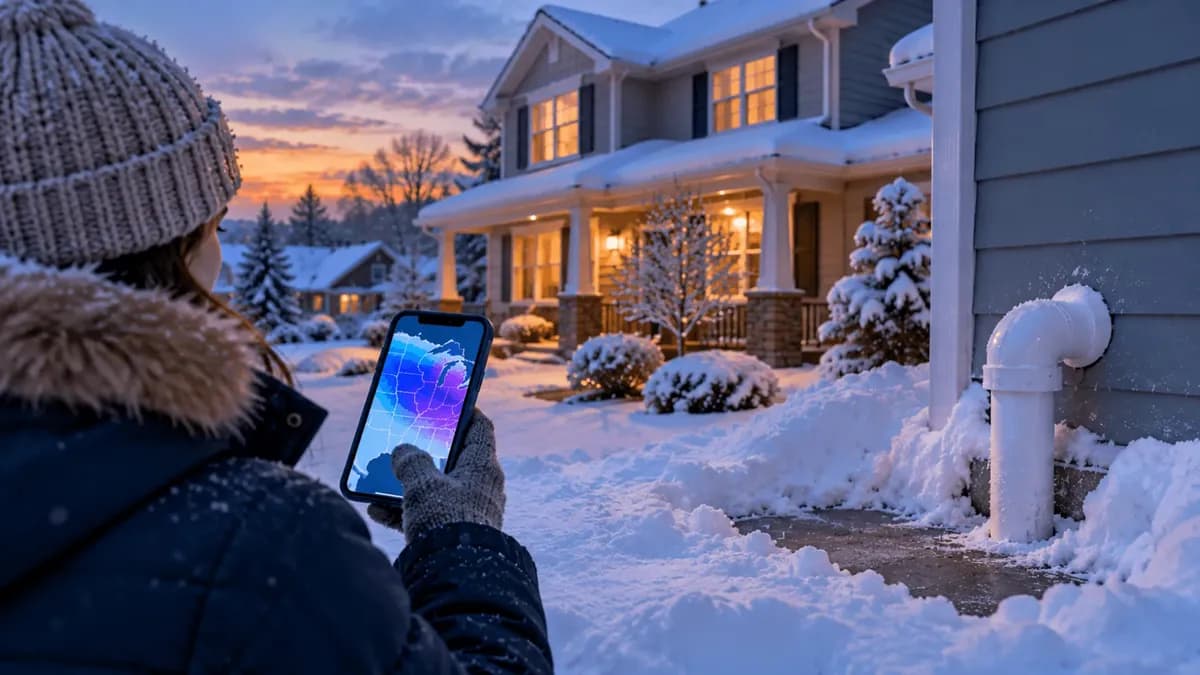
To see how much snow is headed your way, open NOAA’s free snowfall and forecast maps and find the color band over your town. Each band covers a range of new snow, in inches, for a set period, so the legend tells you what to expect in that window.
- NOHRSC (NOAA): observed snowfall over the past 24, 48, or 72 hours.
- WPC (NOAA): odds of 1 to 18 inches, up to three days out.
- Weather.gov: a storm-total snowfall map for your ZIP code.
That number is also your cue to get the house ready. Deep snow can cover the low side-wall pipes on a high-efficiency furnace, and longer heating cycles put extra work on your air filter. Filterbuy builds every filter to order and ships it within 24 hours, so ordering while the storm is still on the forecast gives it time to arrive. Not sure which filter your system needs? The quiz below will match you.
Match the snow total to your prep
Forecast total (24–48 hr) and what to do at home
Answer a few quick questions and we’ll match you to the right MERV rating for your home.
TL;DR
A snow accumulation map shows how much new snow fell, or is forecast to fall, over a set window like 24 or 48 hours. NOAA publishes the best free versions: NOHRSC for snow that already fell and the Weather Prediction Center (WPC) for what's coming. Filterbuy uses it as a prep trigger: when a big total shows up near you, clear your furnace and heat pump vents and put in a clean filter before the snow starts.
Key Takeaways
Snow accumulation maps show new snowfall; snow depth maps show everything on the ground.
NOAA's NOHRSC map shows how much snow fell in the last 24, 48, or 72 hours.
NOAA's WPC maps the odds of 1 to 18 inches of snow up to three days out.
Snow over a high-efficiency furnace's pipes can shut it down, and the CDC urges checking appliance vents after heavy snow.
Filterbuy's vent snow buffer (vent height minus snow on the ground) tells you when to clear vents.
Filterbuy has made air filters in the U.S. for more than a decade, and winter storms follow a familiar pattern. The forecast fills the news, and two five-minute jobs get forgotten: clearing the vent pipe and changing the filter. This guide explains NOAA's snow maps, then turns them into a prep plan based on what we've learned from customers.
What Is a Snow Accumulation Map?
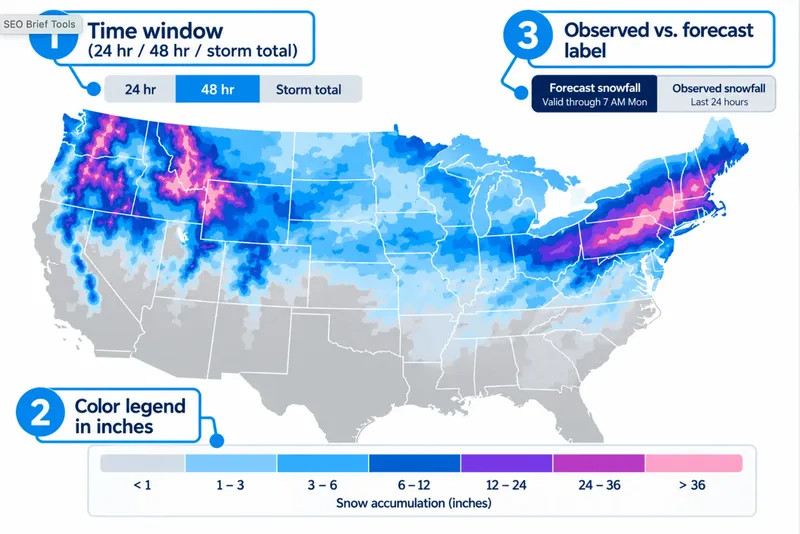
A snow accumulation map uses color bands to show how many inches of new snow fell, or are expected to fall, over a set time window. One band might cover 1–2 inches, and a darker one 6–8.
A snow depth map is different. Accumulation counts only the new snow from one period, while depth measures everything on the ground, old snow included. To judge whether your furnace vent could get buried, you need both numbers.
Where Can I Find a Live Snow Accumulation Map?
NOAA and its National Weather Service (NWS) publish the most reliable free snow maps, and many weather apps pull from the same data.
Table 1: Where to find a snow accumulation map
Sources: NOAA NOHRSC (nohrsc.noaa.gov/snowfall), NOAA WPC (wpc.ncep.noaa.gov), and NWS (weather.gov).
NOHRSC builds its observed map from real reports by weather stations, volunteer observers, and trained NWS spotters (NOHRSC).
Each outlined area on a WPC forecast map carries a confidence level: low means a 20–30% chance, moderate means 30–70%, and high means 70% or greater. Confidence also drops the further out the forecast goes (WPC). Filterbuy's rule of thumb: if your area sits inside a moderate or high outline, start prepping.
Enter your ZIP code on Weather.gov to reach your NWS office's storm-total snowfall graphic. For active watches and warnings, open the Filterbuy Winter Storm Tracker.
How Do You Read a Snow Accumulation Map?
Read any snow map in this order, whether it covers tonight or the last 48 hours.
Confirm the time window. The title or legend lists the valid period, such as 24 hours ending at 7 a.m.
Find your color. Bands usually run from light blue for a dusting to purple or pink for a foot or more. Zoom in near lakes and hills, where totals jump quickly.
Check whether it's observed or forecast. Observed maps show what fell; forecasts show what's likely.
Look at the timestamp. During an active storm, refresh any map that's more than a few hours old.
Watch the edges. If you live near the rain-snow line, plan for the higher total.
What Should I Do When the Map Shows Heavy Snow Headed My Way?
When heavy snow shows up on the map, prep your home before the first flake. Most snow maps stop at inches, so the Filterbuy plan below matches each forecast total to a home task. It's built around the two problems our HVAC reviewer, David Clark, sees most on storm calls: buried vents and clogged filters (source).
Table 2: Filterbuy Snow-to-Home Action Plan
Filterbuy guidance, reviewed by David Clark, Licensed HVAC Technician. Always follow your equipment manufacturer's instructions.
“After a heavy snow, most no-heat calls I see on high-efficiency furnaces trace back to a drift or an ice cap over the exhaust pipe. Clearing it by hand at the wall usually gets the heat back on.”
David Clark, Licensed HVAC Technician, Filterbuy HVAC Solutions (source)
Find Your Vent's Snow Buffer
Filterbuy's vent snow buffer is the gap between the top of the snow and your lowest vent opening. Once you know it, the forecast tells you how soon to act.
Measure the vent. Measure from the ground to the bottom of your lowest furnace or water heater vent pipe.
Subtract the snow already down. A yardstick works, or check NOAA's NOHRSC snow depth map.
Compare it to the forecast. If the forecast total comes within a few inches of your buffer, or wind will drift snow, plan to clear vents during the storm.
Example: An 18-inch vent with 6 inches of old snow on the ground has a 12-inch buffer, so an 8–12 inch forecast means clearing it mid-storm, not the next morning.
Keep Furnace Intake and Exhaust Pipes Clear
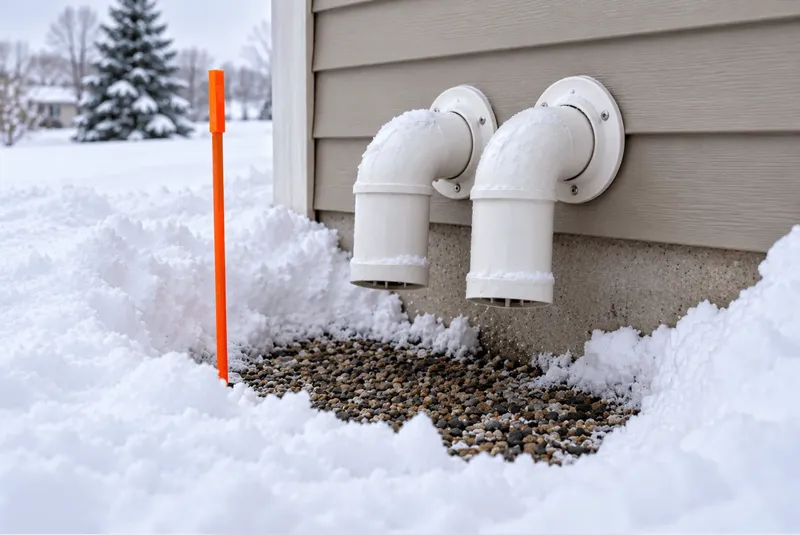
High-efficiency furnaces vent through PVC pipes that exit a side wall close to the ground. When snow or ice blocks them, pressure switches shut the furnace down to prevent unsafe combustion (AdvanPro HVAC). Blocked vents also raise carbon monoxide risk, so the CDC advises checking every fuel-burning appliance vent after heavy snow (CDC).
Clear the pipes by hand or with a soft brush, keep about three feet open around them, and recheck when the wind shifts. If a pipe is frozen solid, leave it alone and call a technician (AdvanPro). Filterbuy's guide to a frozen furnace vent pipe covers restarting the furnace afterward.
Check Your Carbon Monoxide Alarms
Only a working detector can warn you about CO, so test the alarms near bedrooms before the storm. If one sounds, the CDC says to leave right away and call 911, and to get medical help if you feel dizzy, light-headed, or nauseous (CDC).
Because we make filters, we'll be direct: no air filter removes CO. “Carbon monoxide is a gas, so filtration is the wrong tool entirely,” says Filterbuy founder and CEO David Heacock (source). See our guide to winter CO and smoke safety.
Free Your Heat Pump's Outdoor Unit
A snow-smothered outdoor unit can't pull heat from the air. Filterbuy recommends keeping 18 to 24 inches clear on every side (see how to get your heat pump ready for winter). Brush snow off the top gently and never chip at ice with a sharp tool. Before you clear debris, the U.S. Department of Energy advises turning off power to the fan (DOE). Light frost melts during defrost cycles; a unit encased in ice needs a technician.
Start the Storm with a Clean Air Filter
On snow days the furnace runs longer, and a clogged filter chokes airflow and can make the furnace overheat and trip its safety limit. “On winter service calls, I check the air filter first, because a clogged one keeps the system running longer and takes five minutes to replace,” says David Clark (source). Check how often to change your furnace filter in winter, and keep a spare on hand.
Filterbuy's timing tip: We make each filter after it's ordered, so it ships within 24 hours and usually arrives in about two days. So order when a storm first appears on the map, not when the snow starts. Double-check the depth measurement too, since it's the one our manufacturing team sees ordered wrong most often (source). Find your air filter size, then shop Filterbuy air filters.
Supporting Statistics
CO deaths roughly triple in winter.
From 1999 to 2004, an average of 439 Americans died each year from accidental, non-fire CO poisoning.
Daily deaths peaked in January (2.07) and December (1.97), about three times the July and August rate (0.67).
The CDC ties the winter peak to furnace use and heating during outages. Source: CDC MMWR
Americans spend about 90% of their time indoors.
Indoors, some pollutants run 2–5 times higher than typical outdoor levels. Source: EPA
A neglected heat pump can use 10–25% more energy.
The DOE recommends regular filter changes and a clear outdoor unit to close that gap. Source: DOE
Frequently Asked Questions
What Is the Most Accurate Snow Accumulation Map Today?
NOAA's free maps are the most accurate. NOHRSC shows what actually fell, and WPC shows the odds of snow over the next three days.
How Do I See How Much Snow Fell in the Last 24 or 48 Hours?
Open NOAA's NOHRSC snowfall analysis and pick a 24-, 48-, or 72-hour window.
How Can I Find a Snow Accumulation Map Near Me or by ZIP Code?
Enter your ZIP code on Weather.gov. Your local NWS office usually posts a storm-total snowfall map ahead of winter storms.
Why Do Snow Forecasts Change So Much Before a Storm?
A small shift in track or temperature can move the rain-snow line by miles, so check the latest map the night before. Our winter storm watch vs. warning guide explains what each alert means.
How Much Snow Can Block a Furnace Vent?
It depends on your vent's height minus the snow already on the ground. If the forecast total comes within a few inches of that gap, clear the vent during the storm.
Should I Change My Air Filter Before a Snowstorm?
Yes, if it's due or close to it. Filterbuy recommends checking your filter every 30 days in winter. For a timed plan, use our winter storm emergency checklist.
Glossary
Snow accumulation (snowfall): New snow that falls during a set period, such as 24 hours.
Snow depth: All snow on the ground at a given time, including older snow.
Snow buffer: Filterbuy's term for the space between the snow surface and your lowest vent opening.
NOAA: The National Oceanic and Atmospheric Administration, parent agency of the NWS.
NWS: NOAA's National Weather Service.
NOHRSC: NOAA's National Operational Hydrologic Remote Sensing Center, which maps observed snowfall.
WPC: NOAA's Weather Prediction Center, which publishes snowfall probability forecasts.
High-efficiency furnace: A condensing gas furnace that vents through PVC pipes, usually out a side wall.
Carbon monoxide (CO): A colorless, odorless, poisonous gas from burning fuel, detectable only with a CO alarm.
Pressure switch: A furnace sensor that shuts off the burners when a blocked pipe limits airflow.