
Why Is My Furnace Blowing Cold Air? Causes And Fixes
October 28, 2026
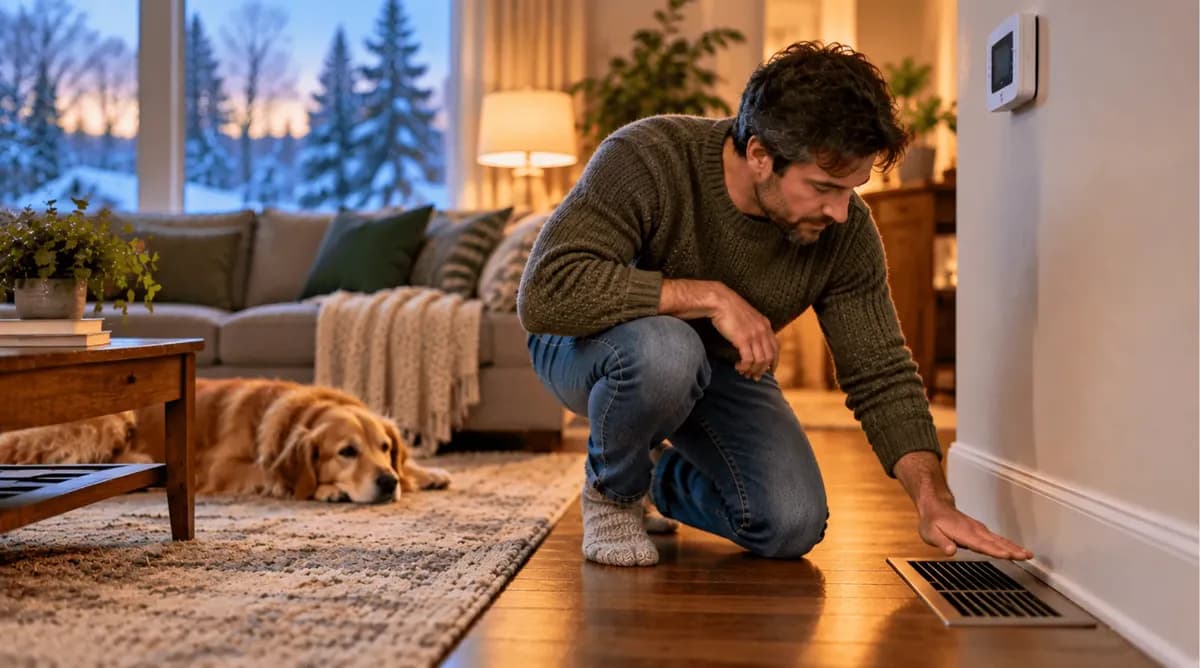
A furnace blowing cold air usually means the thermostat fan is set to On, a clogged filter overheated the furnace, or the burners aren’t lighting. Check the thermostat and the air filter first, since you can fix both yourself.
A short burst of cool air at the start or end of a heating cycle is normal. If you smell gas, leave the home and call 911 or your gas utility from outside.
Not sure which filter your furnace needs? Take the quick match quiz below.
Made to order in the USA in more than 600 sizes, with free 2-day delivery to most states.
Furnace blowing cold air?
Match when it happens to the cause
Cause: Thermostat fan set to On
Try: Switch the fan to Auto
Cause: Clogged, dirty air filter
Try: Replace the filter
Cause: Flame sensor, ignitor, or gas
Try: Reset once, then call a pro
Smell gas or hear a CO alarm?
Leave the home, then call 911.
Find your filter match
Answer a few quick questions about your home and we’ll match you to the right MERV rating.
A furnace blowing cold air is usually telling you one of three things: the thermostat is running the fan without calling for heat, the furnace overheated and shut its burners off to protect itself, or the burners never lit. Because Filterbuy makes air filters, we start with the cause we know best, and the one you can fix yourself: a clogged filter.
TL;DR
A furnace blowing cold air usually has a thermostat fan set to On, a clogged filter that tripped the high limit switch, or an ignition problem that keeps the burners from lighting. Check the thermostat and filter first. If the air is still cold after both, or you smell gas, stop and call a licensed HVAC technician.
Key Takeaways
Brief cool air at the start or end of a cycle is normal.
A thermostat fan set to On blows room-temperature air between cycles. Auto fixes it.
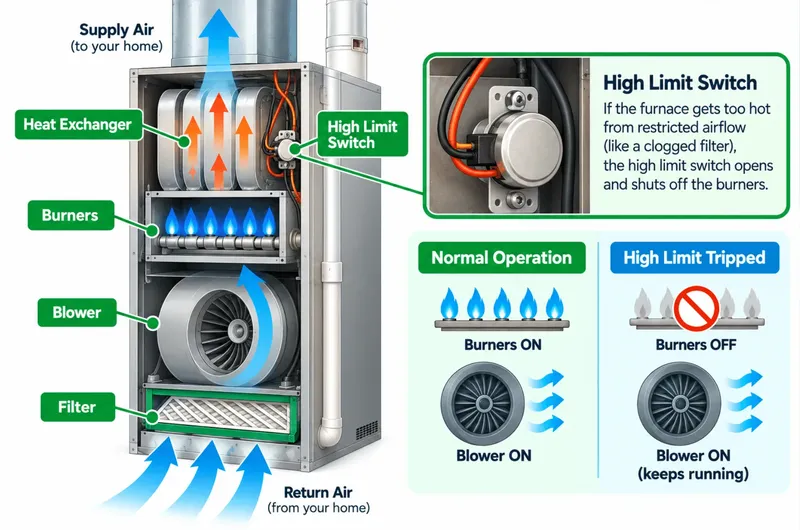
A clogged filter can trip the high limit switch, which shuts off the burners while the blower runs.
Burners that light and then go out within seconds usually point to a dirty flame sensor.
If you smell gas or a carbon monoxide alarm sounds, leave the home first.
Is It Normal For A Furnace To Blow Cold Air?
Yes, for a moment. A gas furnace warms its heat exchanger before the blower starts, then runs the blower briefly after shutoff. What isn't normal is cold air through a whole cycle, or air that turns cold partway through.
The Cold Air Timing Test: Match When It Happens To The Likely Cause
When the cold air shows up is your fastest clue. Watch one heating cycle at a supply vent and find the matching row below.
The Vent Thermometer Test
A kitchen thermometer settles whether the air is really cold.
Let the furnace run about five minutes after the burners light.
Hold the thermometer in the airflow at a supply vent near the furnace.
Take a second reading at a return grille.
Subtract the two. A working gas furnace warms air by several tens of degrees, within the range on its rating label. A gap of a few degrees means no heat.
What To Check Before You Call A Technician
Five checks, none requiring you to open the furnace, solve most cold air problems. Allow one heating cycle per change.
Thermostat. Set the mode to Heat and the fan to Auto, then raise the temperature a few degrees above the room. Replace the batteries if the display is blank.
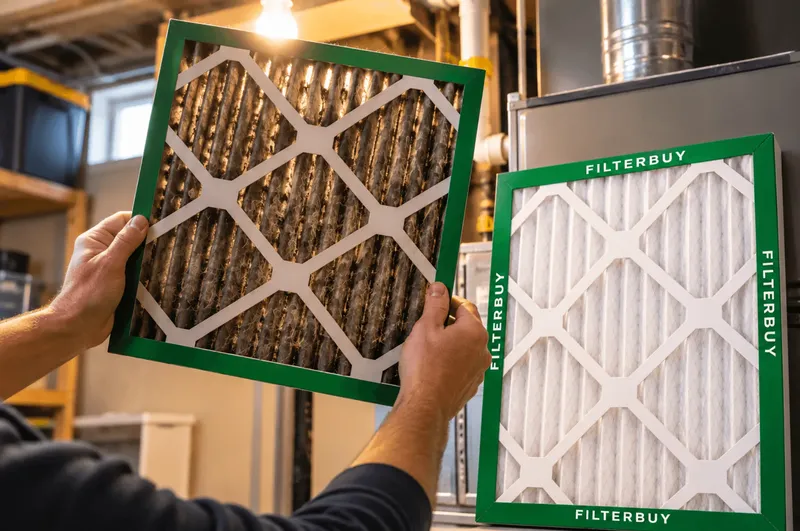
Air filter. Hold the filter up to a light. If little light gets through, replace it with the size printed on the frame. Some gray is normal: in a Filterbuy comparison, a 1-inch filter turned an even gray after 90 days of normal use. Packed, matted media is the warning sign. See what a dirty furnace filter looks like and where your furnace filter is located.
Power. Make sure the furnace service switch is on and the breaker hasn't tripped.
Vents and returns. Open closed registers and move furniture away from return grilles.
Error code. Count the status light blinks through the furnace door window, look them up on the printed chart, and note the code.
Reset the furnace once at most. Repeated resets hide the problem, and many control boards lock out after several failed ignition attempts.
Give Your Technician These Four Details
The matching timing table row.
Any error code and thermometer readings.
When you last changed the filter, and its printed size.
The furnace's age and fuel: natural gas, propane, or oil.
Why A Clogged Filter Makes A Furnace Blow Cold Air
A clogged air filter starves the furnace of airflow, so heat builds up around the furnace heat exchanger faster than the blower can carry it away. Once that heat passes a safe limit, the high limit switch shuts the burners off, but the blower keeps running and sends unheated air to your vents.
When the furnace cools, the burners relight and the cycle starts again. Filterbuy's guide to furnace control board and limit switch failure signs covers repeated trips. A weak blower can cause the same pattern, as our guide to furnace blower motor problems explains.
Filterbuy's Manufacturing View: Fit Matters
A fresh filter only protects airflow if it fills the slot. Filterbuy makes every filter to order in its own US plants, cut slightly smaller than its printed size so it slides into the rack. Order by that printed number. If the slot runs large, air slips around the edges.
"Air will always take the gap over the media," says David Clark of Filterbuy HVAC Solutions. That bypass air coats the blower wheel with dust, which cuts airflow further.
Check the filter monthly and follow our guide to how often to replace a furnace filter. We make pleated MERV 8, MERV 11, and MERV 13 filters in more than 600 sizes, and your HVAC manual lists the MERV rating your system supports.
When The Burners Will Not Light Or Stay Lit
If the burners never light, or go out within seconds, the furnace can't make heat. Common causes are a dirty flame sensor, a failed ignitor, a pilot out on an older furnace, or no gas supply.
A dirty flame sensor is the most common. Carbon buildup keeps it from detecting the flame, so the control board shuts off the gas. Our furnace flame sensor cleaning and replacement guide walks through the fix.
If the ignitor never glows, check the signs of a bad hot surface ignitor.
For the gas supply, make sure the valve handle runs parallel to the pipe and your stove still lights. Propane homes should check the tank gauge. Relight an older furnace's pilot only by the printed instructions.
Heat Pumps And Dual Fuel Systems
Heat pump air feels cooler than furnace heat, and a brief cool burst during defrost is expected. If cool air lingers long after defrost, the auxiliary heat or dual fuel switchover may be at fault, and Filterbuy's heat pump troubleshooting guide covers the next steps.
When Cold Air From The Furnace Is A Safety Problem
Cold air alone is rarely dangerous, but these signs mean stop.
The U.S. Consumer Product Safety Commission recommends an annual professional inspection of fuel-burning appliances and at least one carbon monoxide alarm in every home, and the EPA lists leaking furnaces and backdrafting among common indoor carbon monoxide sources. The Filterbuy HVAC Solutions furnace tune-up checklist shows what a pro visit covers, and Filterbuy's guide to what a black furnace filter can mean explains how to tell soot from dust.
Expert Insight From The Filterbuy Team
"The question I get most is which MERV to buy. The one to ask first is whether the filter you are holding actually fills the slot. A rating describes the media, not the gap around it."
Michelle Wan, Brand Manager and Air Quality Writer, Filterbuy
"In over a decade of helping homeowners maintain their HVAC systems, we've found that a dirty flame sensor is the single most common reason a furnace lights but won't stay running."
Filterbuy HVAC Solutions Team
Supporting Statistics: What The Research Shows
Natural gas is the most common U.S. heating fuel.
It was the main heating fuel for 47% of households in 2024.
Why it matters: The ignition and gas checks above apply to about half of homes.
Source: Electricity Use Is Becoming More Common for Residential Heating
Carbon monoxide deaths peak in winter.
393 people in the U.S. died from unintentional carbon monoxide poisoning in 2015.
36% of those deaths came in December, January, or February.
Why it matters: Treat any gas smell or CO alarm as an emergency.
Source: QuickStats: Number of Deaths Resulting from Unintentional Carbon Monoxide Poisoning
Heating and cooling use nearly half of home energy.
ENERGY STAR advises checking the filter monthly and changing it at least every 3 months, since a dirty filter slows airflow.
Why it matters: A clean filter protects your biggest energy user.
Source: Heat & Cool Efficiently
Frequently Asked Questions
Why Is My Furnace Running But Blowing Cold Air?
Your furnace is moving air without making heat. Usually the fan is set to On, the high limit switch has tripped, or the burners aren't lighting.
How Long Should A Furnace Blow Cold Air Before It Warms Up?
Only for a moment at the start of a cycle. If cool air lasts several minutes, or the whole cycle, something is stopping the heat.
Can A Dirty Filter Cause A Furnace To Blow Cold Air?
Yes. A clogged filter can overheat the furnace, and the high limit switch then shuts off the burners while the blower runs.
Should I Turn Off My Furnace If It Is Blowing Cold Air?
Turn it off if you smell burning, see soot, or the burners fail after one reset. For a gas smell or CO alarm, leave the home first.
Why Is My Furnace Still Blowing Cold Air After I Changed The Filter?
Look next at ignition, the flame sensor, the condensate drain, or the ductwork, and call a technician.
Keep Warm Air Moving With The Right Filter
Find your exact size in the Filterbuy air filter size catalog, or set up an air filter subscription so a fresh, American-made Filterbuy filter arrives on your schedule, with fast and free 2-day delivery to most US states.
Glossary
Auxiliary heat: Backup heat in a heat pump system.
Blower: The fan that moves heated air through the ducts.
Carbon monoxide (CO): A colorless, odorless, poisonous gas from incomplete combustion.
Condensate drain: The line that carries water from a condensing furnace.
Defrost cycle: A heat pump's brief reversal to melt ice off its outdoor coil.
Flame sensor: A rod that confirms a flame and shuts off gas without one.
Heat exchanger: The sealed chamber that transfers burner heat to household air.
High limit switch: A safety switch that shuts off burners when the furnace overheats.
Hot surface ignitor: A part that glows hot to light the burners.
MERV: Minimum Efficiency Reporting Value, the scale for how much a filter captures.